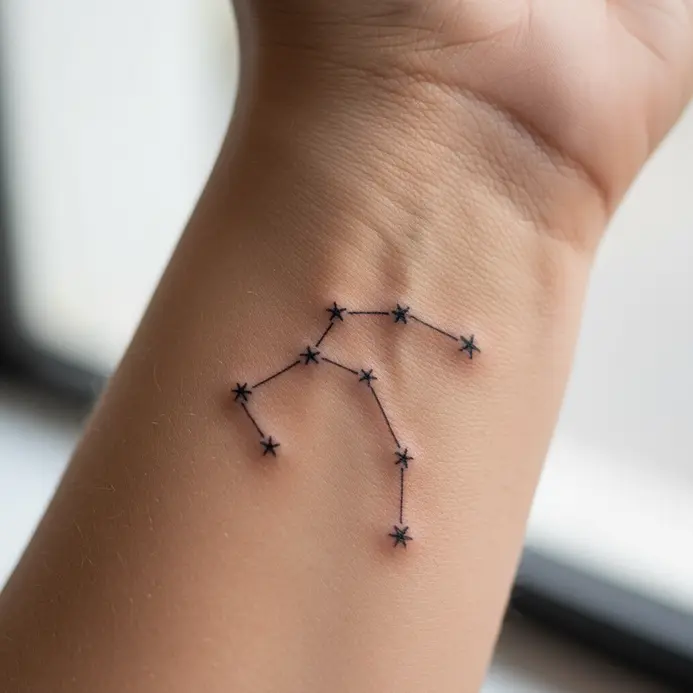
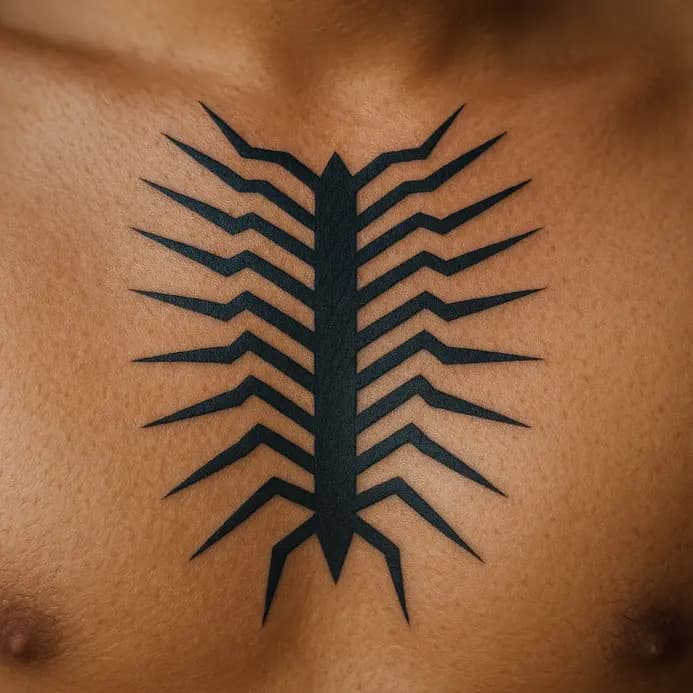
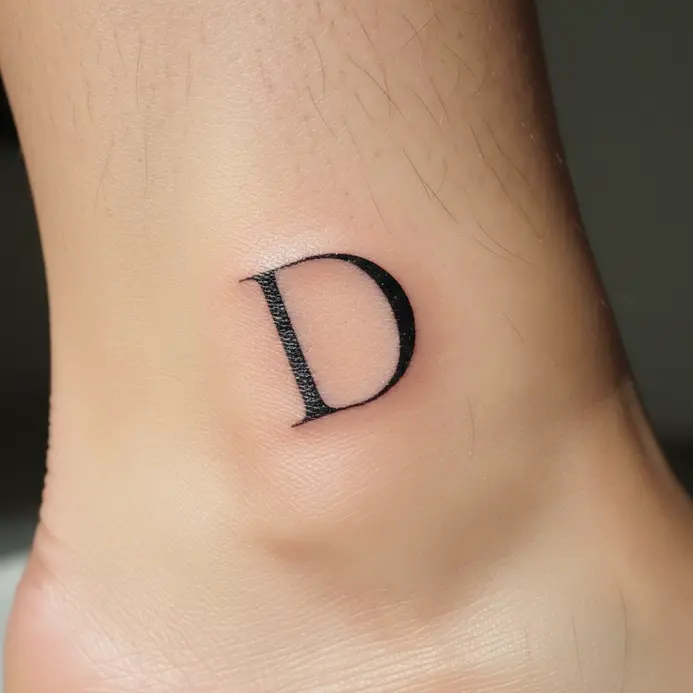
DotsToLines turns the body into a canvas of geometric motion
DotsToLines shows why minimalist line tattoos only work when anatomy leads, with negative space, line weight, and movement doing the heavy lifting.
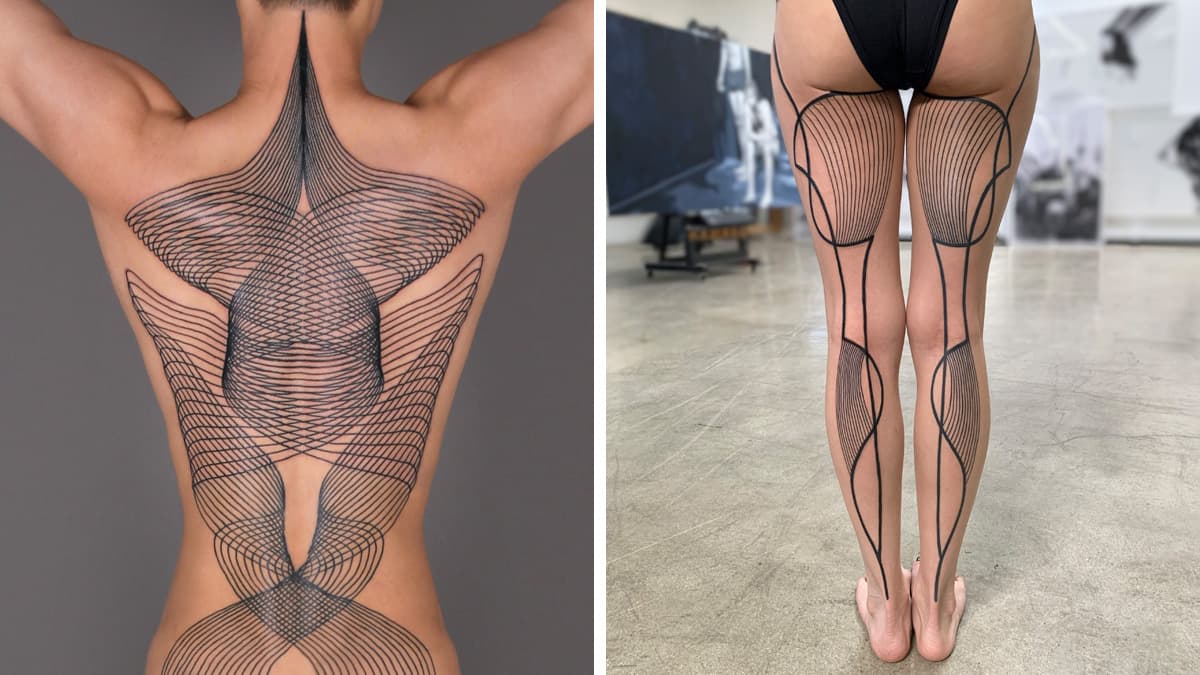
Minimalist line tattoos look easy until they meet a moving shoulder, a breathing ribcage, or a spine that changes shape every time the body turns. The DotsToLines approach makes that tension the whole point: the ink is spare, but the placement is doing most of the storytelling, and the body is the real canvas.
The body decides the line
DotsToLines turns black linework into a study of motion, balance, tension, and rhythm rather than a parade of symbols. The work starts from a simple premise: a tattoo does not sit on anatomy like a sticker, it has to answer to it. That is why a shoulder reads as a turning point, a ribcage becomes an expansion zone, and a spine acts like an axis that organizes the composition.
That way of thinking reflects Mustafa Corbaci’s path into tattooing. Before he ever picked up a machine, he learned form through sculpture and graphic design, then tattooed friends in his neighborhood in the late 2000s. Those roots matter here because they explain why the linework feels built, not merely drawn: the shapes are controlled, but they are also alive to volume, curve, and movement.
Why the simplicity is so demanding
At first glance, these tattoos can look almost stripped down to the bone. In practice, that restraint is what makes them difficult. When a design uses only black lines, every stroke has to carry weight, and every gap has to earn its place through contrast and spacing.
That is where negative space becomes part of the architecture. A clean pause between lines can suggest pressure, airflow, or direction more effectively than adding another element, and a piece that only succeeds in one still photo has missed the larger brief. The real test is whether the tattoo still reads when the wearer lifts an arm, twists at the waist, or changes posture.
How motion changes the design
The best anatomy-aware linework does not fight the body’s movement, it uses it. An arm can bend a composition into two related planes, while the ribcage can open and close the spacing as the chest expands. On skin, that means line weight cannot be treated as a purely graphic choice, because the eye reads thickness, gap, and flow differently once a joint begins to move.
InkedMag’s anatomy-focused guidance makes the same point in broader terms: tattoo artists need to design for movement and muscle structure because the body is three-dimensional. That matters especially for minimalist work, where a small mistake in placement can make a design feel stiff or detached. The body has its own geometry, posture, muscle tone, and mobility, and the tattoo has to be drafted with that in mind.
Fine-line tools, blackwork roots
The DotsToLines aesthetic sits close to fine-line tattooing, and the technical overlap helps explain its visual precision. Tattoodo’s fine-line guidance says artists commonly use round liner needles, or sometimes a single needle, to create hair-thin lines, usually in black or black-and-grey ink. That small scale is part of the appeal: the result can feel subtle and delicate instead of loud or bulky.
Fine-line work also tends to be easier on the skin than bolder tattooing, with less stress and often faster healing. That does not make it simple, though. A lighter touch only works when the line holds its clarity, and when the spacing is disciplined enough that the tattoo can breathe rather than collapse into visual noise.
There is also a stronger black-ink lineage underneath this style. Tattoodo defines blackwork as any design made solely in black ink without color or grey shading, and traces its roots back to ancient tribal tattooing, with Polynesian traditions strongly shaping modern blackwork. That history fits DotsToLines well: the restraint is contemporary, but the commitment to black ink, body contour, and directional pattern has much older precedents.
Geometric language with a living frame
Geometric tattooing is often discussed as a visual system, but it is really a placement problem as much as a design problem. Tattoodo connects geometric tattoos to sacred geometry, describing them as part of a language of mathematical proportions and symbols found in nature, architecture, and religious structures. That broader framework helps explain why a line-based tattoo can feel structural instead of decorative.
Chaim Machlev’s work shows how far that idea can be pushed across the body. He started tattooing in 2012 after previously working as a project manager for an IT company, and his tattoos often stretch across arms, legs, or backs, sometimes continuing from one body part to another. That kind of continuity matters in a placement-driven style, because it treats the body as a connected field rather than isolated panels.
DotsToLines belongs in that same conversation, but with a quieter voice. The work does not need dense shading or ornate icons to create impact; it relies on the discipline of line, the honesty of negative space, and the willingness to let anatomy finish the sentence.
What to look for before committing
A minimalist geometric piece ages best when the design is built around the body’s real movement, not around a flat sketchbook page. The clearest signs are usually simple ones:
- The line weight stays intentional rather than decorative for its own sake.
- The spacing gives the skin room to breathe instead of filling every gap.
- The composition follows a joint, curve, or axis instead of crossing it blindly.
- The tattoo still makes sense when the body bends, twists, or relaxes.
That is the difference between an image that merely sits on skin and one that feels native to it. DotsToLines makes the case that the strongest geometric tattoos do not decorate the body from the outside, they reveal its structure from within.
This article was produced by Prism’s automated news system from verified source data, official records, and press releases, then run through automated quality and moderation checks before publishing. The system is built and supervised by the people who set the standards it runs under. Read our full AI policy.
Know something we missed? Have a correction or additional information?
Submit a Tip