10 geometric D tattoo ideas that balance structure and dotwork
A single D can feel spare, sculptural, or ceremonial once geometry and dotwork take over. The difference comes down to line weight, spacing, and placement.
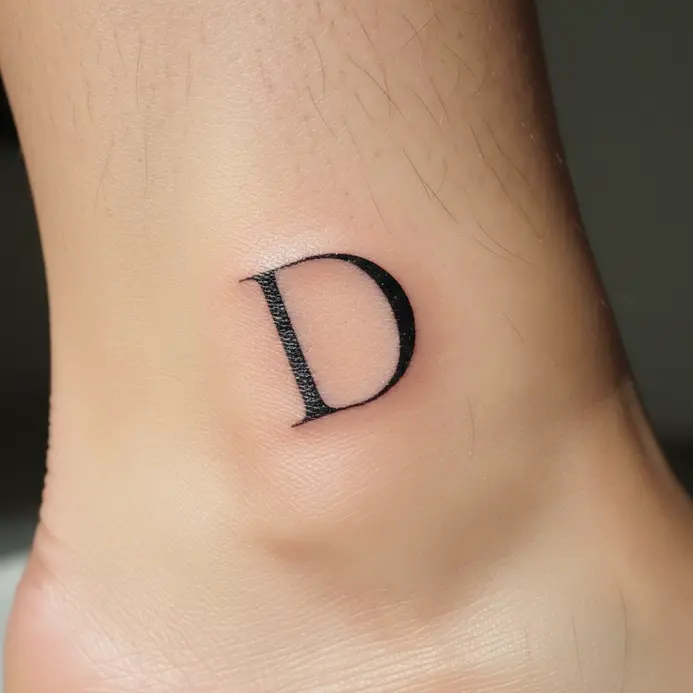
The letter D is a deceptively good test for geometric tattoo work. Its curved opening gives you room for negative space, dot clusters, or a frame, while the straight spine exposes every wobble in spacing and line weight. Get those proportions right, and one initial can read like a clean monogram, a small piece of architecture, or a quiet nod to older pattern-based tattoo traditions.
Clean sans-serif D
Start with the simplest read: a D built from clean sans-serif strokes and careful spacing. This version works because it treats restraint as a design choice, not a compromise, and it gives the letter enough breathing room to stay legible at small scale. If you want a monogram that feels crisp rather than decorative, keep the stroke width consistent and let the curve do the work.
Dotwork shading
Dotwork is the fastest way to turn a plain initial into something with texture. Instead of filling the bowl of the D with a solid black block, cluster tiny points so the letter shades from light to dark and feels both technical and soft. That approach has older roots in traditional engraving and pointillist painting, and modern Western dotwork became especially visible in the 2000s as artists pushed hand-poked and machine-applied methods.
Symmetry as the backbone
A symmetrical D turns the letter into something closer to a monogram than handwriting. You can mirror the balance of the stem and the curve so the eye reads the form as deliberate and engineered, which suits geometric tattoo fans who want order more than flourish. Symmetry also makes the tattoo easier to scale, because the design logic stays clear whether the piece sits on a forearm or is reduced for a smaller placement.
Angular construction
If you want the D to feel more architectural, break the curve into facets and angles. An angular version takes the same initial and rebuilds it from straight segments, so the result feels constructed rather than drawn. That move works especially well when you want the letter to resemble a piece of geometric structure instead of a conventional script initial.
Negative-space cutout
The curved opening of a D is a gift if you know how to use negative space. Leave part of the interior open, carve the bowl out of the skin tone, or let thin surrounding lines define the shape so the eye finishes the letter for you. This is one of the cleanest ways to keep a small geometric tattoo from looking crowded, especially when you want the design to breathe instead of packing every millimeter with ink.
Sacred-geometry framing
Framing the D inside a circle, triangle, or other sacred-geometry style structure pushes the letter into a more ornamental register. That kind of framing echoes the long history of geometric tattooing, from Egyptian and Nubian mummies dated to around 2000 BC to Ötzi the Iceman’s 61 tattoos, which date to about 5,300 years ago and were likely therapeutic. Polynesian tattoo traditions also developed over millennia and are known for highly elaborate geometric designs, so a framed D can nod to that visual language without losing its monogram core.
Architectural monogram
A geometric D can stop being a letter and start reading like a logo built from architecture. This is where proportion matters most: keep the stem rigid, let the bowl arc with precision, and use repeated line logic so the piece feels engineered from the same rules on every side. When the construction is tight, the tattoo reads as personal without falling into ornament for ornament’s sake.
Ornamental terminal details
Small additions can elevate a D without drowning it. Tiny dots, ticks, bead-like accents, or a slim geometric fill at the terminal points can make the curve feel finished, but the trick is to keep those details subordinate to the letter itself. The curved opening gives you a natural pocket for those accents, so you can add personality without losing the clean monogram shape.
Placement that respects movement
Placement changes the whole conversation, especially with a letter this compact. Fingers, wrists, hands, and ankles are high-friction zones, and fine lines there can blur faster because the skin moves more and the area usually sees more wear; those spots can also be more painful because they tend to have more nerve endings, thinner skin, or less fat. If you want the design to stay sharp, a forearm, upper arm, or another steadier patch of skin gives the geometry a better chance to hold its edges.
Built to age cleanly
A geometric D lives or dies on longevity, so think about sun and healing before you lock it in. The American Academy of Dermatology says ultraviolet light can fade tattoo ink and recommends broad-spectrum, water-resistant SPF 30 or higher, applied 15 minutes before sun exposure and reapplied at least every two hours. Healing matters too: the outer layer of skin usually heals in 2 to 3 weeks, but the skin beneath can take up to a year to fully settle, and tattoos near joints like wrists or ankles can take longer because those areas move more.
That is the real trick with a D: the shape looks simple until geometry starts telling the truth. Once you respect spacing, movement, and aging, the initial stops looking like a first letter and starts reading like a finished piece.
This article was produced by Prism’s automated news system from verified source data, official records, and press releases, then run through automated quality and moderation checks before publishing. The system is built and supervised by the people who set the standards it runs under. Read our full AI policy.
Know something we missed? Have a correction or additional information?
Submit a Tip