Filipino tribal tattoo patterns reveal Kalinga heritage and meaning
Filipino geometric tattoos look sleek, but their strongest lines carry Kalinga history, warrior symbolism, and living heritage.
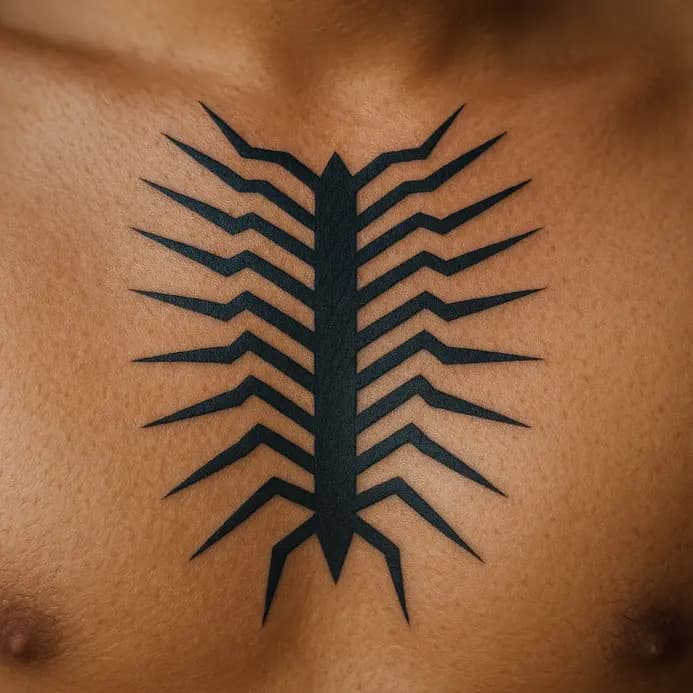
Filipino tribal tattoo patterns can read like perfect geometric design, but the straight lines and repeated forms are only the surface. In the Kalinga tradition, tattooing sits inside a living cultural system shaped by identity, bravery, protection, and belonging, not just visual rhythm. That distinction is what separates respectful learning from aesthetic borrowing, and it is the first thing worth understanding before a pattern ever reaches skin.
Kalinga meaning lives inside the motif
The National Museum of the Philippines says tattooing in northern Philippines had social meaning, and that tattooed warriors were seen as strong and brave. In Kalinga, the presence of a tattooed warrior was historically tied to community security as well as public ideas of courage. That history gives these patterns weight: a band, grid, or repeated mark is not only a composition choice, it can signal a role, a memory, or a place in the social fabric.
The museum also notes that appreciation of Kalinga tattooing has increased among non-Kalinga in recent years. That wider attention has brought visibility, but it also raises the stakes for anyone drawn to the style. A design pulled from this tradition without understanding its lineage can flatten a living practice into decoration, while a design approached with context keeps the meaning intact.
Apo Whang-od turned attention into a doorway, not an endpoint
Apo Whang-od Oggay, from the Butbut group in Buscalan, Tinglayan, Kalinga, became a public-facing symbol of indigenous tattoo preservation. In June 2018, the National Commission for Culture and the Arts conferred on her the Dangal ng Haraya for Intangible Cultural Heritage, and coverage of the award called her the first traditional or folk artist to receive it. That recognition mattered because it put a living tattoo lineage into the national conversation without reducing it to a museum piece.
Whang-od’s name often becomes the shorthand people know first, but the deeper story is bigger than one artist. Her visibility helped draw attention to Kalinga culture as a whole, including the communities and inherited practices that shaped the work before wider audiences ever noticed it. For geometric tattoo readers, that is the right frame: the artist matters, but the tradition around the artist matters more.
How the body changes the pattern
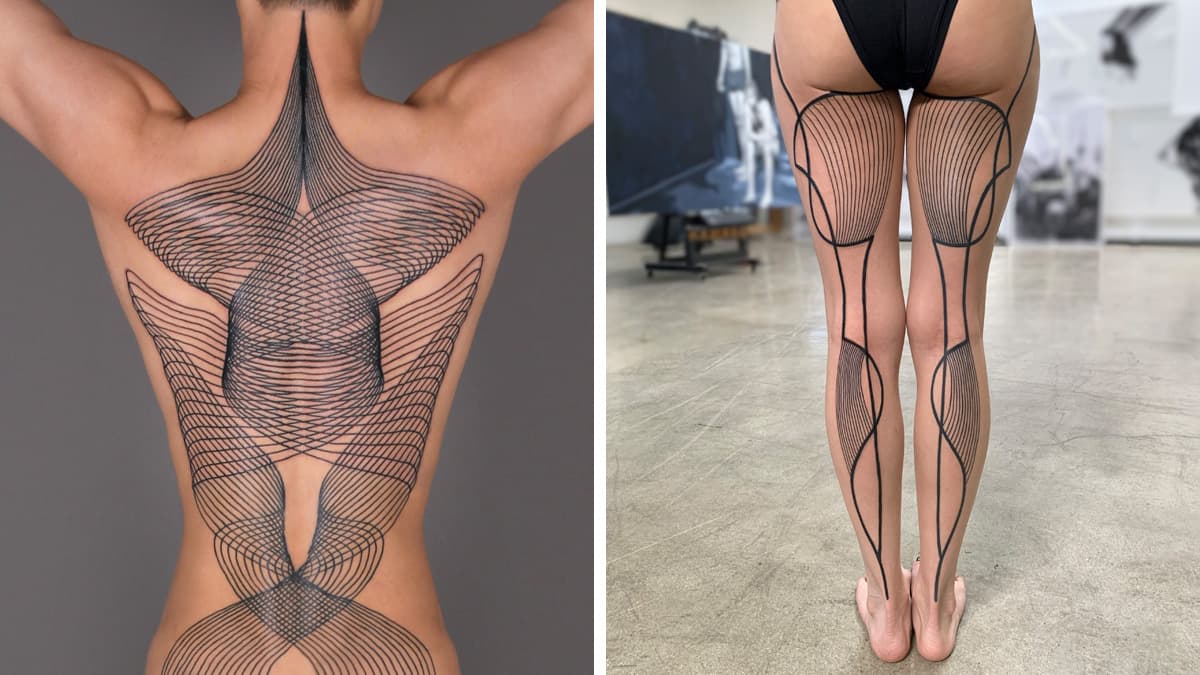
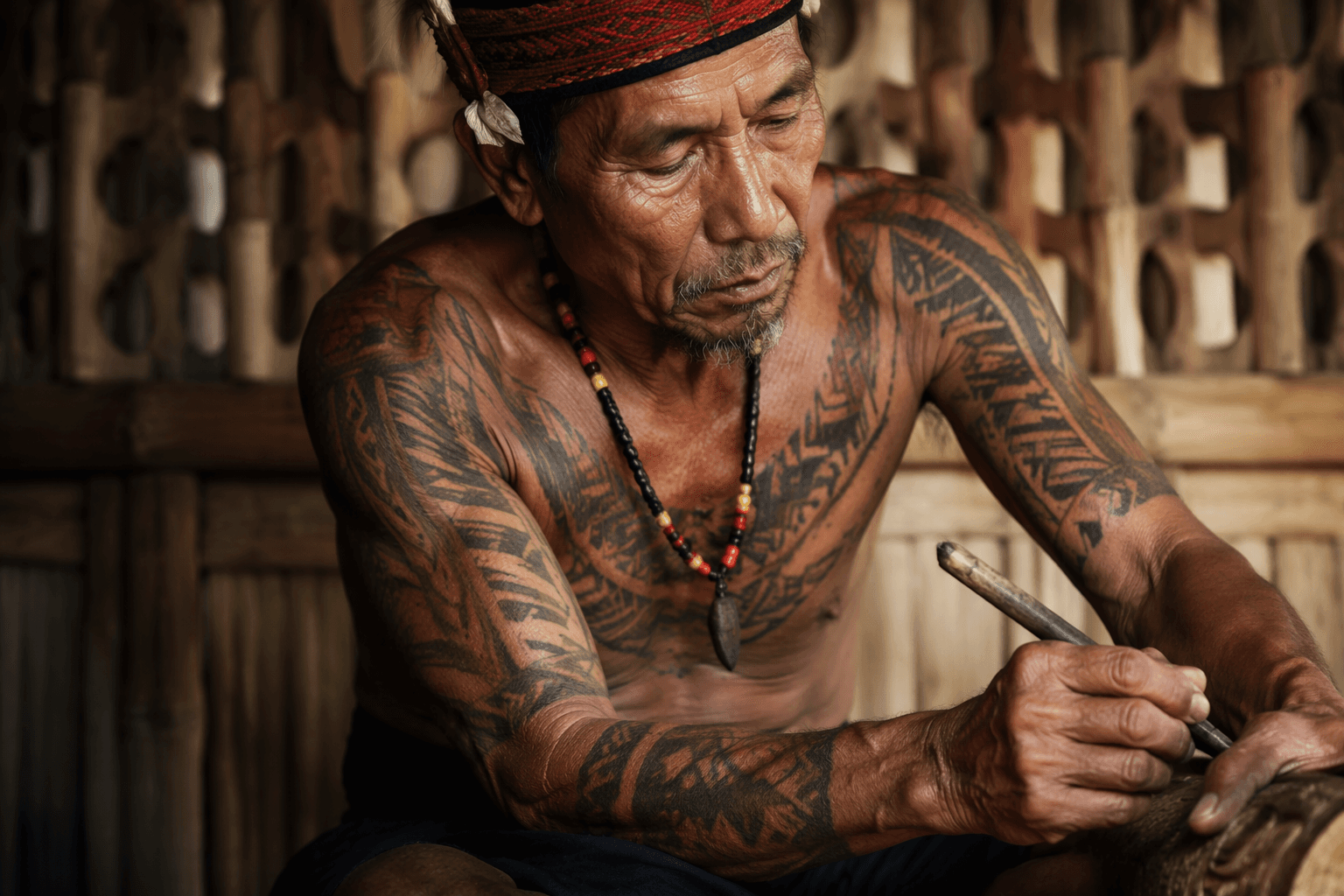
The strongest tribal tattoos do not fight the body. They follow a shoulder cap, swell naturally around a calf, or wrap across the torso in a way that respects motion, and that anatomical flow is part of the discipline of the design. A geometric grid that ignores those contours can look rigid or pasted on, while a composition that travels with muscle and bone feels architectural and alive at the same time.
That is where the style becomes especially relevant to geometric tattoo fans. Symmetry, negative space, long-term readability, and line discipline all matter here, but they work best when the pattern is built for the body it lives on. In this tradition, the body is not a flat page; it changes the way the tattoo reads every time you move.
The symbols carry identity, protection, and belonging
The article’s symbolic language matters as much as its linework. These ancestral marks are described as visual expressions of identity, protection, and belonging, which means they function as more than ornament even when the pattern itself looks minimal. A successful piece respects that layered meaning instead of stripping it down to a purely decorative motif.
That is why the first mistake many people make is choosing a mass-produced band or pattern without understanding what it represents. The safer and more respectful path is to learn the origin and significance of the motif before committing it to skin. A tattoo can still be disciplined, precise, and visually striking, but it should also be literate in the culture it borrows from.

Visayas history broadens the picture
Kalinga is only one part of the Philippines’ tattoo history. The National Museum says the Pintados Festival commemorates the pre-Spanish tattooing tradition of warriors in Leyte, and Leiden University’s summary of a scholarly paper says Spanish documenters in the 16th century used “Pintados” for the tattooed inhabitants of the Visayas Islands. Together, those references show that tattooing was a documented precolonial social practice with regional variation, not a fringe style that appeared recently.
That regional context matters for readers who come to Filipino tribal patterns through geometric tattoo aesthetics. The Philippines did not have one single tattoo language, and the meanings shifted by place, community, and historical moment. Kalinga and Visayan traditions both show how body art carried social meaning long before it became a contemporary trend category.
Safeguarding living heritage is part of the story
For anyone trying to learn responsibly, the preservation side matters as much as the design side. UNESCO’s Intangible Cultural Heritage platform serves as the official repository for living-heritage listings and safeguarding information, while the Philippine Registry of Heritage, known as Talapamana, is the central repository for Philippine cultural properties and is updated as of May 2026. Those systems are reminders that tattoo traditions belong in the broader world of heritage stewardship, not only in inspiration boards.
That framing changes the question from “Does this look good?” to “What lineage am I engaging, and what does it mean to carry it?” In geometric tattooing, the appeal of clean structure can be powerful, but in Filipino tribal patterns the structure always arrives with history attached. The sharpest line is still the one that knows where it came from.
This article was produced by Prism’s automated news system from verified source data, official records, and press releases, then run through automated quality and moderation checks before publishing. The system is built and supervised by the people who set the standards it runs under. Read our full AI policy.
Know something we missed? Have a correction or additional information?
Submit a Tip