Flash tattoo ideas evolve, from sailor tradition to fine-line modern work
Flash is moving from sailor-born wall art to a faster, more customizable system, and geometry is driving the shift. The real test is whether the piece still feels personal.

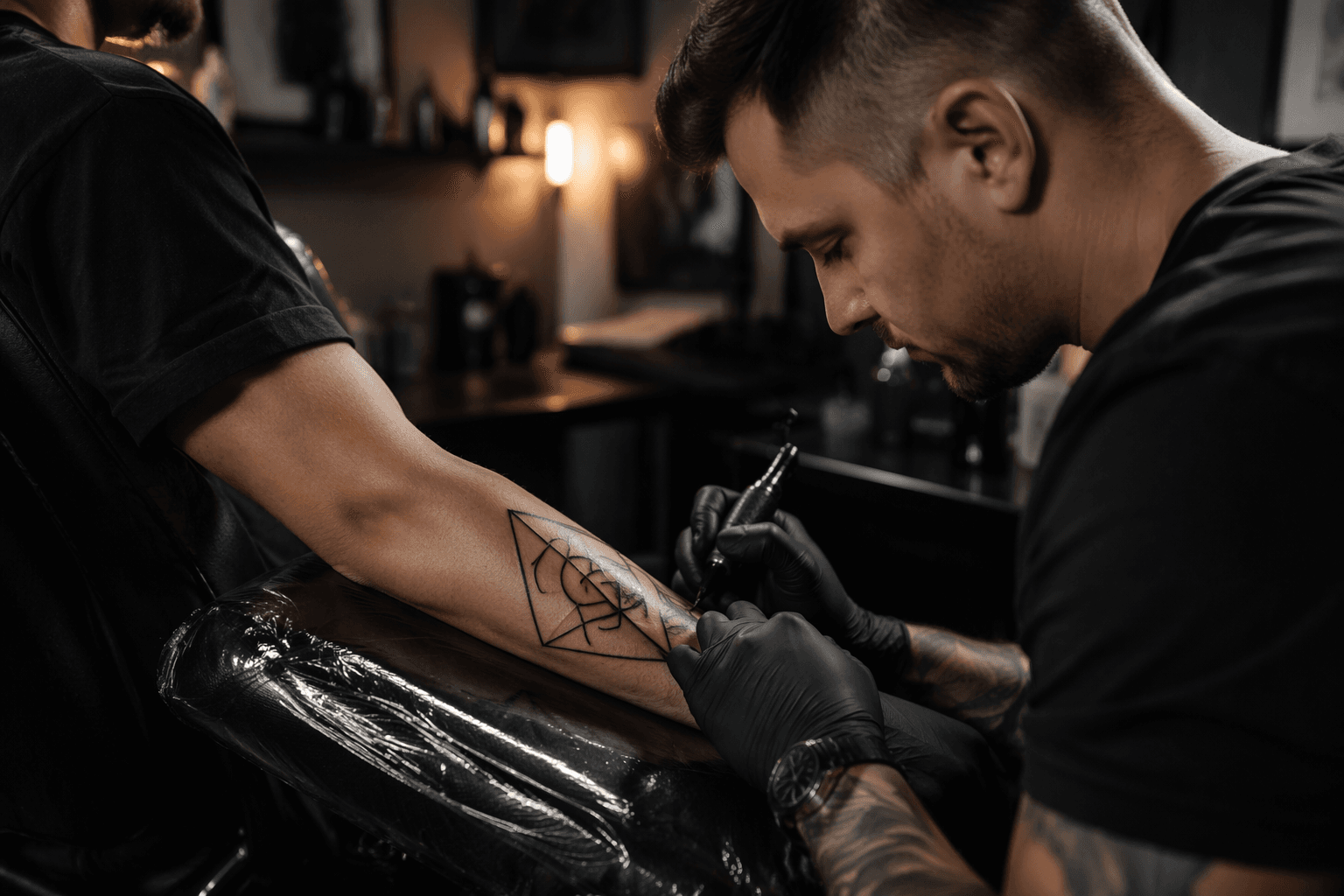
Flash tattoo ideas are no longer just about choosing a panther, anchor, or snake off a wall. The shop-floor shift now is speed with structure: blackwork, geometry, and fine-line modern work are being turned into flash that books faster, transfers cleaner, and still leaves room for personality.
From sailor flash to modern studio shorthand
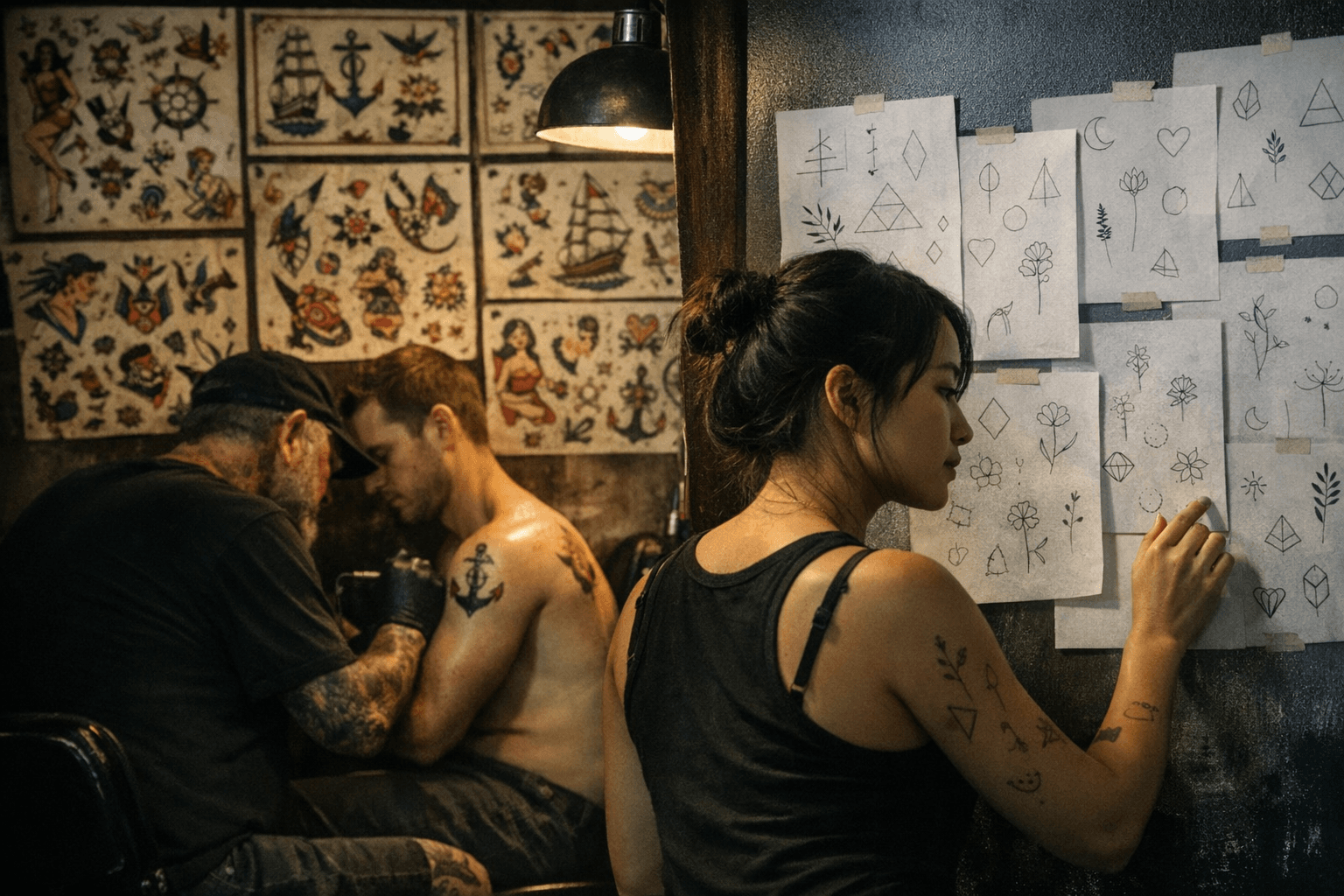
Flash started as a practical language, not a gallery exercise. U.S. Navy historical material ties tattoos to sailors and maritime culture, and a study of American sailors and maritime communities places the first permanent tattoo parlors in the United States around 1860. That history still shapes the way flash works now: bold silhouettes, quick readability, and designs built to age with the skin instead of fighting it.
Sailor Jerry, the shop name of Norman Keith Collins, remains one of the biggest reasons flash still feels like a living system rather than a museum style. His flash sheets are still widely used, and his color palette and technical influence continue to anchor tattoo shop culture. The old rules still matter because they solve the same problem they always did: how to make art that reads instantly, heals well, and still looks strong years later.
Why geometry fits the flash model so well
What changed in 2026 is the range of styles being pushed through that old flash framework. The category now stretches beyond the classic sailor set into micro-realism, fine-line blackwork, and more experimental ideas, but geometry is the most natural fit because it already depends on repeatable structure. Straight lines, repeated shapes, symmetry, and high-contrast fills are exactly the traits that translate cleanly from sheet to stencil to skin.
That is also why the transfer process matters so much. A PubMed-indexed study on transfer tattoos notes that printed transfers have a higher potential for standardization and depend on a strong photographic template plus digital editing skill. In practice, that means a geometric flash design is only as good as the stencil that carries it, and the precision of the needles and machine setup becomes part of the final look, not just the back-end process.
What the new flash approach means when you book
If you are booking a geometric flash piece, the big benefit is speed without giving up clarity. Flash built around established blackwork geometry can shorten the back-and-forth on design, make the stencil stage more efficient, and give you a cleaner estimate on time and price before the appointment even starts. That is a real advantage if you are trying to fit a tattoo around work, travel, or a tight budget.
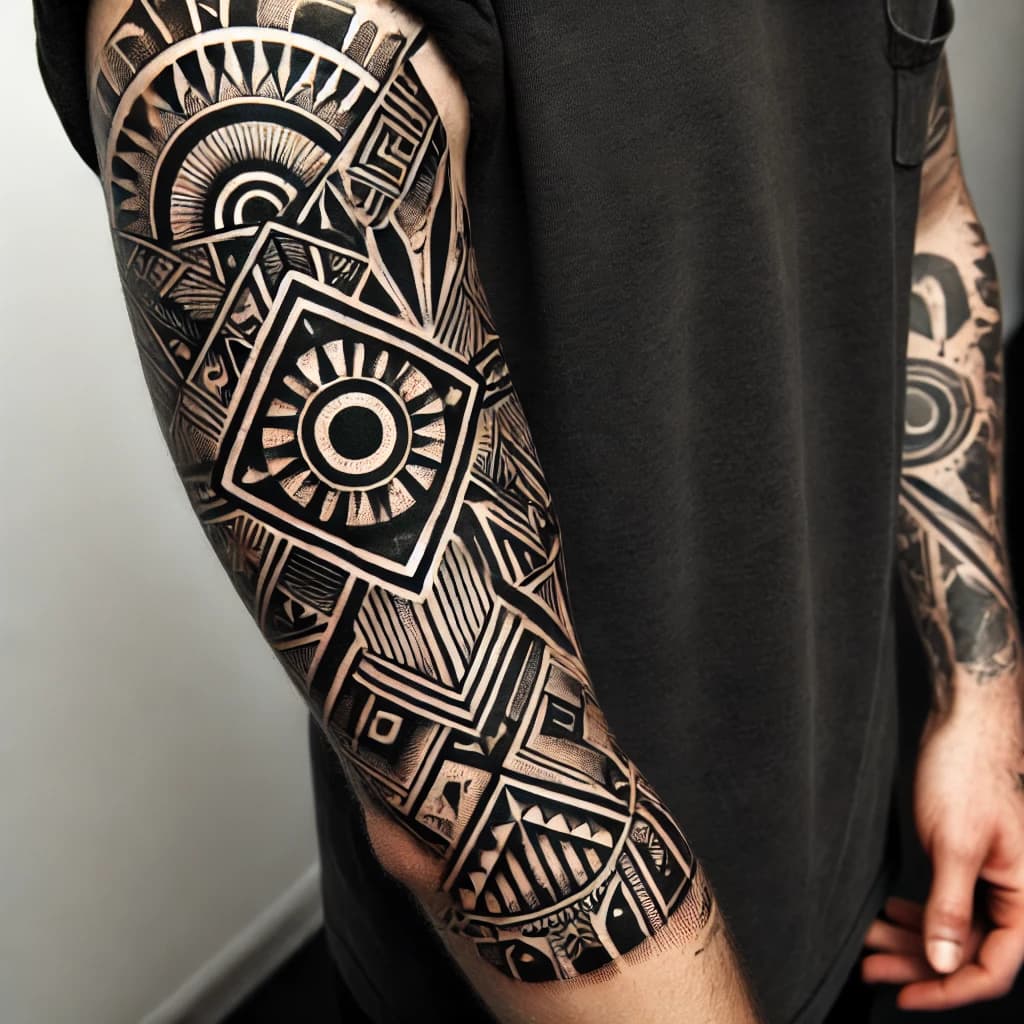
The catch is that fast should not mean flat. A design that can be repeated exactly on every client is efficient, but it can also start to feel mass-produced if nobody adjusts it to your body. The best flash still respects placement, and the guide singles out heavy blackwork geometric mandalas as a standout direction, especially on spots like the elbow or knee where symmetry can do real work.
How to tell whether it still feels personal
The quickest way to separate a strong flash design from something generic is to look at how it responds to anatomy. Geometric tattoos are especially good at showing off the structure of the body, so a serious artist will think about scale, line weight, black fill, and how the pattern lands on a forearm, elbow, knee, or chest. If the design sits on you instead of fighting your shape, it still feels like yours.
- The stencil is adjusted to your placement, not just copied from a wall sheet.
- The symmetry works with your limb or shoulder shape, not against it.
- The artist changes density, dotwork, or negative space so the piece reads cleanly on your skin.
- The design keeps the flash efficiency, but still has a custom center, border, or flow.
A few practical signs help:
That is where artists like Corey Divine and Dillon Forte show how far the style has moved. Corey Divine specializes in sacred geometry, mandala blackwork, dot work, and psychedelic styles, while Dillon Forte works in sacred geometry, blackwork, dotwork, and mandalas. Their names matter because they show how flash has widened into a language where sacred geometry and blackwork can still feel precise, contemporary, and highly individual.
Why this shift matters beyond the shop wall
The wider tattoo audience is already there. Pew Research Center found in 2023 that 32% of U.S. adults had at least one tattoo, and 22% had more than one. Pew also reported that a large majority of adults say society has become more accepting of tattoos in recent decades. The World Health Organization says prevalence can reach 30% to 40% among adults under 40 in Europe and the United States, which means more people are walking into studios already fluent in the basic visual language.
That helps explain why flash is evolving instead of disappearing. People want quicker decisions, cleaner stencils, and designs that hold up under close inspection, but they also want something that does not look stamped out. The modern geometric flash sweet spot is simple: it keeps the speed and durability of sailor-era flash while using blackwork, fine-line detail, and smarter transfer workflows to make the result more personal than mass-produced.
This article was produced by Prism’s automated news system from verified source data, official records, and press releases, then run through automated quality and moderation checks before publishing. The system is built and supervised by the people who set the standards it runs under. Read our full AI policy.
Did this article answer your question?