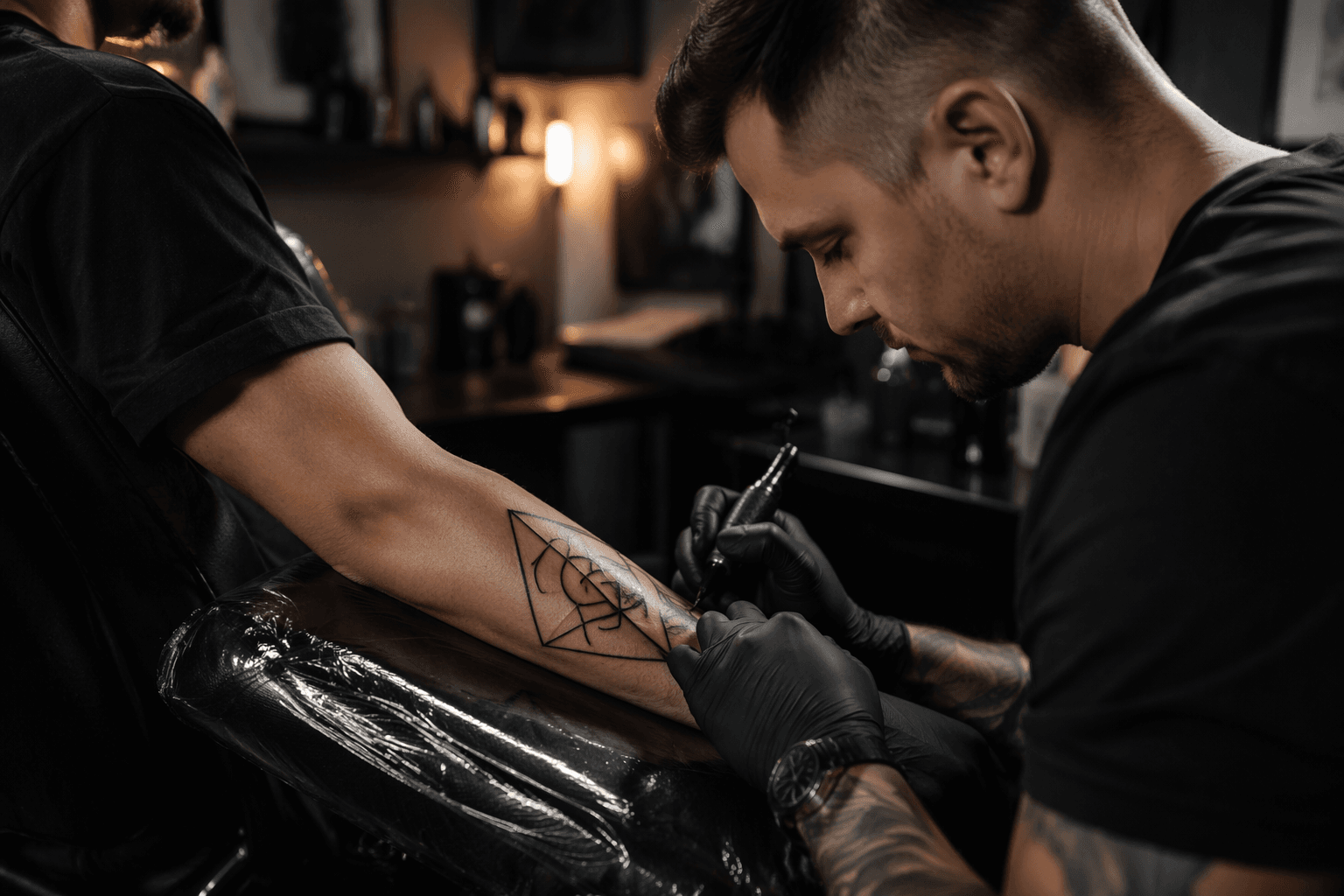
Geometric Sleeve Filler Turns Separate Tattoos Into One Flowing Design
Sleeve filler is the hidden architecture that makes geometric pieces read as one system, not a cluttered stack of separate tattoos.
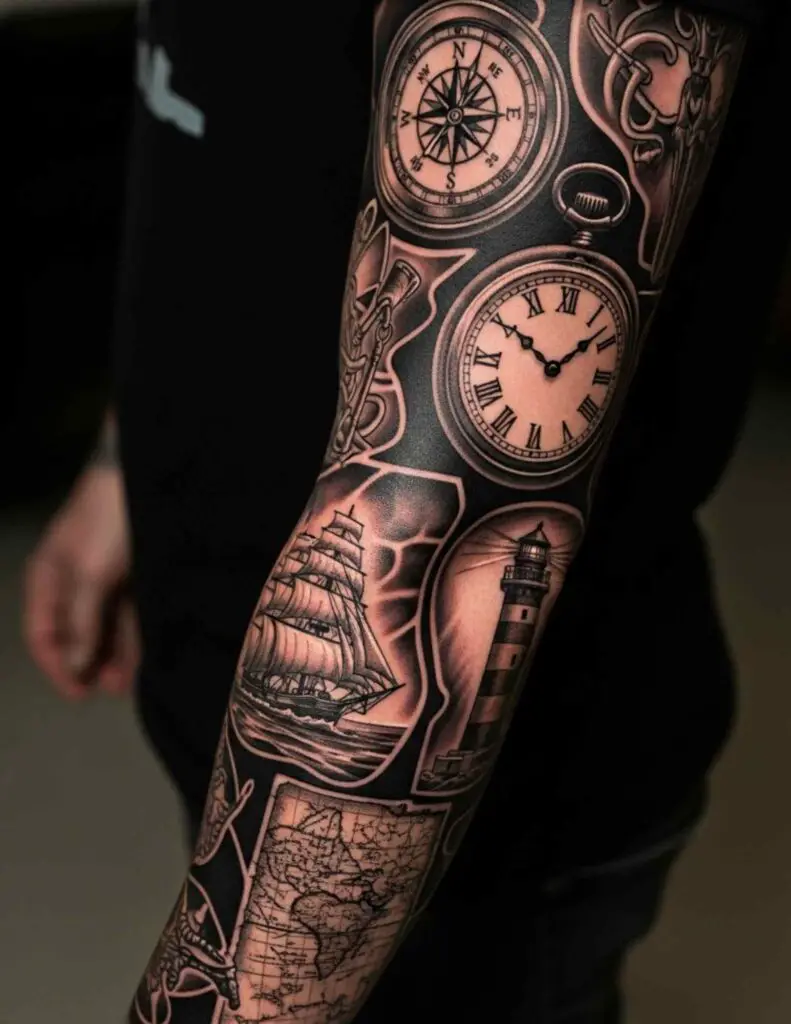
Sleeve filler is the architecture, not the leftovers
A custom sleeve can take roughly 25 to 50+ hours, which is exactly why filler matters from the start. If the pieces are placed randomly, they will still read as separate tattoos unless the filler solves the problem of flow.
That is the core idea running through the best sleeve-planning advice: a sleeve is a composition, not a pile of isolated images. Tattoo artists keep coming back to the same priorities, the arm’s natural shape, visual pathways, and the way the design will move when it’s seen from different angles. Brian Ulibarri Ink puts it plainly by treating the sleeve as an artwork that has to interact with the human form, while AuthorityTattoo describes the goal as making smaller tattoos feel intertwined and continuous.
Why geometric sleeves depend on a system
Geometric work is especially vulnerable to looking fragmented when the spacing is off. Sacred geometry, Fibonacci sequences, dotwork, ornamental patterning, and large interweaving geometric quilts all depend on repetition and structure, so the filler has to reinforce the same logic rather than compete with it. When the background does its job, the sleeve gains rhythm, balance, and a sense of purpose.
That is also why geometric filler is more than a cover for empty skin. It can establish order across awkward transitions, turn negative space into part of the design, and link pieces that were tattooed in different sessions. Done well, the filler makes the whole arm read like one continuous canvas, not a series of appointments stacked side by side.
The filler patterns that do the heavy lifting
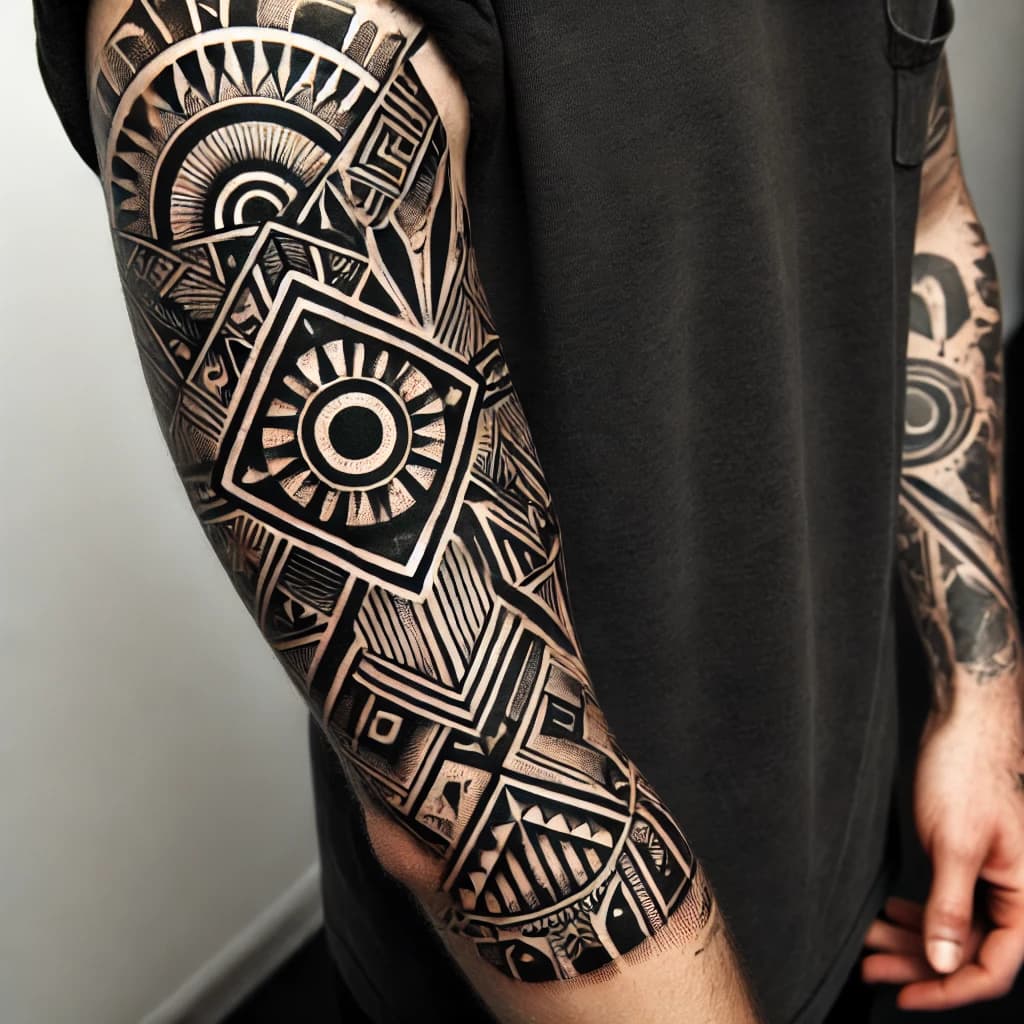
TattooBuild maps out 21 filler approaches, but a few stand out immediately for geometric sleeves because they preserve structure without flattening the design. Geometric linework is one of the cleanest options, especially when the sleeve already includes angular forms, grids, or sacred geometry. It creates a framework that can bridge gaps while staying true to the visual language already on the arm.
Dotwork is another workhorse because it gives the sleeve texture without forcing heavy black into every space. It is commonly used for intricate mandalas and delicate floral designs, and in a sleeve it can function like shading that softens transitions instead of erasing them. That lighter density matters when you want cohesion without making the whole piece feel sealed off.
Mandala segments and partial mandalas are especially useful when the available space is irregular. A full mandala can act like a center of gravity, but partial forms can be scaled and trimmed to fit the arm’s curves, turning odd gaps into purposeful extensions of the design. The same logic applies to floral fill, water and waves, Japanese cloud formations, and traditional background fill, all of which can support the composition if they stay subordinate to the main structure.
Geometric linework as the skeleton
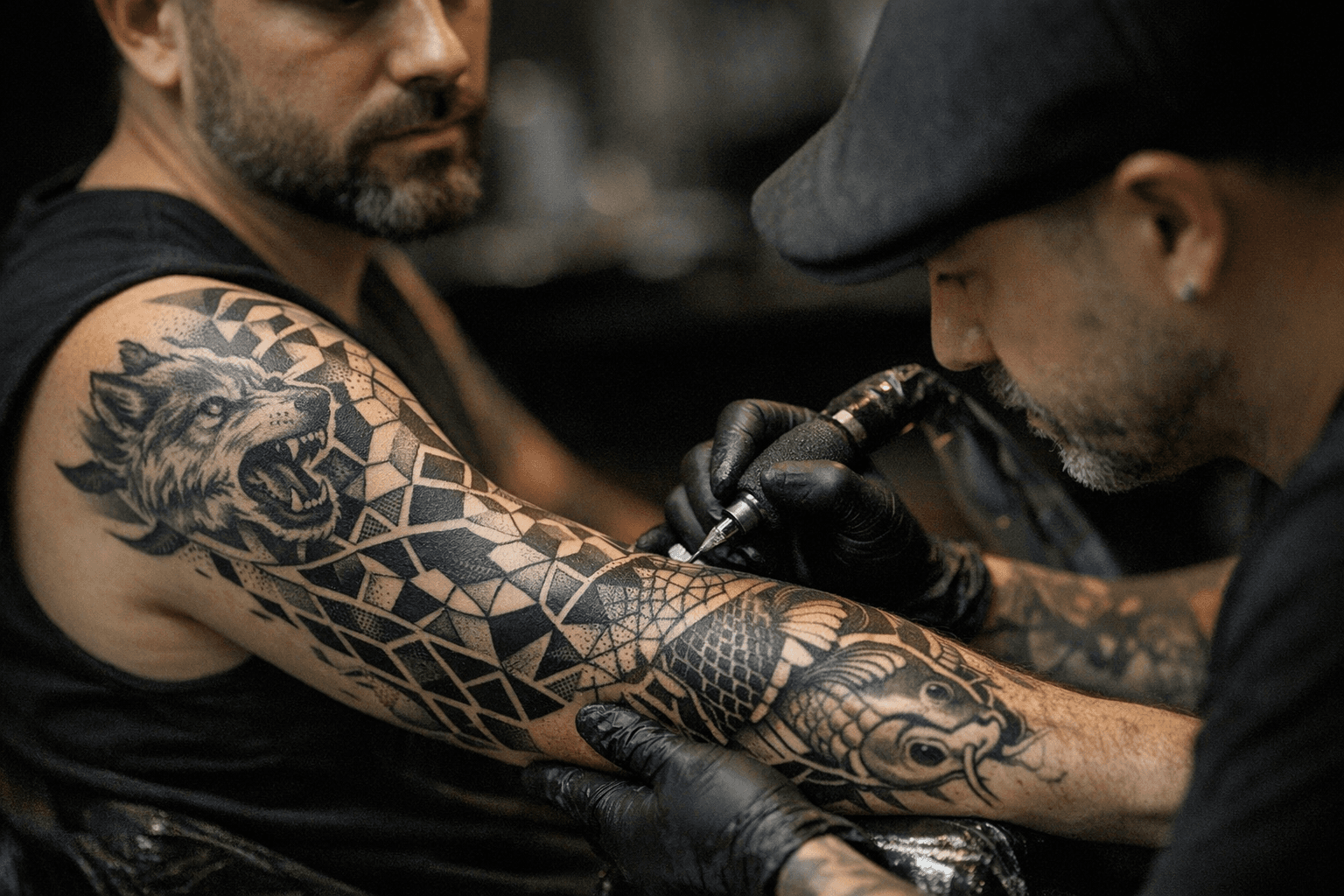
Linework is often the first filler that makes a sleeve feel deliberate. Instead of treating each tattoo as an island, it gives the eye a path to follow from one section to the next. That matters most when the sleeve already contains sharp edges, repeating angles, or ornamental borders, because matching those forms helps the whole arm feel engineered rather than patched together.
The strongest linework filler does not just plug holes. It creates direction, repetition, and spacing that match the tattoos already there, so the transitions feel built in from the beginning.
Dotwork and negative space as the breathing room
Dot shading is one of the most effective tools in geometric sleeves because it lets the skin breathe while still closing visual gaps. Solid black can be useful, but it can also overpower fine geometry, while dotwork adds density more gradually and keeps the sleeve from looking boxed in. That makes it especially valuable when you want texture without visual heaviness.
Negative space matters just as much. Open skin can become part of the pattern if it is placed intentionally, but random voids are what make a sleeve look unfinished. The best filler uses dots, repeats, and connector patterns to control where the eye rests and where it moves next.
Mandala segments bring structure and symbolism
Mandalas carry more than visual weight. The word comes from Sanskrit and translates to “circle,” and the form has roots in ritual, meditation, and religious traditions before becoming a major tattoo motif. That history explains why mandala-based filler feels so natural inside geometric sleeves, it already carries a sense of order and center.
In practical terms, partial mandalas can smooth over gaps while preserving a strong focal rhythm. They work especially well when you want the sleeve to feel anchored without forcing every section to be the same size or shape.
The rest of the arm has to be part of the plan
Sleeve planning advice keeps pointing back to the same thing, the arm itself is part of the composition. A successful sleeve has to account for the natural curve of the bicep, the turn of the forearm, and the way the design changes when the arm is rotated. If filler ignores that anatomy, even great individual tattoos can start to look disconnected.
That is why consultation matters so much. Stories & Ink advises talking with your tattoo artist during the consultation process if you are not sure which type of sleeve to choose, and that advice applies even more when you are building a geometric sleeve around existing pieces. The right filler decision is not just aesthetic, it is structural.
What makes filler work, and what makes a sleeve feel crowded
The difference between a cohesive sleeve and a cluttered one usually comes down to restraint. Good filler respects the original tattoos, reinforces their style, and leaves enough breathing room for the eye to travel. Poor filler tries to cover every gap with no regard for spacing, and that is when the arm starts to feel busy instead of intentional.
That is the hidden advantage of geometric filler in a revived style that has seen renewed popularity since the late 2010s. The current appetite for geometric sleeves is not only about bold imagery, it is about coherence, symbolism, and control. When linework, dotwork, mandala segments, and connector patterns are used with discipline, separate tattoos stop competing with each other and start working as one flowing design.
This article was produced by Prism’s automated news system from verified source data, official records, and press releases, then run through automated quality and moderation checks before publishing. The system is built and supervised by the people who set the standards it runs under. Read our full AI policy.
Did this article answer your question?