Geometric Tattoos That Heal Boldly on Dark Skin, What Works Best
Geometric tattoos can heal powerfully on dark skin when contrast stays high, lines stay bold, and the artist can show healed work on skin like yours.
What actually heals clearly
Geometric tattoos can look exceptional on deeper complexions, but only when the design is built for contrast from the start. The difference between a piece that pops for years and one that softens into a blur usually comes down to line weight, fill density, and whether the artist understands how ink settles after healing.
The first decision is not style. It is artist selection. Fresh photos can flatter almost anything, but healed examples on skin similar to yours tell the truth. That is the standard that matters most if you want clean geometry, readable structure, and a tattoo that still looks intentional months later.
Why contrast does the heavy lifting
Bold blackwork, traditional black outlines, and strong graphic contrast are the safest visual bets because they stay readable after the skin settles. Tattooing 101 specifically recommends thick outlines, fewer values, and limited shading on darker skin tones, and that advice lines up with what holds up best in healed tattoos.
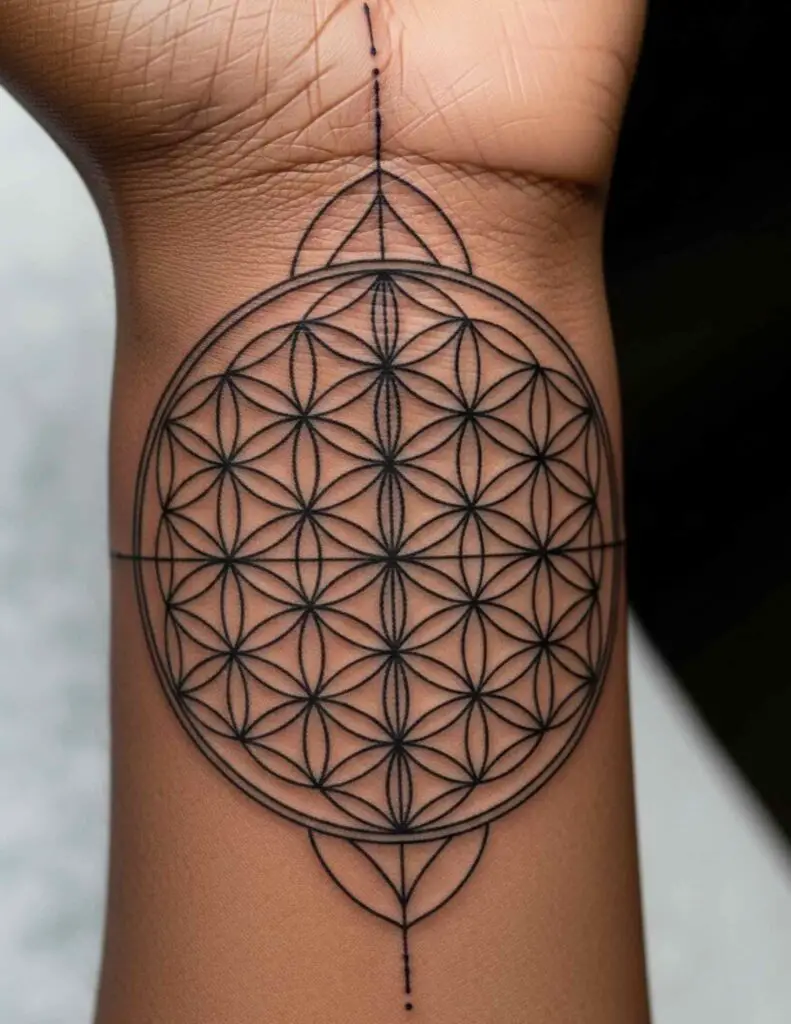
That is why geometric work can be especially effective. Clean black line systems, solid fills, and deliberate negative space give the eye a clear path through the design. On deep skin tones, the right amount of saturation can make a mandala, sacred geometry panel, or abstract grid read with real force instead of getting lost in busy detail.
Geometric styles that tend to hold up
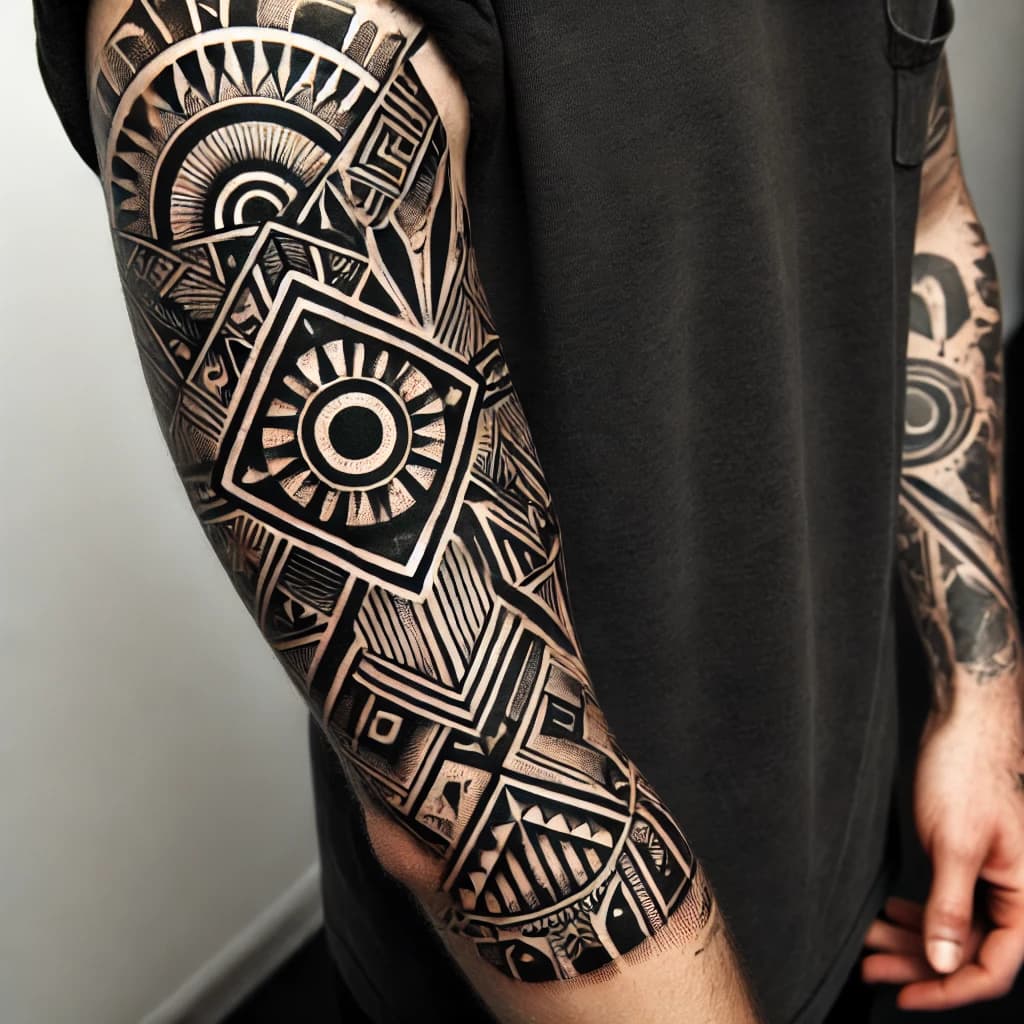
The strongest geometric pieces usually rely on structure rather than ornament. Bold blackwork geometric tattoos, mandalas, sacred geometry, and abstract compositions all benefit from the contrast between dense black ink and deeper skin tones. The same principle also helps tribal and Polynesian-inspired work, where the power comes from silhouette, rhythm, and spacing.
Other styles can work when they are handled with the same discipline. Blackwork animal portraits, bold mandalas, and neo-traditional botanical designs can all land well if the artist keeps the shapes crisp and the dark areas substantial. The real question is not whether the design is trendy. It is whether the composition has enough contrast to survive healing with its identity intact.
What usually fades into the background
Delicate fine line work is the most common misread in this category. It may look elegant in a fresh photo, but very thin lines can disappear more easily once the skin heals, especially when the design depends on tiny internal details. Pastel palettes, watercolor effects, and white ink alone can also be harder to preserve visually on deeper complexions.
That does not mean those ideas are off-limits in every case. It means they ask for more caution, more experience, and more realistic expectations. If the structure of the tattoo depends on light values and soft transitions, the final result can lose the crisp separation that geometric work needs most.
The portfolio test that actually matters
The most useful question to ask an artist is simple: do you have healed photos of tattoos on skin like mine? Kandace Layne, the Atlanta-based tattoo artist, has said that when she entered the industry, photos of tattoos on Black skin were few and far between. That scarcity still shapes how many clients shop for artists today.
InkedMag has reported that misconceptions about tattooing dark skin have persisted and that Black tattoo artists want more public understanding of what actually works on deeper complexions. That makes healed portfolio work more than a preference. It is the closest thing to proof that the artist knows how contrast, saturation, and healing will behave on your skin.
Healing is an aesthetic issue and a health issue
Tattoo choice is not only about appearance. The American Academy of Dermatology says people prone to keloids should rethink tattoos because any skin injury can trigger one, and keloids are more common in Black people and some other groups in the United States than in people with lighter skin tones. Tattoos can also react in unexpected ways even when they are done by a licensed artist and followed with careful aftercare.
The long-term maintenance matters too. UV light can fade tattoo ink, so sun protection is part of protecting the design, not just the skin. That matters even more for tattoos built on bold contrast, because once a crisp black design starts to soften, the whole geometry changes with it.
Hygiene and placement still count
A 2012 Centers for Disease Control and Prevention report on a tattoo-associated infection outbreak tied to prediluted gray ink is a reminder that technique and hygiene are inseparable. The CDC advised consumers to use registered parlors and hygienic practices, and that advice still holds up as common sense for anyone booking body art.
That caution is especially important for intricate geometric work, where clean execution is everything. A design with straight lines, repeated symmetry, and tight spacing leaves less room for sloppy technique, so the studio’s sanitation and the artist’s discipline matter as much as the drawing itself.
What to lock in before you book
- Ask for healed photos, not just fresh session shots.
- Look for thick outlines, strong black saturation, and clear spacing.
- Favor designs that use contrast as the structure, not as decoration.
- Be cautious with fine line, pastel, watercolor, and white ink alone.
- Check whether the artist has real experience with deeper complexions.
- If you have a keloid history, take that seriously before committing.
- Protect the finished piece from sun exposure so the contrast lasts.
Geometric tattoos can be some of the most striking work in the room on dark skin, but only when the design is built to heal, not just to photograph well. The winning formula is plain and demanding at the same time: bold structure, smart spacing, proven experience, and a clear-eyed respect for how skin, ink, and healing actually work together.
This article was produced by Prism’s automated news system from verified source data, official records, and press releases, then run through automated quality and moderation checks before publishing. The system is built and supervised by the people who set the standards it runs under. Read our full AI policy.
Did this article answer your question?