Dotwork and realism redefine geometric tattoos in 2026
Dotwork gives geometric tattoos structure and calm; realism trades that for lifelike depth, longer planning, and a different healing curve.
Why this is not a simple style split
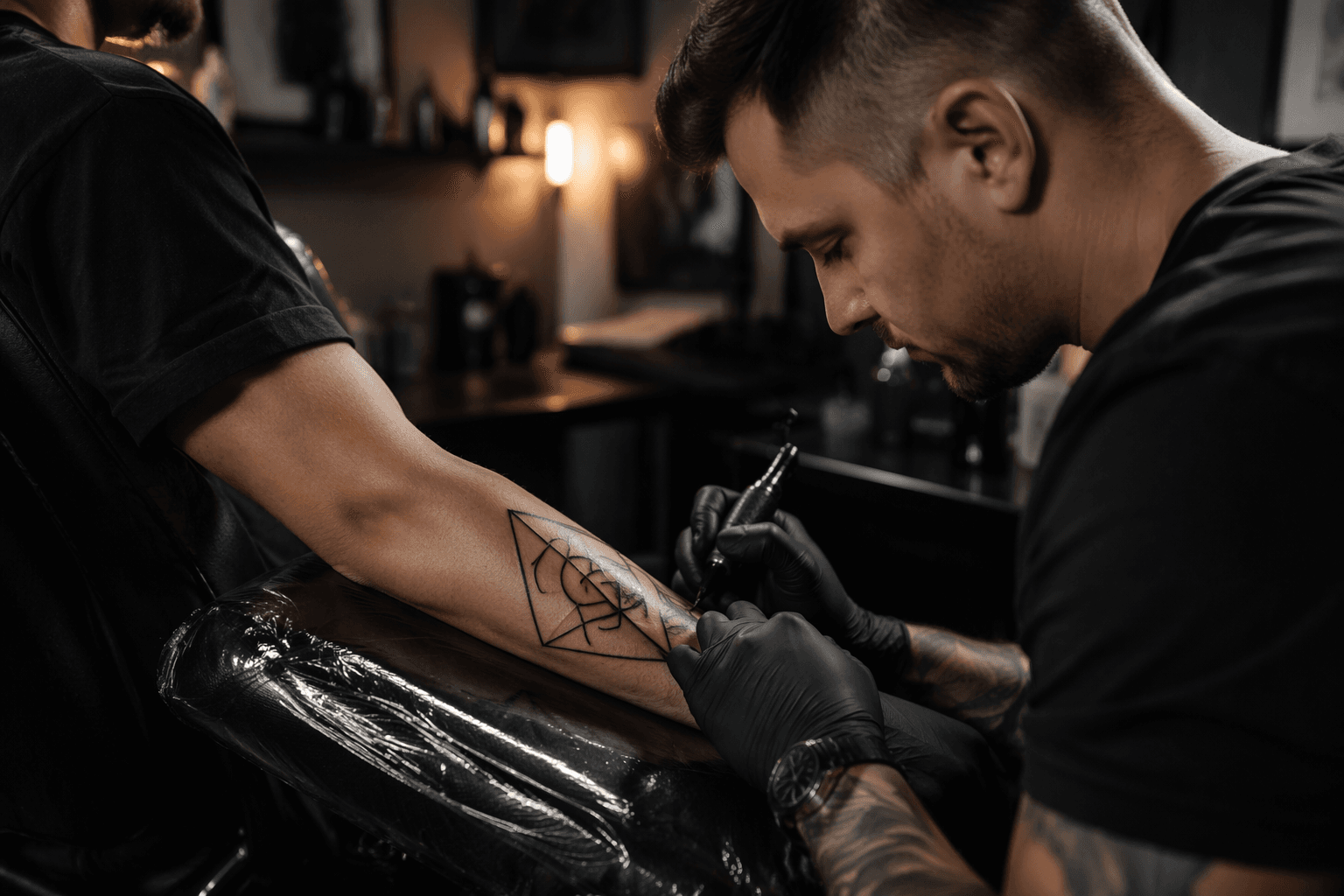
A tattoo built from thousands of tiny points plays by different rules than one that tries to look like a photograph. In geometric work, that difference decides whether a piece feels like sacred architecture or a frozen frame from real life. Dotwork and realism are not just aesthetic options; they are different build systems.
Dotwork: the geometry language that holds its nerve
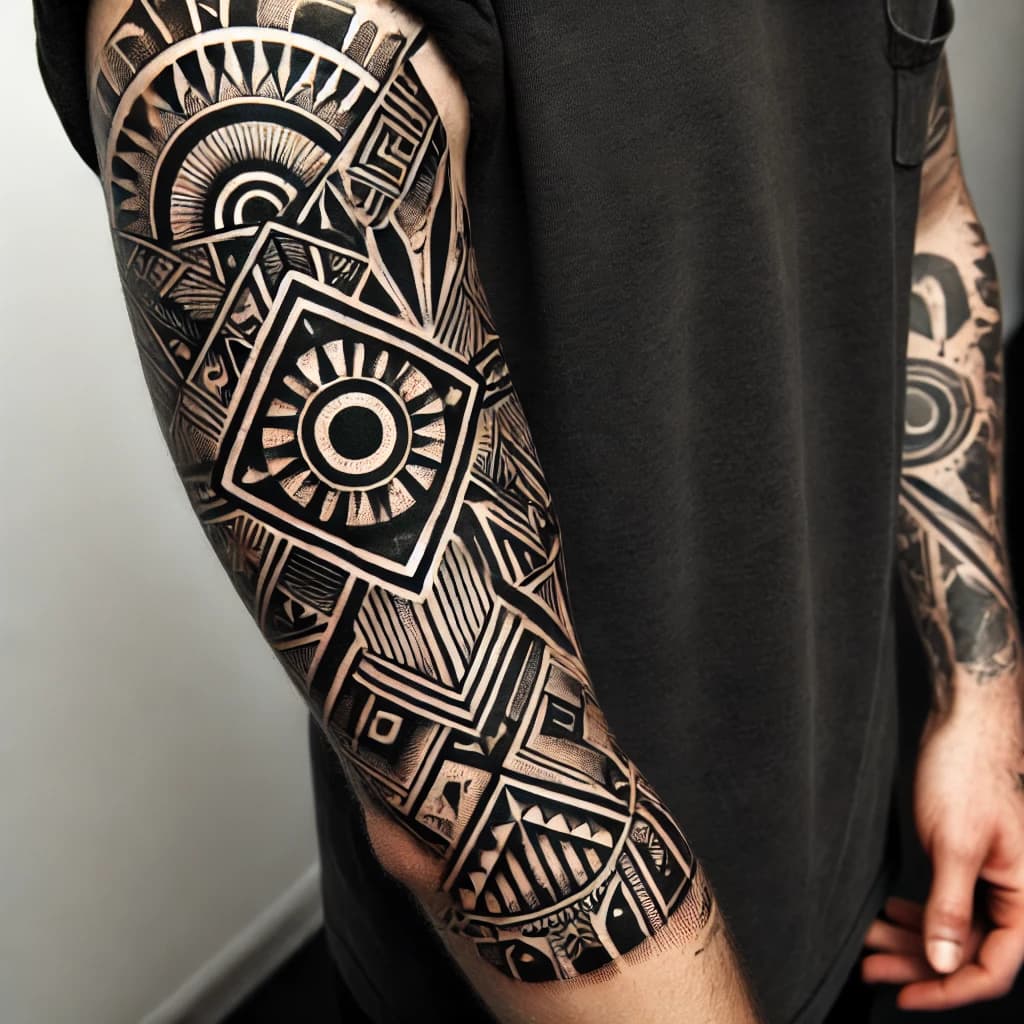
Dotwork earns its place in geometric tattoos because it turns repetition into structure. The style is built from tiny points that create shading, pattern, and image, which makes it a natural fit for mandalas, golden spirals, sacred knots, and sleeve work that needs rhythm more than spectacle. Thomas Hooper’s studio bio says he has been tattooing since 2000 and is known for blackwork, sacred geometry, esoteric symbolism, and ornamental design, while his Tattoodo profile links his work to cosmology, mathematical and geometric patterns, pointillism, repetition, and detailed line-work. Mo Ganji’s official site calls him a Berlin tattoo artist known for one-line tattoos, another reminder that restraint can still look forceful when the draftsmanship is clean.
Smithsonian’s reminder that humans have been marking their skin for thousands of years gives this lane extra weight. Sacred geometry does not feel trendy when you see how easily it connects to old symbols and modern pattern language at the same time. Dotwork is the style that lets those references breathe instead of shouting over them.
Realism: when the goal is believable depth
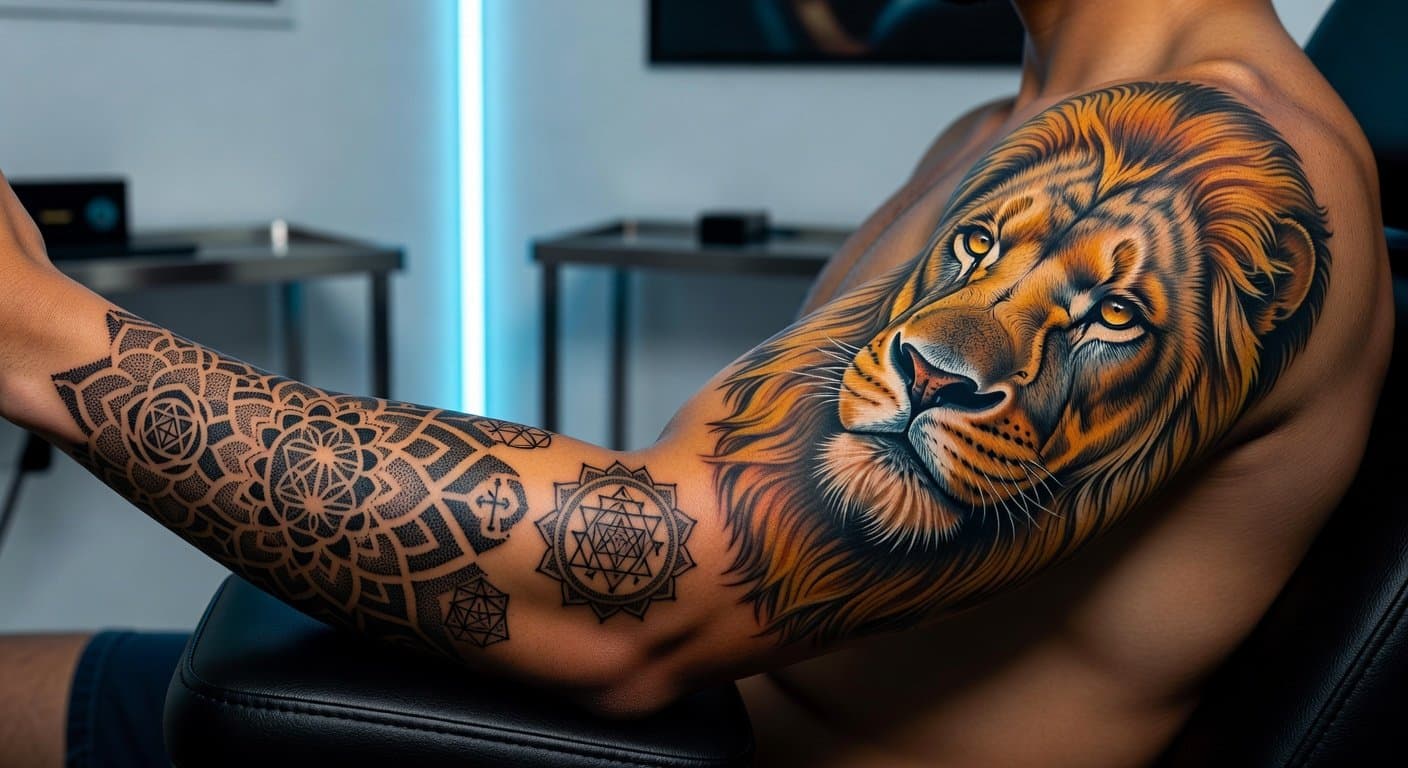
Realism lives on a different promise: the tattoo should look lifelike, not diagrammatic. Tattoodo’s realism guide says the process often starts by mapping shadows in a photograph, and iNKPPL describes shadow mapping as the planning stage for shadows, highlights, and contrast before the needle ever touches skin. That workflow ties realism to the visual grammar of Photorealism, where depth depends on careful gradients, controlled saturation, and believable edges.
This is where realism can be brilliant and brutally unforgiving. A geometric tattoo can survive abstraction, but a portrait or animal face needs convincing transitions to read correctly. If the reference is busy, the shadows are weak, or the highlights are misplaced, the whole piece can flatten fast.
What actually changes on skin
The practical split shows up in healing, session length, readability at distance, and how hard the tattoo works over time. Dotwork relies on repeated passes and layered density, so large pieces like sleeves can take many hours because the pace is slow and deliberate. That patience pays off in a texture that often reads clearly from across a room, because the eye catches the pattern before it gets lost in tiny details.
Realism can move faster on some portraits depending on size and complexity, but the speed depends on how much detail the artist has to build into gradients and shadow transitions. It is usually more demanding at close range, where the subtle work lives, and it asks more from maintenance because a muddy fade or patchy heal can blunt the illusion. In other words, dotwork rewards structural discipline, while realism rewards tonal control.
How to choose the lane for your own piece
If you want sacred geometry, mandalas, ornamental repetition, or a pattern-based sleeve, dotwork is the safer and more satisfying bet. It supports composition first, then image, which is exactly why so many collectors keep coming back to it for meditative pieces like skulls, animals, and layered geometry. If you want a face, a pet, a flower, or any subject that depends on convincing light and shadow, realism gives you the tools to chase that illusion.
The cost question follows the same logic. Dotwork can be simpler in equipment, but it is labor-heavy because those thousands of points add time; realism can also be expensive because it demands precision shading and careful planning. Either way, you are not buying a tattoo style so much as a method, and the method is what determines how many hours, how much patience, and how much upkeep the piece will ask of you.
Why this choice matters more now
This conversation is not happening on the fringe anymore. Pew Research Center found in 2023 that 32 percent of U.S. adults had at least one tattoo and 22 percent had more than one, and a large majority said society had become more accepting of people with tattoos in recent decades. The survey was based on the American Trends Panel with 8,480 respondents, which is a big enough sample to make the social shift hard to ignore.
That matters because geometric tattoos are no longer a private code understood only inside the shop. They sit in the open now, on forearms, backs, calves, and full sleeves, where healing quality, distance readability, and design discipline all shape how the piece lands in public. Dotwork and realism may share the same skin, but they ask for very different commitments, and the smarter choice is the one that matches both your subject and your tolerance for process.
This article was produced by Prism’s automated news system from verified source data, official records, and press releases, then run through automated quality and moderation checks before publishing. The system is built and supervised by the people who set the standards it runs under. Read our full AI policy.
Did this article answer your question?