Skull Tattoos Reimagined, Geometric Designs Expand a Timeless Symbol
Geometric structure gives skull tattoos sharper meaning, cleaner placement, and more range. Symmetry, dotwork, and blackwork turn a familiar icon into something more precise.
Why skulls still hit hard
Skull tattoos keep coming back because the symbol still carries real weight. Monolith Studio’s guide treats the skull as one of body art’s most durable images, tied to mortality, strength, resilience, rebellion, and transformation. That range is exactly why it never feels locked into one style for long. It can be blunt and aggressive in traditional Americana, elegant in a fine-line forearm piece, or dramatic enough to anchor a full blackwork sleeve.
The deeper history helps explain the durability. Britannica places skull imagery inside vanitas painting in the early 17th-century Netherlands, where skulls stood for mortality and the transience of earthly pleasures. It also notes that skull veneration traditions may stretch back to the Early Paleolithic period. In other words, this is not a trend that needed social media to survive. It is an old symbol that keeps finding new visual languages.
What geometry changes
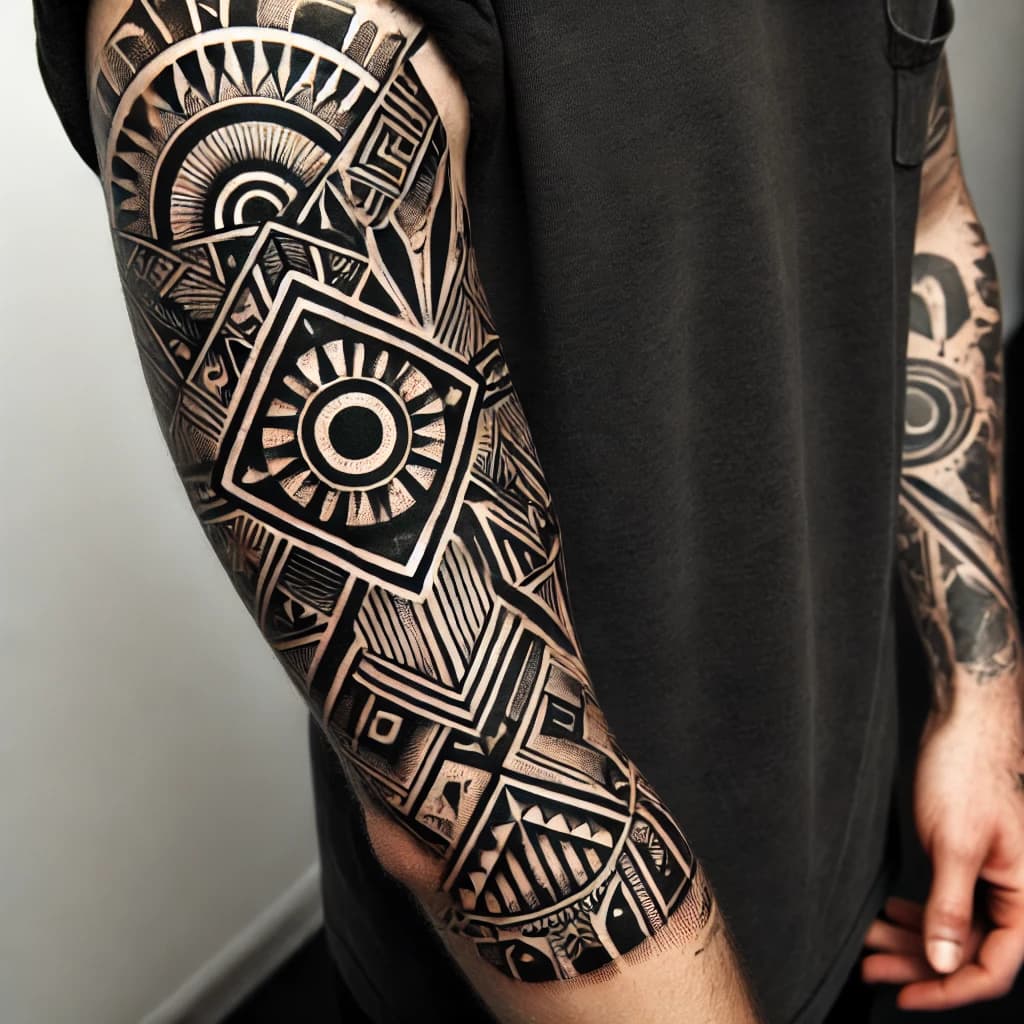
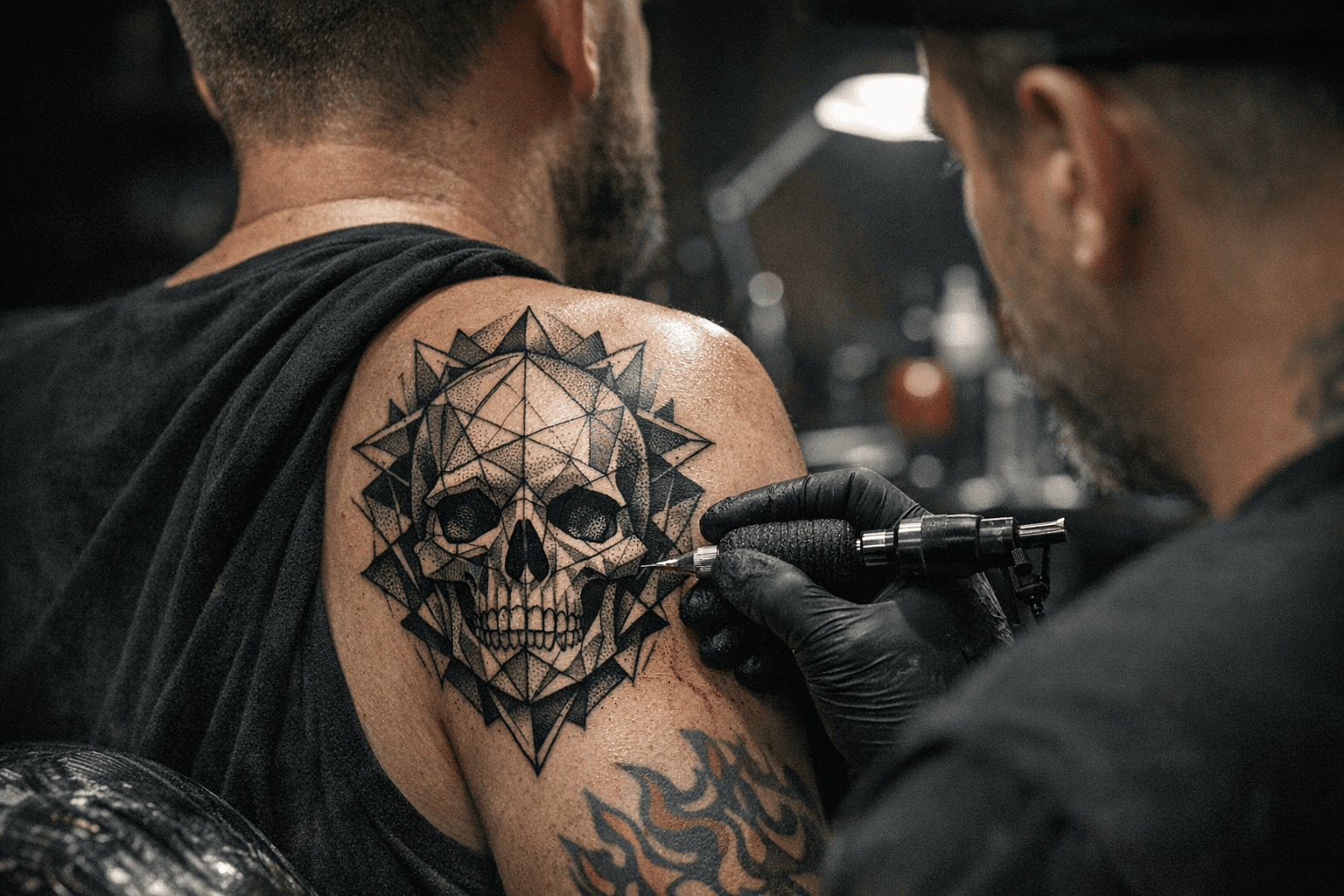
Geometry does not replace the skull’s meaning. It tightens it. Once you start breaking the form into planes, symmetry, dotwork, negative space, mandala overlays, and faceted edges, the design stops reading like a literal head and starts reading like structure versus decay. That tension is the whole point. The skull still signals mortality, but geometric treatment adds order, control, and a kind of engineered calm.
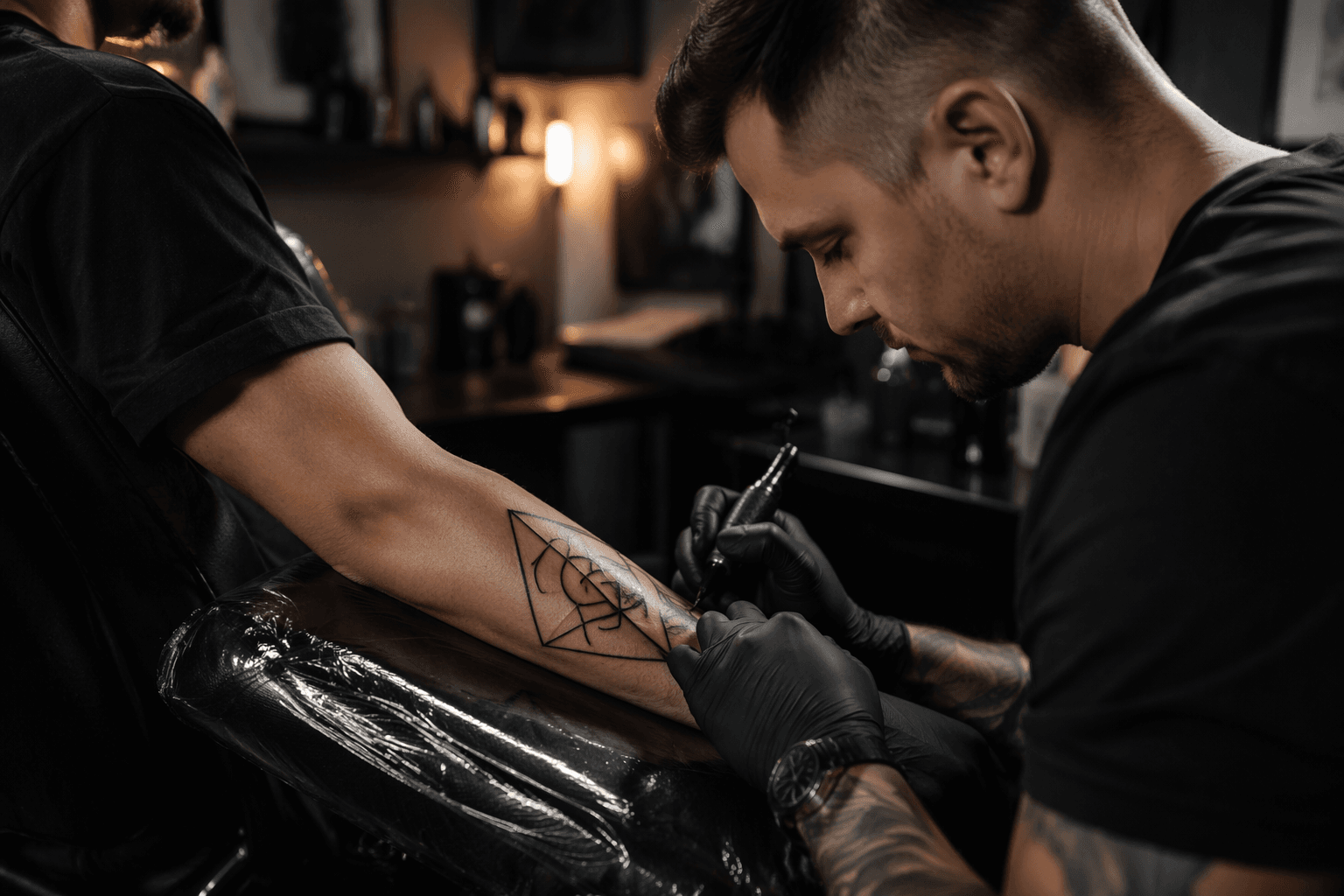
Monolith Studio’s own framing makes that clear. The studio, based in Brooklyn, New York City, at 77 Washington Avenue, identifies co-founder Okan Uçkun as a geometric and minimalist tattoo specialist. That matters because geometric skulls are not just skulls with extra decoration. They are built to look intentional from every angle, with linework and symmetry doing as much emotional work as the bone structure itself.
This is also why the style translates so well across different skull concepts. A traditional skull can be sharpened with clean symmetry. A darker blackwork skull can be broken up with negative space so it breathes instead of turning into a flat blob. A mandala overlay can push the image toward sacred-geometry territory, while faceting can make the cranium feel carved rather than drawn. The motif stays recognizable, but the mood changes fast.
Scale, placement, and how much detail the skin can hold
Monolith Studio’s guide is useful because it treats placement like a design decision, not an afterthought. A small fine-line skull on the forearm can take about an hour, while a full chest or back skull composition can take multiple sessions. That spread tells you everything about how flexible the motif is. The same subject can be minimal and quick or dense and expansive, depending on how much structure you want to build into it.
Placement changes the geometry, too. Forearms and hands favor cleaner silhouettes, simpler line logic, and designs that can survive the movement of the body. Chest and back pieces give an artist room for symmetry, layered shapes, and larger faceted forms that can sit with the body’s center line. If you want a skull to feel architectural, bigger canvases usually let that idea land better.
The practical takeaway is simple: the more geometric the plan, the more important the layout becomes. Symmetry looks strongest when it has room to balance. Dotwork needs enough scale to build gradation instead of crowding. Negative space has to be deliberate or the design collapses into noise. That is why a small skull can be quick and sharp, while a larger composition can become much more immersive.
The cultural lane matters, especially with Day of the Dead imagery
If the skull leans into calavera or Day of the Dead imagery, the symbol carries a different kind of responsibility. UNESCO says Mexico’s Indigenous festivity dedicated to the dead commemorates the transitory return to Earth of deceased relatives and loved ones, and the tradition was inscribed on the Representative List of the Intangible Cultural Heritage of Humanity in 2008. Britannica adds that Day of the Dead is typically observed on November 1 and 2. Smithsonian notes that calavera skulls are among the most recognizable symbols of the observance and are often made from sugar, meringue powder, and water.
That is why sugar-skull tattoos are not just decorative face paint on skin. They point to a living commemorative practice with real historical and cultural depth. If you are going in that direction, the strongest designs tend to respect the visual cues that make the symbol readable at a glance: ornate symmetry, floral framing, precise contours, and the familiar decorative language of celebration and remembrance. Geometric structure can work beautifully here because it gives the image discipline without stripping away its warmth.
How geometric skulls modernize the motif without losing the bite
The best geometric skulls usually make one clear decision and commit to it. Some lean hard into blackwork and faceting, which gives the image a heavier, more armored feel. Others use dotwork and open space to keep the skull airy and cerebral, almost like a diagram of mortality instead of a portrait of it. Both approaches work, but they send different signals on skin.
The other useful thing about geometry is that it lets artists mix the skull with related imagery without overcrowding the piece. Monolith Studio’s guide moves comfortably from traditional Americana skulls to photorealistic Day of the Dead portraits, from minimalist hand pieces to dramatic sleeves, and from animal skull compositions to darker symbolic hybrids. Flowers, moths, wings, and bone structure can all coexist when the underlying composition is disciplined. Without that structure, the design turns mushy fast.
That is where the old and new line up beautifully. Smithsonian notes that Polynesian tattoo traditions developed over millennia and often featured highly elaborate geometric designs, which helps explain why this visual language still feels so strong on the body. Geometric skull tattoos tap into that same logic: lines, symmetry, and pattern make the symbol feel designed rather than merely illustrated. The result is a skull that still means death, defiance, or remembrance, but with a sharper, more architectural finish.
This article was produced by Prism’s automated news system from verified source data, official records, and press releases, then run through automated quality and moderation checks before publishing. The system is built and supervised by the people who set the standards it runs under. Read our full AI policy.
Did this article answer your question?