Geometric bear tattoos sharpen animal symbolism through angular design
Geometric bear tattoos turn raw animal power into structure, letting line weight, symmetry, and negative space shift the mood from protection to ferocity.
Why the bear works so well in geometric form
The bear already comes loaded with meaning: strength, wilderness, protection, and a deep cultural charge that comes from its long relationship with humans. Bears are the most recently evolved carnivore lineage, and they have been hunted for food, clothing, and medicine, which helps explain why they still read as powerful symbols rather than just animal imagery.
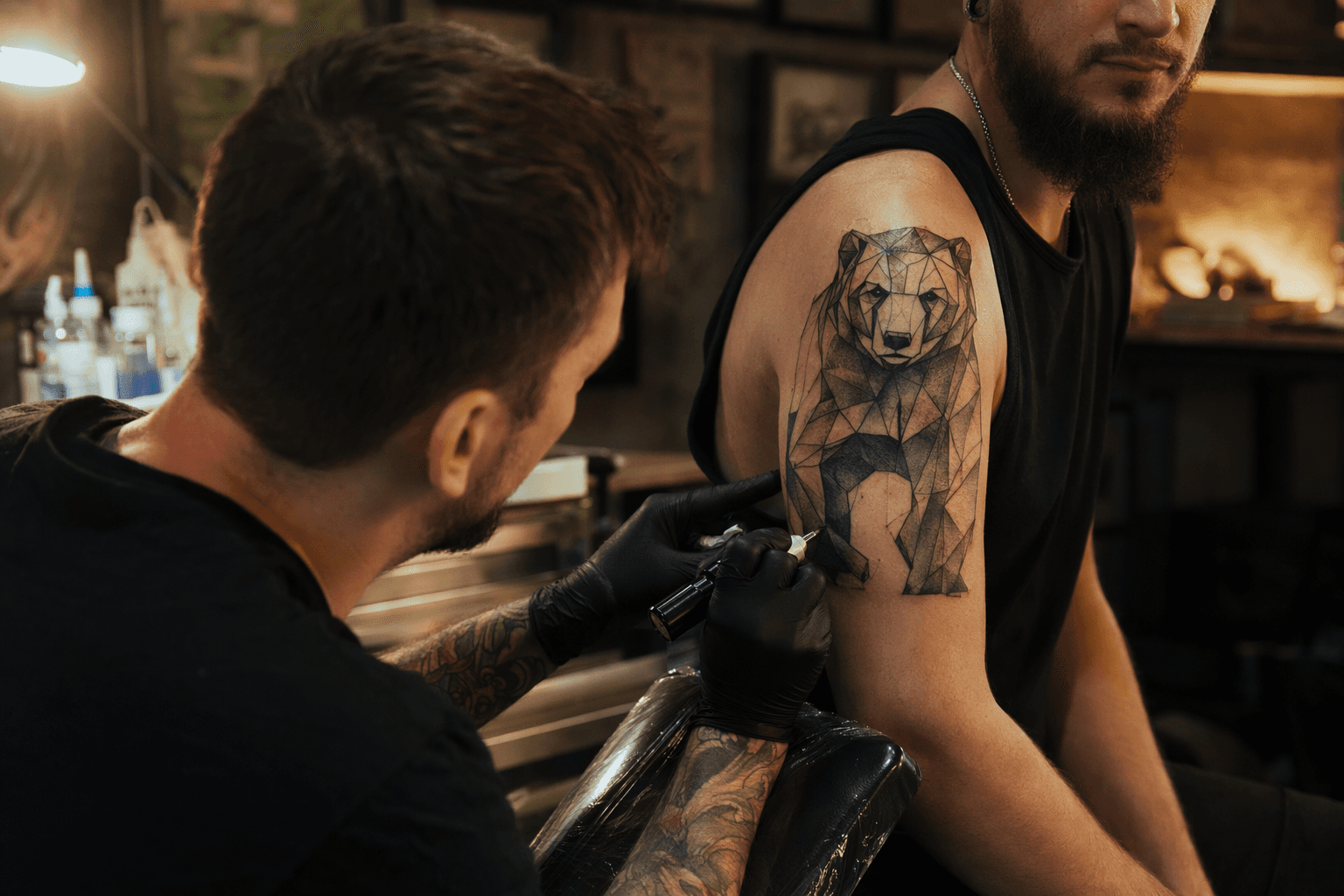
That built-in weight is exactly why geometric tattooing fits the bear so naturally. When angular structure is added, the subject stops feeling like a plain portrait and starts reading like a designed system. The result can feel carved, engineered, or intentionally constructed, which gives the animal a different kind of force: controlled strength instead of blunt aggression.
What geometric structure changes in the symbolism
Geometric bear tattoos do more than decorate the animal. They recast its symbolism through precision, and that is where the style becomes useful as a design language. Sharp facets can make a bear feel more formidable, while clean symmetry can turn it into a symbol of balance and restraint. If the design uses more open space, the bear can feel solitary or watchful; if it is packed with dense patterning, the same subject can become more intense and territorial.
Line weight matters too. Heavier lines give the bear mass and presence, while thinner lines make the structure feel lighter and more technical. Faceting can push the design toward realism or abstraction depending on how much of the face, fur, and body is broken into planes. Negative space is just as important, because it can suggest quiet confidence, frozen motion, or a kind of spiritual distance that makes the animal feel less like a beast and more like a symbol.
Reading the main geometric bear approaches
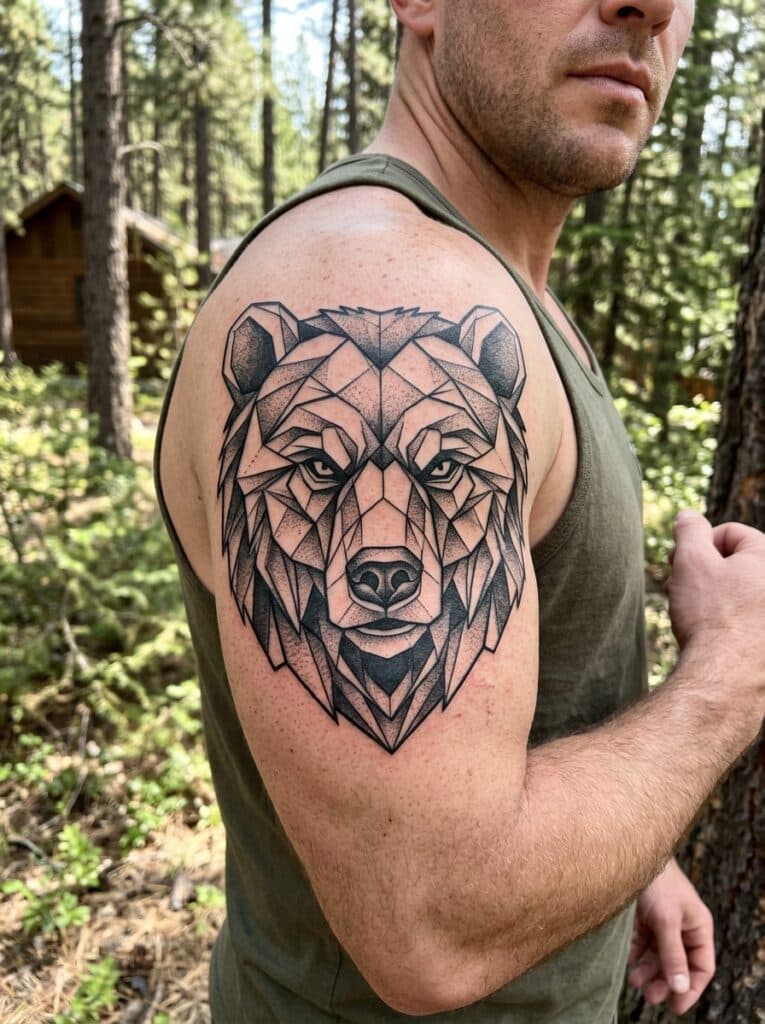
One of the most effective versions is the faceted grizzly head built from triangular planes. The grizzly is a brown bear subspecies, Ursus arctos horribilis, with humped shoulders, an elevated forehead, and pale-tipped fur, so its natural anatomy already supports a hard-edged interpretation. When that shape is reduced into sharp planes, the bear’s mass becomes more architectural, and the image reads as toughness with discipline.
A low-poly bear pushes that idea even further. Rendered almost like a three-dimensional graphic model, it feels modern, measured, and digitally constructed. That style works especially well if you want the tattoo to signal order and containment rather than chaos, because the faceted surfaces keep the animal recognizable while giving it a sculptural, engineered look.
A bear silhouette filled with internal geometric patterning takes a different route. Instead of breaking the whole animal apart, it preserves the outline and uses the interior as a field for shape, line, and rhythm. This is a strong choice if you want the bear to remain instantly legible while still carrying a more layered, mathematical feel.
How dotwork and sacred geometry change the mood
Dotwork-shaded geometric bears soften the hard edges without losing the structure. The shading builds tone through pointillism rather than heavy fill, which gives the piece texture and depth while keeping the overall language precise. That approach is especially useful if you want the bear to feel contemplative or weathered rather than aggressive.
Sacred-geometry compositions add another layer of meaning. In geometric tattoo culture, sacred geometry is a recognized motif, and it is often paired with mandalas, platonic solids, and symmetrical forms. Wrapping a bear in those shapes can make the tattoo feel ceremonial or cosmological, as if the animal is being framed as a guardian figure or an emblem of balance within a larger order.
When the bear shares the stage with landscape
Some of the strongest concepts expand beyond the animal alone. Landscape-driven designs build the bear, the mountains, and the forest from the same angular visual language, which ties the animal back to its environment without losing the geometric discipline. That kind of composition makes sense if you want the tattoo to speak about territory, solitude, and survival all at once.
In these pieces, the bear becomes the anchor for a broader system rather than the only subject. The mountains can echo the shoulder line, the trees can repeat the same triangular rhythm, and the whole tattoo can feel unified by one design grammar. The effect is less like a wildlife illustration and more like a constructed emblem of the wild itself.
Why bear scale matters in tattoo design
Physical scale matters in symbolism, and bear species give artists a lot to work with. The Kodiak bear can weigh up to 720 kg, or 1,600 pounds, and it is the world’s largest bear and the world’s largest land carnivore. The polar bear can also weigh up to about 720 kg, and it is the largest and most powerful carnivore on land. Those facts help explain why bear tattoos so often read as mass, force, and presence before they read as delicate linework.
That size becomes visually persuasive in geometric work. A broad shoulder made from angular planes or a massive head defined by sharp facets can communicate physical authority without needing extra detail. If you want the design to feel more protective than feral, keep the structure balanced and symmetrical. If you want it to feel more threatening, push the angles harder and reduce the amount of soft shading.
Where geometric bear tattoos sit inside the style family
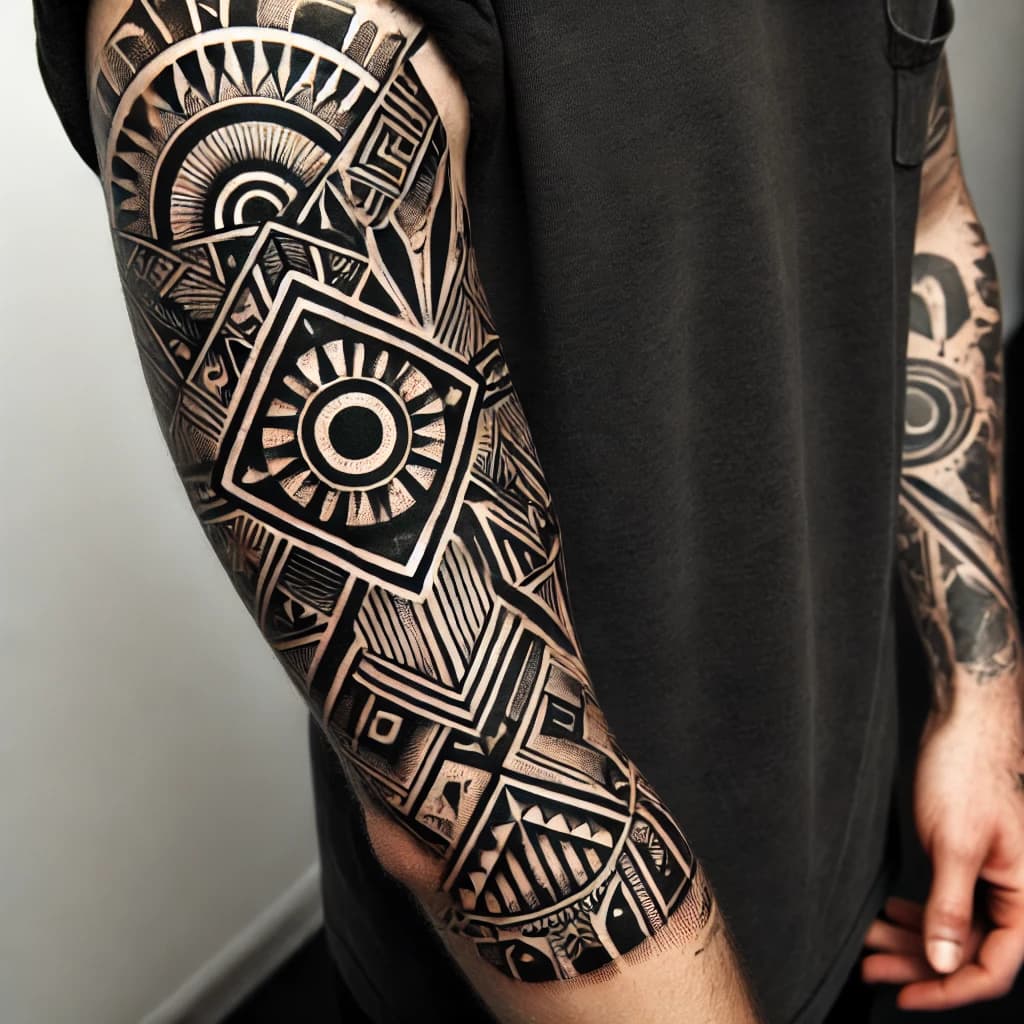
Geometric tattooing is a broad contemporary style family built around symmetry, mathematical shapes, dotwork, mandalas, platonic solids, and sacred geometry. Ornamental tattooing overlaps with that world through symmetry, black shading, and pointillism, and its roots are linked to older tribal traditions. That is why geometric bear tattoos can feel both modern and connected to older symbolic systems at the same time.
This intersection matters when you are refining a concept. A bear built with strict symmetry will feel more controlled and emblematic; a bear with ornamental flourishes will feel more decorative and layered; a bear made of sparse lines and sharp planes will feel minimal but forceful. The same animal can shift between protection, solitude, and ferocity depending on how much structure you add and how much you leave open.
How to refine the concept before booking
The cleanest way to shape a geometric bear tattoo is to decide what the bear should communicate first, then build the form around that intent. If the goal is protection, lean into symmetry, steady line weight, and a grounded pose. If the goal is solitude, open up the negative space and keep the composition restrained. If the goal is ferocity, increase contrast, tighten the facets, and let the angular structure sharpen the expression.
That is the real strength of this style: geometry does not compete with the bear. It sharpens it, turning a familiar animal into a deliberate visual statement that feels primal, precise, and unmistakably designed.
This article was produced by Prism’s automated news system from verified source data, official records, and press releases, then run through automated quality and moderation checks before publishing. The system is built and supervised by the people who set the standards it runs under. Read our full AI policy.
Did this article answer your question?