Geometric ear tattoos turn tiny skin space into bold style statements
The ear has become the smallest high-visibility canvas in geometric tattooing. Clean symmetry, smart placement, and disciplined healing now decide whether it reads like a statement or a smear.
Why the ear is suddenly the geometric tattoo’s strongest little stage
The ear has become the kind of tiny canvas that changes everything: a few millimeters of clean line, a sharp angle, or a tightly built mandala can read louder there than a larger piece elsewhere. That is exactly why geometric work has surged in the placement, because the ear turns precision into the whole point. On runways, in social feeds, and across street style, it is functioning like a micro-signature, small enough to feel intimate but visible enough to signal confidence immediately.
What makes the placement click is not just novelty. The ear offers instant impact without demanding a lot of skin real estate, which is why geometric motifs translate so naturally there. Intricate geometric patterns, symbolic mandalas, minimalist lines, abstract shapes, and culturally significant symbols all show up in the same conversation because each one depends on structure. The ear rewards that structure, but it also punishes sloppiness fast.
Why geometry works, and why it fails, on ear anatomy
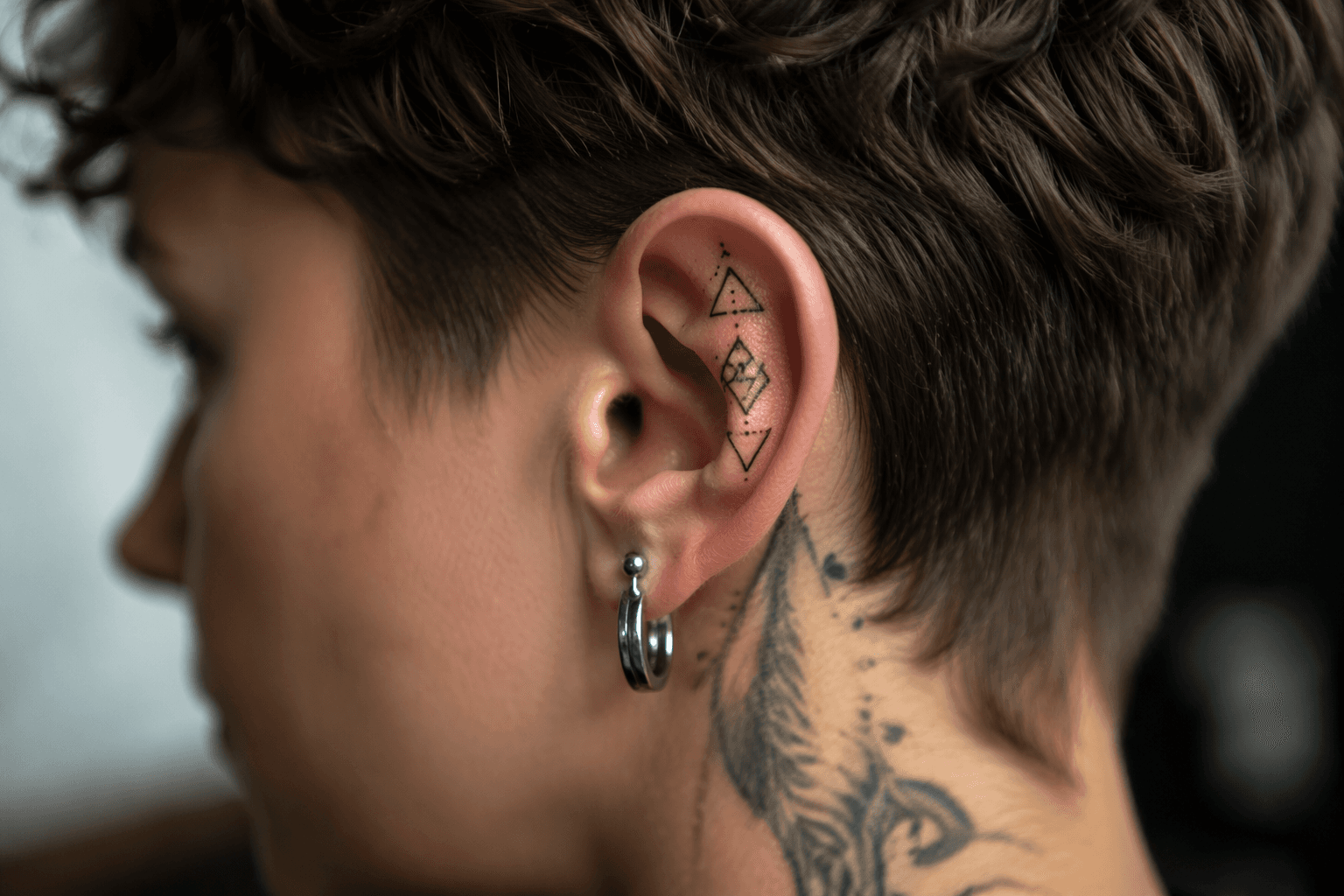
Geometry succeeds on the ear when the design is built for the body, not just drawn on a flat page. Tight symmetry matters more here than in many other placements because curved cartilage makes uneven spacing stand out instantly. A line that looks crisp in a stencil can start to feel off-balance once it wraps over the rim, tucks behind the fold, or hugs the upper ear.
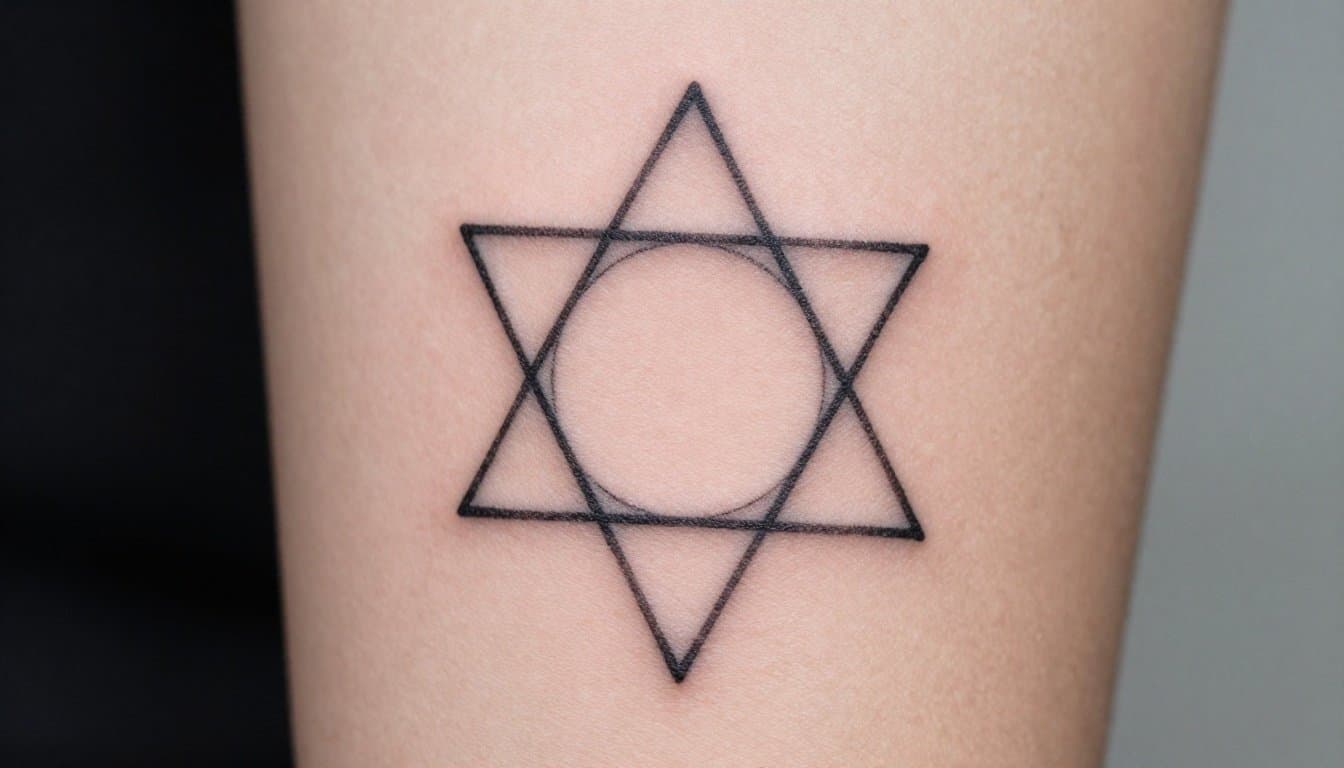
That is why minimalist geometric patterns have become such a reliable choice at small scale. They hold clarity and symmetry when the canvas shrinks, and they avoid the muddiness that can swallow more elaborate shapes. The same goes for sleek line work, tiny angular forms, and simplified mandala fragments. By contrast, dense patterns with too much internal detail can collapse into visual noise once they are reduced to ear size.
The ear also invites designs that feel intentional from every angle. Behind the ear has become popular because it frames smaller tattoos in a deliberate way, while the outer rim and upper cartilage create a built-in architecture for sharp, compact geometry. The best designs use that structure instead of fighting it.
Who this placement is really for
This trend is for people who want their tattoo to read as precise, minimal, and highly visible rather than large and heavily shaded. Ear tattoos do not hide their decision-making. They telegraph that you care about placement, balance, and the relationship between the body and the design.
They are also a strong fit if you like micro-scale tattoos that still feel curated. The ear makes even a tiny mark feel finished, especially when the artist uses tight spacing and disciplined line weight. If you want a piece that feels like a neat detail rather than a broad declaration, this is where geometric work shines.
It is a less forgiving choice if you are drawn to packed complexity without compromise. The smaller the canvas, the more every angle matters. If your idea depends on lots of interior detail, soft gradients, or a design that needs room to breathe, the ear can feel cramped very quickly.
The healing and hygiene questions you should not skip
The ear’s beauty is tied to its risk. It is a delicate placement, and cleanup, needle control, and aftercare matter more than they would on thicker, flatter skin. Cleveland Clinic says tattoo infections can come from contaminated ink or a nonsterile environment, and the Centers for Disease Control and Prevention has linked tattoo-associated nontuberculous mycobacterial skin infections to contaminated inks and nonsterile water used to dilute ink.
That concern is even sharper around cartilage. Cleveland Clinic notes that ear cartilage trauma commonly leads to perichondritis, an infection of the tissue covering the outer-ear cartilage. Medical literature also points out that severe infection risk is higher in avascular areas such as auricular cartilage, which is another reason upper-ear cartilage procedures deserve careful handling. The ear’s limited blood supply makes trouble harder to clear and easier to escalate.
This is also not a brand-new safety conversation. The National Institute for Occupational Safety and Health began visiting tattooing and piercing studios in the 1990s because of workplace safety and bloodborne-disease concerns, which is a good reminder that body art has always had a technique-and-safety side running alongside the style side. For a tiny, visible placement like the ear, that history matters.
Questions to ask an artist before you book
The right artist can make geometric ear work look crisp and intentional. The wrong one can make a tiny flaw impossible to ignore. Before you commit, ask questions that focus on anatomy, hygiene, and line control:
- How do you adapt geometric designs to curved ear cartilage?
- What line weights hold best at ear size without blurring together?
- How do you prevent spacing from collapsing on a small, irregular surface?
- What aftercare do you recommend for cartilage-heavy placements?
- How do you reduce infection risk in a spot that is hard to keep clean and dry?
An artist who works confidently in this area should be able to talk through those details without hesitation. You want someone who understands that a geometric ear tattoo is not just a smaller version of a larger piece. It is its own technical problem.
The designs that translate best
The strongest ear tattoos usually share one trait: restraint. A tiny mandala segment can feel elegant if the geometry stays open and balanced. A few razor-clean lines can carry more presence than a crowded pattern. Even culturally significant symbols or tribal traditions work best when the artist treats the ear like a precision placement, not a decorative afterthought.
That is why the current fascination has spread so quickly across fashion and social media. The ear reads as curated. It does not need size to announce itself, only accuracy. And in geometric tattooing, accuracy is the whole game.
The ear has become a high-visibility micro-placement because it compresses everything the style asks for into one small frame: symmetry, clarity, discipline, and confidence. That is what makes it thrilling, and what makes it unforgiving.
This article was produced by Prism’s automated news system from verified source data, official records, and press releases, then run through automated quality and moderation checks before publishing. The system is built and supervised by the people who set the standards it runs under. Read our full AI policy.
Know something we missed? Have a correction or additional information?
Submit a Tip