Geometric Feather Tattoos Fuse Sacred Geometry, Dotwork, Precise Linework
Feather tattoos are getting rebuilt as geometric blackwork, where a spine, micro-patterns, and mandala structure turn a soft motif into precision.

A feather tattoo gets a harder, sharper voice when the design is built from a clear spine, repeating micro-patterns, and mandala integration. That is the shift happening now: a familiar organic shape is being rebuilt through sacred geometry, dotwork, and disciplined linework until it reads less like a free-floating symbol and more like engineered ornament.
Sacred geometry gives the feather a new skeleton
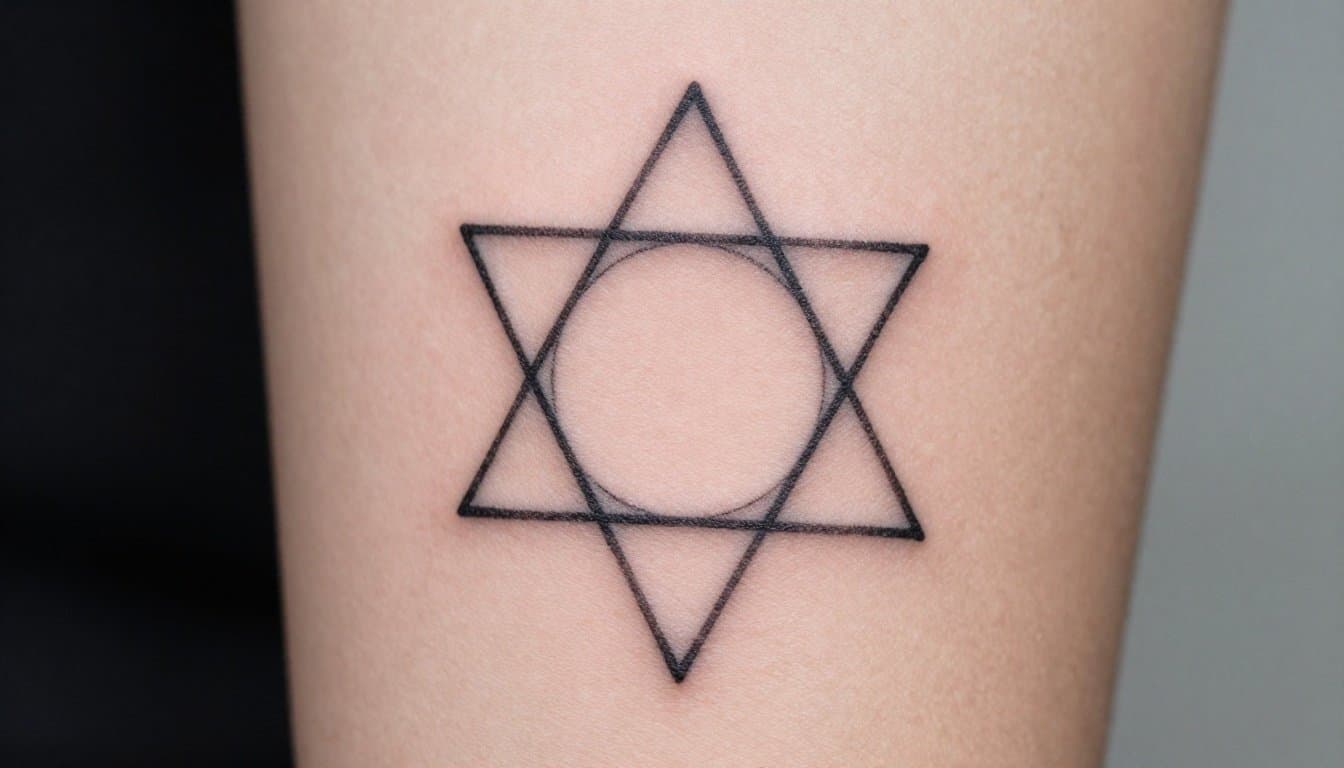
The most compelling version of this trend is the geometric native feather tattoo design, which pairs the soft vanes of a feather with rigid sacred geometry backgrounds. The visual tension is the point. The feather keeps its sense of movement, but the surrounding structure gives it weight, symmetry, and a sharper technical finish.
That balance is what makes the look stand out, and it is also why the style is asking more from the artist than a simple illustrative feather ever did. Clients are not just chasing prettier reference photos anymore. They want higher precision, cleaner execution, and stronger technical planning, so the design has to be thought through from the central spine out to the smallest dot.
The broader language around the piece makes sense inside ornamental tattooing, one of the older tattoo styles. Ornamental work leans on geometry, symmetry, black shading, and delicate pointillism, which is exactly why feathers now slot so naturally into that visual system. Sacred geometry is also a popular aesthetic inside blackwork, so the feather becomes a bridge between a symbolic subject and a highly ordered tattoo language.
The trend map stretches far beyond one look
The guide does not stop with the geometric native feather. It moves through a full range of feather directions, which shows how flexible the motif has become in 2026. Abstract watercolor feather tattoos bring in looser movement, while single-needle minimalist feathers strip the shape down to a clean, delicate outline. Stippled mandala feathers push in the opposite direction, layering a feather form inside a dense, patterned structure.
From there, the field widens again. Hyper-realistic eagle feathers lean into texture and natural detail, while neo-traditional phoenix feathers bring bolder storytelling and stronger color-coded symbolism. Biomechanical cyber feathers take the motif into a more futuristic lane, brushstroke enso feathers pull in the feel of gesture and flow, infinity flock silhouettes simplify the idea into movement and repetition, and compass-and-feather fusion designs add direction, navigation, and personal symbolism to the shape.
What makes the guide especially useful is that each of those styles is tied to a production setup. Crisp line and dotwork-based pieces are paired with rotary machines and round liners, while stippled mandala feathers call for thermal transfer printers. That is a practical detail with real creative impact, because the tool choice affects more than convenience. It shapes how cleanly the image reads on skin, how the shading settles, and how the final tattoo holds together after healing.
Why the feather still carries weight
Feathers have never been empty decoration. In contemporary explanatory coverage, they are linked with freedom, spirituality, strength, bravery, and transformation, and those meanings run deep enough to keep the motif relevant even when the style around it changes. Cultural references including Native American traditions and ancient Egypt add another layer of resonance, so the feather already arrives with a symbolic history before geometry ever enters the picture.
That is part of why the motif works so well in geometric form. Sacred geometry gives the feather structure, but the feather itself still carries emotional charge. A client can come in wanting something restrained and elegant, then leave with a piece that still reads as personal, protective, and symbol-rich.
The market context helps explain why these refinements matter. Statista estimates that about 26 percent of people in the United States had at least one tattoo in 2021, up from about 21 percent in 2012. In the same year, 17 percent of U.S. respondents had multiple tattoos and 9 percent had one tattoo. That is a large, differentiated audience, and it has created room for style-specific choices that feel more intentional than broad, generic tattoo imagery.
Precision is now part of the client promise
The strongest thread running through the guide is not just aesthetics, but workflow. The right tool choice is presented as part of healing quality and final readability, not just studio convenience. That matters because geometric feather work depends on line discipline, balanced spacing, and dotwork that stays crisp enough to preserve the design’s symmetry after healing.
It also matters because tattooing is a hygiene-sensitive procedure. The Centers for Disease Control and Prevention has documented tattoo-associated nontuberculous mycobacterial infections, including outbreaks linked to contaminated ink and nonsterile water. The agency recommends sterile ink products, sterile water, and hygienic practices, a standard reinforced by outbreak reporting that began in January 2012 in Rochester, New York, where investigators studied a tattoo-associated Mycobacterium chelonae skin and soft-tissue outbreak.
That public-health backdrop gives the technical obsession around feather tattoos another layer of meaning. Clean execution is not just a style choice in a geometric feather piece; it is part of professional responsibility. The sharper the lines, the more visible the mistakes, and the more important it becomes to match the design to the right machine, the right transfer method, and the right working conditions.
Geometric feather tattoos are succeeding because they solve a familiar problem in a smarter way: how to keep a beloved, organic symbol soft in spirit while making it exact on skin. That is why the motif now feels less like a passing trend and more like a technical test, one that rewards symmetry, patience, and control.
This article was produced by Prism’s automated news system from verified source data, official records, and press releases, then run through automated quality and moderation checks before publishing. The system is built and supervised by the people who set the standards it runs under. Read our full AI policy.
Know something we missed? Have a correction or additional information?
Submit a Tip