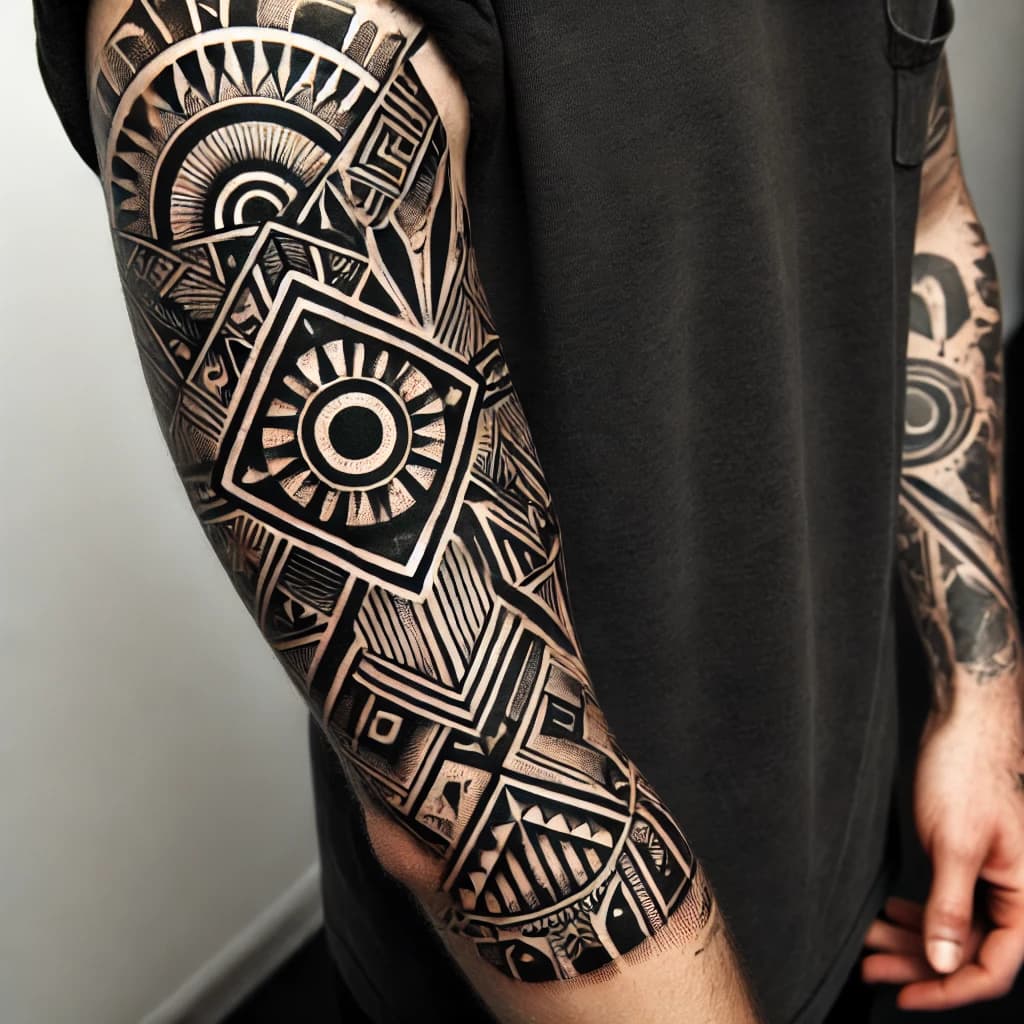
Geometric Forearm Tattoos, versatile designs that flow with the arm's contours
Forearm geometry works because the limb does half the composing for you, giving bands, symmetry, and wraparound designs room to move. It is a practical, high-visibility spot with real symbolic depth.
Why the forearm works so well
The forearm gives geometric work something many placements cannot: a long, cylindrical surface that already suggests flow. Bands can stack cleanly, vertical symmetry feels native to the shape, and a design can travel with the muscle instead of fighting it. That is why the area can handle everything from a small wrist accent to a full-sleeve precursor without losing its clarity.
It is also one of the easiest places to live with day to day. A forearm tattoo can be shown off or covered with a cuff, which makes it especially useful if you want visibility in some settings and discretion in others. For geometric collectors, that flexibility matters because the linework stays readable in motion and in the mirror, not just on a flat stencil sheet.
What geometric ideas actually shine here
The forearm rewards geometry that understands the body as part of the composition. Sacred geometry motifs such as mandalas and interlocking triangles work well because their symmetry can expand or taper as the arm turns. Clean linework built from hexagons, dots, and latticed shapes also fits naturally, because the eye reads those forms as ordered even when they wrap around a cylinder.
Abstract polygons are another strong match, especially when you want a subtle three-dimensional effect. A forearm does not need a design that sits stiffly like a decal; it wants pieces that can bend, repeat, and break into modules. That is why many forearm tattoos land comfortably in the 3 to 6 inch range for a first piece, then scale outward later if you decide to build toward a larger composition.
- Bands and stacked panels read clearly from a distance.
- Vertical symmetry helps the design feel centered along the arm.
- Dotwork can soften edges without losing structure.
- Open polygons can add depth without overcrowding the skin.
Placement, pain, and the reality of healing
Tattoo pain is not one-size-fits-all, and placement is a major reason. According to dermatology guidance, tattoos tend to hurt more where there are many nerve endings, thinner skin, or less fat over bone, and the experience also changes with size, style, artist technique, physical health, and pain tolerance. The forearm is appealing partly because it sits in a more workable middle ground than many high-bone spots, though sensation still changes as a design moves toward the wrist or elbow.
Healing deserves the same level of respect as the art itself. The American Academy of Dermatology warns that tattooed skin needs sun protection because ultraviolet light can fade some inks, and forearms are exposed more often than many other placements. The same organization also notes that tattoos can react in unexpected ways and may make skin cancer harder to detect, which is one more reason to treat aftercare as part of the design, not an afterthought.

Why color and contrast matter on different skin tones
Forearm geometry often looks strongest when the contrast matches the skin. High-contrast blackwork and white-ink highlights can be especially effective on darker complexions, where crisp edges help the pattern stay legible. On fairer skin, brighter colors can read more vividly, giving the same framework a different energy without changing the underlying structure.
That flexibility is one of the best things about the placement. A forearm piece does not need to be loud to be effective, and it does not need to be colored to feel finished. What matters most is whether the palette supports the linework, the spacing, and the way the shape wraps around the arm.
The meaning behind the math
Geometry carries more weight than a lot of people realize. Encyclopaedia Britannica describes it as one of the oldest branches of mathematics, rooted in practical measurement problems, which is a reminder that geometric order was never just decorative. Euclid’s Elements became one of the most translated, published, and studied books in the Western world, and that long intellectual life helps explain why a simple triangle or grid can still feel charged on skin.
Sacred geometry adds a spiritual layer to that history. The Metropolitan Museum of Art describes a mandala as a diagram of the universe, and in Tibet, a map of true reality used in Buddhist practice. That is why a forearm mandala can feel more like a statement of orientation than a mere pattern, especially when it is built to follow the body’s shape instead of ignoring it.
Structure and flow in the same piece
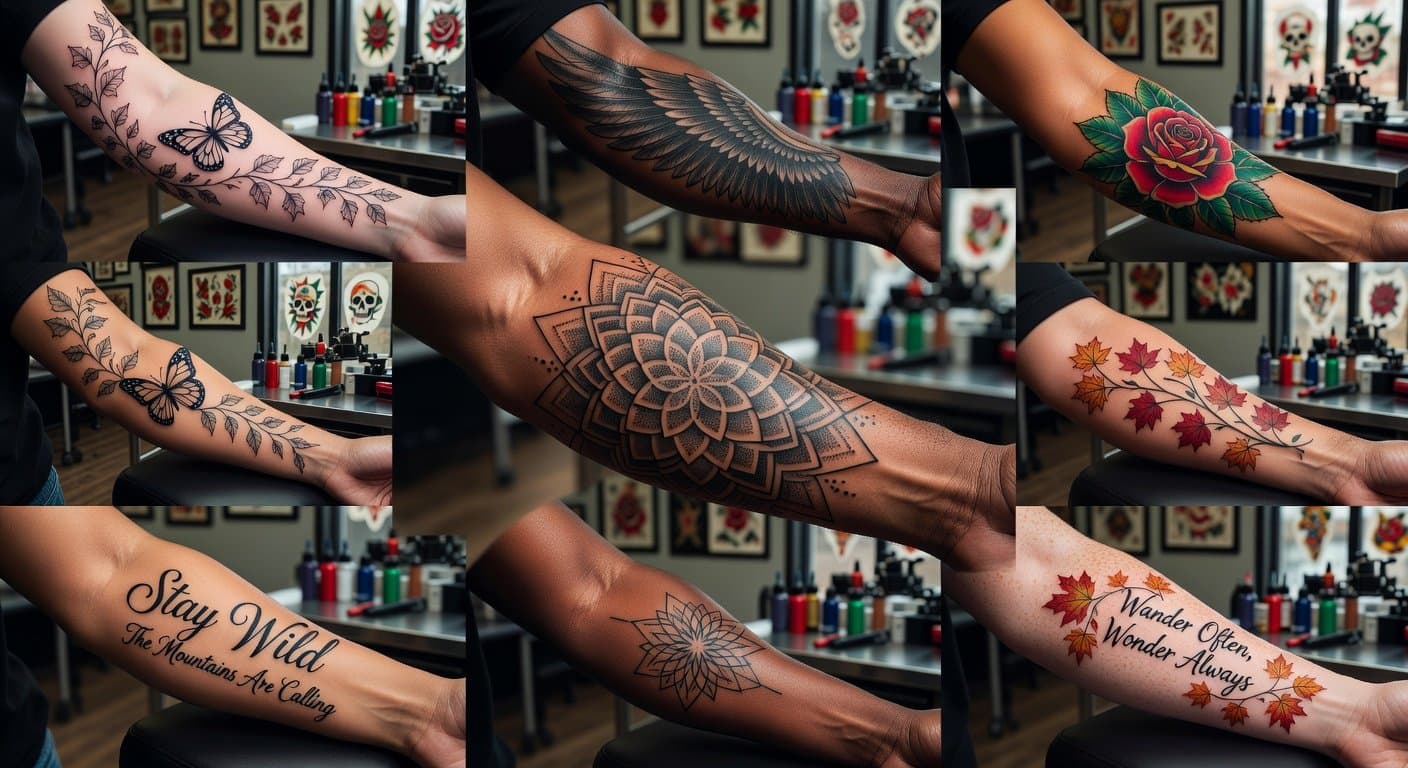
Forearm geometry gets even stronger when it borrows from nature. Leaves, vines, animals, and landscapes can soften the precision of triangles and hexagons, giving the tattoo a living pulse without losing its framework. The best versions do not fight between structure and motion; they let one clarify the other.
Text can work here too, especially when it is woven into geometric borders or floral frames. A short phrase placed inside a clean shape can add narrative without breaking cohesion, which is one reason the forearm is such a useful canvas for personal work. The arm gives the text enough room to breathe, and the geometry keeps the message from floating off on its own.
The material side you should not ignore
Tattoo ink is not just one substance, and medical literature has found that inks can contain a mix of compounds. Black inks in particular have been studied for polycyclic aromatic hydrocarbons, and adverse reactions, while rare, have been documented, including granulomatous and systemic inflammatory responses. That does not make the style less worth getting, but it does underline why precision, reputable materials, and careful aftercare matter.
Geometric forearm tattoos succeed because they sit at the intersection of anatomy, symbolism, and visual discipline. The placement gives the design room to flow, the history gives it depth, and the forearm gives you a clean, readable stage for symmetry that can be seen every day.
This article was produced by Prism’s automated news system from verified source data, official records, and press releases, then run through automated quality and moderation checks before publishing. The system is built and supervised by the people who set the standards it runs under. Read our full AI policy.
Did this article answer your question?