Geometric hexagon foo dog tattoos modernize a classic guardian motif
A hexagon can freshen up a foo dog without softening its bite, if the face, symmetry, and frame stay disciplined.
A good foo dog tattoo does not become contemporary by accident. The strongest versions keep the guardian’s authority intact, then use geometry to clean up the composition, sharpen the silhouette, and give the old symbol a new kind of architectural weight. That is the trick in this June 16, 2026 roundup from Your Next Ink: modernize the motif without flattening the protection, discipline, and strength that make the image work in the first place.
the hexagon frame that does the heavy lifting
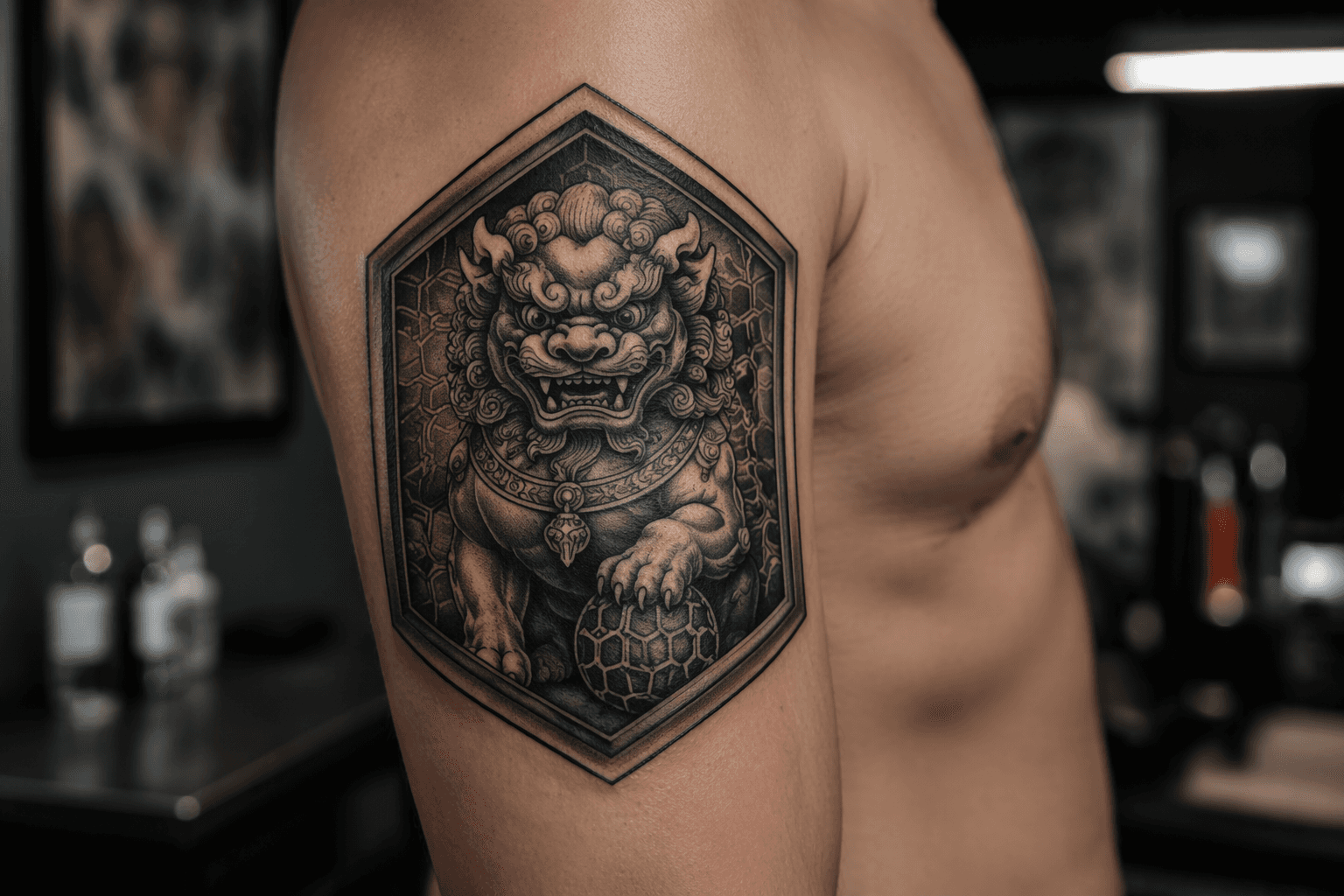
The geometric hexagon foo dog is the piece that speaks most directly to geometric tattoo readers, and for good reason. The guardian face sits inside a bold hexagon, while the surrounding shapes create structure and balance around it, so the design reads less like decoration and more like a constructed emblem. That frame matters. A hexagon gives the tattoo a stable perimeter, and stability is exactly what keeps the motif from drifting into generic pattern work.
What makes this version click is that the geometry supports the symbol instead of replacing it. The face still has to read as a true guardian, with the aggressive expression and watchful presence doing the heavy lifting. The hexagon simply tightens the composition, which is why the piece feels clean, ordered, and deliberate, the kind of tattoo that looks at home beside other sacred-geometry work without losing its roots in East Asian protective imagery.
the leaping guardian that turns motion into defense
The leaping guardian cloud piece takes a different route. Instead of locking the foo dog into a hard frame, it uses clouds and motion to suggest a guardian in action, not one posed for display. That movement changes the energy of the tattoo, but it does not change the job of the image. The creature still reads as a protector, only now it feels like it is actively meeting danger head-on.
That is the key design decision here: motion can intensify a guardian tattoo if the body language still feels forceful and grounded. The leap, the cloudwork, and the flow around the figure create a sense of force in transit, but the face and stance have to stay disciplined enough that the motif does not turn into fantasy illustration. In geometric tattoo language, the cleaner the motion is organized, the more the piece retains its authority.
the paired guardians that keep balance visible
Paired guardian compositions are one of the oldest ways to signal that this motif is about more than raw aggression. Encyclopaedia Britannica describes Lions of Fo as stylized guardian figures in Chinese art that are often shown in male-female pairs, with the male playing with a ball and the female with a cub. The Metropolitan Museum of Art adds that pairs of stone lions have been found protecting Han-dynasty tombs, then became more prevalent after lion imagery entered Buddhist cave temples in northern China during the fifth and sixth centuries.
That history matters when you build a paired tattoo today. Two guardians can be composed to watch different domains, which gives the piece a broader sense of vigilance and balance. If you want the pairing to still read as a true foo dog rather than just mirrored ornament, the bodies need different but complementary roles, not identical decorative repetition. One of the easiest ways to lose the motif is to over-symmetrize it until the figures feel like pattern fills instead of sentries.
the fierce mask that keeps the eyes on the threshold
The fierce mask tattoo strips the image down to its most confrontational parts. This version leans into vigilance and resilience, which is a smart move because foo dogs were never just pretty animals, they were guardian presences in Chinese religious and architectural tradition. A mask format works when the face still carries that threshold energy, the sense that it is meant to confront harm before it gets inside.
Geometrically, the challenge is restraint. If the linework gets too ornamental, the piece stops feeling like a guardian and starts feeling like a decorative faceplate. The best mask versions keep the brow heavy, the mouth aggressive, and the overall shape symmetrical enough to feel stable, but not so rigid that the expression goes dead. This is where modern geometric tattooing can help: dotwork, sharp line weight, and symmetrical framing can all strengthen the image without sanding off the menace.
the roaring head that keeps the symbol upright
The roaring head design pushes authority hardest. It is the most direct expression of defensive energy in the roundup, and it works because it centers the one thing a foo dog cannot lose: a presence that says “do not cross this line.” The Metropolitan Museum of Art’s history of guardian lions at tombs and temples, along with the Japanese komainu tradition of statue pairs guarding shrine entrances, shows how deeply the motif is tied to protection at thresholds, not just to ornament.
That is the practical test for any contemporary version. If the roaring head still feels planted, symmetrical, and deliberate, if the line weight supports the face instead of softening it, and if the placement gives the image the space it needs to command attention, then it still reads as a foo dog. If the geometry overwhelms the expression, the symbol collapses into pattern. The best modern versions do the opposite: they use shape to clarify the guardian, not to quiet it.
This article was produced by Prism’s automated news system from verified source data, official records, and press releases, then run through automated quality and moderation checks before publishing. The system is built and supervised by the people who set the standards it runs under. Read our full AI policy.
Did this article answer your question?