Geometric Icarus tattoos turn myth into sharp visual storytelling
Icarus works best when geometry does more than decorate it. Sharp framing, radiant suns, and broken wings turn the myth into a readable story on skin.
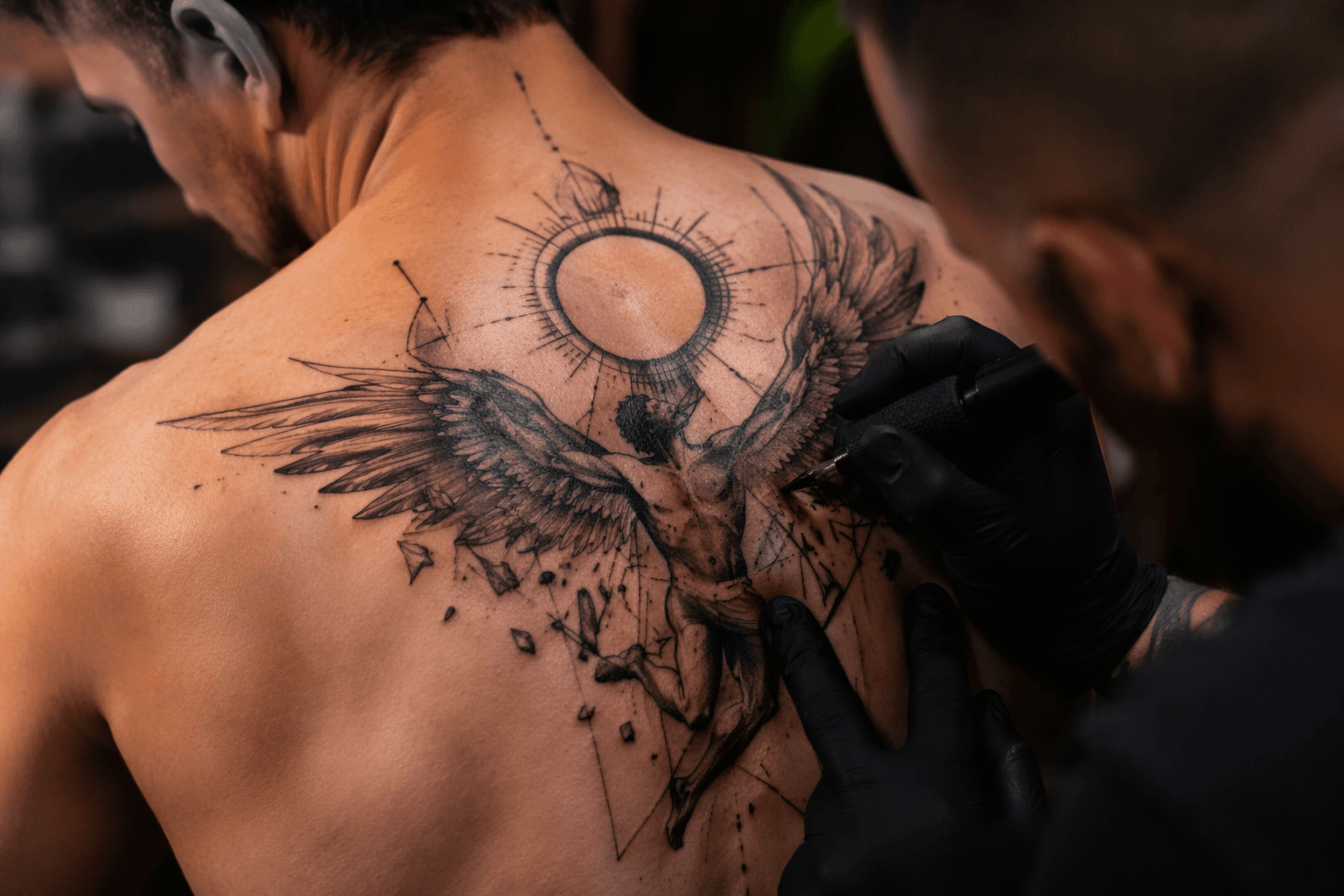
The best geometric Icarus tattoos do something smarter than illustrate a myth. They organize the fall, using framed shapes, a radiant sun, and controlled motion to make the descent read like a composition instead of a collapse. That is why the design feels so current on skin: the story is still ancient, but the structure is unmistakably modern.
Geometry gives the myth a spine
Encyclopaedia Britannica identifies Icarus as the son of Daedalus, the inventor who fashioned wings of wax and feathers for himself and his son so they could escape imprisonment. The escape worked only until Icarus flew too near the Sun and died, which is exactly why the image still carries so much emotional charge. Greek mythology, Britannica notes, often explained natural events and helped shape moral values, so the Icarus story arrives preloaded with ambition, risk, and consequence.
That built-in narrative is why geometry fits the subject so well. In a strong geometric version, the sun is not just background detail, it becomes the focal point. The figure’s path, the angular framing, and the wing fragments all lock into a visual system that makes the story legible at a glance. Instead of floating as separate symbols, the parts feel engineered to work together.
Why the modern versions feel sharper
The most effective contemporary Icarus tattoos lean on design decisions that keep the image from turning into a generic mythology piece. Sharp framed shapes around the falling body create order, then the descent cuts through that order and creates tension. A radiant sun above the figure adds direction, while the wings, feathers, and torso become part of the same structure rather than separate decorative elements.
That is the real shift in the geometric approach: motion is still there, but it is disciplined. The figure can look like it is falling and still feel controlled because the artist is using symmetry, negative space, and clean line hierarchy to hold the composition together. For people who want myth ink without dense ornament or heavy realism, that balance is what makes the style work.
A few visual choices keep showing up in the strongest pieces:
- Fragmented wings, which suggest damage without destroying the overall shape.
- Radial linework around the sun, which gives the composition a center of gravity.
- Negative space around the body, which keeps the descent readable instead of cluttered.
- Symmetry in the larger frame, which makes the fall feel deliberate rather than chaotic.
Placement changes the read
The same motif behaves very differently depending on where it lands. Large back and chest pieces are where symmetry and radial structure can breathe. Those placements let the artist build a broader sunburst, spread the wings wider, and use the torso or spine as part of the fall line, which gives the whole tattoo a more architectural feel.

Compact forearm pieces need a tighter strategy. On a forearm, the best versions usually compress the story into one clear vertical movement, with the figure cropped tighter and the framed shapes doing more of the heavy lifting. The sun still works as the anchor, but the design has to rely on cleaner silhouette and fewer moving parts, or the myth starts to blur.
That is why some geometric Icarus tattoos feel monumental while others feel like distilled symbols. On a back or chest, the composition can use broader symmetry and more open negative space. On a forearm, the smartest designs are the ones that keep the narrative sharp and leave enough room for the geometry to do its job.
The emotional versions matter too
The collection of Icarus designs also shows how flexible the motif has become. One variation pushes the myth toward memento mori language, turning the fall into a reminder of mortality rather than just a scene from legend. Another, the Fly Up version, focuses on aspiration before the fall, which changes the mood from cautionary to reaching.
That emotional range helps explain why the motif keeps showing up in tattoo culture. An APA study on memorial tattoos found that they can function as embodied meaning-making in grief, helping create permanence, construct control, and symbolize bonds after loss. An Icarus tattoo that leans into memorial language can carry the same kind of weight, especially when the geometry keeps the image restrained instead of theatrical.
Why the design feels durable, not just trendy
Tattooing is no longer niche in the United States. Statista’s U.S. coverage says more than a quarter of Americans have at least one tattoo, and its reporting has also described tattoos as especially common among Millennials. That matters because once a style becomes broadly familiar, artists have more room to refine it instead of constantly proving that it belongs.
Geometric Icarus fits that moment well. It borrows an old myth, strips the image into sharp structure, and uses cleaner framing to keep the symbolism from feeling heavy-handed. In a market where people already understand tattoos as personal language, that kind of restraint reads as confident rather than minimal for its own sake.
The practical side still matters
The image may be about ambition and descent, but the tattoo itself still has to heal cleanly. The U.S. Food and Drug Administration warns that tattoos and permanent makeup can carry risks including infections and allergic reactions, and the Centers for Disease Control and Prevention has specifically linked tattoo-associated infections to contaminated ink or nonsterile water used for dilution. That is not abstract caution; sharp geometric linework shows every mistake, from uneven saturation to blown edges.
So the designs that look strongest on day one are not always the ones that age best. Clean line hierarchy, adequate spacing, and smart placement matter because geometry has less room to hide technical sloppiness. When the execution is solid, the myth stays crisp instead of turning muddy.
Geometric Icarus works because it turns a familiar fall into a structure you can actually read. The sun holds the center, the wings break into form, and the body moves through the frame without losing control, which is exactly why the motif keeps getting reinvented instead of retired.
This article was produced by Prism’s automated news system from verified source data, official records, and press releases, then run through automated quality and moderation checks before publishing. The system is built and supervised by the people who set the standards it runs under. Read our full AI policy.
Know something we missed? Have a correction or additional information?
Submit a Tip