Geometric tattoos that pop on darker skin, from dots to circuit motifs
The best geometric tattoos on darker skin are engineered, not copied. Thicker lines, open space, and bigger repeating patterns keep the design crisp after healing.

The sharpest geometric tattoos on darker skin are built like good architecture: they rely on contrast, clean spacing, and a layout that works on a real body, not just a flat reference image. That is the difference between a piece that disappears after healing and one that still reads from across a room, whether it is a chest dot cluster, a shoulder circuit pattern, or a basket-weave sleeve.
Why the design has to be translated, not traced
The most useful shift in the current geometric tattoo conversation is simple: stop treating dark skin like a background and start treating it like part of the design. The strongest pieces use thicker outlines, more deliberate negative space, and larger repeating shapes so the tattoo keeps its clarity as the skin settles. That matters more now because tattoos are deeply mainstream in the United States, where 32% of adults have at least one and 22% have more than one, and 80% say society has become more accepting of tattoos over the last 20 years.
That wider acceptance has also made expectations more specific. People do not just want a pretty sketch anymore. They want a tattoo that holds up in daily life, on moving skin, under normal lighting, and after the first flush fades. That is why geometric work on darker skin is less about copying a tiny ornamental image and more about translating the same idea into bolder contrast and cleaner structure.
The myth problem is still part of the scene
There is still a lot of bad advice floating around tattoo culture, especially around Black and brown skin. Inked’s reporting on Black tattoo artists describes how rumors and misconceptions have long shaped who feels welcome in tattoo shops and who feels confident asking for detailed work. That lack of representation has real consequences: if you rarely see dark-skin tattoos photographed well, you are more likely to doubt what is possible.
Specialists have pushed back hard on the old idea that dark skin cannot carry tattoos well. The European Academy of Dermatology and Venereology says dark skin is not at risk of specific healing issues after tattooing, and it describes keloids on tattoos as exceedingly rare. At the same time, dermatology sources note that skin of color can be more prone to post-inflammatory hyperpigmentation after injury and to keloids in general, which is why clean technique, thoughtful placement, and aftercare still matter. The point is not that darker skin is fragile. The point is that it deserves a design plan.
Mandalas and sacred geometry grids read best when they breathe
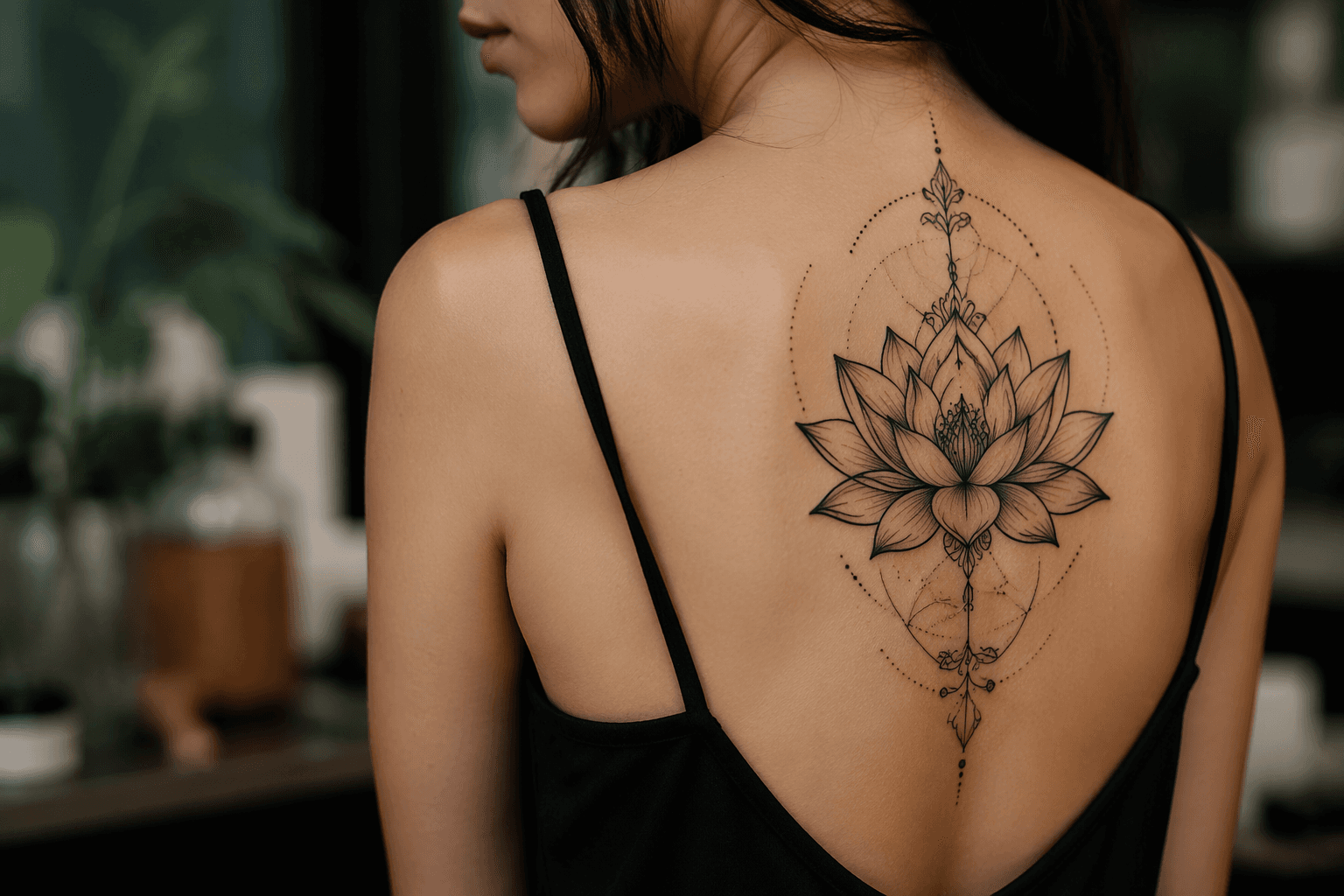
Mandalas work especially well because they already depend on symmetry, rhythm, and repetition. On darker skin, the best versions are not overpacked with tiny filigree. They use a stronger outer ring, clear internal spacing, and a scale that lets the eye read the pattern immediately. That is why a mandala on the chest, shoulder, or thigh often lands harder than a smaller version crammed onto a narrow patch of skin.
Sacred geometry grids need the same discipline. Hexagons, lattices, and interlocking shapes can look incredibly sharp, but only if the artist resists the urge to over-detail every intersection. A thigh linear piece with lots of negative space is a good example of the principle at work: the open skin becomes part of the structure, so the pattern stays legible instead of turning into visual static. On darker skin, that breathing room is not empty. It is what keeps the geometry clean.

Dotwork constellations and line accents give you precision without clutter
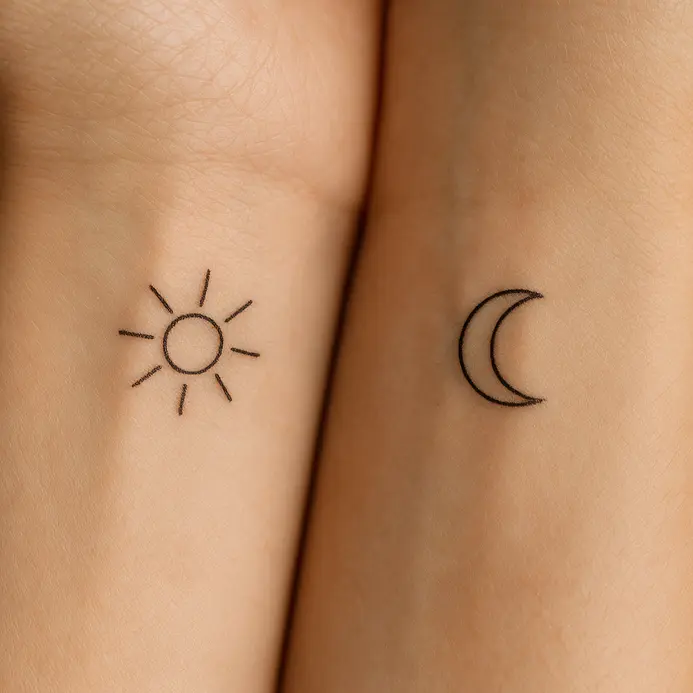
Dotwork is one of the smartest ways to build geometric texture on deeper skin tones because the eye reads clusters, not just lines. A chest dot cluster can be bold without looking heavy, and that bold simplicity is the whole point. On a wrist, an abstract line can feel like subtle jewelry rather than a loud statement, which makes it one of the easiest ways to wear geometry every day without it taking over the whole arm.
This is also where visibility choices matter. A hand accent is for someone who wants the tattoo to speak up in plain sight, while matching arrow hearts work well for couples or best friends because the shape is readable even when it is kept compact. The common thread is restraint: if the dots and lines are spaced with intention, the design keeps its shape instead of sinking into the skin tone.
Blackout-assisted geometry gives smaller motifs something to stand against
Some of the best dark-skin geometric pieces borrow strength from blackout placement or heavier fill. The basket-weave arm pattern described as soft armor works because the woven structure sits against darker fields and still holds definition. It feels protective without becoming blunt, which is exactly the balance good geometry needs.
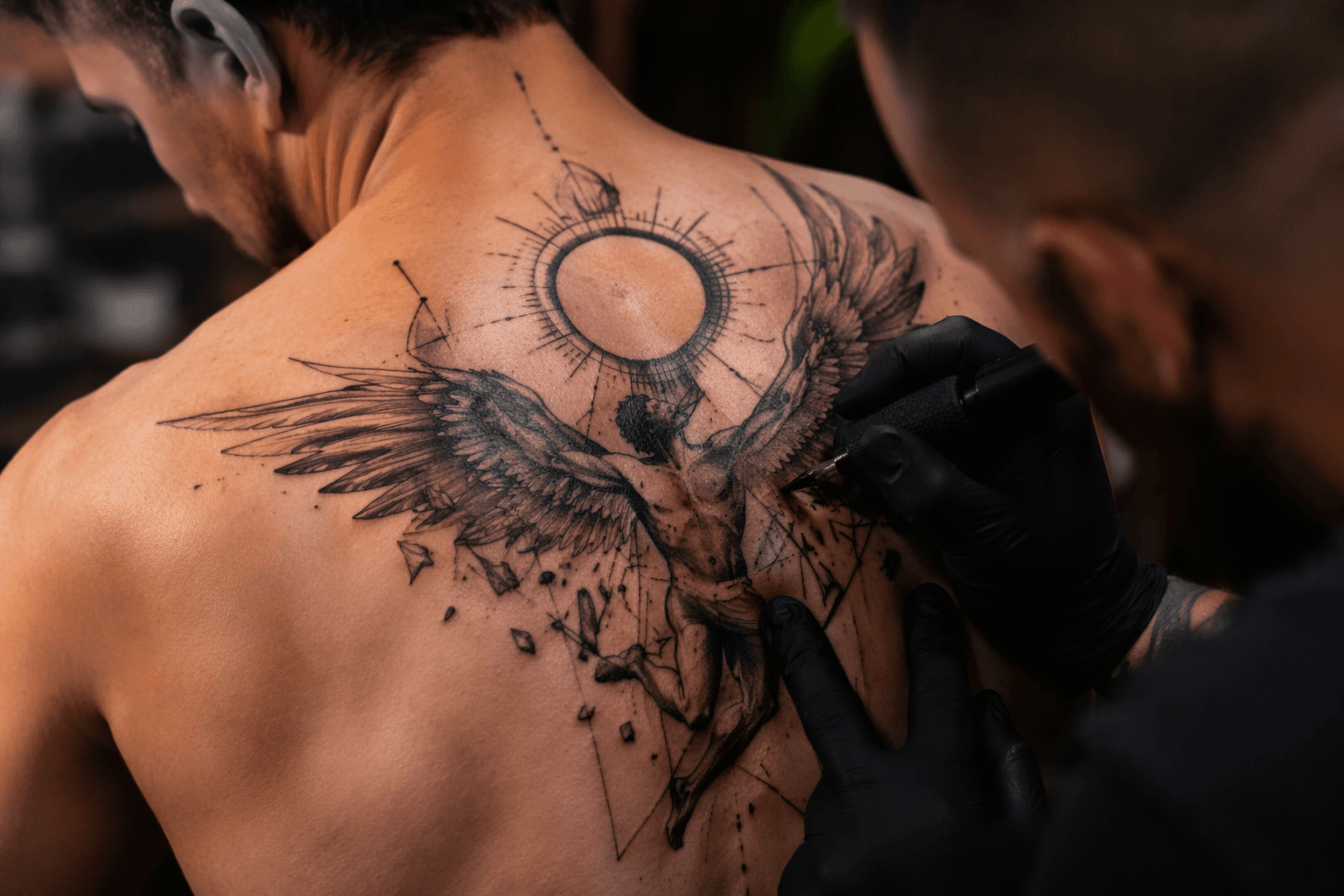
The shoulder circuit motif is the clearest example of tech and geometry meeting real-world wear. A tattooist friend’s advice to use thicker lines for longevity makes perfect sense there, because shoulders move, stretch, and catch light constantly. If the linework is too fine, the design can blur into the body as it heals. If it is thick enough, the circuit still looks deliberate, almost engineered, instead of tentative.
What holds up in daily life is usually the bigger idea
The strongest geometric tattoos for darker skin are not trying to prove how intricate they are. They are trying to stay readable after healing, in motion, and at a glance. That is why the motifs that work best keep returning to the same principles: mandalas with open centers, sacred geometry grids with room to breathe, dotwork constellations with deliberate spacing, and blackout-assisted forms that give the eye a place to land.
That is the real update in the design language. The old mistake was treating geometric tattooing like a flat image problem. The better approach treats it like translation, where contrast, placement, and scale do the heavy lifting so the tattoo still pops long after the skin has settled.
This article was produced by Prism’s automated news system from verified source data, official records, and press releases, then run through automated quality and moderation checks before publishing. The system is built and supervised by the people who set the standards it runs under. Read our full AI policy.
Know something we missed? Have a correction or additional information?
Submit a Tip