Geometric Mountain Tattoos Capture Endurance, Stability, and Sharp Linework
A geometric mountain tattoo can turn a familiar peak into a sharper story about endurance, place memory, and precision linework.
Why the mountain keeps working in geometric tattooing
A mountain only works in tattoo form when the shape carries the story. Stripped down to lines, triangles, and layered planes, it still reads as endurance, stability, and earned perspective, which is why the motif keeps landing in geometric tattoo culture instead of fading into outdoor cliché.
That directness matters. A mountain does not need translation: you either climb it or you do not. In tattoo language, that honesty gives the design unusual force, because the symbol already says something about difficulty, the long view, and the way hard terrain can change a person.
Why the symbol feels bigger than a landscape
Mountains have real-world weight beyond aesthetics. Britannica describes them as prominent landforms with steep slopes, a relatively confined summit area, and considerable local relief, and notes that mountain ranges are more common than isolated peaks. National Geographic also points out that mountains can define natural borders and influence weather patterns, which helps explain why the image feels both personal and structural at the same time.
That environmental presence is part of the appeal. National Geographic Society launched its Perpetual Planet Mountain Expeditions in 2019 in response to the urgent need to document and understand high alpine systems facing climate and environmental change. In other words, mountains are not just symbols of resilience in tattoo art, they are living systems under pressure, which gives the motif a deeper sense of consequence.
How geometric tattooing sharpens the mountain
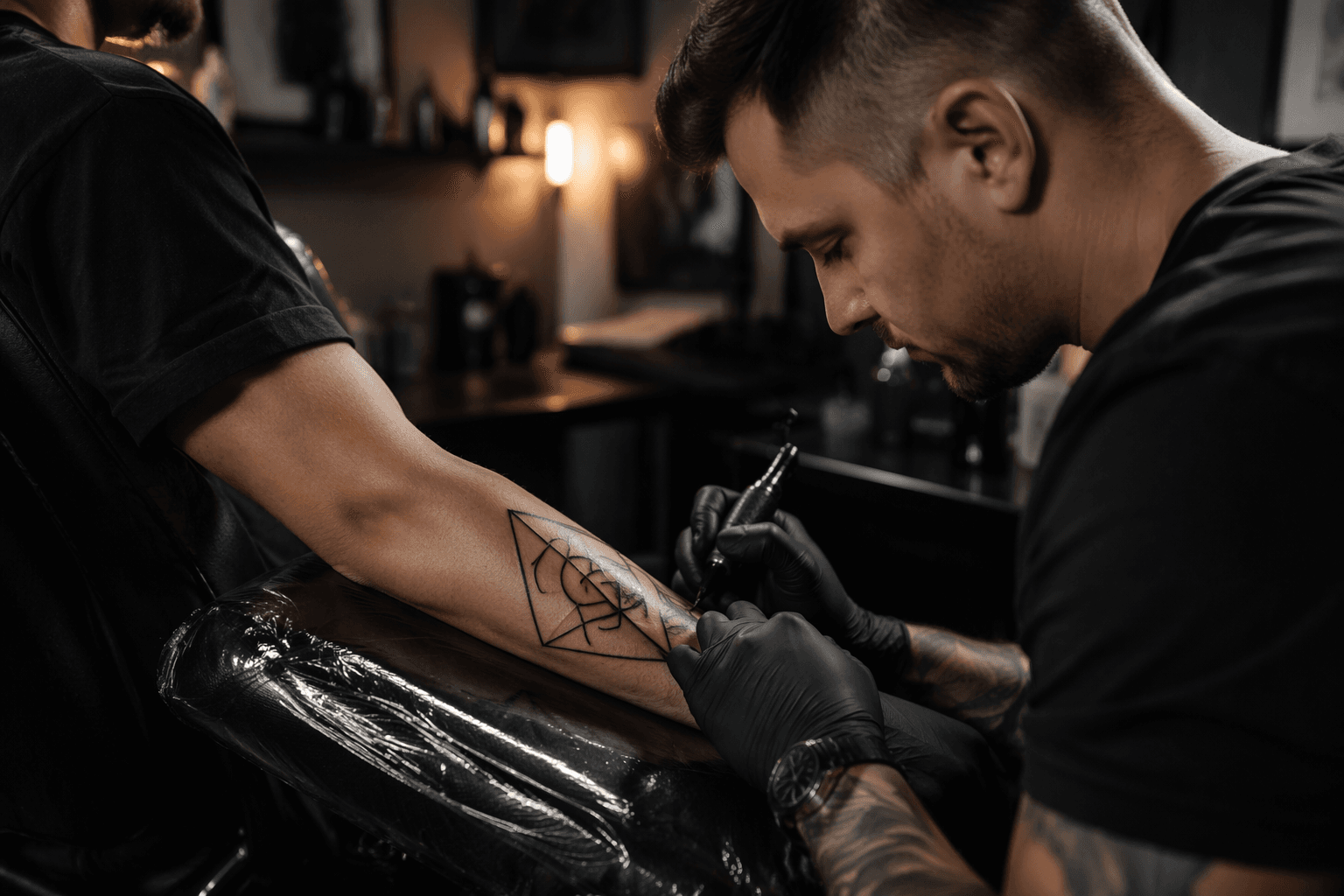
The geometric version works because it translates a familiar scene into a cleaner visual language. Tattoo media describes geometric tattoos as using precise lines, symmetry, repetition, and mathematical patterns, and those traits fit mountain imagery naturally when the peak is broken into triangular facets or stacked planes.
That faceted approach gives the landscape a crystalline, carved quality that mirrors the angular reality of rock. It also connects well with the broader geometric tradition, where some artists and coverage reference Fibonacci sequences and sacred geometry, making the tattoo feel ordered without becoming sterile. For readers who want the outdoors motif but not the standard rustic look, geometry adds structure, tension, and a more contemporary edge.
Design choices that keep the tattoo personal
The strongest mountain tattoos usually do more than depict a ridge. They encode a specific story through composition, and that is where geometric work really earns its place. A single-line peak can feel spare and disciplined, while a faceted range suggests persistence across multiple stages of life.
Common ways people personalize mountain tattoos include:
- Coordinates that mark a summit, hometown, or place of recovery
- Dates that anchor the design to a milestone
- A compass that turns the image into navigation rather than decoration
- An alpine lake reflection for balance and symmetry
- A sun or moon for timing, transition, or arrival
Those details matter because mountain tattoos are often chosen to symbolize love of nature, but the best versions usually go further than that broad sentiment. They can stand for exploration, a hard period survived, a place that changed someone, or the quiet confidence of knowing exactly where the memory came from.
Blackwork, grey tone, and the power of negative space
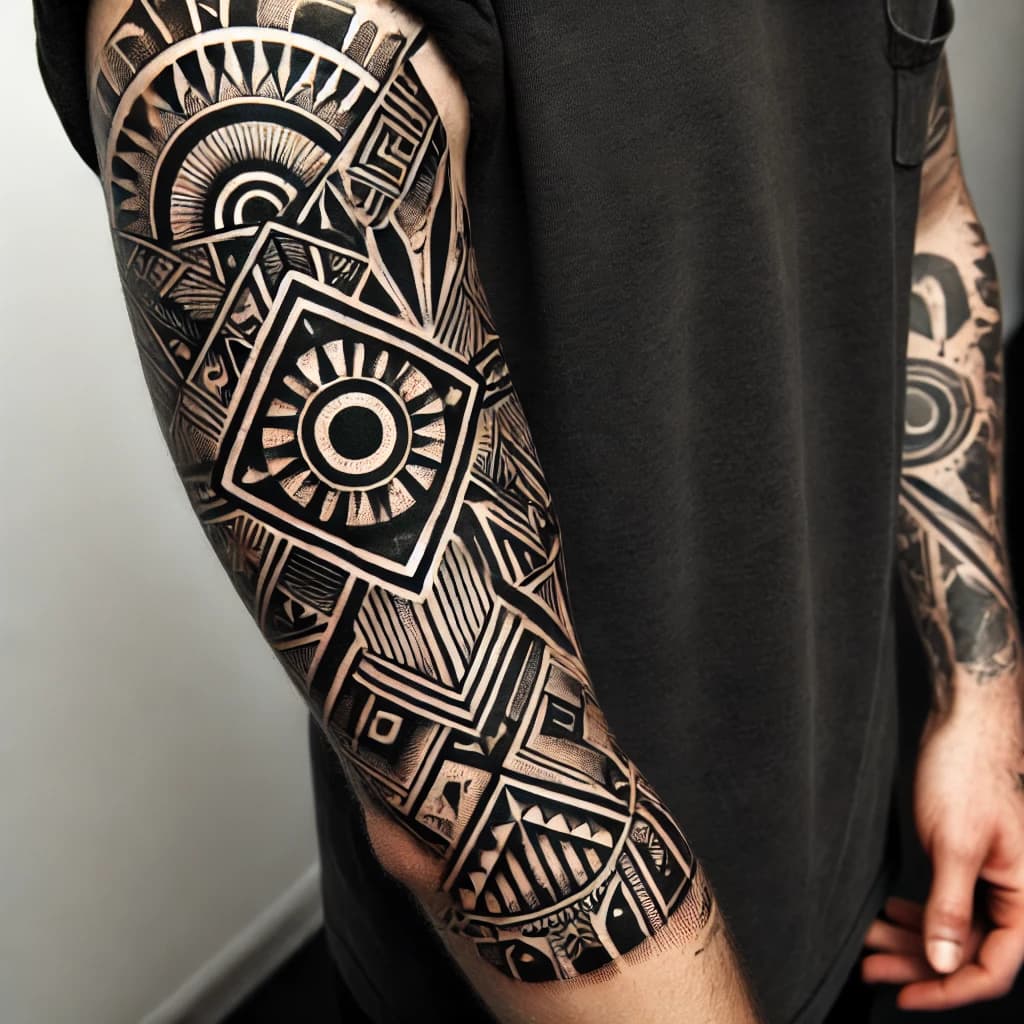
Blackwork is a natural fit here because it heightens the contrast between deep ink and open skin. That contrast is one reason blackwork is commonly associated with sacred geometry tattoos, where negative space is doing as much work as the ink itself.
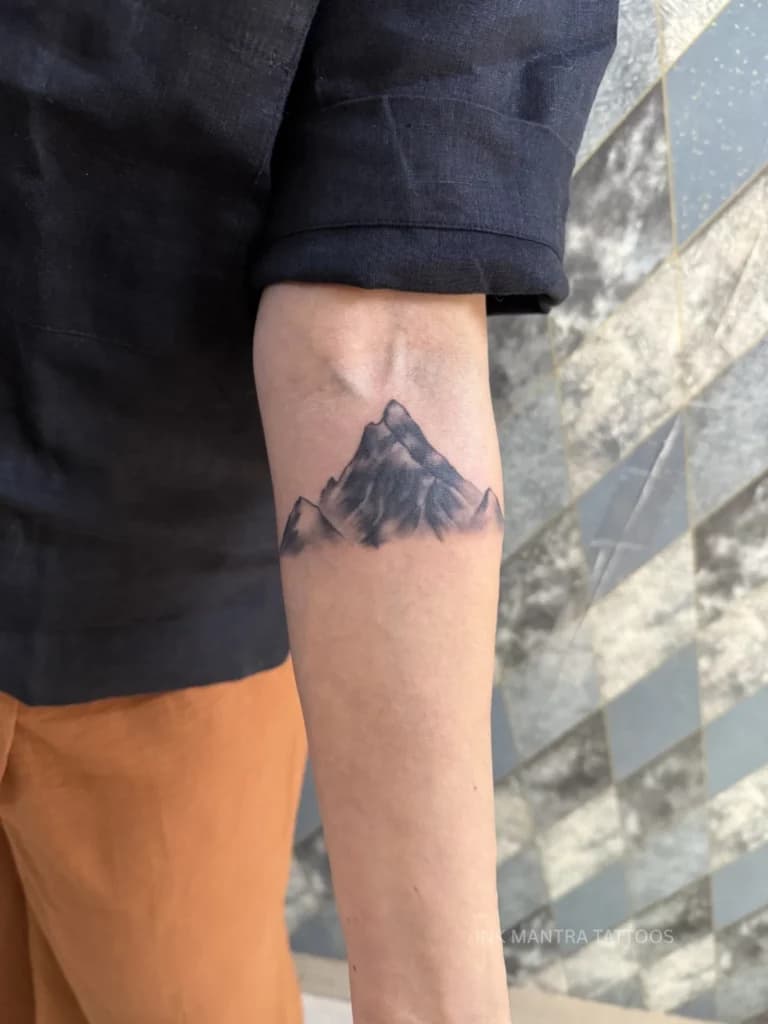
For a mountain design, blackwork can turn the silhouette into a strong visual anchor, while grey toning softens the transition between peaks and background. If the goal is clarity and impact, blackwork keeps the outline crisp; if the goal is atmosphere, subtle grey shading can suggest distance, mist, or weather without losing the geometric read.
The strongest mountain concepts in geometric form
Among the wider set of mountain tattoo ideas, the geometric version stands out because it can move easily between minimalism, realism, and symbol. A bold blackwork silhouette feels immediate and graphic. A realistic black-and-grey landscape leans into texture and depth. A mountain-and-sun combination can frame the peak as arrival or renewal, while an alpine lake reflection creates a mirrored composition that plays beautifully with symmetry.
The mountain compass version is especially effective for people who want the tattoo to signal direction as well as resilience. It turns the piece into a map of intent, not just a picture of scenery. That is the advantage of geometric framing: the same mountain can feel meditative, technical, rugged, or navigational depending on how the lines are arranged.
What to think about before locking the design
The key question is not whether you want a mountain, but what kind of mountain story you want to tell. If the design is about endurance, stronger angles and denser blackwork can make the piece feel grounded. If it is about place memory, coordinates, dates, or compass details can turn the tattoo into a specific record rather than a generic nature motif.
The most successful geometric mountain tattoos usually balance three things:
- Symbolism, such as resilience, stability, or a long climb
- Structure, such as symmetry, facets, and line discipline
- Personal context, such as a route, summit, season, or milestone
That balance is what keeps the design from drifting into standard outdoors iconography. Instead of a decorative mountain, you get a piece that feels measured, intentional, and built with the same kind of precision that geometric tattooing demands in the first place.
Why the style keeps its edge
Geometric mountain tattoos keep working because they turn a familiar emblem into something sharper without stripping away its meaning. The mountain still says struggle, scale, and permanence, but geometry gives it restraint and a modern architecture that suits the skin.
That is the real strength of the design. It can look clean and technical on day one, yet still carry the weight of a specific place, a hard-earned memory, or a personal summit years later.
This article was produced by Prism’s automated news system from verified source data, official records, and press releases, then run through automated quality and moderation checks before publishing. The system is built and supervised by the people who set the standards it runs under. Read our full AI policy.
Did this article answer your question?