Geometric Tattoo Aftercare Guide Covers Linework, Dotwork, and Infection Prevention
Linework gaps and blown-out dotwork aren't always the artist's fault — poor aftercare destroys geometric precision faster than a shaky hand does.
Why Geometric Tattoos Demand a Different Aftercare Mindset
Most tattoo aftercare advice is written for bold traditional flash or shaded realism, where minor healing imperfections blend into the composition. Geometric work is unforgiving by design. Sacred geometry and geometric linework rely entirely on line clarity, and if a scab rips off or the area is over-dried, it can leave gaps in the pattern. The same math that makes a Metatron's Cube or a dotwork mandala visually stunning is precisely what makes healing mistakes impossible to hide. This guide addresses the specific pressure points for linework, dotwork, and sacred-geometry pieces, and the infection risks that can turn a precise tattoo into a liability.
The First Hours: What Happens at the Studio Sets the Tone
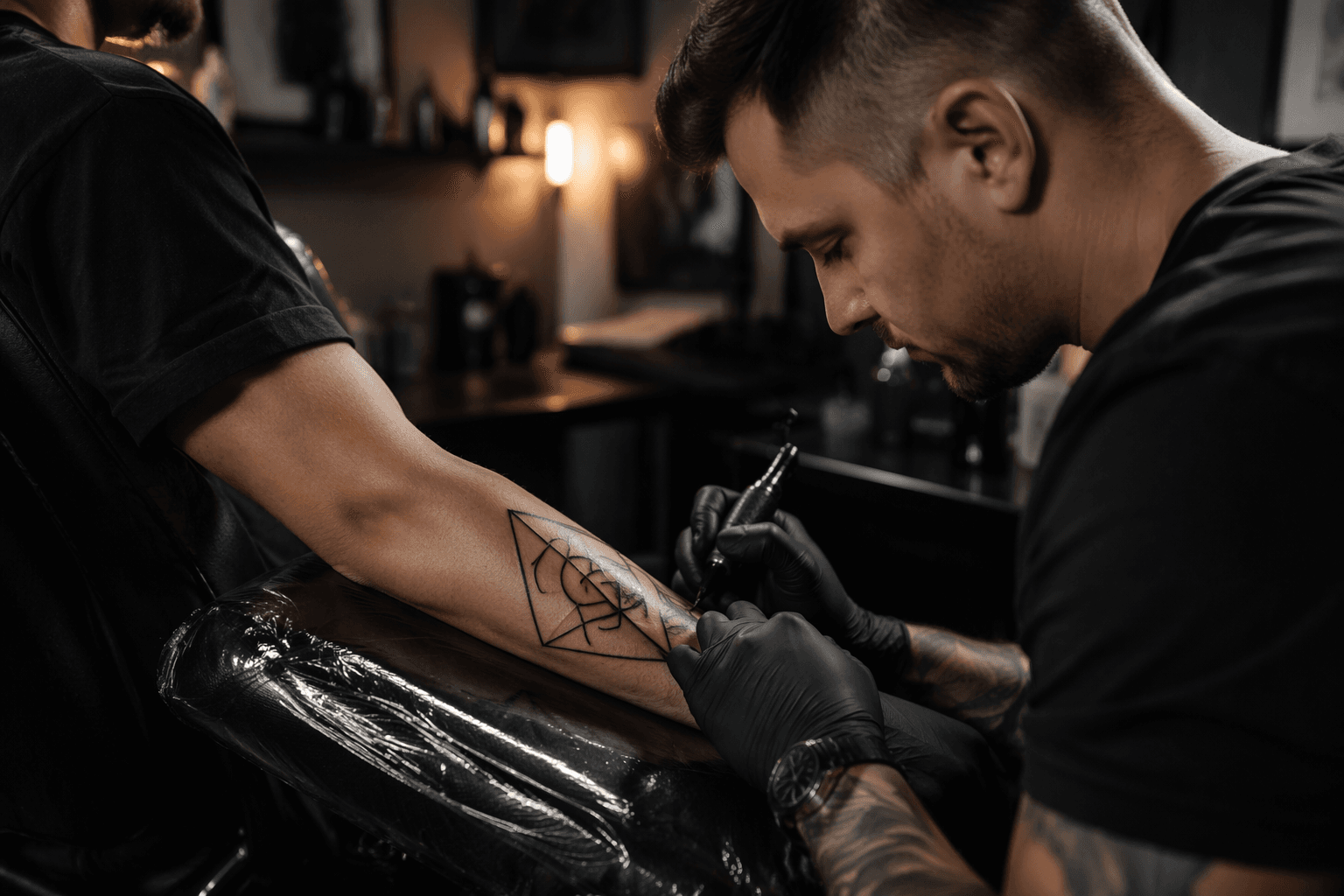
Infection control starts before the client sits in the chair. Tattooists must wash their hands before and after tattooing to prevent the spread of viruses and bacteria, and artists should wear gloves while working with clients and equipment. For ink specifically, the CDC recommends that only sterile ink products and sterile water should be used, and that appropriate hygienic practices should be followed when tattooing. This matters especially for dotwork, where single-use ink from single-service containers should be used to avoid contamination — an artist re-dipping into a shared cap across multiple clients is a contamination vector that most clients never think to ask about.
The client's skin must be washed before being shaved and before any procedure, and should be wiped down with an antiseptic solution or antimicrobicide before tattooing begins. Once the session is finished, the artist will clean the area and apply a sterile, non-stick bandage to protect the fresh tattoo from bacteria and contaminants.
Right after the session, the artist should cover the tattoo with a breathable wrap like DermShield, which helps protect it from bacteria while letting the skin heal underneath.
Choosing Your Wrap: Saniderm vs. Traditional Methods
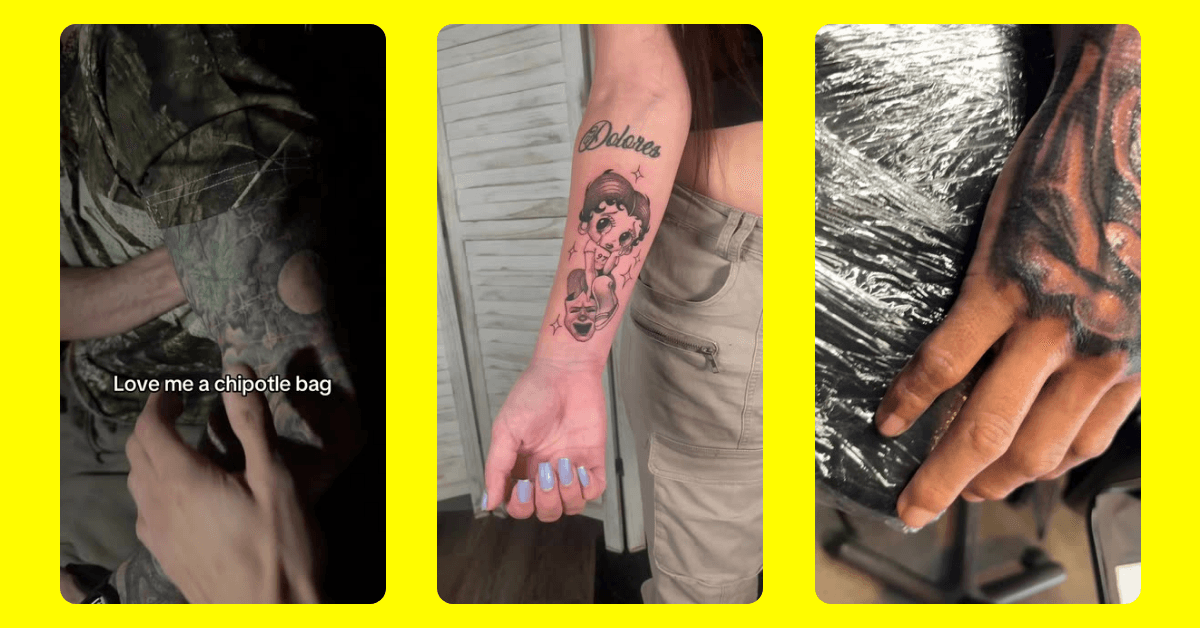
In traditional tattoo care, covering the new tattoo with plastic wrap like Saran Wrap is usually the first step in the healing process, staying on for a few hours before the tattoo is washed, dried, and covered with a thin layer of petroleum-based ointment such as Aquaphor or Vaseline, repeated three to four times daily. This process can take anywhere from two to four weeks.
The modern alternative, medical-grade second-skin bandages like Saniderm or Tegaderm, is now the standard in most reputable studios. Unlike plastic wrap, Saniderm is a sterile, medical-grade, breathable, and waterproof tattoo bandage specifically engineered to be oxygen-permeable. By locking in the body's blood and plasma as it exits the wound site during the first 24-48 hours, Saniderm prevents scabbing and accelerates the recovery process, while also drastically reducing the risk of tattoo contamination by keeping the site covered with a protective barrier.
For geometric work, this matters more than with other styles. Scratching or itching at scabs on a new tattoo can result in loss of the ink's pigment and detail, and may even cause bleeding, irritation, infection, or scarring. On a piece where every line is measured and every dot is intentional, losing even a small section of pigment during healing means a touch-up that may never sit quite the same way.
The ideal duration for keeping a Saniderm bandage on is between three and five days. Keep the bandage fully sealed on top of the tattoo, and remove it when it is worn out and no longer looks sanitary. Do not exceed five days of wearing.
One critical caution: if the Saniderm is leaking, you cannot leave it on the tattoo. If bacteria can get out of the bandage, it can get in, leaving the tattoo susceptible to infection. Also avoid isopropyl alcohol when cleaning before re-application: isopropyl alcohol will kill bacteria in the area, but it will also kill the body's own healing elements, causing the wound to dry out under the bandage.
Linework-Specific Aftercare
Clean, single-pass linework heals faster than densely worked areas, but it is also the most brutally honest about aftercare failures. A blown-out line is usually a needle depth issue; a broken or faded line during healing is almost always an aftercare failure.
Linework heals very quickly and easily, so if a tattoo is just linework, there is the option of drying it out around days five to eight after the bandage comes off. Over-moisturizing is counterproductive; only a few days of ointment and washing are needed once the bandage is removed.
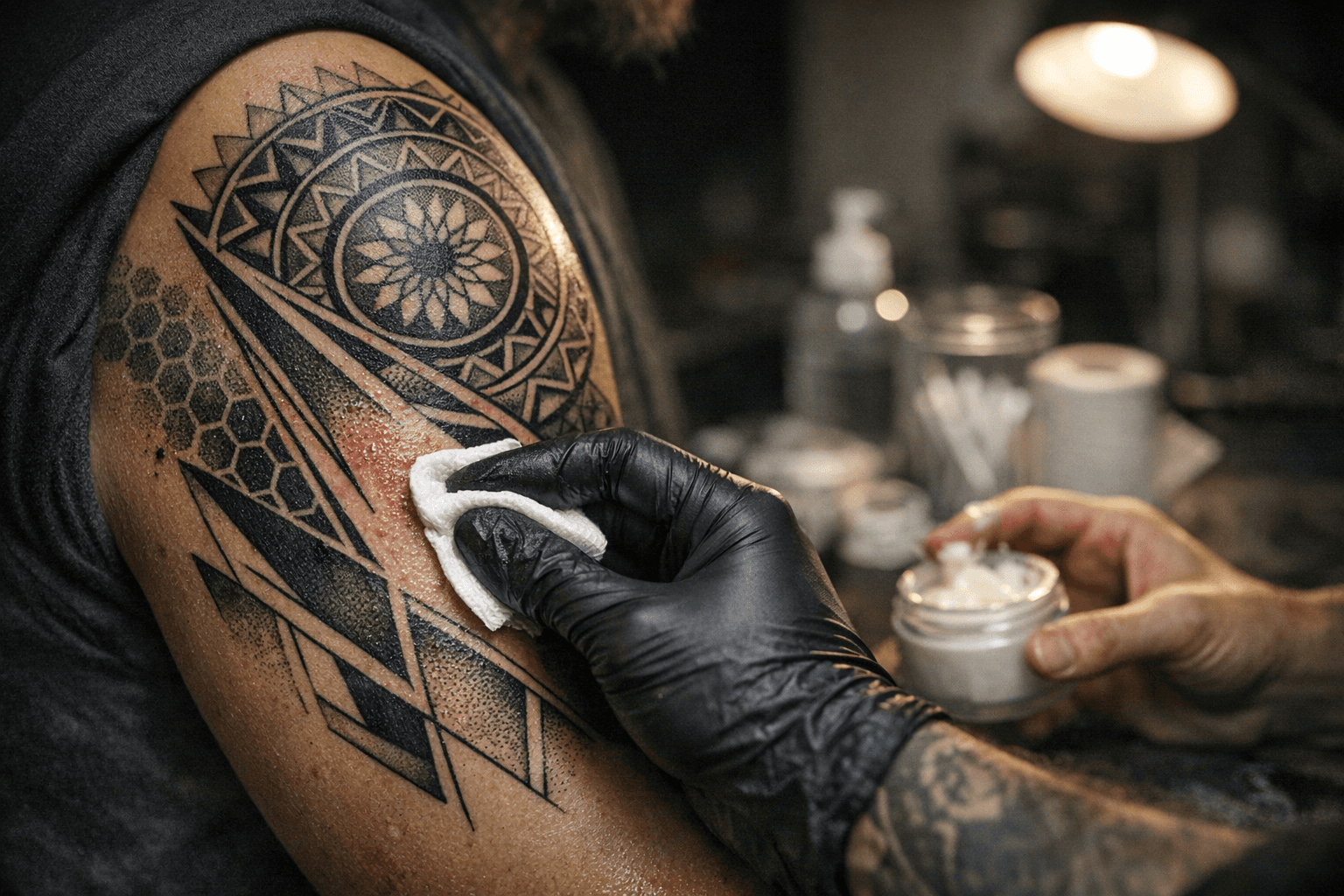
After the Saniderm comes off, wash the tattoo twice a day, once in the morning and once at night, with an unscented, fragrance-free soap. During the day, keep the tattoo clean and dry. When moisturizing, apply only a thin layer of fragrance-free moisturizer once in the morning and night, using a lightweight lotion without heavy oil or petroleum.
Wash the tattoo with a mild antibacterial soap, lathering with the hands and applying suds to the tattoo rather than rubbing the bar directly on it. Pat the tattoo dry rather than rubbing. Rubbing with a towel drags across healing skin and can pull ink out of fine lines before it has fully set.
Dotwork-Specific Aftercare
Dotwork behaves differently under the skin than linework because the technique itself is structurally different. Dotwork tattoos are created using individual dots rather than continuous lines or heavy shading. This technique minimizes damage to the skin's surface because the needle isn't dragging across large areas or repeatedly penetrating the same spot. Less collective trauma to the skin generally means a calmer healing window, but the clustered density of dotwork mandalas can still create localized inflammation.
Dotwork rarely uses solid blackouts or dense color packing. Instead, gradients and shadows are built using spaced-out dots, which means less ink is forced into the skin in a single session. The practical consequence: dotwork pieces typically have less plasma weep than heavily saturated work, so the "ink sac" that forms under Saniderm is usually smaller. Still, that fluid needs to be monitored. In the first twenty-four hours there may be a buildup of blood, ink, and plasma underneath the Saniderm. This is completely normal, but you do not want to leave the buildup for more than one day. Remove the Saniderm when there is excessive buildup, clean and dry the tattooed area, and re-apply.
The itching phase, which hits most clients around days five through ten, is where dotwork gets damaged. Around this time, a tattoo may itch intensely. Do not itch it, do not pick at it. Rub or tap the tattoo gently if necessary, but do not agitate the skin. With dotwork, picking at a single scabbed cluster can pull an entire section of stippling, leaving an obvious void in what should be a seamless gradient.
Sacred Geometry Pieces: The Symmetry Stakes
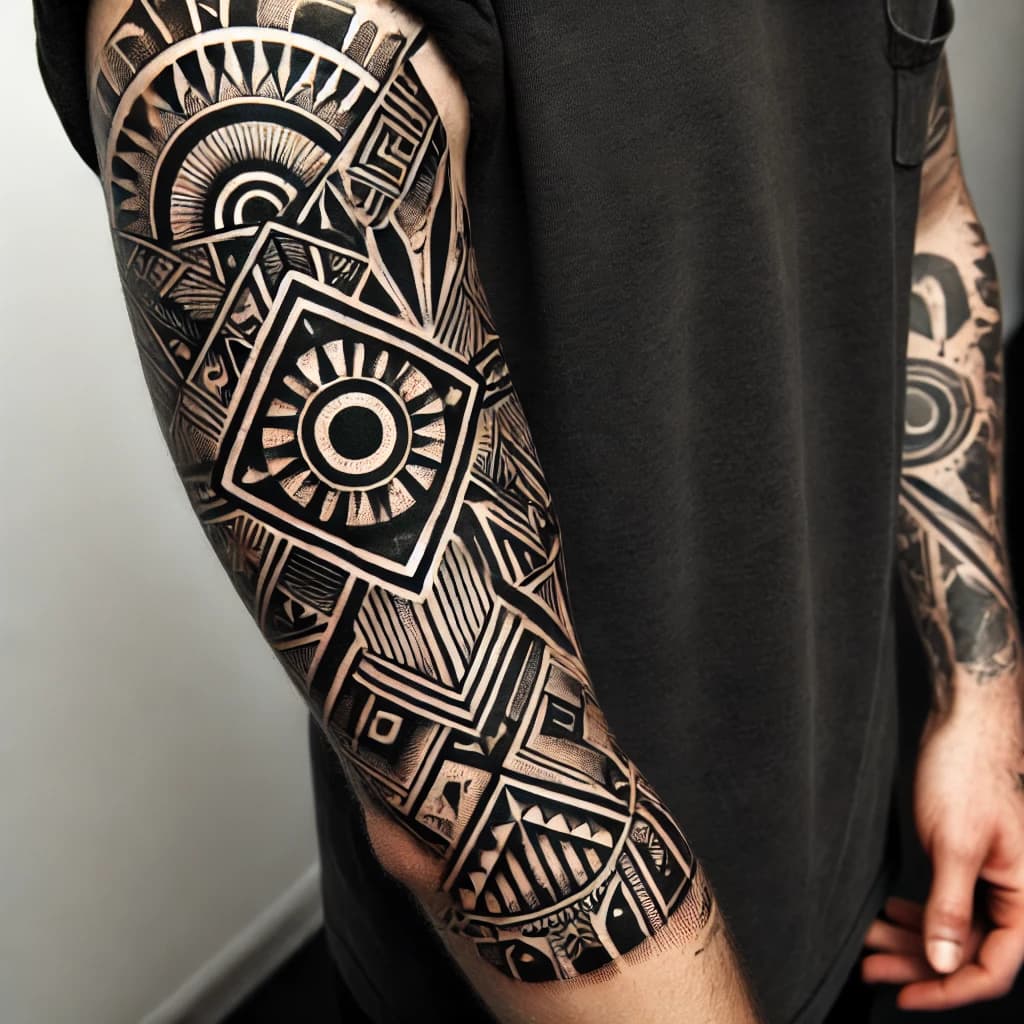
Sacred geometry tattoos, whether Flower of Life, Metatron's Cube, Sri Yantra, or mandala formats, carry an additional burden: symmetry is a large part of sacred geometry tattoos. Any uneven healing across a symmetrical pattern is visible in a way that asymmetrical designs simply are not. A patchy heal on one side of a mandala looks like a design error even if the artist executed perfectly.
Geometric style doesn't hide mistakes well. If part of the skin dries out too much, or the wrap traps sweat, it can shift the pigment. The client may not notice until it heals unevenly. This is why tight clothing is particularly dangerous over geometric pieces that span joints, ribs, or the sternum. Keeping the area around the tattoo clean is vital during the healing process, which means wearing clean clothes that don't irritate the tattooed area and avoiding environments where the tattoo might be exposed to dirt and bacteria.
Sacred geometry tattoos, especially those with intricate details, can fade over time due to sun exposure. Use sunscreen or cover the tattoo when exposed to the sun to maintain its vibrancy. During active healing, do not use sunblock until the tattoo is completely healed, as the chemicals in sunscreens may damage the tattoo. Cover it physically instead: loose cotton over the piece while outdoors.
Infection Prevention: Recognizing the Difference Between Normal Healing and a Problem
Redness and minor swelling are normal, but watch for spreading redness, heat, pus, or increased pain. If anything seems off, contact a doctor or the tattoo artist immediately.
The most common bacteria responsible for tattoo infection is Mycobacterium chelonae. Infection with Mycobacterium chelonae can cause a rash or raised red bumps in a tattooed area within a couple of weeks of receiving a tattoo, and the infection can be difficult to diagnose and may be mistaken for an allergic reaction. This is not a generic redness-around-the-edges situation; it is a clinical infection requiring medical attention, not extra moisturizer.
On the artist's side, autoclave sterilization of reusable equipment is required, and disposable needles and tubes should always be used. The skin should be cleaned with a medical-grade disinfectant before starting, and needles, gloves, and other contaminated items must be disposed of in biohazard containers.
For clients, the rules are straightforward: avoid soaking in pools, hot tubs, or the ocean for at least a month to prevent complications and ensure the aftercare routine leads to successful healing. Avoid picking at scabs or scratching the tattooed area, as this can introduce bacteria and cause infections.
Long-Term Maintenance: Keeping Geometric Work Sharp
The tattoo may appear to be fully healed on the surface once the Saniderm bandage comes off. However, deeper layers of skin will still be repairing for two to four months. A good moisturizing regimen for this entire period is recommended.
Limit sun exposure by covering tattoos and using sunscreen, and avoid tanning. This will help keep black inks dark and lines crisp. For geometric work in particular, crisp lines are the entire point. Consider touch-up sessions with your artist to refresh the tattoo's details. This helps maintain the tattoo's original beauty and prevents fading.
If something looks off during healing, don't panic. Reach out to the artist. Most touch-ups are quick and clean, especially when caught early. The geometry that makes these tattoos so striking is also what makes early communication with the artist the most valuable tool in the aftercare kit.
This article was produced by Prism’s automated news system from verified source data, official records, and press releases, then run through automated quality and moderation checks before publishing. The system is built and supervised by the people who set the standards it runs under. Read our full AI policy.
Did this article answer your question?