Geometric Tattoo Gallery Maps Symmetry, Meaning, and Placement Ideas
The best geometric tattoos are built like architecture: precise, symmetrical, and placed where the body can carry the pattern cleanly.
Why the gallery matters
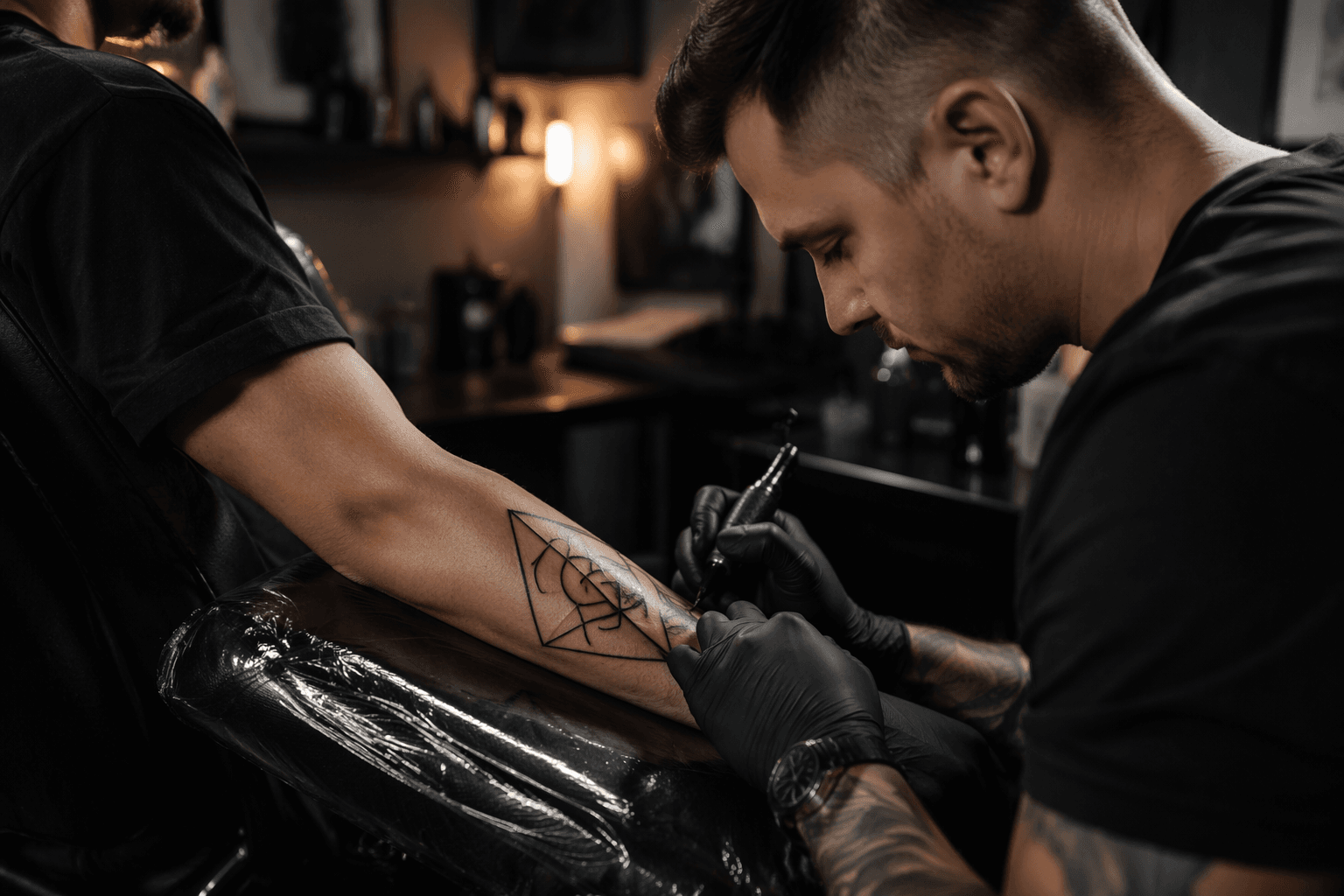
The hardest part of a geometric tattoo is not the stencil. It is deciding whether the pattern belongs on a forearm, a chest, or a back where symmetry can actually breathe. Tatship’s gallery works because it treats geometry as a practical language of precision, balance, and visual clarity, not just a pile of pretty shapes.
That matters because geometric tattoos are more than triangles, circles, squares, and lines arranged for effect. They can signal order, stability, interconnectedness, and even the mathematical structure of the universe, which gives the style a rare range: clean enough for minimalists, symbolic enough for people who want meaning, and structured enough for clients who want the tattoo to feel intentional on the body.
Sacred geometry, mandalas, and the designs that demand perfect control
If you are drawn to sacred geometry, the appeal is usually immediate: symmetry does emotional work before the eye even notices the mechanics. Golden spirals, sacred knots, and mandala designs sit at the center of that lane, and they ask for elite execution because even a small imbalance can throw the whole piece off. These are the tattoos that look effortless only after a lot of discipline from the artist.
This is also where the style can age well, as long as the design is built with restraint. Dense sacred-geometry work can stay powerful for years when the spacing is clean and the composition respects the body, but overcrowded patterns can start to look busy rather than meditative. On larger placements like the chest or back, the geometry has room to stay legible; on tighter spaces, the same design can feel compressed fast.
Linework and dotwork, the cleanest route into the style
Linework and dotwork are often where people find the geometric world most wearable. Tattooing 101 describes geometric tattoos as especially appealing because they are clean, bold, and show off the structure of the body, and that is exactly why simple line systems and dot-built shading keep working long after louder tattoo fads cool down. They let the shape of your arm, shoulder, or ribcage do part of the storytelling.
Dotwork in particular gives geometry a softer pulse. It can turn hard-edged structure into something that feels almost atmospheric, while still preserving the discipline that makes the style recognizably geometric. Linework ages well when the spacing is honest and the composition is not overcrowded, which is why the strongest pieces often look calm from a distance and intricate up close.
Optical illusion pieces and why they need the best hands
Optical-illusion geometry is the most unforgiving branch of the family. The whole effect depends on exact spacing, consistent line weight, and a strong sense of flow, because the design has to trick the eye without falling apart when the body moves. That is thrilling when it works and brutally obvious when it does not.
This is also the part of geometric tattooing most likely to feel tied to a particular moment if it leans too hard on a trendy visual trick. A convincing illusion piece can still age well, but only if it is grounded in structure rather than gimmick. If the design exists only to look wild on a phone screen, it can lose its force once the novelty fades.
Sleeve structure, back tattoos, and where geometry actually lives best
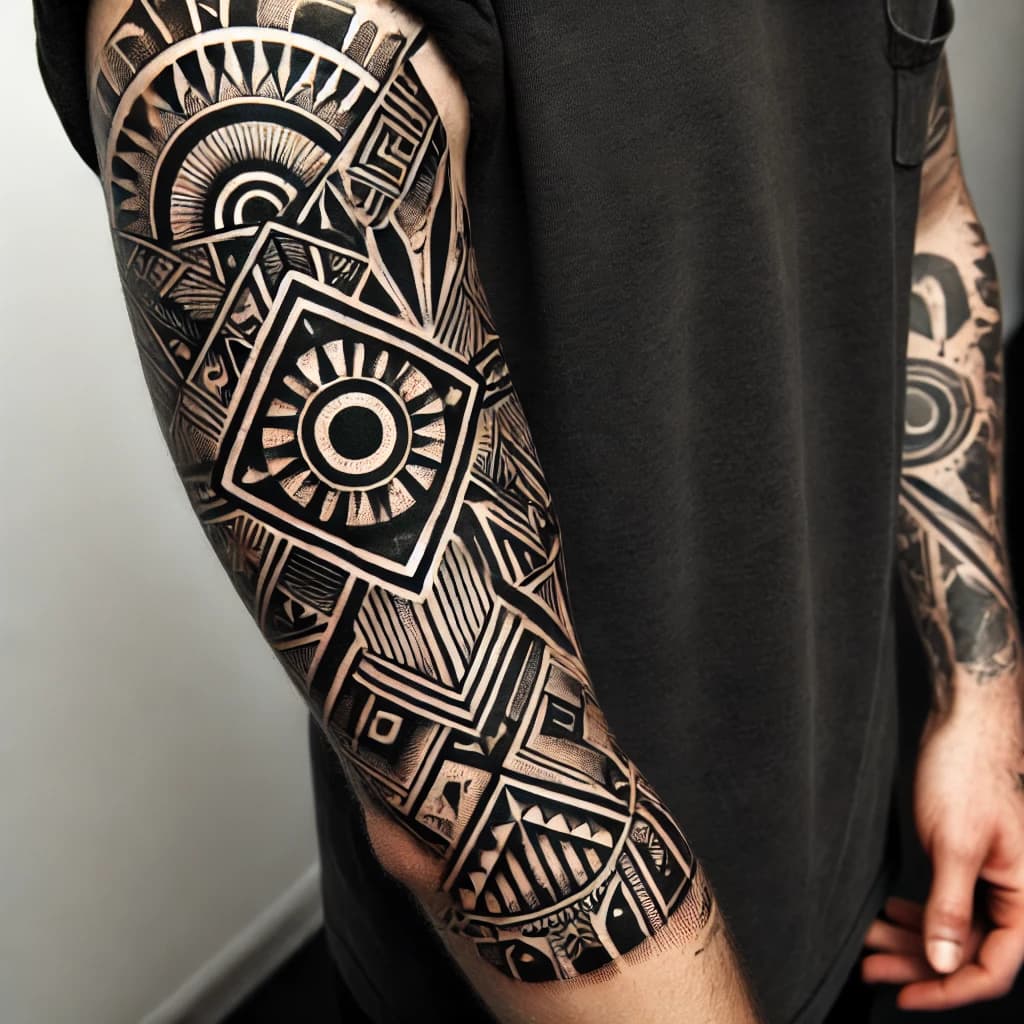
Placement is where geometric tattooing becomes real. Arms, backs, and chests keep coming up because those areas give pattern enough room to breathe while still letting the design follow the contours of the body. A back tattoo can hold wide symmetry in a way a smaller canvas cannot, and a chest piece can anchor the whole composition around a central axis.
Sleeve structure is its own skill set inside the style. The best geometric sleeves do not just repeat motifs until the arm is full; they map the flow of the limb, use negative space intentionally, and let the pattern bend with shoulders, elbows, and wrists instead of fighting them. That is why a sleeve built around structure usually outlasts a sleeve built around collecting separate symbols.
Micro-geometry, minimalism, and the risk of going too small
Micro-geometry can be beautiful, but it is the easiest place for the style to lose impact. Tiny repeating forms look elegant in a fresh stencil or a close-up photo, yet they can blur visually if the design is packed too tightly or placed where the body moves and stretches constantly. Minimalism helps here, because a small design with disciplined spacing often survives better than a tiny design trying to do too much.
That does not mean small geometry is weak. It means the work has to be honest about scale. A few precise lines on the forearm can read as more refined than a crowded cluster of miniature shapes that never had enough space to begin with.
A style with older roots than the feed
Geometric tattooing can feel like a modern Instagram language, but its roots run much deeper. Smithsonian Magazine notes that the Iceman, discovered on the Italian-Austrian border and carbon-dated to around 5,200 years old, carried dot-and-cross tattoos near the lower spine, right knee, and ankle, with researchers suggesting a therapeutic purpose. That detail matters because it shows that pattern on skin has long been tied to function, not just decoration.
The same Smithsonian account describes Polynesian tattoo cultures as developing over millennia and often using highly elaborate geometric designs that could cover the whole body. Add the Metropolitan Museum of Art’s discussion of Islamic geometric ornament, with its emphasis on repetition, symmetry, abstract patterning, and the suggestion of infinite growth, and the style stops looking like a passing trend and starts looking like a global design tradition. The Met also notes that the compass and straightedge were foundational tools for generating the lines and circles that make these patterns possible, which is a reminder that geometry in tattooing is as much about craft as it is about symbolism.
What the current wave says about the future of the style
The modern scene is still pushing the category forward. Tattoodo has spotlighted sacred geometry motifs such as golden spirals, sacred knots, and mandalas, while Inked Magazine reported that Dillon Forte brought his geometric practice into the digital space with a Sacred Geometry Drawing App. That shift says a lot: the style is not frozen in museum language, it is still being rebuilt with new tools.
Tattooing 101 also points out that social media and pop culture continue to shape tattoo trends, and geometric work benefits from that visibility because it photographs cleanly and reads fast. But the pieces that last are the ones that are built on clarity, not hype. The strongest geometric tattoos are the ones where the pattern, the placement, and the meaning all reinforce each other, so the final image feels designed for the body instead of pasted onto it.
This article was produced by Prism’s automated news system from verified source data, official records, and press releases, then run through automated quality and moderation checks before publishing. The system is built and supervised by the people who set the standards it runs under. Read our full AI policy.
Did this article answer your question?