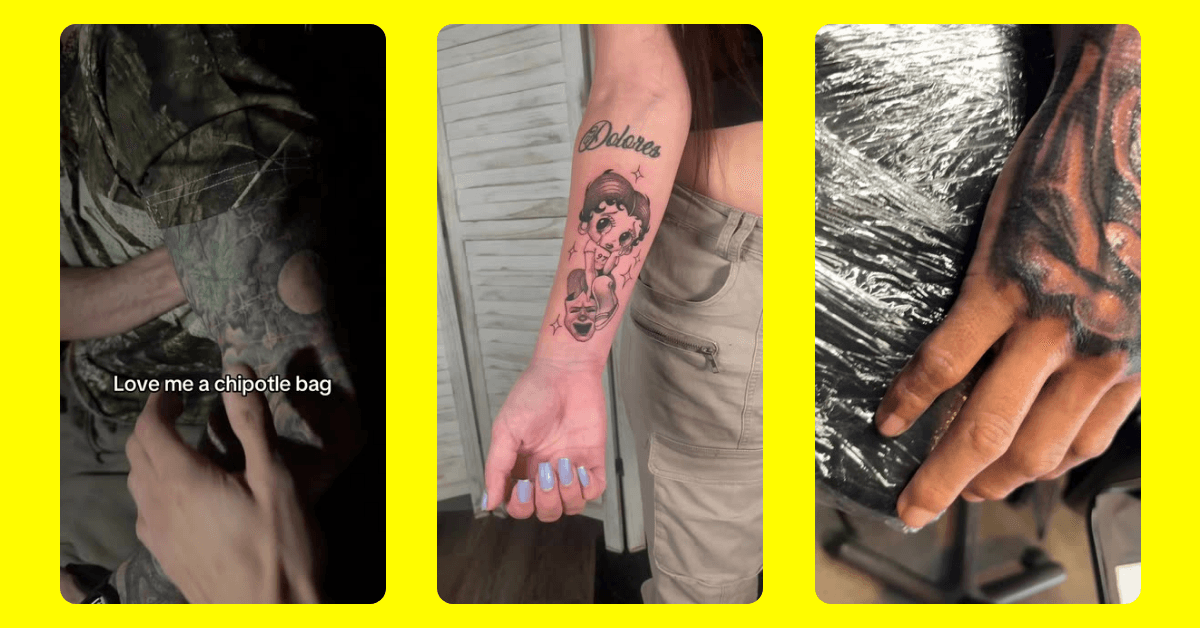
Hand Tattoos Go Mainstream as Minimalist Geometric Ink Rises
Hand tattoos are mainstream, but geometric designs only survive on the hand when symmetry, spacing, and linework stay razor-clean.
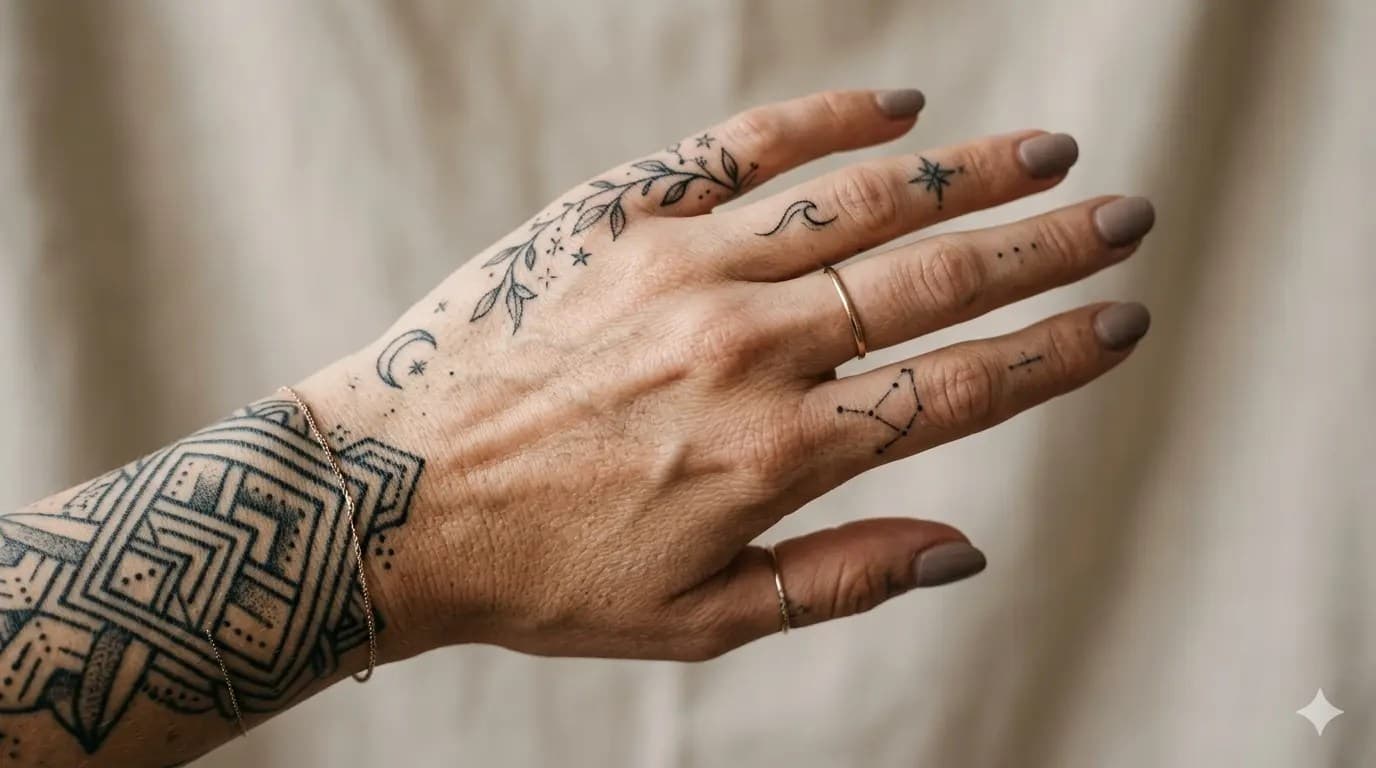
The hand tattoo has crossed the line
Hand tattoos have moved from risky to normal, and that shift changes the rules fast. The hand is no longer a place for people who want to hide their ink, it is a place for people who want their tattoo to function like part of their styling, the way a ring, a watch, or nail art does. That is exactly why minimalist geometric work is gaining ground here: on a hand, every line has to earn its keep.
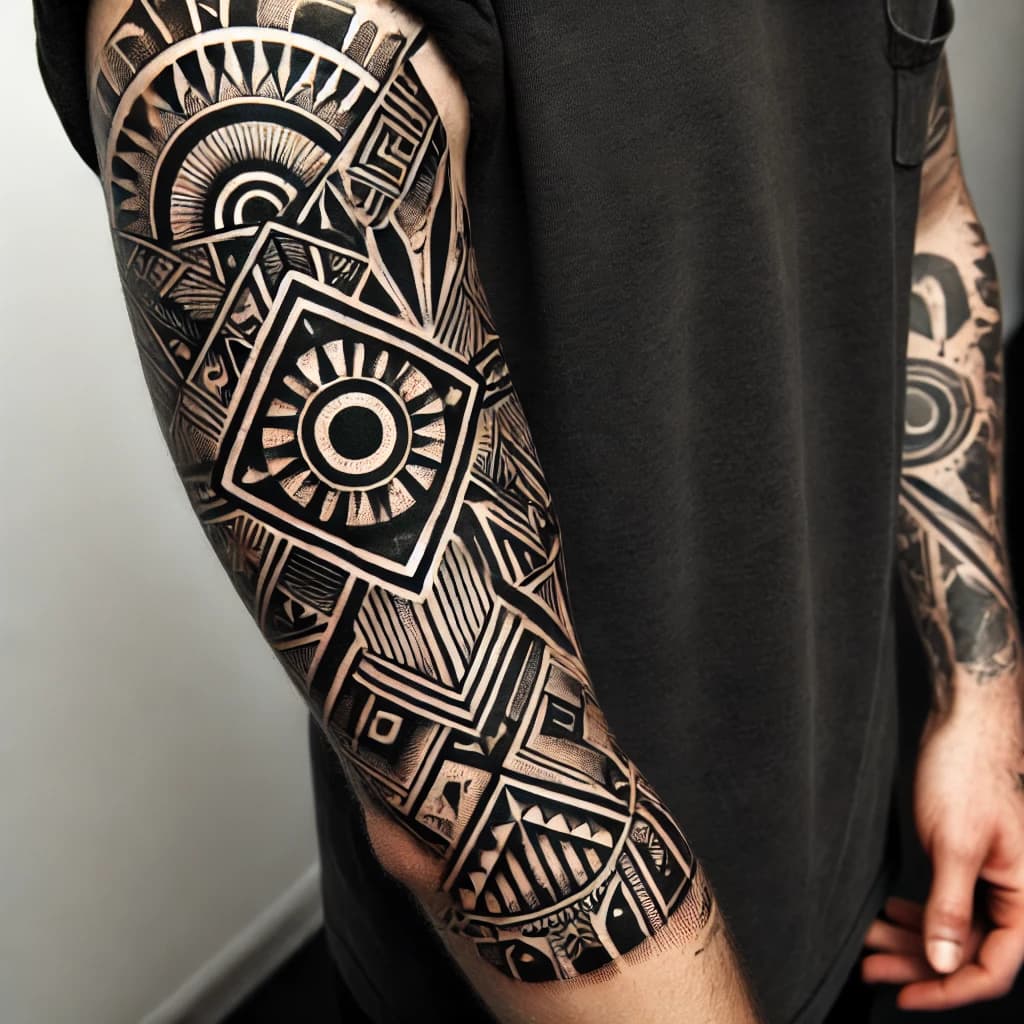
The current trend runs across two very different lanes. At one end are tiny fine-line symbols that read like a personal signature. At the other are bolder statement designs that claim the hand as a full-time canvas. For geometric readers, the middle ground is usually the sweet spot. Symmetry, restraint, and clean negative space do more for a hand tattoo than visual noise ever will.
What actually holds up on a hand
The hand is an unforgiving placement because it moves constantly, gets washed constantly, and is always on display. That means the best geometric hand tattoos are the ones with strong composition and fewer parts that can blur into one another. Crisp linework, balanced dotwork, and compact blackwork tend to age better than designs that rely on delicate detail jammed into a small space.
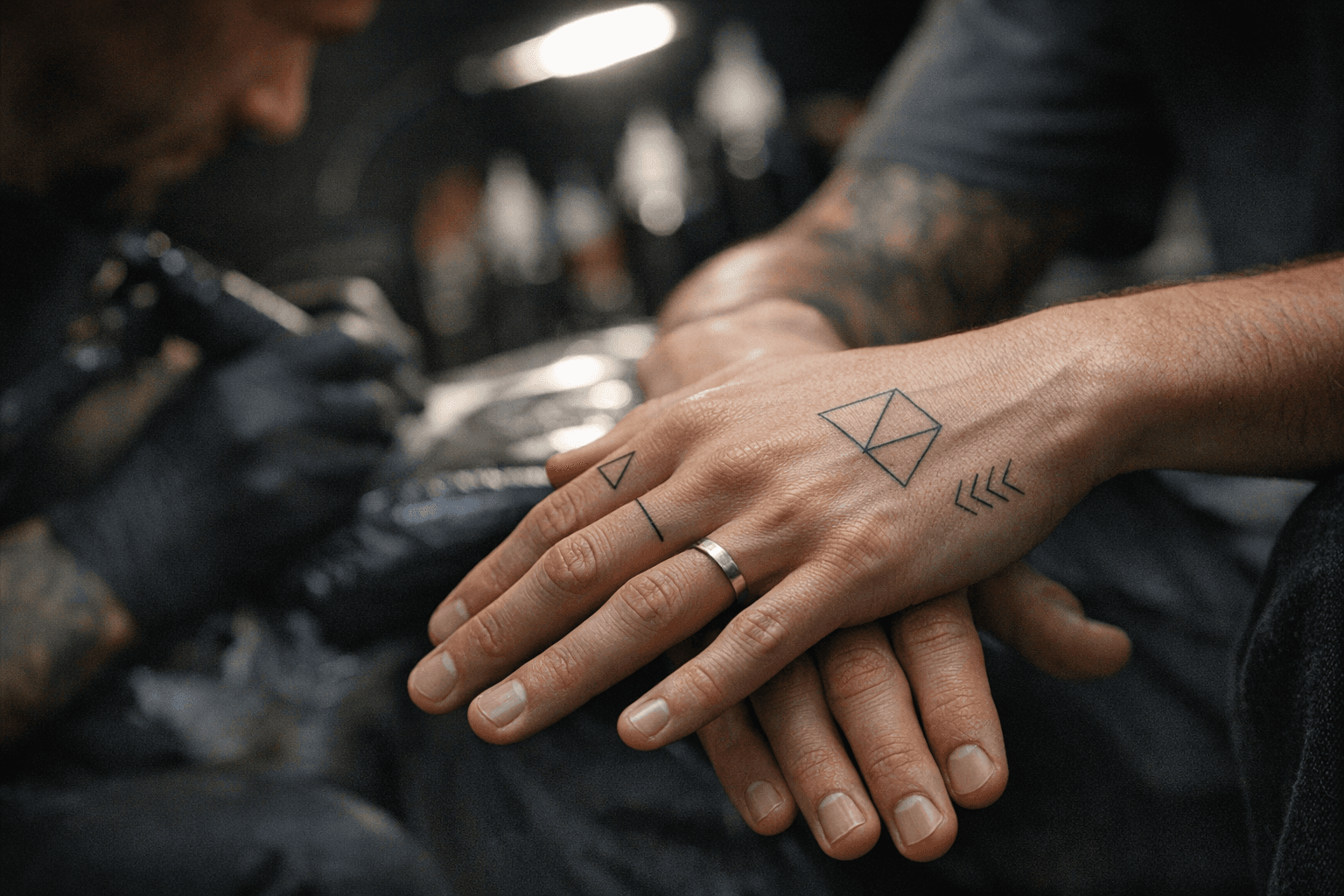
This is where the trend splits into good decisions and bad ones. A small, well-spaced geometric mark can look deliberate for years. A crowded sacred-geometry piece that was squeezed to fit the back of a hand can start looking busy before it is even fully settled. On this body part, readability matters more than complexity, because the eye reads the tattoo in motion, not under studio lights.
- clear symmetry instead of fragile ornament
- strong outlines instead of too many thin interior details
- enough breathing room that the image does not collapse as the skin ages
- a shape that still reads cleanly when the hand is bent, open, or in motion
If you are choosing between styles, look for designs that can survive from arm’s length. That usually means:
Why the trend feels bigger than fashion
The popularity of hand tattoos is part of a larger normalization of tattooing itself. Pew Research Center found in 2023 that 32% of U.S. adults have a tattoo, and 22% have more than one. Tattoo ownership is especially common among adults under 50, including 41% of adults under 30 and 46% of adults ages 30 to 49. That is a huge base of people who already treat ink as ordinary rather than rebellious.
The temperature around tattoos has also changed. A YouGov survey published in April 2025 found Americans are more favorable toward tattoos now than they were a decade earlier. That matters because visible placements only get mainstream when the culture stops treating them like a liability. Hand tattoos used to read as defiance. Now they read more like personal style, especially when the design is clean and minimal.
That is one reason geometric hand tattoos fit the moment so well. They feel intentional, not impulsive. A symmetrical mark on the hand can look like a design decision rather than a dare, which is exactly why it travels well across different styles and age groups.
The old language behind the new look
The current geometric hand tattoo wave also sits on top of a very old visual tradition. Smithsonian Magazine notes that Polynesian tattoo traditions developed over millennia and feature highly elaborate geometric designs. That history matters because it reminds you that geometric ink is not a trend invented for social media. It is a visual language with deep roots, long before the hand became a mainstream display case.
Smithsonian also points out that the earliest known human tattoos were pushed back to around 5,200 years old by the discovery of the Iceman. Add in ancient geoglyph traditions like the Nazca Lines in Peru, where hundreds of geometric designs were mapped into the landscape, and the current fascination with clean geometry starts to look less like novelty and more like a modern version of something humans have always done: use line, shape, and repetition to make meaning visible.
That is why the hand is such a compelling place for this style. Geometry does not need much space to communicate discipline. On a hand, that can be enough.
The permanence test is real
The same visibility that makes hand tattoos attractive also makes regret more expensive. Removery’s analysis of more than 200,000 individuals and more than 500,000 tattoos across the United States, Canada, and Australia found that 46% of tattoos treated were in highly visible areas such as the forearm, hand, and face. That is a telling number. People are not just getting visible tattoos, they are also removing them from visible places.
Laser tattoo removal is the most common removal method today, according to the American Society of Plastic Surgeons, but removal is not a casual undo button. Medical literature notes that tattoo removal can be more challenging on some body areas and skin types, and it can carry risks of dyspigmentation and scarring in darker skin types. On the hand, where every inch is exposed and movement is constant, that should push you toward a more exacting choice at the start.
The practical takeaway is simple: if the design does not already look strong in a mirror, it probably will not become stronger after a few years of wear.
The hygiene and execution test
Hand tattoos also demand serious hygiene and execution. The Centers for Disease Control and Prevention has documented tattoo-associated infections, including 22 cases of nontuberculous mycobacterial skin infections in four states in 2011 and 2012, and outbreaks tied to nonsterile ink dilution and tattoos done in prison, at home, or in other nonsterile settings. That is a reminder that the hand is not just a visible canvas, it is a high-contact one.
For geometric work, that matters twice over. Precision is already hard on the hand, and bad hygiene can turn a clean design into a medical problem. The more minimal the design, the more every needle pass, every line edge, and every bit of aftercare counts. There is no clutter to hide behind.
How to judge the 2026 hand-tattoo trend
The hand tattoo trend is not really about getting more ink on more people. It is about a new standard for what visible ink can look like when tattooing becomes part of everyday styling. The designs that will age best are the ones that respect the hand’s limits: symmetry that still reads in motion, linework that stays crisp, and enough restraint to let the image breathe.
If a piece only works when the hand is still, perfectly lit, and held at the right angle, it is too fragile for this placement. The hand rewards discipline, not decoration. That is why minimalist geometric ink is the part of this trend with real staying power: it can look sharp on day one, and still look like a design, not a smudge, after the hand has lived in the world.
This article was produced by Prism’s automated news system from verified source data, official records, and press releases, then run through automated quality and moderation checks before publishing. The system is built and supervised by the people who set the standards it runs under. Read our full AI policy.
Did this article answer your question?