Spring 2026 Tattoo Trends Split Between Fine Line Geometry and Blackout Art
Geometry is splitting into two camps: whisper-clean linework and full blackout, and the winner is the tattoo that moves with your body.

The new split in geometric ink
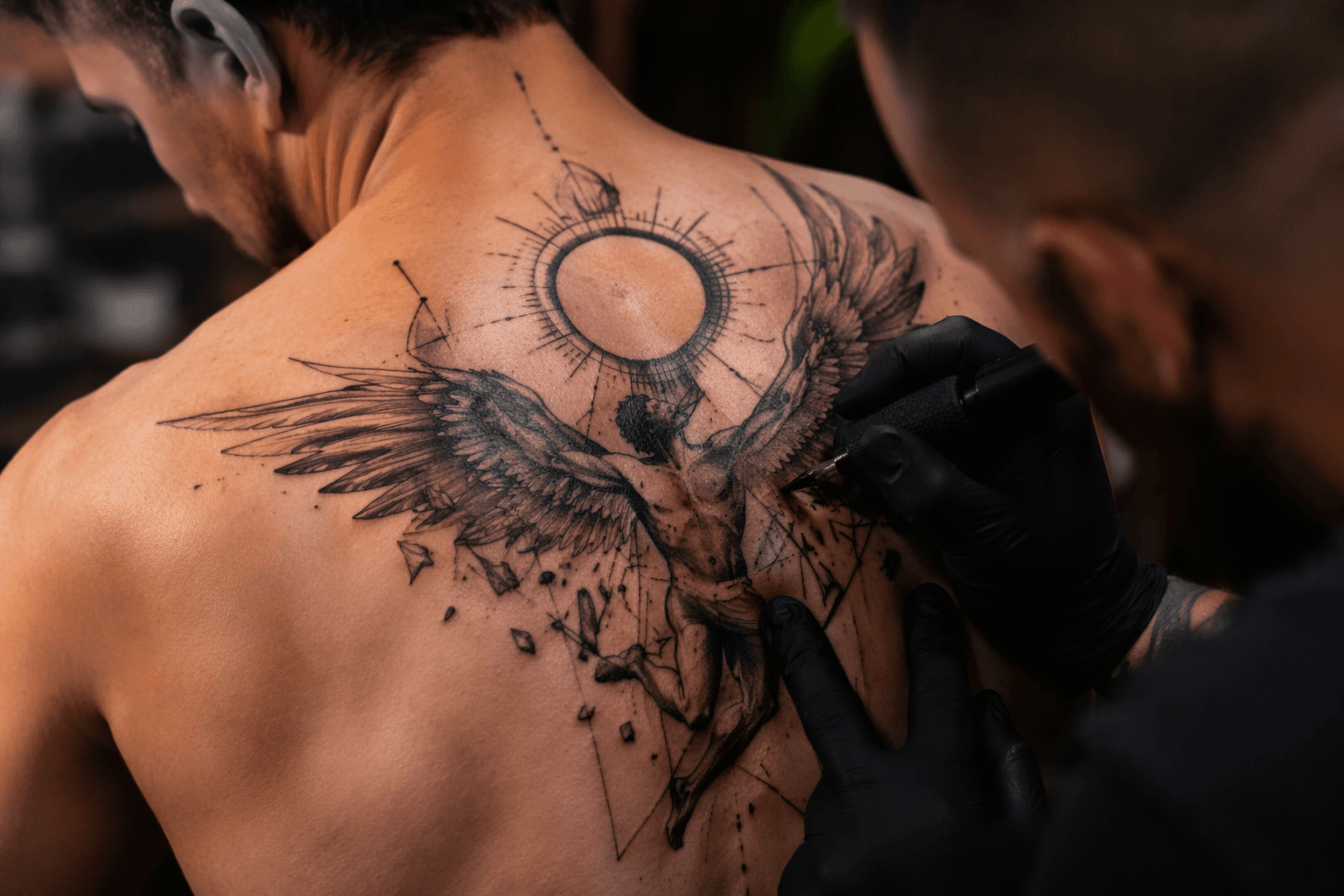
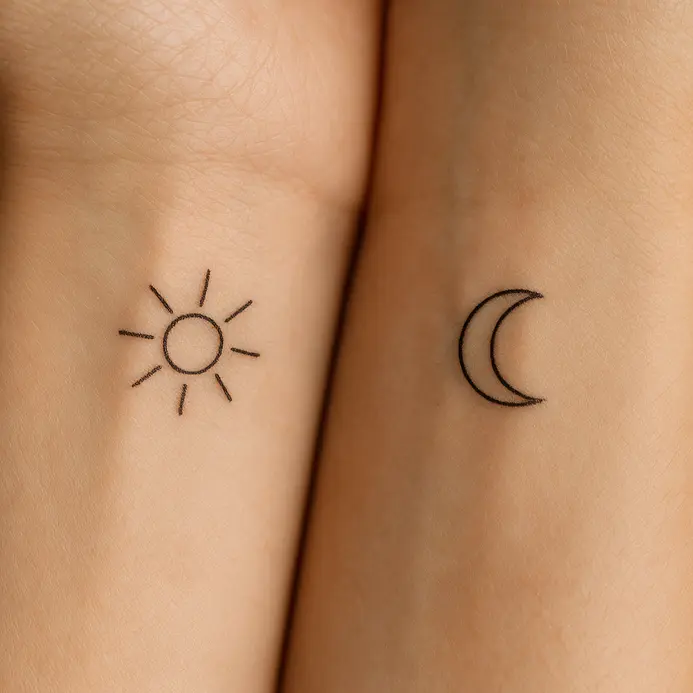
Spring 2026 is pushing geometric tattoos in two very different directions at once. One side is whisper-thin linework, delicate single-line jewelry, and fine-line minimalism that reads like quiet luxury. The other is sweeping geometric blackout art, where the whole piece lands like structure instead of decoration.
That split matters because geometry has always been about control, but now the best tattoos are the ones that control the body instead of fighting it. A clean square, a sacred knot, or a blacked-out field looks strongest when the artist plans for the wrist curve, the shoulder cap, the sternum, or the spine from the start. The trend is not just about looking precise. It is about looking precise on a real body.
Why fine-line geometry keeps winning
Talking Pretty’s spring 2026 trend read makes the case plainly: the season is moving from whisper-thin linework to bold blackout art, and the range includes delicate single-line jewelry. That is exactly why fine-line geometry still has legs. It gives you the discipline of structure without making the tattoo feel heavy or overbuilt.
Fine-line minimalism works especially well when you want something wearable and professional, but still personal. A tiny compass rose, a restrained mandala fragment, or a narrow band of repeating geometry can feel almost architectural without turning loud. The trick is restraint: if the lines are too crowded, the piece loses the airy precision that makes it feel current.
Blackout art is not the opposite of geometry
The other end of the trend line is just as important. Talking Pretty’s framing includes sweeping geometric blackouts, and that tells you blackwork is not fading out, it is scaling up. The cleanest blackout pieces do not rely on randomness; they depend on structure, negative space, and a real understanding of how the black mass sits on the body.
Tattoodo’s history of blackwork helps explain why this looks so powerful now. Modern blackwork has roots in ancient tribal tattooing, especially Polynesian traditions, where thick outlines, solid black areas, and intentional negative space were part of the visual language. That history still shows up in the best large-format geometry today: the piece has to feel composed, not just dark.
Why body flow decides whether a geometric tattoo works
This is where the trend really gets interesting for geometric readers. Corey Divine is known for large geometric pieces that blend with anatomy, and that idea is the key to the whole spring conversation. Good geometry does not ignore the body. It uses the body as the grid.
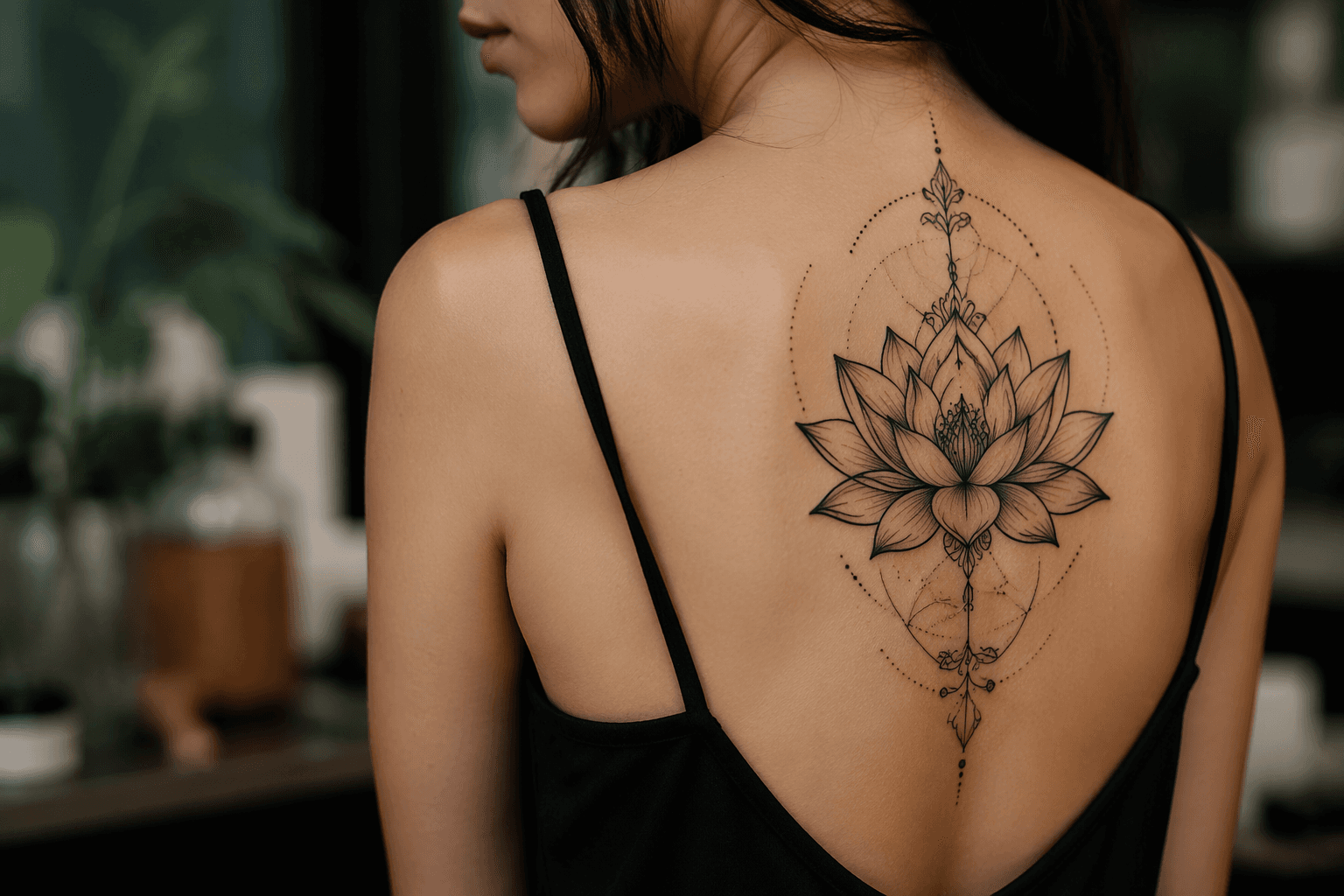
On flat areas like the chest or back, clean symmetry can stay intact longer and read with more authority. On joints, ribs, calves, and shoulders, the design needs to flex with motion and wrap with the muscle underneath. If you force perfect geometry onto a shifting surface without adjusting for curvature, the tattoo can look correct on paper and awkward in skin.
- Long vertical motifs work well on the sternum, spine, and forearm.
- Radiating or circular geometry sits naturally on shoulders, knees, and upper back.
- Dense blackwork needs enough negative space to breathe when the body moves.
- Fine-line pieces need spacing that survives healing without turning muddy.
A practical way to think about it:
Sacred geometry still gives the style its backbone
Tattoodo says ornamental tattooing is one of the oldest styles in the game, built on geometry, symmetry, black shading, and delicate pointillism. It also says many geometric tattoos connect to sacred geometry, which is why people keep returning to the style when they want harmony, balance, or universal order in the design.
That is a big reason these tattoos keep cycling back into fashion. They are not just aesthetic. They carry a built-in language of meaning. A spiral, knotwork pattern, or symmetric layout can feel meditative even when the execution is minimal. When the linework is disciplined, the tattoo does more than decorate skin. It signals intention.
The artists who still set the pace
If you want reference points, Dillon Forte and Corey Divine are still useful names in the genre. Inked Mag describes Forte as one of the leading tattooers in sacred geometry, and notes his Sacred Geometry Drawing App from 2025, which tells you how closely the style now sits at the intersection of craft and digital design. Divine, meanwhile, is known for meticulous sacred-geometry work that blends with anatomy instead of sitting on top of it like a stencil.
That pairing says a lot about where the trend is headed. The market is not choosing between old-school precision and new-school scale. It is rewarding artists who can do both, whether that means a fine-line pattern that feels almost jewelry-like or a large black geometric panel that moves cleanly with the body.
How to adapt clean geometry to different body types
The biggest mistake with geometric tattoos is treating every body like a flat page. The better move is to build the piece around the wearer’s actual shape. A narrow forearm wants different spacing than a broad shoulder. A flat back can carry exact symmetry in a way a rib panel cannot. That does not mean you abandon precision. It means you preserve the illusion of precision by designing for movement, not against it.
If you are choosing between fine-line and blackout, ask one question first: do you want the tattoo to whisper or to command the room? Fine-line geometry is strongest when the goal is clarity, subtlety, and elegance. Blackout art is strongest when the goal is impact, contrast, and a sculptural read from across the room. Either way, the body has to stay part of the composition.
Aftercare and safety still matter as much as the design
The American Academy of Dermatology recommends water-based lotion or cream on tattooed skin and UV protection to reduce fading. That advice matters even more with clean geometry, because a crisp line that softens too fast can flatten the whole piece. Sun exposure is one of the fastest ways to make fresh precision look tired.
The AAD also notes that skin reactions can still happen even when a tattoo is done by a licensed artist. And in May 2025, the U.S. Food and Drug Administration warned consumers and tattoo artists to avoid certain Sacred Tattoo Ink products after testing found bacterial contamination. That is a reminder that style trends do not erase the basics: good ink, clean setup, and careful healing are still part of getting geometry right.
Spring 2026 is not asking geometric tattoos to pick a side so much as to know their scale. The strongest work is either ultra-refined and body-aware, or bold enough to turn skin into structure. The tattoos that last in the conversation will be the ones that keep their precision after they meet real anatomy, real healing, and real light.
This article was produced by Prism’s automated news system from verified source data, official records, and press releases, then run through automated quality and moderation checks before publishing. The system is built and supervised by the people who set the standards it runs under. Read our full AI policy.
Know something we missed? Have a correction or additional information?
Submit a Tip