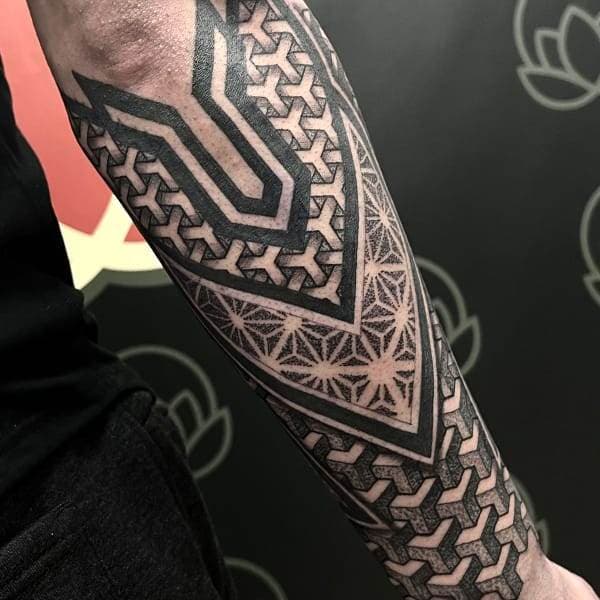
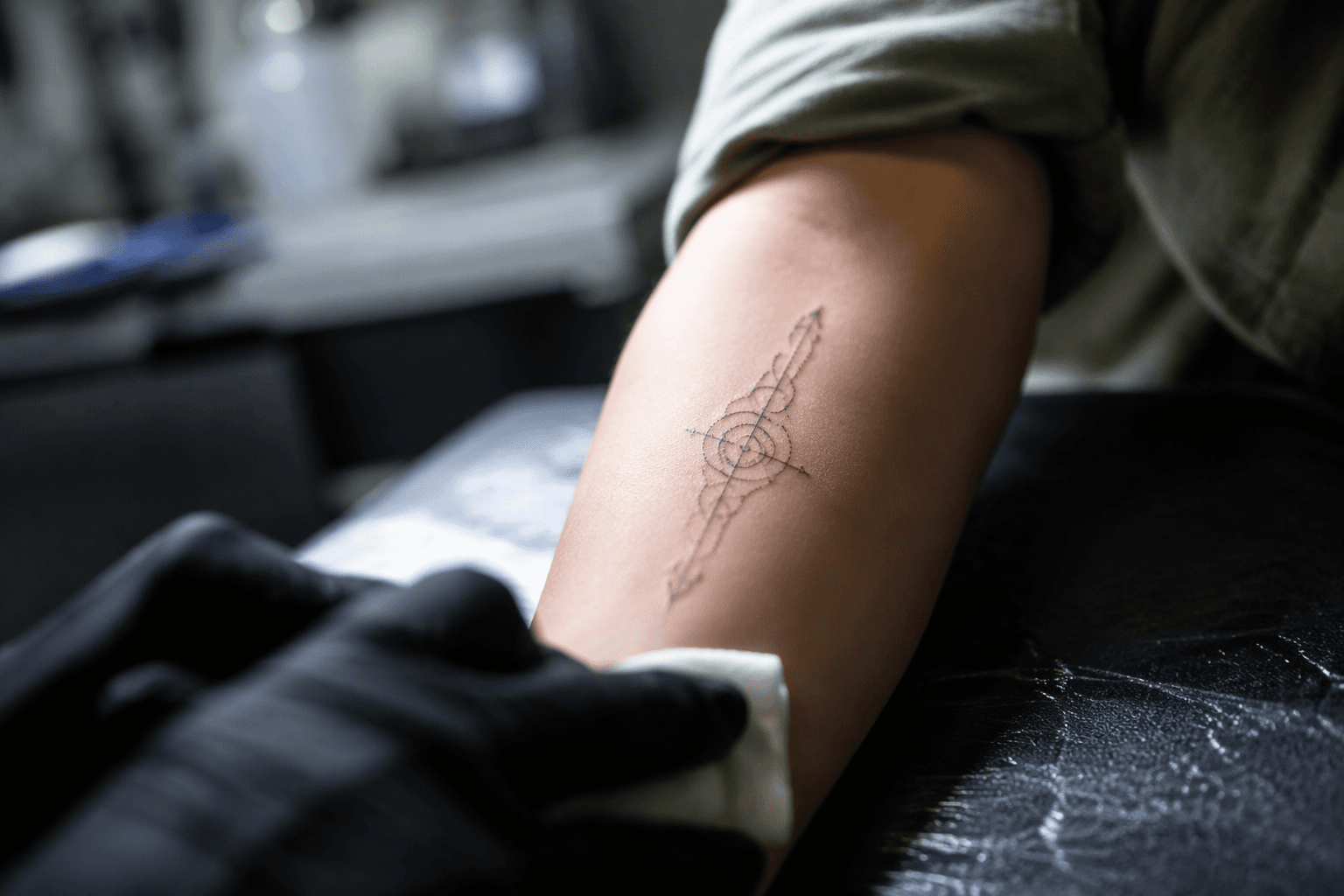
Geometric tattoo size matters, spacing and symmetry define the design
Scale makes or breaks geometric tattoos: too small and symmetry collapses, too large and movement can warp the pattern. The right size keeps lines crisp, readable, and balanced.
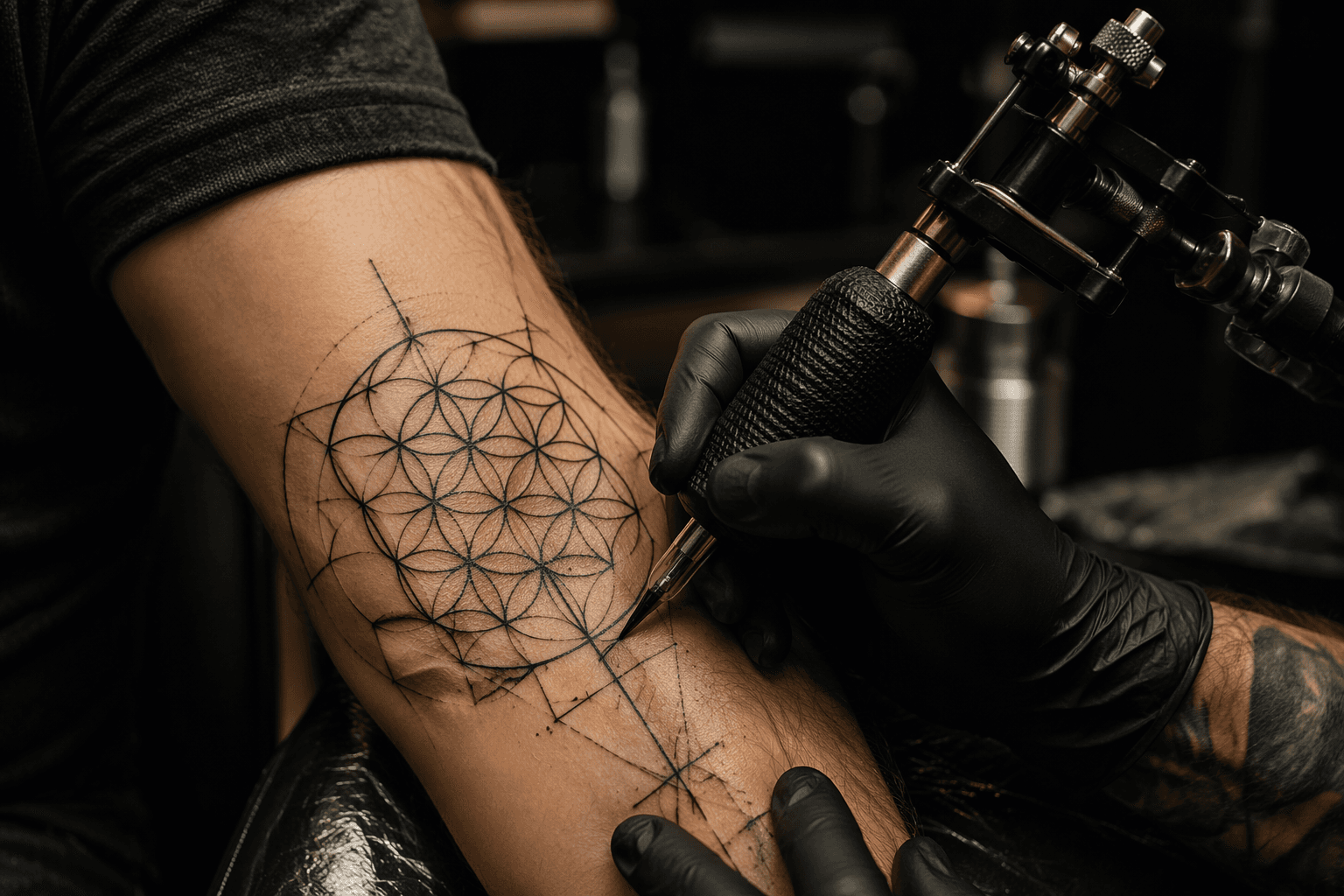
On curved or mobile areas like the forearm, ribcage, ankle, or shoulder, a geometric tattoo that looked perfect in a sketch can feel cramped, stretched, or uneven once it is transferred to skin. If the design is squeezed too tightly, spacing disappears, symmetry slips, and the pattern stops reading cleanly after healing. The first decision is not how much skin is available, but whether the design has enough room to breathe on the body it will live on.
Why scale changes the whole design
Geometric work depends on a precise visual language: lines, symmetry, repetition, dotwork, blackwork, and negative space. That style leaves very little margin for sloppy placement because the composition itself is built on clean intervals and mirrored balance. When a design moves from paper to skin, especially on curved or mobile areas, body contours can make a balanced layout feel cramped, stretched, or uneven.
Sizing affects readability, placement, pain, and how well the tattoo ages. A geometric piece that looks sharp on day one can lose its structure if the lines sit too close together or the design is forced into a shape that the body does not naturally support.
Start with the motif, not the empty space
The best sizing decisions begin with the artwork itself. Minimal symbols can work small because they rely on a simple outline or a single repeated shape, but more intricate geometry needs real space so the details do not collapse into one another. If the design includes a mandala, a circle grid, a sacred knot, or a golden spiral, the spacing is part of the meaning, not an afterthought.
When choosing between a compact tattoo and one that gives the pattern room to hold its symmetry, ask which elements must stay distinct after healing: the inner rings, the crossing lines, the open gaps, or the repeated points. If those parts blur together, the tattoo stops reading as intentional geometry and starts looking compressed.
Placement sets the limit
Placement is where scale becomes practical. Forearms and upper arms can usually support medium pieces without crushing the structure, which makes them strong candidates for geometric work that needs visible line spacing. Wrists and ankles are better suited to simpler designs, because tiny detail blurs faster there and the body moves more at those points.
Healing adds another layer. Tattoo healing time varies with size and intricacy, and tattoos near joints or on flexing areas like wrists and ankles often take longer to settle than work placed on less mobile skin.
Longevity is part of the sizing decision
The Food and Drug Administration defines tattoos as permanent marks created by inserting ink into skin with needles, and it treats them as difficult to remove. The FDA warns that tattoos and permanent makeup can cause infections and allergic reactions.
The American Academy of Dermatology warns that even tattoos done by licensed artists can react unpredictably, and online removal kits are not regulated by the FDA. Once a geometric tattoo loses its clarity, correction is not simple, because the style depends on exact spacing and clean edges more than many other forms of body art.
Safety and execution belong in the same conversation
The Centers for Disease Control and Prevention has documented tattoo-associated infections linked to contaminated ink, including investigations that began after persistent rashes followed tattooing. Registered parlors, tattoo-specific inks, and hygienic practices are central to that guidance. The CDC’s occupational safety work on tattooists and piercers also goes back to concerns raised in the 1990s about blood exposure and bloodborne diseases.
For geometric tattoos, that safety discipline connects back to scale. A design that is planned carefully is easier to place cleanly, easier to read once healed, and less likely to be compromised by rushed adjustments on the day of the appointment.
The style itself asks for precision
Ornamental tattooing draws on mandalas, mehndi-inspired patterns, and sacred geometry, and geometric tattoos are unforgiving when they are undersized. These designs are built on repeating structure and negative space. If the scale is wrong, that structure and space break down.
This article was produced by Prism’s automated news system from verified source data, official records, and press releases, then run through automated quality and moderation checks before publishing. The system is built and supervised by the people who set the standards it runs under. Read our full AI policy.
Did this article answer your question?