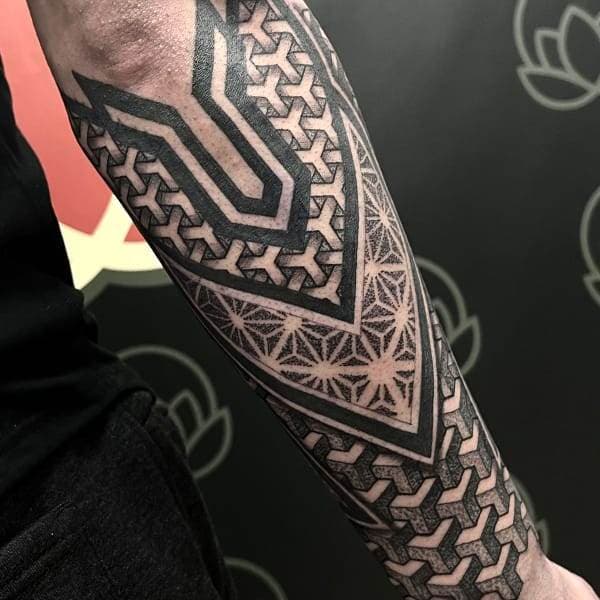
Studio 21 explains why fine line tattoos blur over time
Tiny geometric lines only stay crisp when the design, placement, and aftercare work together. Studio 21's rule: scale for aging, not just for day one.
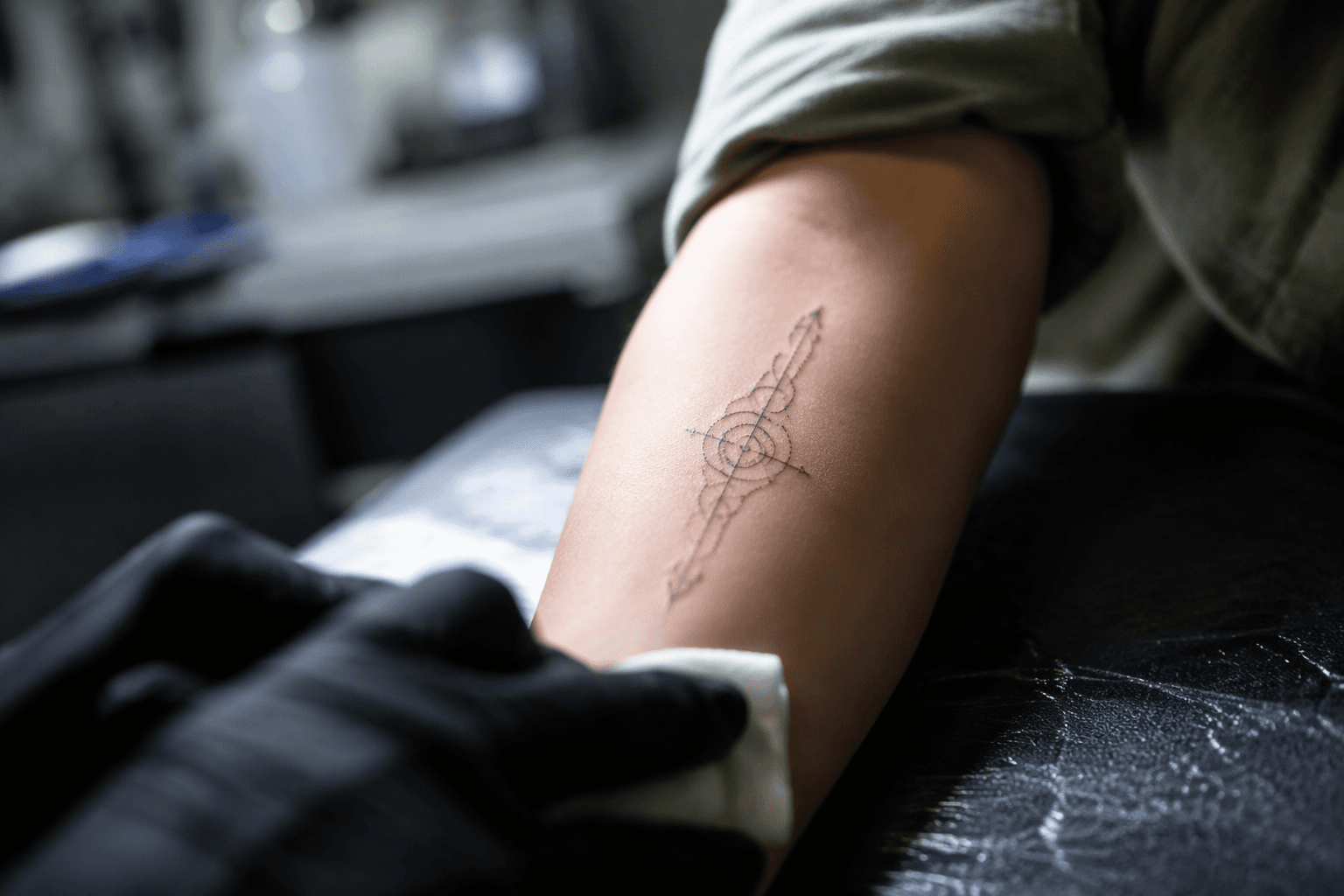
At Studio 21 Tattoo Gallery, 6020 W Flamingo Rd, Ste B-2, Las Vegas, NV 89103, about two miles off the Strip, a mandala spoke packed too tightly or a bracelet built from threadlike bands can soften into a gray seam long before the tattoo loses its shape. The real question is whether the design has enough structure to stay legible after friction, sun, and skin aging do their work.
What blur really is
In 2024, Studio 21 wrote that fine line tattoos can hold their structure for years when they are done correctly, but they can lose clarity quickly when they are done poorly. The technical reason is ink migration, which is pigment moving away from its original deposit point in the dermis and leaving behind blurred lines or visible discoloration. That shift can show up immediately as a blowout, or it can creep in over months and years as the body interacts with the ink.
For geometric tattoos, that matters more than it does for looser ornamental work. Canonical forms, symmetry, and negative space are part of the design language, so even a slight softening can throw off the whole read. A line that would be acceptable in an open pattern can break a sacred geometry layout if the spacing was too tight from the start.
The three design choices that decide aging
Spacing is structural, not decorative. Lines need room so they do not blur together over time, and that warning matters most in geometric work where repeated marks, dots, and spokes sit close to one another. If the design is too small or too crowded, the eye loses the gaps first, then the pattern.
Line density has the same problem. The more elements you stack into a small area, the less room the skin has to age without closing the negative space. A tiny mandala, a minimalist sleeve panel, or a delicate linework bracelet can look elegant in the chair, but if the motif depends on dozens of near-parallel strokes, a bolder structure will usually hold the geometry better.
Body placement is the other major pressure point. Fingers, wrists, ribs, and the inner arm all bend or rub, so fine line work in those zones takes more mechanical stress than a panel on the upper arm or outer thigh. Even a well-executed tattoo can soften sooner there if the placement lives in constant motion or catches fabric and friction all day.
Needles, hands, and scale
Technique still sets the ceiling. 1RL and 3RL are common configurations for very fine work, but the number on the needle group does not save a design that was scaled too small for the space. The best artists pair the needle choice with a steady hand and enough negative space for the motif to breathe.
That is why a tiny commission is not automatically the safest commission. One monthly Tiny Tattoo Club event advertises up to three small fine line tattoos for $150, which shows how attractive miniaturized work has become. Many of those pieces age harder than their owners expect. A design that needs to preserve symmetry over time will often benefit from being enlarged a little or rebuilt with stronger outer lines, especially if it has mandala spokes, sacred geometry, or a sleeve structure that depends on perfect alignment.
A 2018 digital exclusive from Ink Master's The Art of Ink featured a geometric tattoo segment.
Aftercare is part of the design
Once the tattoo heals, the burden shifts to maintenance. Ultraviolet light can fade some inks, and the American Academy of Dermatology recommends broad-spectrum, water-resistant sunscreen with SPF 30 or higher for tattooed skin. Covering the tattoo or applying sunscreen reduces one of the few daily factors that steadily erase crisp lines.
Tattoo aftercare also begins long before the first beach day. The European Academy of Dermatology and Venereology treated aftercare in its 2021 patient leaflet as part of normal wound healing and infection prevention, which is where line clarity can be preserved or lost through good hygiene and careful healing. If the skin is irritated, overworked, or poorly protected while it heals, delicate geometry has less of a chance to settle into a clean final form.
A practical rule set for deciding how fine to go
The safest geometric tattoo is the one designed for the body that will wear it, not the stencil in the moment. Fine line is a smart choice when the motif has generous spacing, the placement sees limited friction, the scale gives each element room, and you are comfortable protecting it from the sun. It is a weaker choice when the design is crowded, the area bends constantly, or the whole composition depends on needle-thin lines carrying the entire structure.
A simple way to think about it:
- Choose fine line when the geometry has open space, clear symmetry, and enough size to age with room to spare.
- Choose bolder structure when the pattern is dense, the placement is high-friction, or the tattoo has to keep its readable outline for years.
This article was produced by Prism’s automated news system from verified source data, official records, and press releases, then run through automated quality and moderation checks before publishing. The system is built and supervised by the people who set the standards it runs under. Read our full AI policy.
Did this article answer your question?