How to turn geometric tattoo ideas into custom skin art
The strongest geometric tattoos are built around placement, scale, and negative space, not copied from flash. Small shifts in line weight and transitions turn structure into something personal.
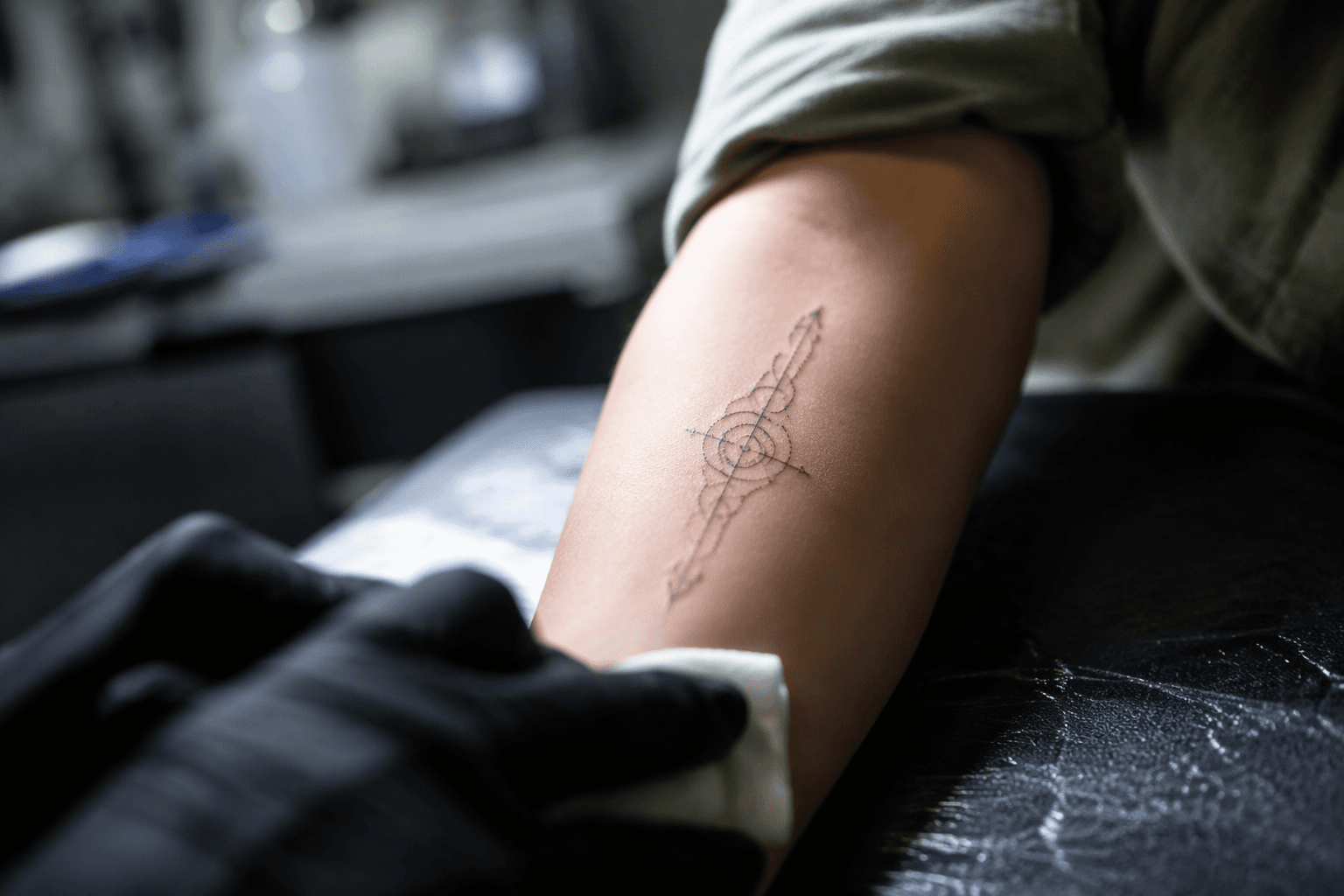
A geometric tattoo that looks exact on a stencil can still fall apart on skin if symmetry slips by a few millimeters or the negative space closes up under the needle. The custom piece starts with the body, then the pattern, then the way line weight and spacing survive movement, aging, and whatever you already wear on that arm or torso.
Start with the body, not the flash sheet
The best geometric work treats the skin like a moving structure, not a flat page. Geometry is one of the oldest branches of mathematics. The term comes from Greek words meaning “Earth measurement,” and the language began with practical problems such as surveying.
If you want a piece that feels custom, decide first whether the tattoo should read as minimal, architectural, ornamental, or densely patterned. Triangles, circles, hexagons, grids, and interlocking line segments all push the eye differently, and the wrong mix can make a design feel copied from a sheet instead of built for one person.
Match the pattern to the placement
Placement changes everything. A forearm gives you a long, directional canvas; a calf curves and turns with the muscle; an upper arm can wrap cleanly if the artist respects the taper; the chest and spine demand extra care because the body is never truly symmetrical when you breathe, twist, or move. A pattern that looks balanced on paper can read skewed once it bends over bone or rounds off a shoulder cap.
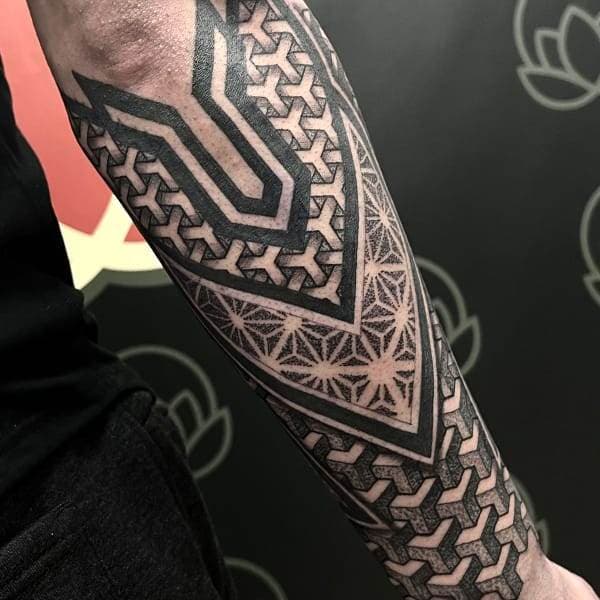
That is why geometric pieces usually work best when the artist adapts the design to the exact zone instead of dropping the same drawing everywhere. On a forearm, a repeating band or vertical lattice can flow with the limb. On the chest or spine, a central motif may need to be broadened, narrowed, or split so it does not fight the body’s natural center line.
Existing tattoos matter here too. If you already have script, blackwork, or a partial sleeve, the new geometry needs clear transitions so it does not collide with older linework or crowd the remaining skin.
Use line weight, repetition, negative space, and transitions on purpose
Four variables do most of the work:
- Line weight: bolder outer lines can anchor the design, while fine-line detail gives it delicacy. Too much tiny linework in a busy area can soften faster and lose clarity.
- Repetition: repeated shapes create rhythm, whether you are building mandala spokes, stacked triangles, or a grid. Repetition becomes personal when the spacing changes to fit the body instead of repeating mechanically.
- Negative space: open skin is not empty space, it is part of the composition. Leaving breathing room can make a small central motif read louder and can keep the piece from looking overcrowded.
- Transitions: dot shading, tapering lines, and bridging forms help a design move across curves or connect to an existing tattoo. Without transitions, even clean geometry can feel abrupt.
A piece with the right repetition but flat line weight can look rigid. A design with strong symmetry but no negative space can feel dense and heavy.
Know the history before you borrow the look
Geometric tattooing may be popular now, but the pattern language is far older than the current wave of Instagram-friendly linework. Ancient Egyptian mummies dating to around 2000 BCE carried tattoos that were primarily geometric patterns and deity symbols, and National Geographic dates human tattooing to at least 5,200 years ago.
By 2015, tattoo artists were already explaining what people need to know before getting a trendy sacred geometry tattoo, which is still the right caution for anyone trying to turn spiritual or symbolic forms into body art.
Other traditions show how deeply geometry travels across cultures. Traditional Polynesian tattooing developed over millennia and included highly elaborate geometric designs, while the Ainu traditionally wore bark cloth decorated with geometric designs.
Work with an artist who can redraw, not just reproduce
The right artist will not simply size up your reference image and press it to skin. They will check the stencil, scale the motif to the exact body area, and decide whether the design needs bold outlines, dotwork texture, or a more restrained build for long-term clarity. A 2018 Ink Master digital exclusive called geometric tattooing “the architecture of all living organisms” and highlighted Laura Martinez, Dillon Forte, and Kirk Nilsen.
Portfolios and visual references now shape how many people study the style. CO:CREATE gathered the style’s history, inspirations, and artists, while TattoosWizard put together a list of 10 geometric tattoo artists to follow on Instagram. Use those references to study how different artists handle symmetry, spacing, and the shift from one form to another, then bring that thinking into your own appointment.
This article was produced by Prism’s automated news system from verified source data, official records, and press releases, then run through automated quality and moderation checks before publishing. The system is built and supervised by the people who set the standards it runs under. Read our full AI policy.
Did this article answer your question?