Geometric Tattoos Work Best When They Follow the Body’s Anatomy
Geometric tattoos fail fastest when the stencil ignores the body. The cleanest lines are the ones that follow muscle, movement, and natural asymmetry.
Why flat geometry reads wrong on skin
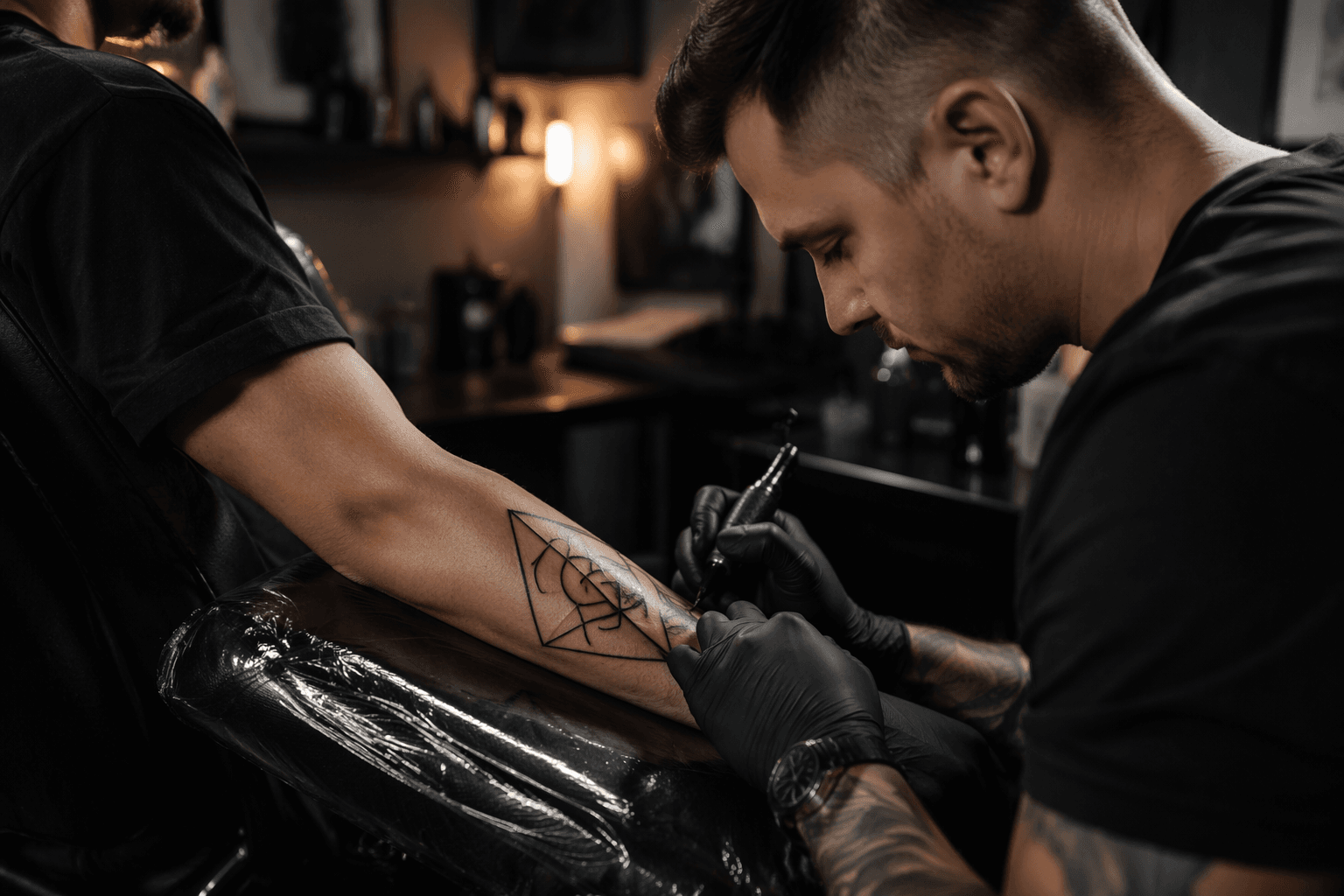
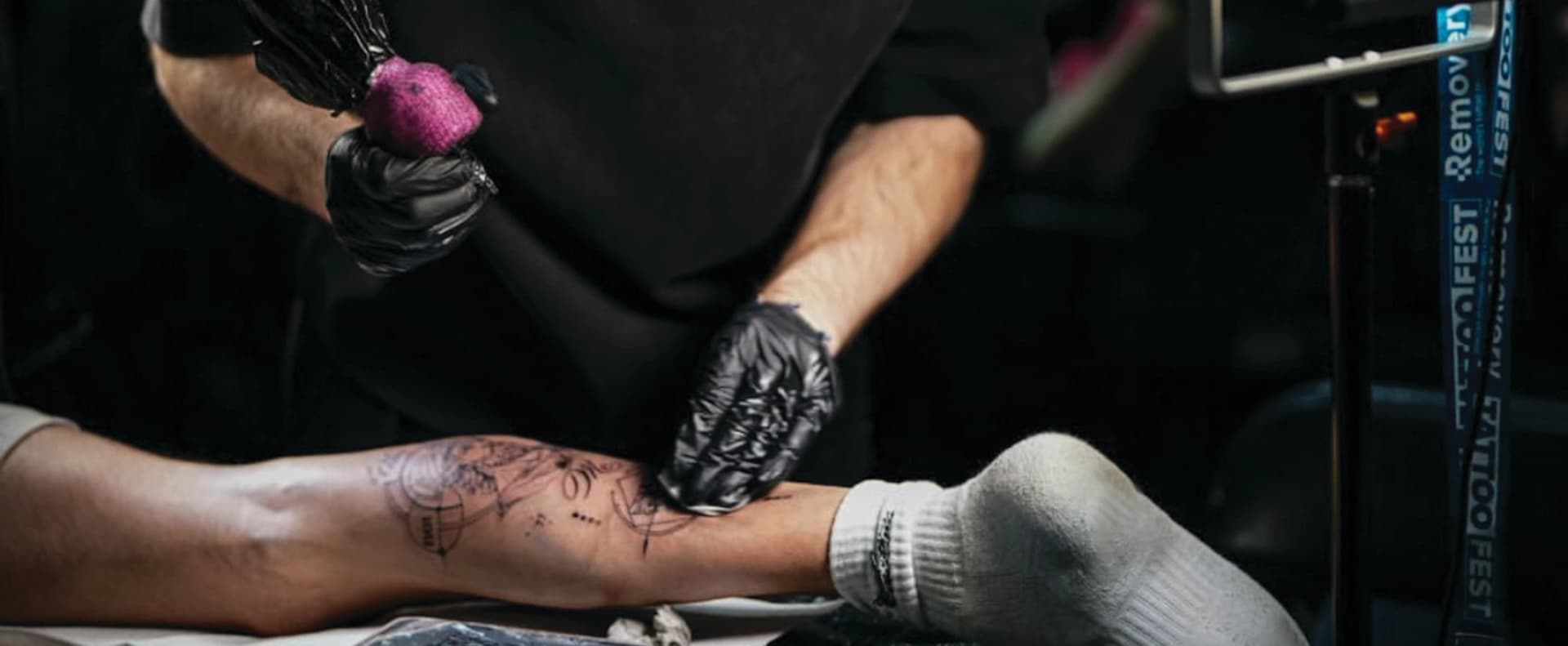
The easiest way to ruin a strong geometric tattoo is also the most common: treat skin like a flat page. Inked’s anatomy coverage makes the warning plain, because a tattoo artist has to see through the skin and understand what sits underneath it, from muscle structure to movement. When a design is built as if the body were static, it can start to feel less like body art and more like a sticker.
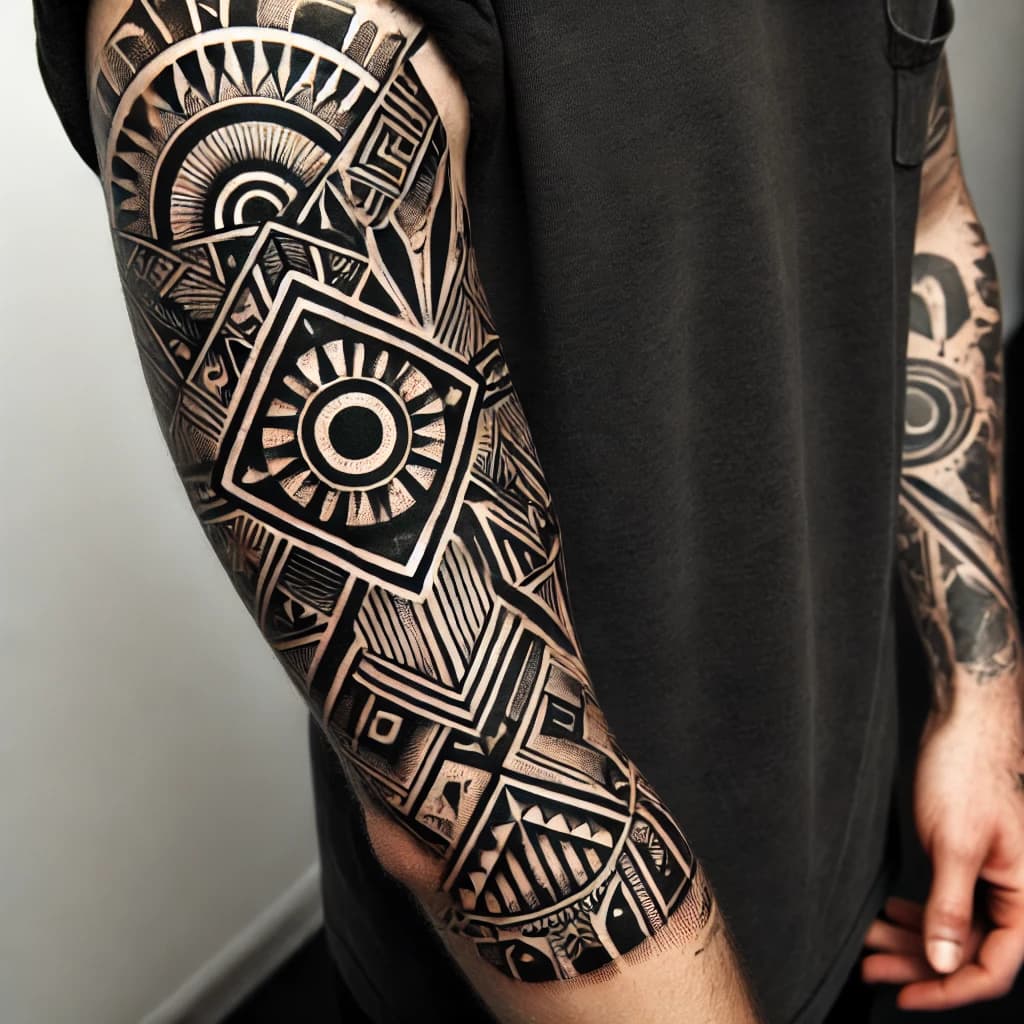
That matters especially in geometric work, where balance, symmetry, and hard edges are the whole point. Inked’s geometric coverage says a well-done geometric tattoo has to use the space on the body effectively, and straight lines only stay convincing when they are adapted to the wearer’s form. Geometry succeeds when it follows anatomy, not when it tries to overpower it.
Placement is an anatomy decision, not a decoration choice
Placement is where a lot of otherwise excellent ideas go sideways. Inked notes that muscles are not fixed shapes, they expand, contract, and shift as you move, whether you are twisting a wrist, raising an arm, or relaxing a hand. A composition that looks perfectly centered while you are standing still can change as soon as you bend, reach, or turn.
That is why placement is not just about aesthetics. Healthline’s tattoo guides point out that placement affects appearance, pain, and aftercare, and that thinner skin, bone-close areas, and spots with dense nerve endings tend to hurt more. For geometric tattoos, those same factors also affect readability, because crisp lines look most stable where the body gives them a calmer surface to live on.
A good artist usually thinks about the logical center of the design first. If the center sits on a zone with less motion, the tattoo has a better chance of staying legible across different positions instead of fragmenting when the body changes shape. That one decision can separate a composition that feels integrated from one that seems to drift every time you move.
Symmetry on paper is not symmetry on a body
One of the smartest ideas in the research is also the most humbling: nothing in nature is perfectly symmetrical, including the human body. Once you accept that, the goal shifts. You stop asking a tattoo to force mirror-image perfection onto skin and start asking it to create harmony through complementary elements.
That shift is crucial in geometric tattooing, because a stencil that looks mathematically perfect can still look off once it meets a shoulder, forearm, chest, or back that is slightly different on every side. The body already has asymmetry in posture, muscle development, and movement patterns. The best geometric work acknowledges that reality and builds balance around it rather than pretending it does not exist.
This is also why ornamental and optical-illusion work depends so heavily on anatomy. Inked’s coverage of artists in these styles points to the same principle: the design has to be aware of body shape if it is going to read as intentional instead of warped. A pattern can be technically precise and still lose its authority if the placement makes the symmetry fight the body instead of fit it.
What strong geometric artists do differently
The artists who make this style work think in three dimensions. Inked has profiled specialists including Dillon Forte, Corey Divine, and Ilya Cascad, and the through-line is clear: they do not treat geometry as a flat graphic exercise. Their work depends on knowing where the body opens, curves, compresses, and changes with motion.
Corey Divine is described as creating geometric patterns that blend with the wearer’s anatomy, which is exactly the standard geometric clients should be looking for. That blend is what keeps the tattoo from reading as a rigid object pasted onto a living form. It also explains why large-scale pieces and optical illusions need especially careful planning, because the more ambitious the composition, the more the body can either support it or break it apart.
Dillon Forte is another name that shows how established sacred geometry has become. Inked has described him as one of the leading tattooers in the style, and his visibility extends into mainstream culture through clients such as Chris Hemsworth. That kind of recognition matters because it shows geometric and sacred-geometry tattooing is not a novelty corner of the industry, but a serious practice with its own visual rules and technical demands.

How to tell whether a design will hold up
A strong geometric tattoo should feel like it belongs to the body before the first needle goes in. The simplest test is to imagine the design in motion, not just in a straight-ahead pose. If a line only looks right when the body is perfectly still, or if the symmetry depends on an angle people will never actually hold, the concept needs another pass.
A useful pre-booking check looks like this:
- Ask where the design’s center will sit, and whether that spot moves a lot during normal motion.
- Look at the tattoo while the body is relaxed, twisted, and extended, because the read will change.
- Pay attention to areas where skin is thinner or closer to bone, since those are both more painful and more likely to challenge visual calm.
- Make sure the artist is adapting the pattern to the body, not just scaling a flat drawing up or down.
Those details sound small until you see the difference in the finished work. A design that respects anatomy keeps its line clarity longer, reads more cleanly from different angles, and ages with more intelligence because it was built for the body it lives on.
The long view
Geometric tattoos last best when they are designed with movement in mind from the start. The body is not a backdrop, it is the architecture, and every clean line has to answer to muscle, symmetry, and motion if it wants to stay convincing. That is why the strongest geometric tattoos do not flatten the body, they follow it.
This article was produced by Prism’s automated news system from verified source data, official records, and press releases, then run through automated quality and moderation checks before publishing. The system is built and supervised by the people who set the standards it runs under. Read our full AI policy.
Did this article answer your question?