Do Dotwork Tattoos Heal Faster, or Just Feel Less Painful?
Dotwork can sting less, but the healing speed comes down to depth, placement, size, and aftercare far more than the style itself.
The real question is not whether dotwork heals faster, but what actually makes it easier to live with
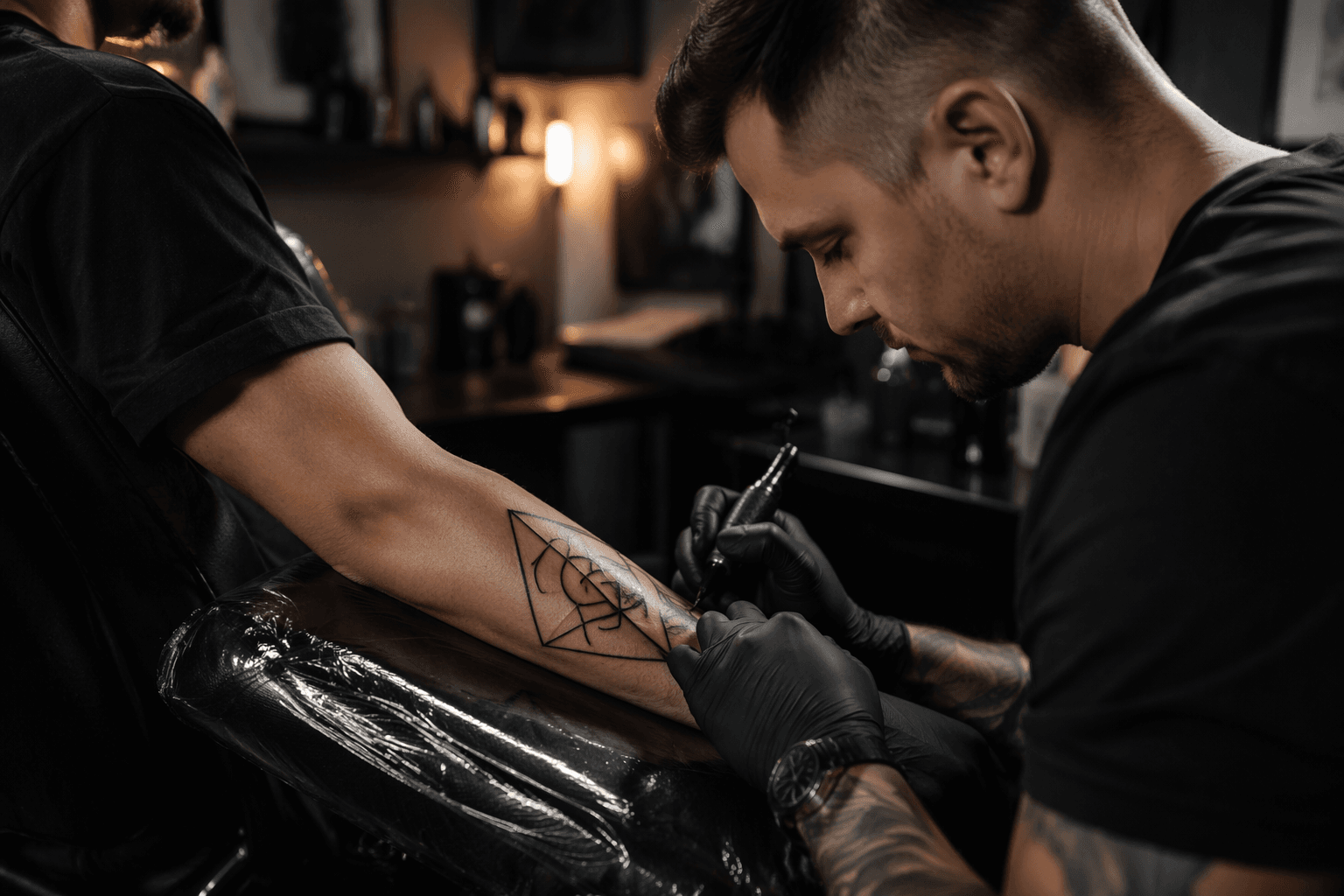
Dotwork often feels gentler than a heavy black fill, but that does not automatically make it a faster-healing tattoo. The skin responds to trauma, not aesthetics, so the real variables are how much damage the needle does, where the tattoo sits, how large it is, and how carefully you treat it afterward.
That is why this matters so much in geometric work. Dotwork sits at the center of sacred geometry, mandalas, and precision line-driven compositions, and it is usually built into slightly larger black-and-grey pieces where value is created by spacing, not brute force. With roughly 30% of American adults now having at least one tattoo, this is not a niche concern anymore. It is the difference between a crisp finish and a patchy one.
Why dotwork often feels less painful
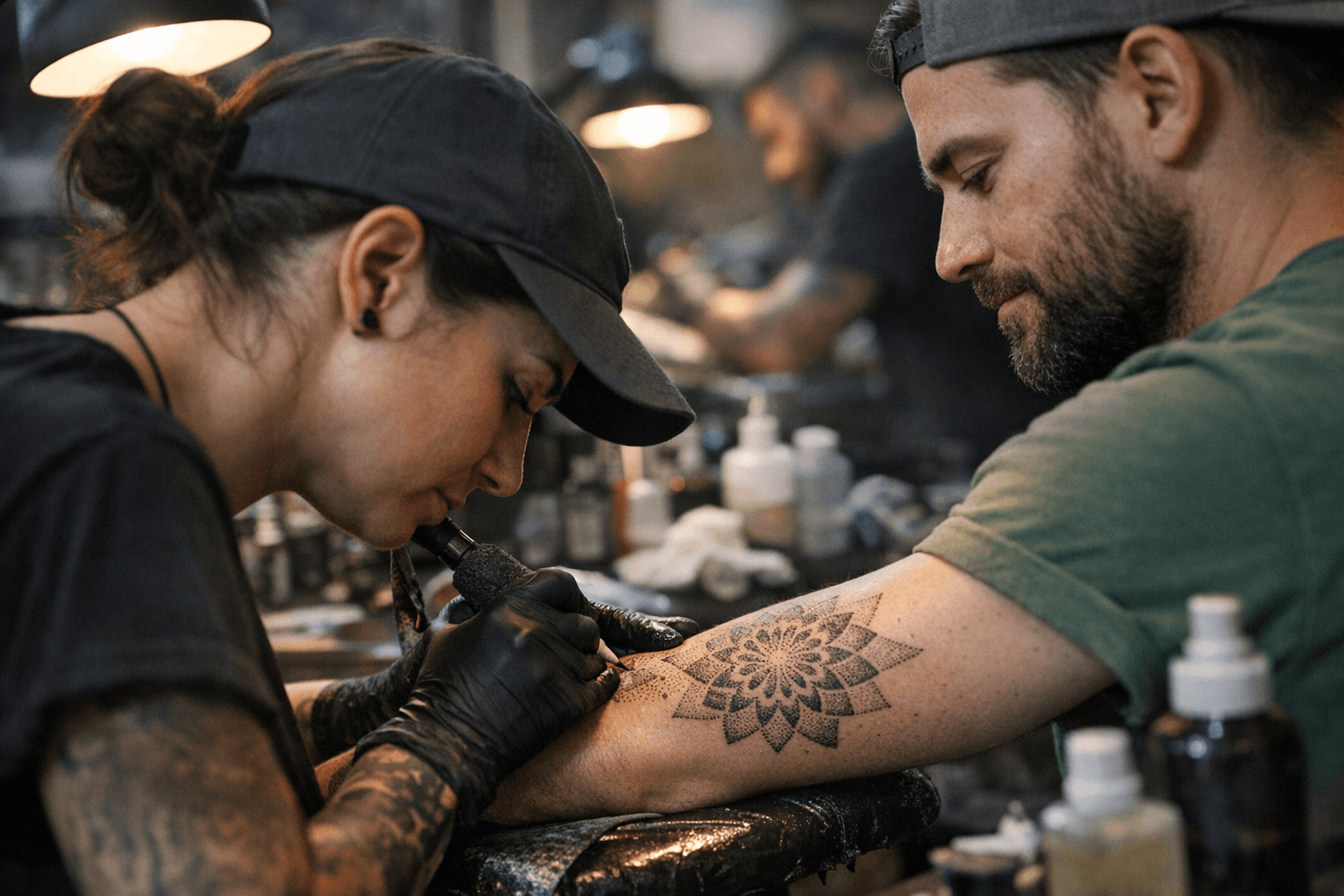
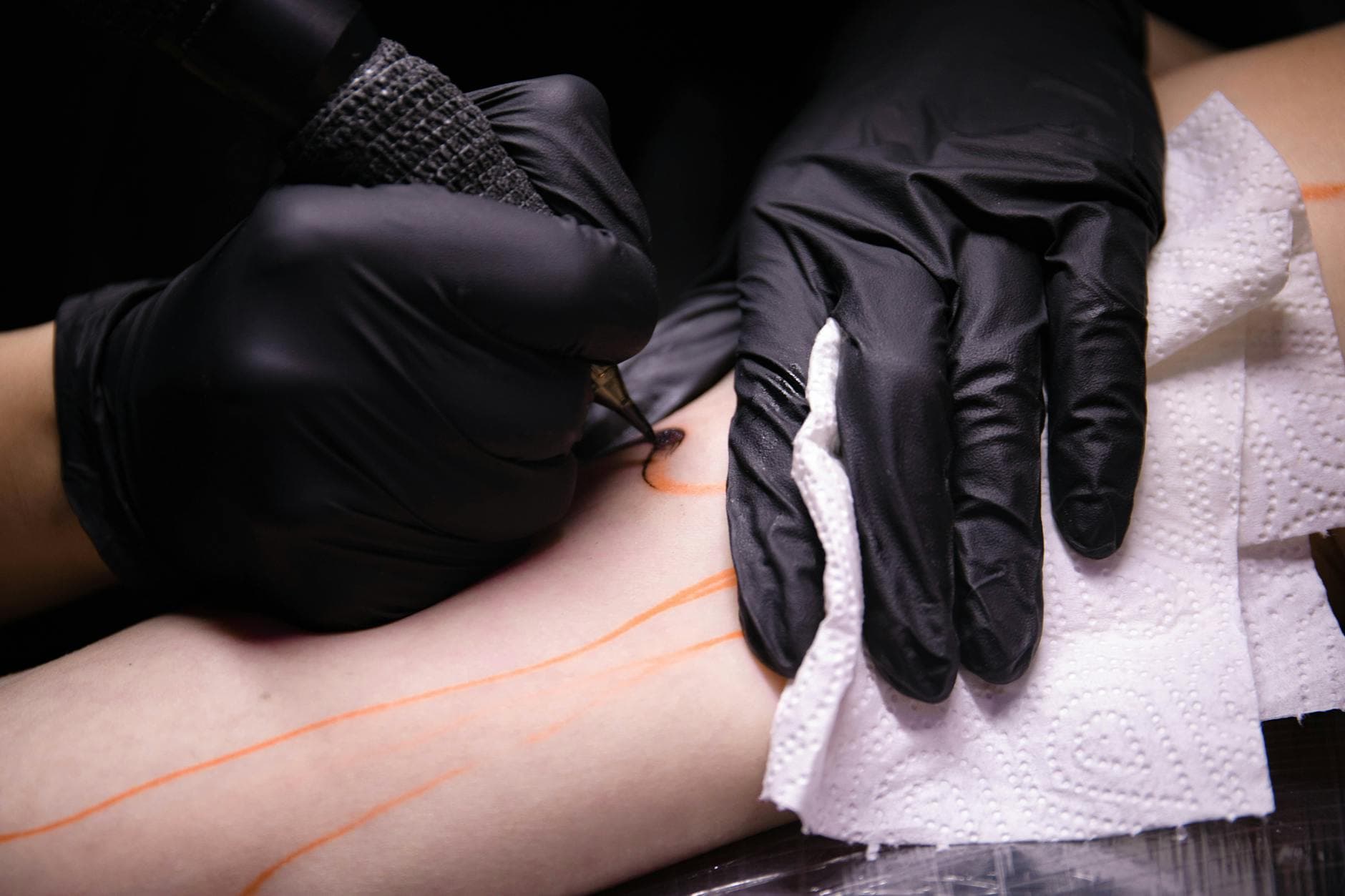
Dotwork is not magic, and it is not painless. It can still be uncomfortable because it asks for a high level of detail, especially when the artist is building gradients, halos, or dense ornamental fields. But the technique is usually done with a slightly inclined needle and quick strokes, rather than a long, heavy continuous pass.
That changes the experience in a real way. Instead of dragging the skin through a broad, solid fill, the artist is placing tiny marks with more control. For a lot of people, that means the session feels more manageable, especially on designs where the eye wants precision but the skin does not need a wall of pigment.
Why easier to sit through does not mean faster to heal
Tattooing injects pigment into the dermis, and the body responds the way it responds to any controlled injury: with immune activity and localized inflammation. Cleveland Clinic dermatologists describe tattoos as controlled forms of trauma to the skin, which is why the healing conversation always starts with the wound, not the style.
The American Academy of Dermatology is blunt about this too. Tattoos can react in unexpected ways even when they are done by a licensed artist and cared for properly, and those reactions can show up immediately, weeks later, or even years later. Placement and size matter just as much as the pattern. A larger piece or anything in a high-friction area is more likely to heal slowly because it gets rubbed, flexed, and irritated before it has time to settle.
What the healing timeline really looks like
If you have ever had a tattoo look “done” long before it actually felt settled, that is normal. Healthline notes that the outer layer usually looks healed within 2 to 3 weeks, while the visible surface can still be in the 4 to 6 week recovery window. Cleveland Clinic says tattoos can take a few months to fully heal, and deeper repair continues long after the surface closes.
That slow finish is real biology, not tattoo folklore. StatPearls describes the final stage of wound healing as the maturation phase, when collagen cross-linking, remodeling, and wound contraction continue to refine the repair. In plain English: the tattoo may stop looking raw first, but the skin is still rebuilding underneath. Other clinical guidance extends that deeper recovery even further, with some tattoos continuing to mature for up to 12 months.
There is also a practical reason the timeline feels messy. All tattoos heal in stages, and the visible phase does not always match the biological phase. A permanent-tattoo skin study has even measured changes in skin homeostasis, including transepidermal water loss and hydration, in tattooed versus non-tattooed skin. That is a reminder that tattooed skin is not just decorated skin, it is altered skin.
Aftercare is the thing that decides whether dotwork holds its edge
This is where most people get tripped up. Dotwork may look airy on the skin, but if you neglect aftercare, the finish can still suffer. The main article’s point is simple: cleanliness and moisture matter more than whether the design is dotwork, linework, or solid black.
NHS aftercare guidance warns against picking or peeling crusts because that can lead to pigment loss or uneven results. That warning is especially relevant to dotwork, because the style depends on controlled spacing and measured texture. If scabbing gets rough and you start pulling at it, you can interrupt the pattern, lose ink, and end up with a patchy read instead of a clean gradient.
A practical dotwork aftercare routine looks like this:
- Keep the area clean without over-washing it.
- Use enough moisture to stop the skin from drying out and cracking.
- Do not pick at scabs or crusts, even when they itch.
- Protect the tattoo from friction, because rubbing slows recovery.
- Give the deeper layers time, even after the surface looks calm.
The point is not babying the tattoo forever. The point is getting through the first few weeks without stripping out the very detail you paid for.
Why dotwork ages well when it is healed properly
One reason people keep coming back to dotwork is that it can age beautifully. Because the style is built from controlled detail rather than broad fills, it can preserve crisp value transitions and a softer tonal texture when the skin heals cleanly. That is especially important in geometric tattoos, where the whole piece depends on discipline, symmetry, and spacing.
You can see why this style has such a strong place in sacred geometry and mandala work. The aesthetic rewards patience, and the skin does too. The cleaner the healing routine, the better the finished piece holds its measured texture instead of turning muddy or uneven.
When a tattoo needs medical attention, not more lotion
Not every healing problem is a normal scab. The American Academy of Dermatology says a dermatologist can diagnose what is happening and treat it, which matters because tattoo reactions are not always immediate. Some flare-ups show up right away, some arrive weeks later, and some do not appear until much later, when people have stopped thinking about the tattoo at all.
It is also worth remembering that tattoos can make it harder to spot early signs of skin cancer later on. That does not mean you should avoid tattooing, but it does mean you should treat healing as part of long-term skin care, not just the first week after the appointment.
The bottom line is simple: dotwork may feel easier on the skin than a heavy solid fill, but it does not heal faster just because it is dotwork. Placement, scale, friction, and aftercare decide the pace, and the final result depends on how well you respect that recovery window from the first wipe-down to the last bit of collagen remodeling.
This article was produced by Prism’s automated news system from verified source data, official records, and press releases, then run through automated quality and moderation checks before publishing. The system is built and supervised by the people who set the standards it runs under. Read our full AI policy.
Did this article answer your question?