How clean linework shapes geometric tattoos, from stroke to symmetry
Clean geometry starts with machine setup, hand control, and repeatable stroke mechanics, not luck. The difference between a sharp mandala and a shaky one is often a few millimeters, volts, and habits.

Clean linework is the hidden architecture of geometric tattoos
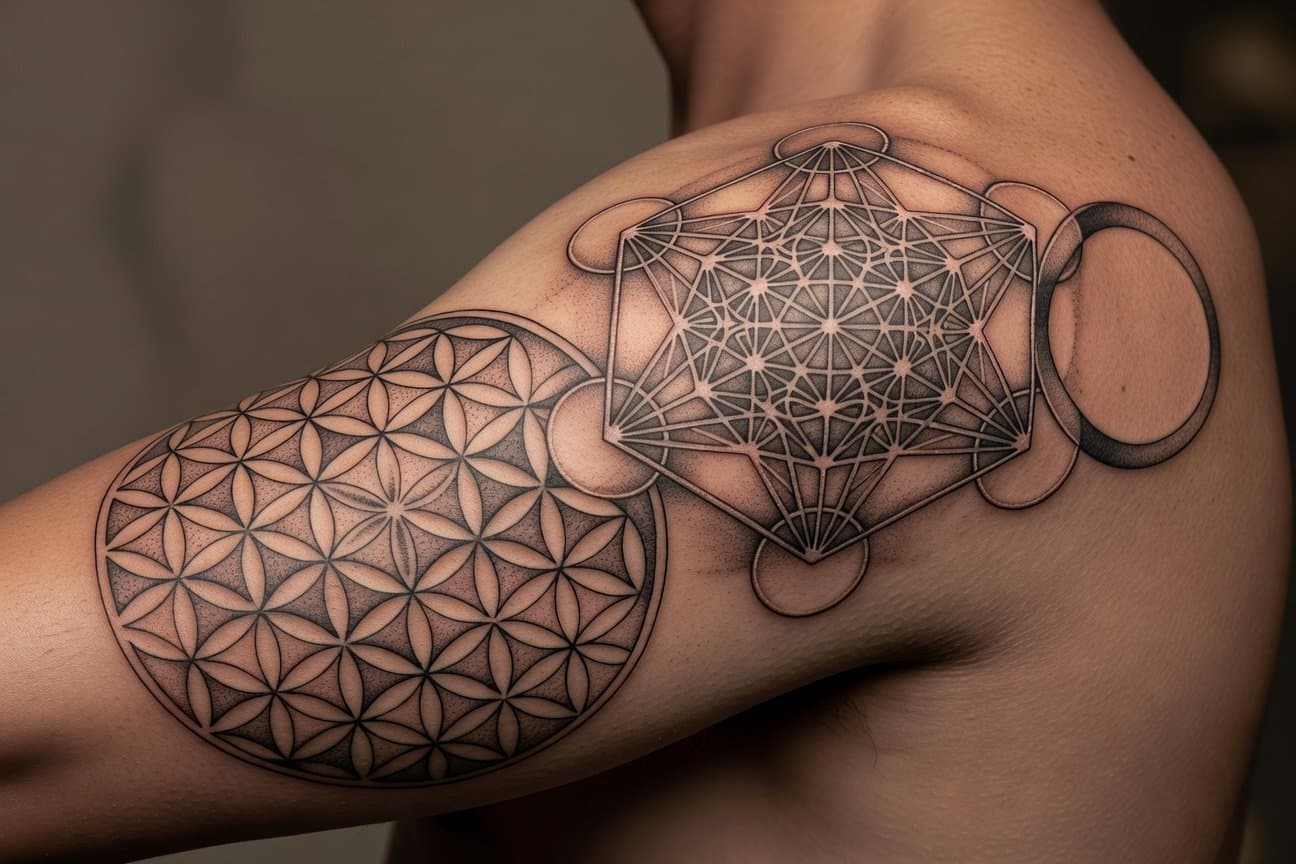
Geometric tattoos live or die on the line before the shape ever reads as a whole. The Thunderlord Power guide makes that plain: clean work comes from matching machine setup, hand position, and stroke mechanics so the needle moves the same way every time. In sacred geometry, blackwork grids, and minimalist frames, a wobble or uneven depth does not just look messy, it can throw off symmetry in a way that never fully disappears.
The reason this matters is bigger than style. NIOSH began visiting tattooing and piercing studios in the 1990s after artists raised workplace safety and health concerns, and it later published *Good, Clean Art* in November 2007 to help reduce bloodborne pathogen exposure in body art settings. Tattooing sits inside a larger safety culture, not just an aesthetic one. That framing matters when you are chasing a crisp compass rose or a clean mandala: technique is part of both the visual result and the studio standard.
The setup that protects a straight line
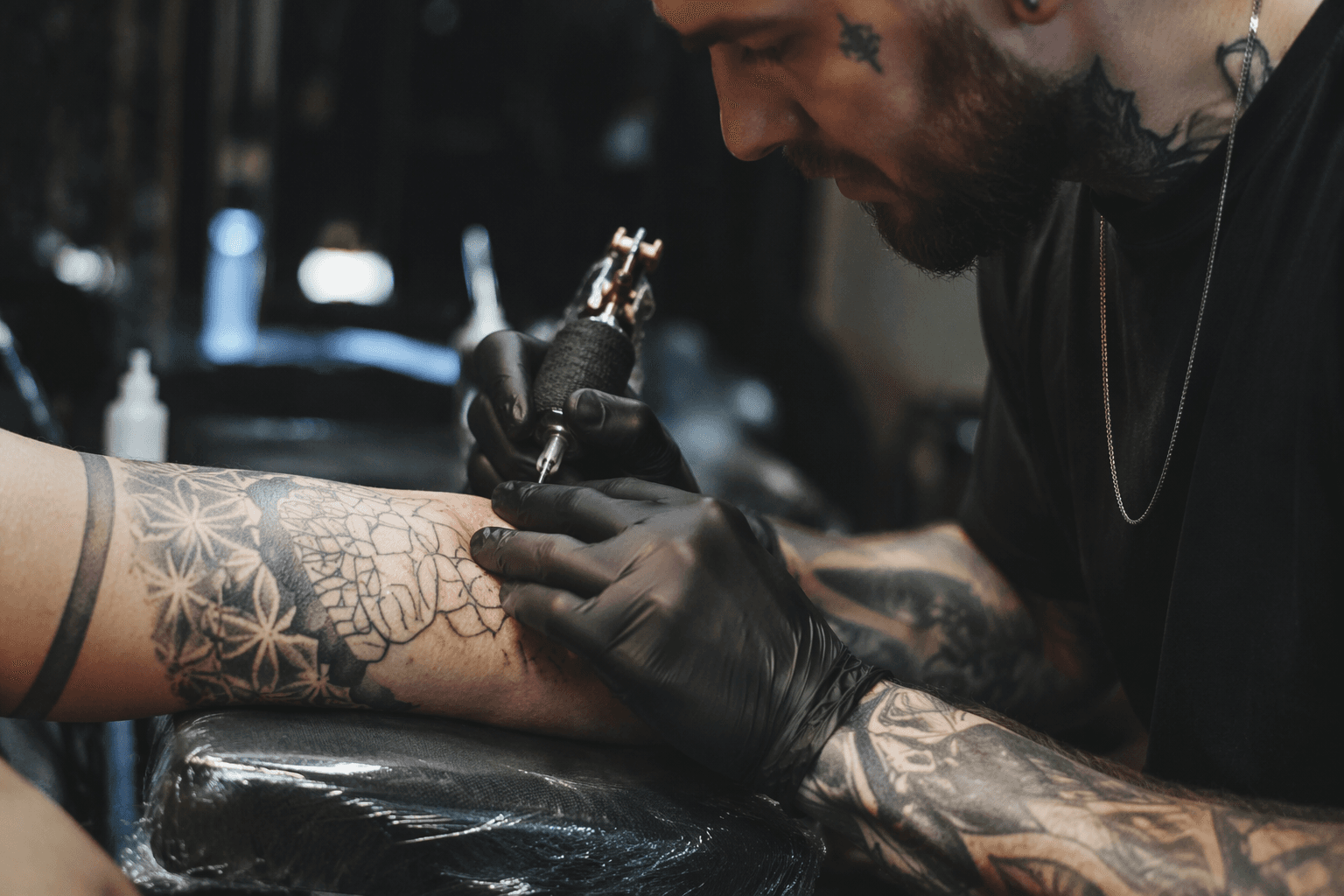
Thunderlord Power’s core recommendation is a lining stroke in the 2.0 to 3.5 mm range, with practice-skin testing in the 7 to 9 volt range. The guide also stresses a 45 to 60 degree hand angle, a floating grip anchored by the pinky, and a motion that stays consistent in speed and pressure. Those details sound small, but geometric work exposes every mistake because the eye can spot even a slight drift in a straight run or a corner that lands heavy on one pass and light on the next.
FK Irons makes a similar point in its machine guides, saying linework depends on the interaction of stroke length, voltage, hand speed, and machine setup. Its voltage chart warning is especially useful for artists booking or buying gear: copying another artist’s settings does not reliably work because the right range changes with the machine, the artist, and the skin in front of them. For clients, that is a useful filter when comparing portfolios. A good geometric artist is not just making clean photos, but showing control that can transfer to different skin types and placements.
How line type changes the whole approach
Not every geometric project wants the same hardware feel. Thunderlord Power breaks the work down by line type, and that is where a lot of linework problems start to make sense.
- Fine lines are best served by shorter strokes around 2.0 to 2.5 mm.
- Standard outlines sit around 2.5 to 3.0 mm.
- Bold lines may call for 3.5 to 4.0 mm.
That stroke choice changes how the machine behaves on long straight runs, especially in blackwork grids where one rushed pass can leave a line that looks either shaky or overworked. The same logic applies to voltage: lighter work around 6.0 to 7.5 volts, clean standard lining around 7.5 to 9.0 volts, and bolder lines around 9.0 to 10.5 volts. If the voltage is too timid, the hand starts pushing, which invites inconsistency. If it is too hot, the line can get harsh fast, which is the last thing you want when symmetry is the point.
Why geometric tattoos expose every technical slip
A geometric tattoo does not forgive the way a looser illustrative piece might. A compass point, sacred geometry band, or decorative frame depends on repeated spacing, equal depth, and a steady read from one side to the other. If the artist varies pressure on a long pass, the line can widen, darken, or dip just enough to break the pattern. Once that happens, the eye stops seeing the design as a system and starts seeing the flaw.
That is why the Thunderlord Power guide reads less like a style note and more like a mechanical checklist. The article’s 30-second summary points to the same three fundamentals over and over: machine setup, hand position, and stroke mechanics. In practice, that means the line is built from repeatable habits, not improvisation. The cleanest geometric pieces usually come from artists who treat every pass like a test of control.
The practice schedule behind the polished portfolio
The long-view advice in the guide is just as blunt. It recommends 30 to 60 minutes of daily practice for 3 to 6 months to build muscle memory. That is the part clients do not always see when they scroll a polished Instagram grid, but it explains why some portfolios look nearly identical from post to post: the artist has built a repeatable motion that holds up under pressure.
That repetition is what keeps symmetry intact on skin, where texture, stretch, and body movement all work against perfect drafting. It is also why apprentices benefit from drilling the same line types at different voltages instead of jumping straight to ornamental work. The goal is not to memorize one setting, but to understand how the stroke, the volts, and the hand all change together.
Geometry is still one of tattooing’s biggest public-facing styles
Tattooing is not a niche practice anymore. CDC MMWR reported in 2012 that 21% of adults in the United States had at least one tattoo, which helps explain why technique guidance matters to such a wide audience. At the same time, Tattoodo continues to feature fine-line and geometric artists, a sign that sacred geometry, minimalist structure, and clean blackwork remain highly visible in contemporary tattoo culture.
That visibility raises the bar. Clients can spot line quality fast, especially in pieces built from circles, symmetry, and repeating frames. Artists who understand stroke length, voltage, and hand control are not just chasing neat edges, they are protecting the design from the small errors that geometric work exposes immediately.
The cleanest geometric tattoos still start long before the machine touches skin. They begin with the stroke length chosen for the line type, the voltage matched to the machine and the artist, and the hand position that keeps the movement steady from start to finish. In a style where one wobble can break the whole read, precision is not a flourish, it is the structure holding the piece together.
Know something we missed? Have a correction or additional information?
Submit a Tip