Think Tank Tattoo explains when geometric tattoos can be fixed
Geometric tattoos are usually fixable, but the right answer depends on the structure you have. Symmetry drift, blowout, and placement each call for a different fix.
Start with structure, not regret
Think Tank Tattoo’s fix-it logic lands on a useful truth for geometric work: the first question is not how to hide the problem, it is what the tattoo is still capable of becoming. A grid that healed a little wider than planned, a pattern that sits awkwardly on the body, or a piece that feels too small or too dark may still be salvageable, but the repair has to match the tattoo in front of you, not the version you hoped would heal.
That matters because geometric tattoos expose flaws fast. Symmetry drift, blown-out linework, uneven dotwork, and poor placement can all read louder in geometry than in looser styles. The guide treats regret as common, not dramatic, and that is the right frame here: many people only think seriously about a tattoo after the idea has already been rushed, and some never planned it for more than a few weeks before getting inked.
The three paths: rework, cover-up, or laser
If you are trying to triage a geometric tattoo, start with a simple decision tree.
1. If the structure is still mostly intact, try rework first.
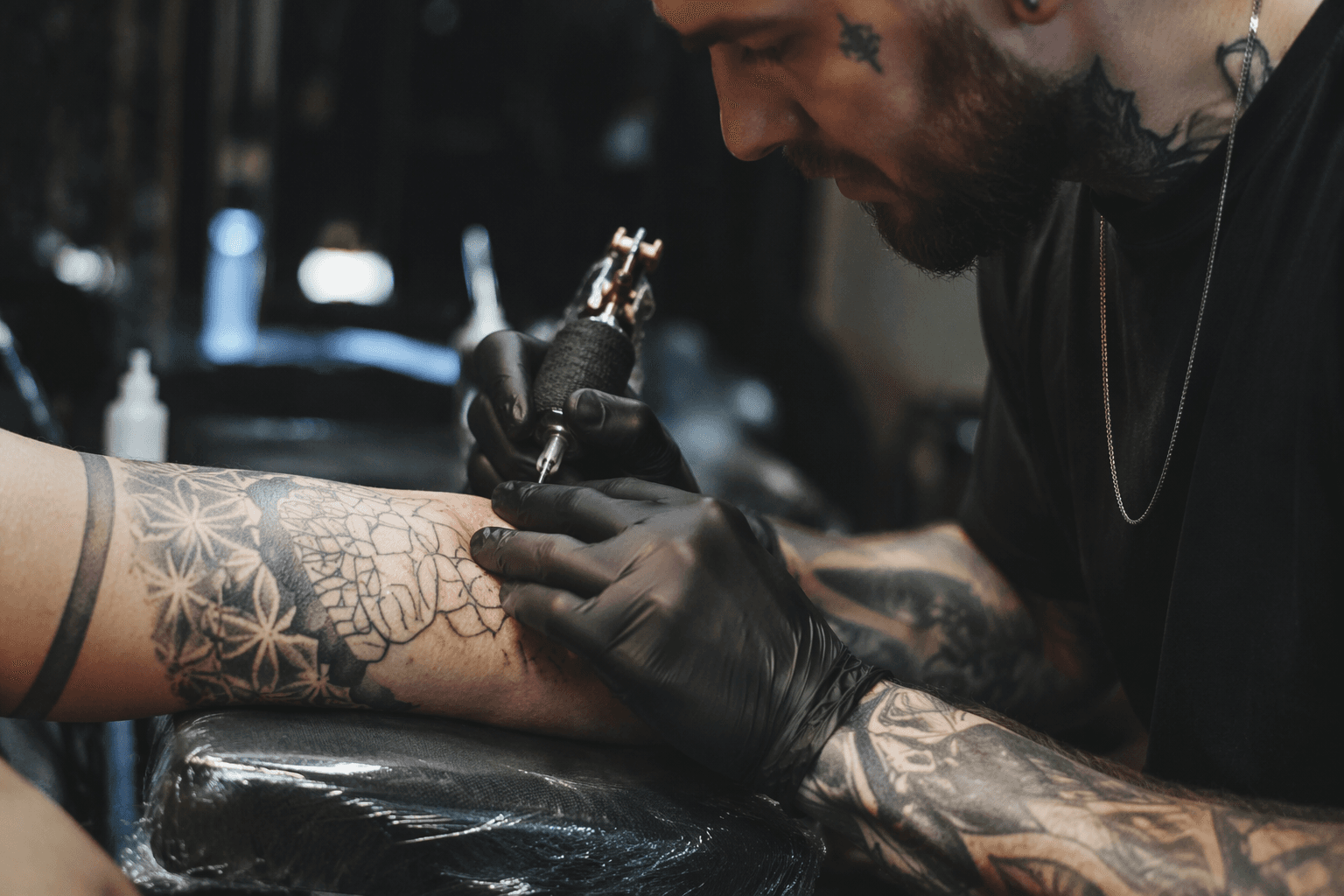
Slightly widened lines, a small symmetry drift, or spacing that feels off can often be improved with a careful touch-up. The catch is that a rushed correction can make the original problem harder to solve, especially when the design depends on exact spacing and clean alignment.
2. If the tattoo is too dark, too small, or badly placed, a cover-up may be the better route.
This works best when there is enough visual room to build over the old piece without forcing the new design into a fight with it. In geometric work, though, cover-ups often need more density or scale than the original tattoo, which can change the look more than you expected.
3. If the ink blocks every cleaner option, fade it first with laser.
Laser removal or fading can open space for a better cover-up or take a failed piece closer to neutral skin. That is often the best move when the tattoo is too saturated, the linework has blown out beyond a practical rescue, or the placement can’t be redeemed by adding more ink.
What can realistically be saved
Geometry rewards restraint. If the problem is a slightly misaligned grid or a line that healed wider than planned, a skilled artist may be able to tighten the read of the piece without starting over. Uneven dotwork can sometimes be balanced as well, but only if the underlying composition still has enough order to support the correction.
The warning from Think Tank Tattoo is worth repeating: stop asking only how to cover the issue and start asking what the tattoo can still become. That shift keeps you from forcing a cosmetic fix onto a structural problem. A geometric piece that is technically salvageable can still be damaged by a repair that ignores the original architecture.
When a cover-up makes sense
Cover-ups work best when your old tattoo can be absorbed into a larger, stronger composition. If the original piece is too small, too dark, or sitting in a place that never matched the body, a new design may solve more than one problem at once. But a cover-up is not a magic eraser. It usually changes the feel of the tattoo, and in geometric work that can mean moving away from light, airy precision toward something bolder and more opaque.
That tradeoff is important. If what you want most is to preserve the crispness of sacred geometry, a cover-up may not be the cleanest path. If what matters most is replacing a failed tattoo with something better balanced on the body, then a stronger overbuild can be the right call.
When laser is the smarter first step
The medical guidance is clear: laser removal has become the preferred treatment for unwanted tattoos, and modern lasers are safer and more effective than many older methods. The American Academy of Dermatology notes that today’s lasers can remove ink with fewer treatments than before and can treat some colors that were once harder to remove. The American Society for Dermatologic Surgery also says laser therapy uses high-intensity beams to break up pigment.
That said, laser is still a process, not an instant fix. The U.S. Food and Drug Administration says tattoos are permanent, and tattoo inks used for intradermal tattoos are cosmetics, but no color additives are approved for injection into the skin. The FDA also warns against tattoo removal creams and DIY removal kits, which are not approved and can cause burns, scars, rashes, or permanent injury. The American Academy of Dermatology adds that some online removal kits contain acid and have caused permanent skin injuries.
Why geometric tattoos make this decision harder
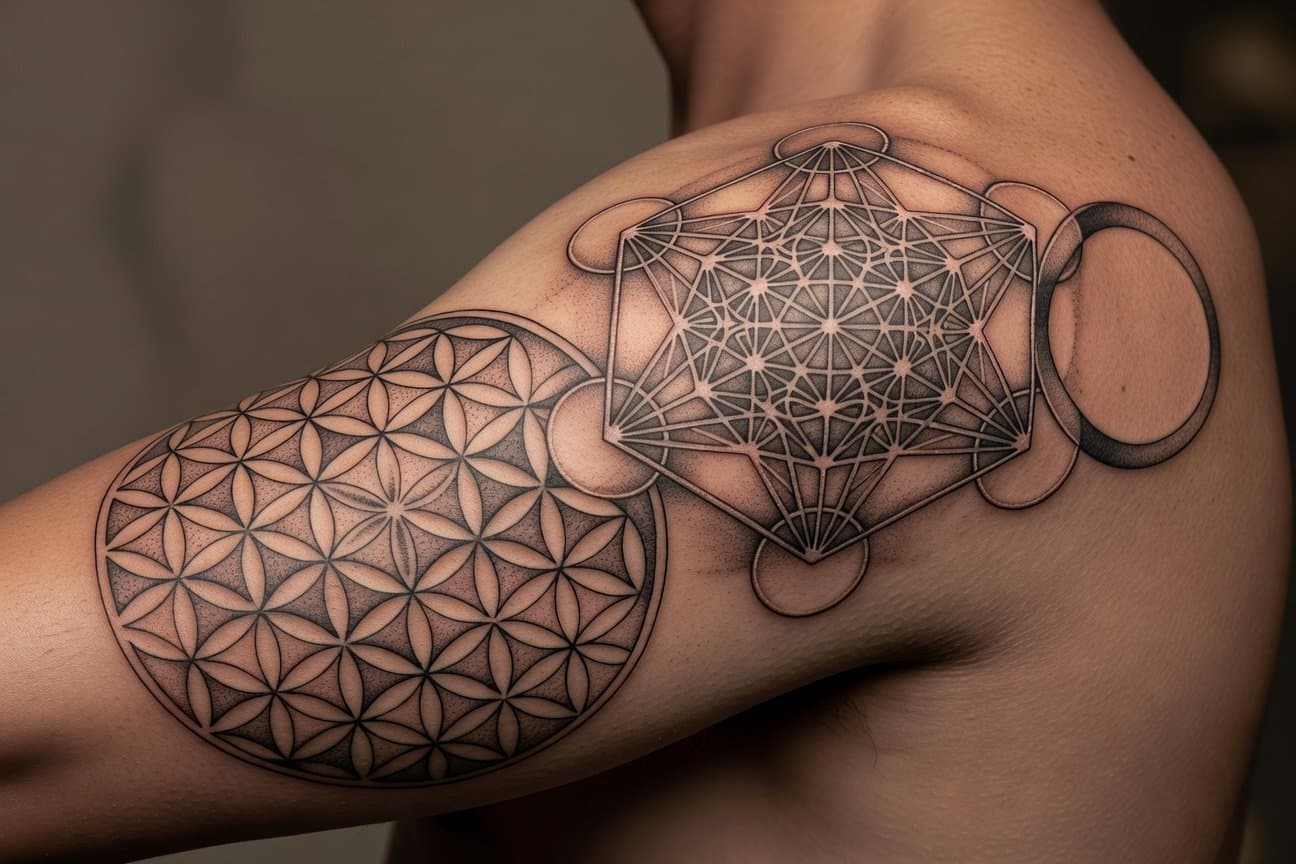
Geometric tattoos are unforgiving because the style is built on precision. If the symmetry is off, the spacing is uneven, or the linework healed wider than planned, the eye catches it immediately. A design that might seem passable in another style can look obviously compromised once it is reduced to clean edges and repeating forms.
That is why the best fix often starts before the first needle pass. A strong stencil, realistic sizing, and a design built for the body can prevent a lot of the triage work later. The guide’s larger point is not just that regret happens, but that geometry gives you fewer places to hide it.
The bigger context around tattoo correction
This is not a niche concern. Pew Research Center found that 32% of U.S. adults had at least one tattoo in a July 10 to July 16, 2023 survey of 8,480 adults, and 22% said they have more than one. Pew also found in its 2010 Tattoo Taboo report that 72% of tattooed adults said their tattoos were usually not visible, which helps explain why concealment, correction, and redesign matter so much in real life.
For geometric collectors, the takeaway is practical: if a piece heals wrong, you do not need to panic, but you do need to diagnose it honestly. A slightly drifted line may be reworked, a bad placement may be covered, and a stubborn block of ink may need laser before anything else can happen. Once the skin already carries the structure, the smartest move is to choose the fix that respects it.
Know something we missed? Have a correction or additional information?
Submit a Tip