How dotwork shaped the rise of geometric tattoos
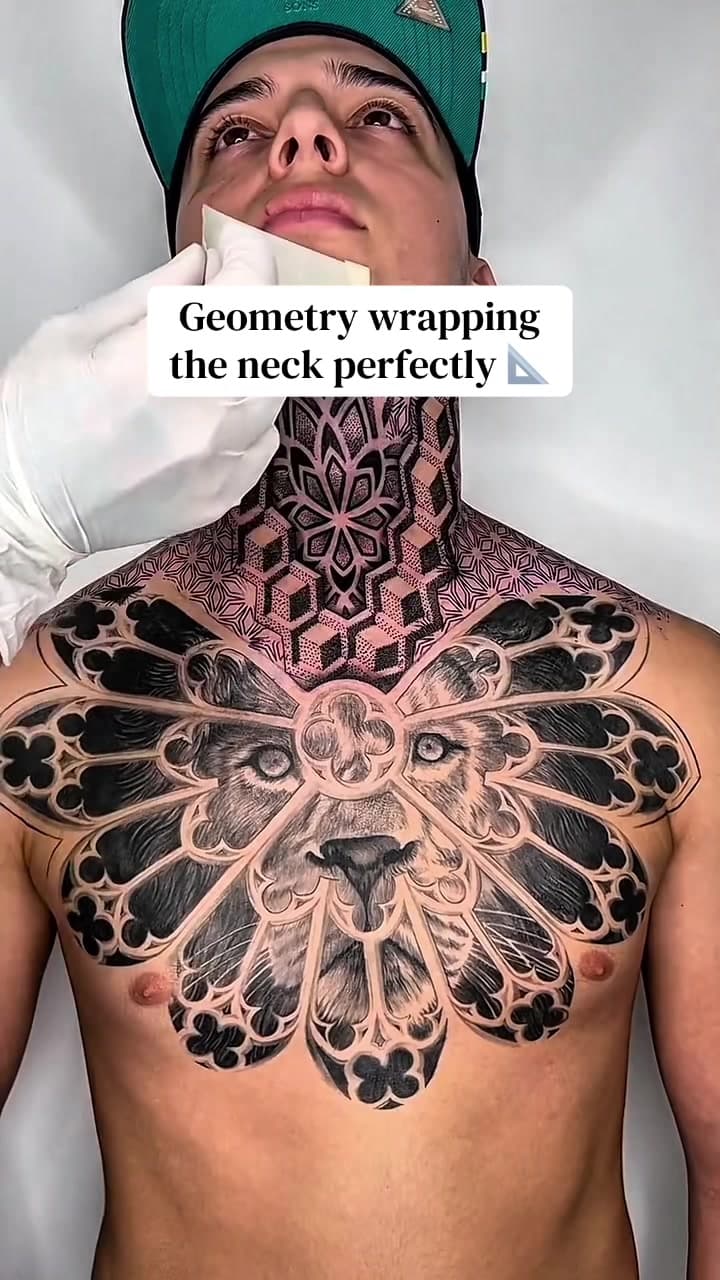
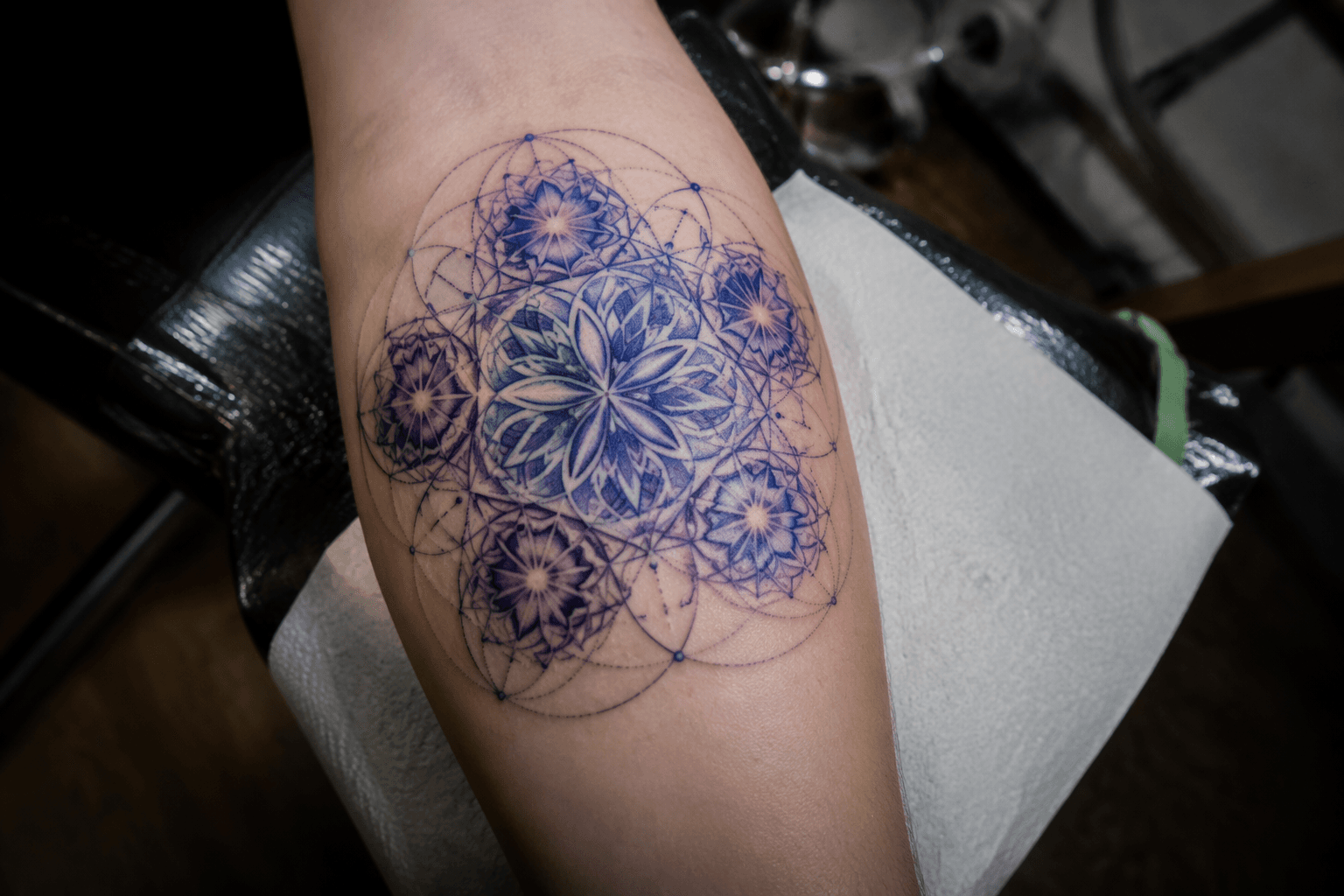
Dotwork gave geometric tattoos their depth: tiny points build sacred geometry, gradients, and texture without flattening the design.
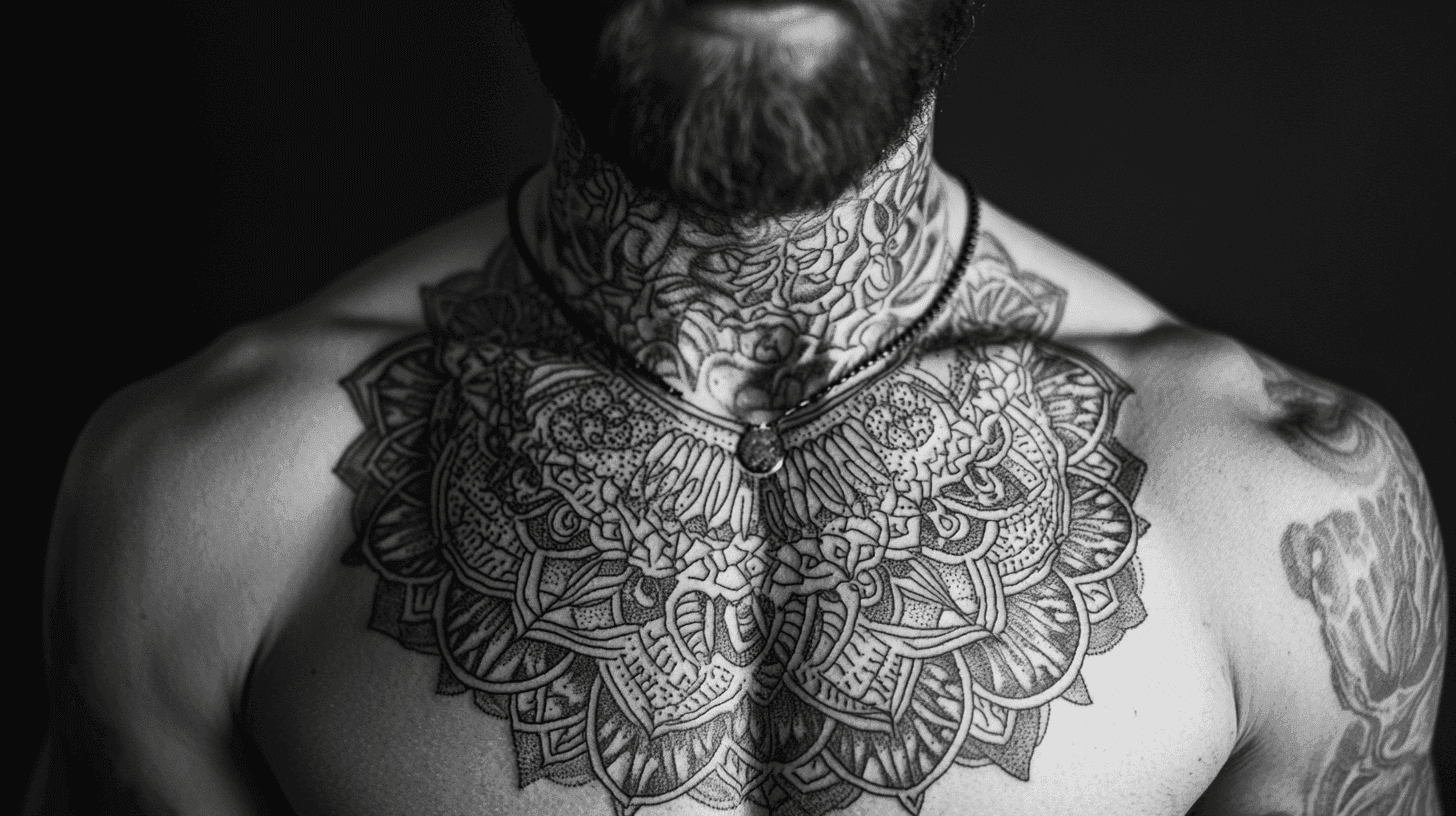
In geometric tattoos, clean symmetry, soft shading, and a sense of motion come from dots placed one point at a time. That is why dotwork sits at the center of the style’s rise.
From mark-making to modern geometry
Tattooing is the process of inserting pigments under the skin with a needle, or sometimes another tool, to produce an indelible mark visible through the layers of skin. That basic idea is older than any modern style label, and it already contains the logic that dotwork relies on: repeated contact, controlled placement, and a mark that only makes sense when many small actions are read together.
Dotwork bridges older tattoo traditions and the modern geometric studio. Instead of depending on broad fills or heavy outlines, it turns repeated puncture marks into pattern, shading, and structure. In 2019, Mantra Tattoo & Piercing noted that some of the most popular tattoos today are sacred geometric designs accented with dot work.
Why dotwork became the geometric tattoo workhorse
Inside geometric tattooing, dotwork does the job that hard linework alone cannot. It creates softness without losing precision, and it gives sacred geometry room to breathe. The result is especially strong in mandalas, repeating tessellations, dot-shaded spheres, and radial designs, where tiny shifts in dot density can change the way the eye moves across the skin.
Dotwork also gets paired often with blackwork. Blackwork uses black ink contrasted against the negative space of the skin, and stippling can add depth without burying the design under solid ink. Dotwork keeps the composition crisp while giving it texture, which is why it works so well in pieces that need both architectural order and a more organic fade.
In practical terms, dotwork is how a geometric tattoo gains dimension without looking overworked. A clean halo of dots can suggest a gradient. A tighter cluster can pull a focal point forward. A looser field can soften an edge or make a central form feel like it is expanding outward instead of sitting flat on the skin.
The technique is slower than it looks
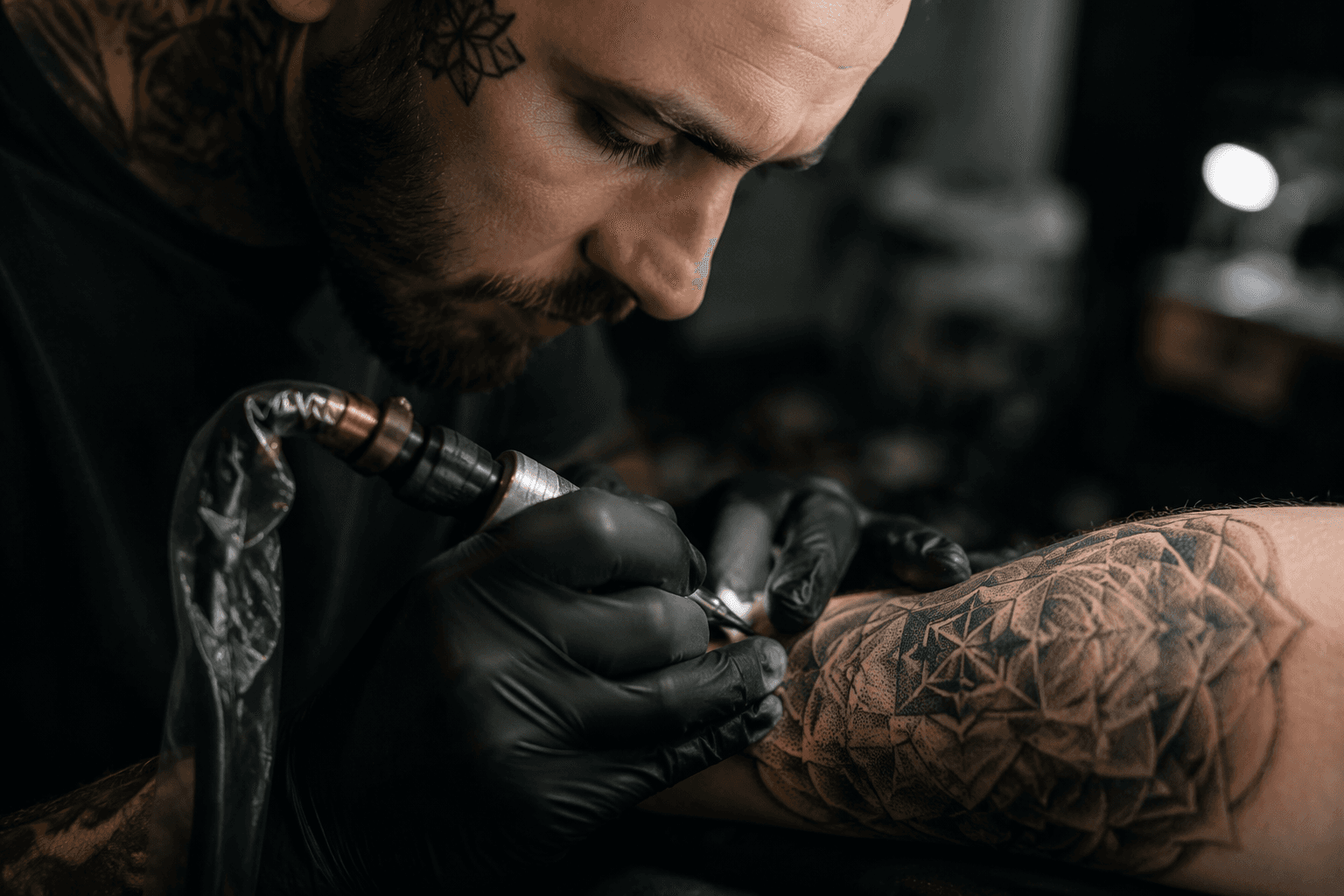
Dotwork asks for patience, craftsmanship, and intricate detail, and the technique punishes shortcuts fast. Tight dot placement, controlled needle grouping, slow machine movement, and disciplined stencil planning matter because uneven pressure or inconsistent spacing can make a geometric design look blurry or lopsided once it heals. That is especially true in pieces built on symmetry, where one drifting section can throw off the whole read.
The difference shows most clearly in the way healed dot shading settles. Fresh work often looks sharper and more contrast-heavy, while healed work can soften depending on skin type, placement, and how the dots were packed. Comparisons of fresh and healed dot shading make that settling process obvious: the structure stays, but the texture changes, which is why a good artist plans for the healed result instead of chasing only the day-one look.
A 2026 YouTube description on sacred geometry tattoos framed the style around structure, precision, and technique, with layering of black, dark gray, and light gray for long-term clarity.
Sacred geometry made dotwork a signature language
The sacred geometry side of geometric tattooing pushed dotwork from useful technique into signature language. Once the subject matter leans on circles, radiating lines, repeating ratios, and symbolic order, stippling becomes more than shading. It becomes the tool that can hold the design together without overpowering the sacred forms at its center.
Artists like Dillon Forte helped define the current look. Forte is a Texas-based tattoo artist specializing in sacred geometry and blackwork. In 2022, V13 Media linked Forte to sacred geometry, his move to Texas, FORTE Tattoo ATX, NFTs, and tattoos for Chris Hemsworth and Usher.

By 2025, CO:CREATE framed the field around sacred symbolism, precision and technique, and visionary design.
What to look for in a dotwork geometric piece
The best dotwork geometric tattoos do not just look dense or complicated. They are paced well. The spacing has to hold up across the whole composition, especially in larger sleeves, back pieces, and sternum tattoos where symmetry has more room to drift if the artist is careless.
A strong piece usually shows a few things at once:
- Even dot density where the artist wants weight or shadow
- Wider spacing where the design needs light or movement
- Clean transitions between dark zones and open skin
- Enough scale for the geometry to stay readable after healing
Dotwork can make a design feel larger than it is because the eye fills in the texture, but the tattoo still needs enough real estate for the symmetry to survive. Crowding sacred geometry too tightly is one of the fastest ways to lose the effect that made you want the style in the first place.
This article was produced by Prism’s automated news system from verified source data, official records, and press releases, then run through automated quality and moderation checks before publishing. The system is built and supervised by the people who set the standards it runs under. Read our full AI policy.
Did this article answer your question?