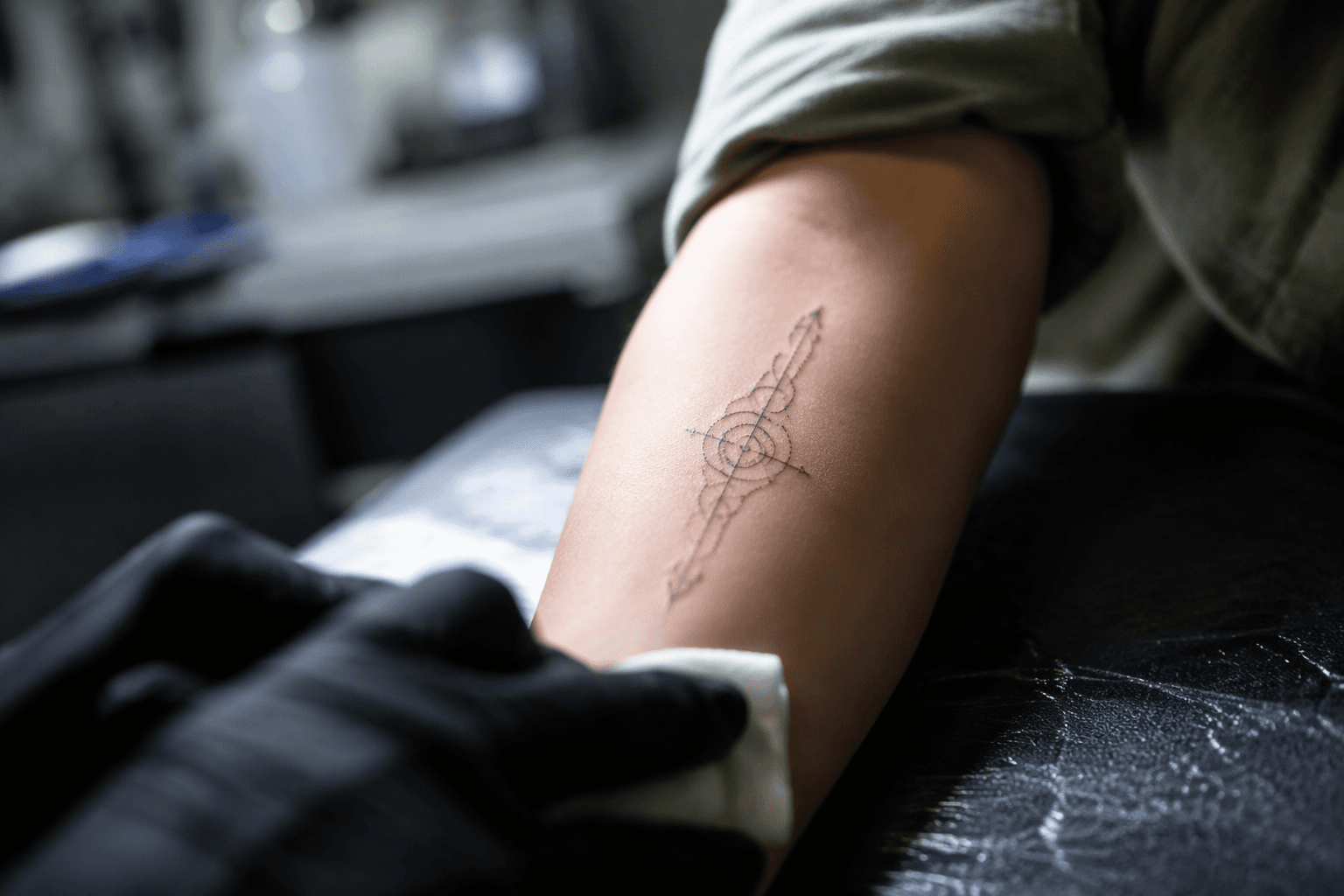
Optical illusion tattoos use geometry to create warped, surreal skin art
Optical illusion tattoos work when geometry is engineered with millimeter-level precision, smart placement, and contrast that can still read after healing.
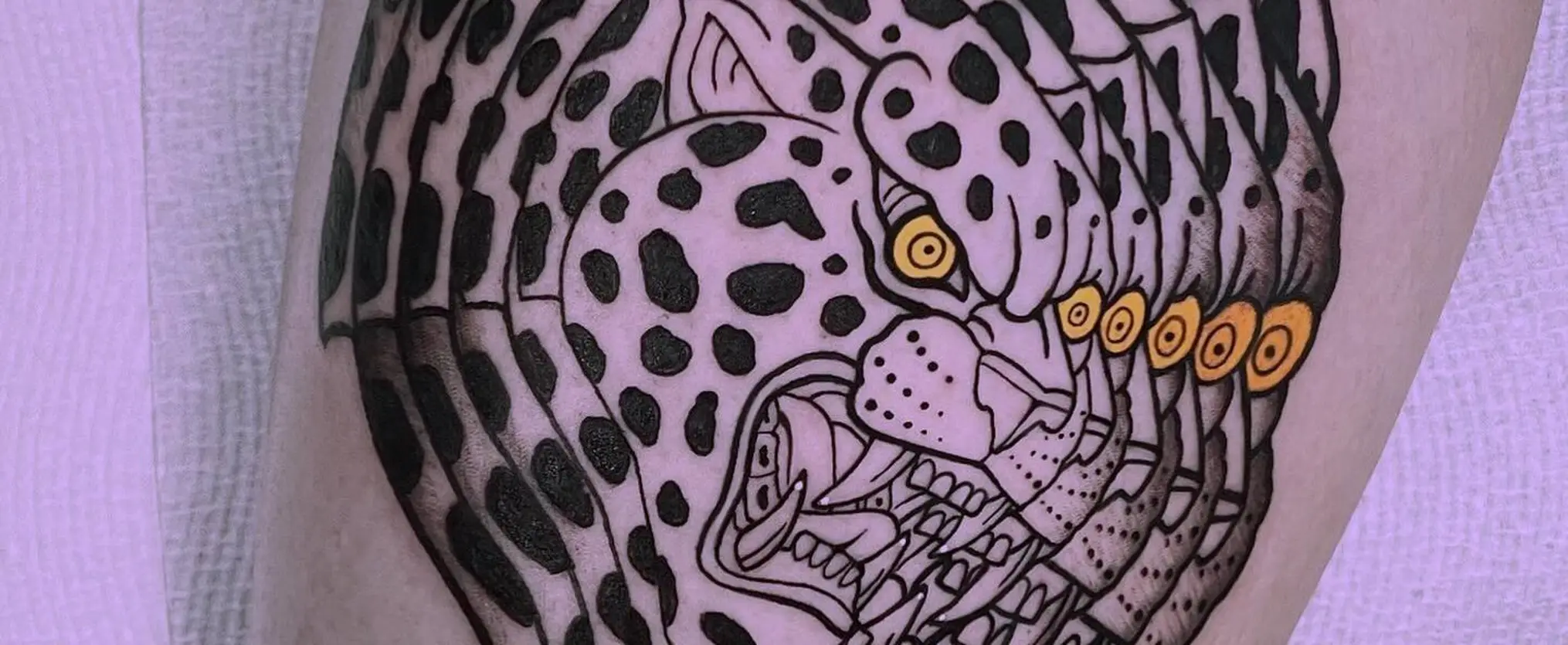
A warped triangle field that slips by even a fraction of a millimeter stops looking impossible and starts looking wrong. Optical illusion tattoos work when geometry is treated like engineering: systems of symmetry, contrast, and repeated patterning that still read after the skin settles.
Why illusion tattoos belong in the geometric conversation
The visual language behind these tattoos is not new. Optical-illusion tattooing draws on M.C. Escher, Bridget Riley, symmetry, perspective, repetition, and the 1960s op-art movement. The eye is reacting to the same structural cues whether the image is a warped triangle field, an impossible tunnel, or a shape that appears to fold back on itself.
There is also a much older backdrop here: tattooing has existed for thousands of years across cultures around the globe. The modern twist is not the existence of body art itself, but the way artists now use structure to create motion, depth, and a sense of visual instability.
What makes the illusion hold up on skin
The trick is never just the subject matter. Optical-illusion tattoos succeed because the underlying draftsmanship is strict: the spacing has to stay even, the contrast has to stay legible, and the line rhythm has to support the visual trick instead of fighting it. When a piece uses tight repeated patterning, negative space, and controlled symmetry, the eye accepts the distortion; when any of those elements drift, the illusion starts to wobble.
This style overlaps with the core mechanics of geometric tattooing. A clean triangle grid, a mirrored tunnel, or a folded plane works because the geometry is doing the heavy lifting. Once the shapes stop aligning, the tattoo reads as a mistake instead of a distortion, which is why illusion-based work demands more precision than casual viewers usually realize.
The geometric grammar behind the trippy look
Tattoodo’s geometric tattoo category includes sacred geometry, dotwork patterns, mathematical shapes, symmetrical compositions, mandalas, platonic solids, and geometric animal designs, all of which depend on proportion and repeatability. Optical illusion pieces borrow that same grammar, even when the finished image is surreal instead of spiritual.
A literal mandala is not the only path to a strong geometric piece, and a warped, impossible form can still use the same design logic.
Placement decides whether the design reads or drifts
Placement can make or break a geometric tattoo because even incredible artwork can look awkward if it does not fit the body. Medium-sized canvases such as forearms, calves, shins, neck, shoulders, and upper arms are especially workable for geometric designs. Those areas usually give enough surface for symmetry to breathe without forcing the pattern to wrap too hard around a joint or curve.
That body fit becomes even more important with illusion work, because the effect depends on clean alignment. A design that looks perfect on a flat sketch can break down if it is stretched across a shoulder cap or squeezed over a narrow forearm turn. The better placements are the ones that let the geometry stay readable from a normal viewing distance, not just in a close-up photo.
Why Dillon Forte is such a useful reference point
Inked’s profile of sacred-geometry artist Dillon Forte called him one of the most sought-after tattoo artists in the world; his practice now sits in Wimberley, Texas, on 10 acres with walking trails, cabins, an art garden, and pyramids.
The studio setting, with its walking trails and pyramids, mirrors the same impulse that drives sacred geometry on skin: repeated forms and measured proportions.
What to look for before you commit
The most reliable optical-illusion tattoos share a few traits that are easy to spot before the needle ever touches skin:
- Crisp, confident linework that can hold symmetry
- Enough contrast to preserve the visual trick from a distance
- Repetition that stays mathematically consistent
- Negative space that is intentional, not accidental
- Placement that follows the body instead of fighting it
The designs that feel razor-sharp on day one are usually the same ones that still make sense after healing, while pieces built on delicate spacing or weak contrast tend to soften faster and lose the sense of depth that made them compelling in the first place.
This article was produced by Prism’s automated news system from verified source data, official records, and press releases, then run through automated quality and moderation checks before publishing. The system is built and supervised by the people who set the standards it runs under. Read our full AI policy.
Did this article answer your question?