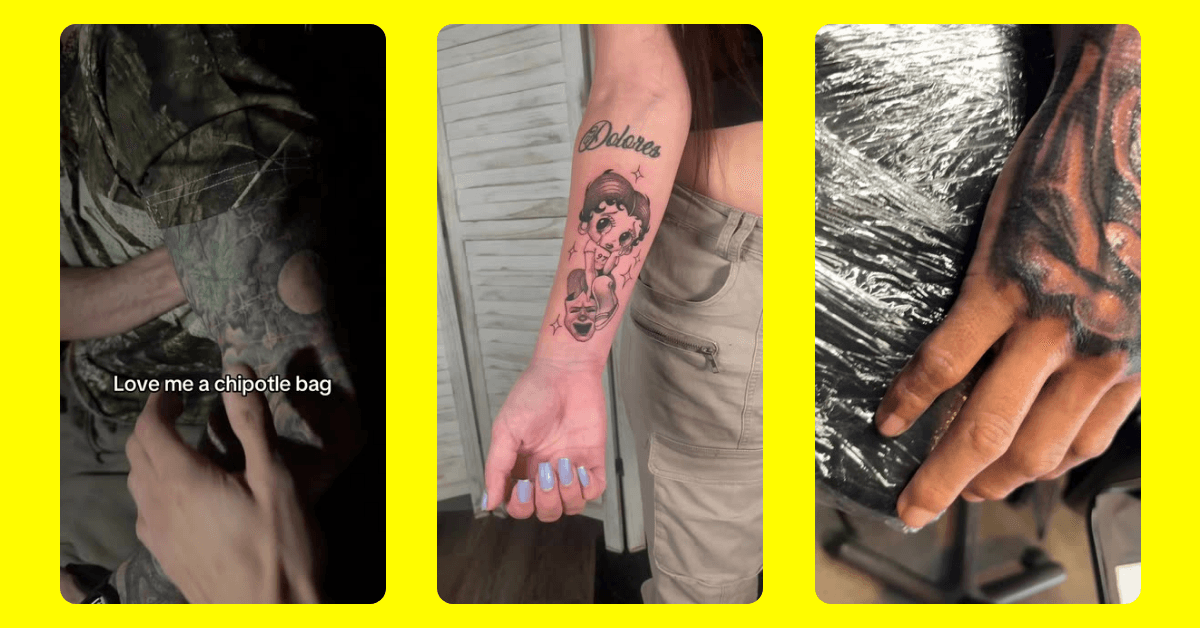
Placement shapes geometric tattoos, from clean lines to lasting flow
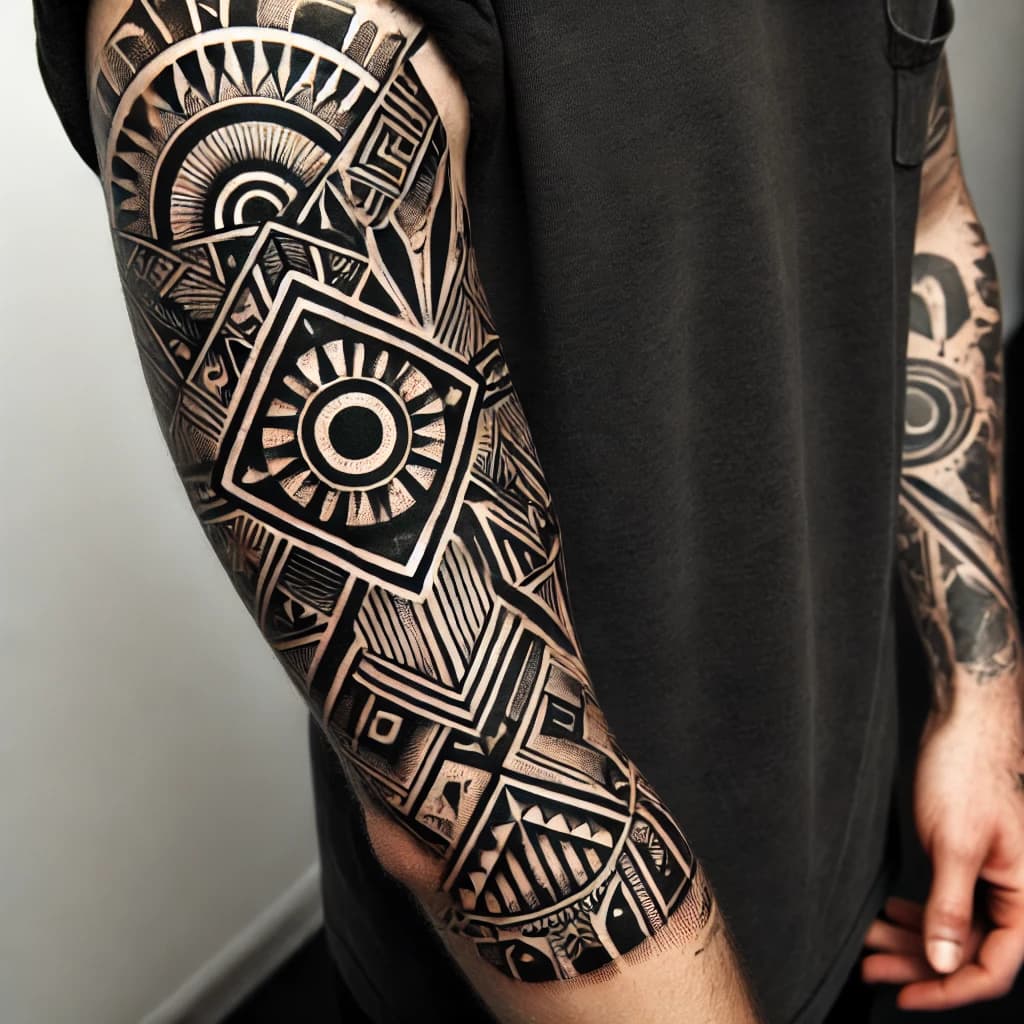
Placement can save a geometric tattoo or wreck it. The sharpest lines live or die on anatomy, motion, sun, and scale.
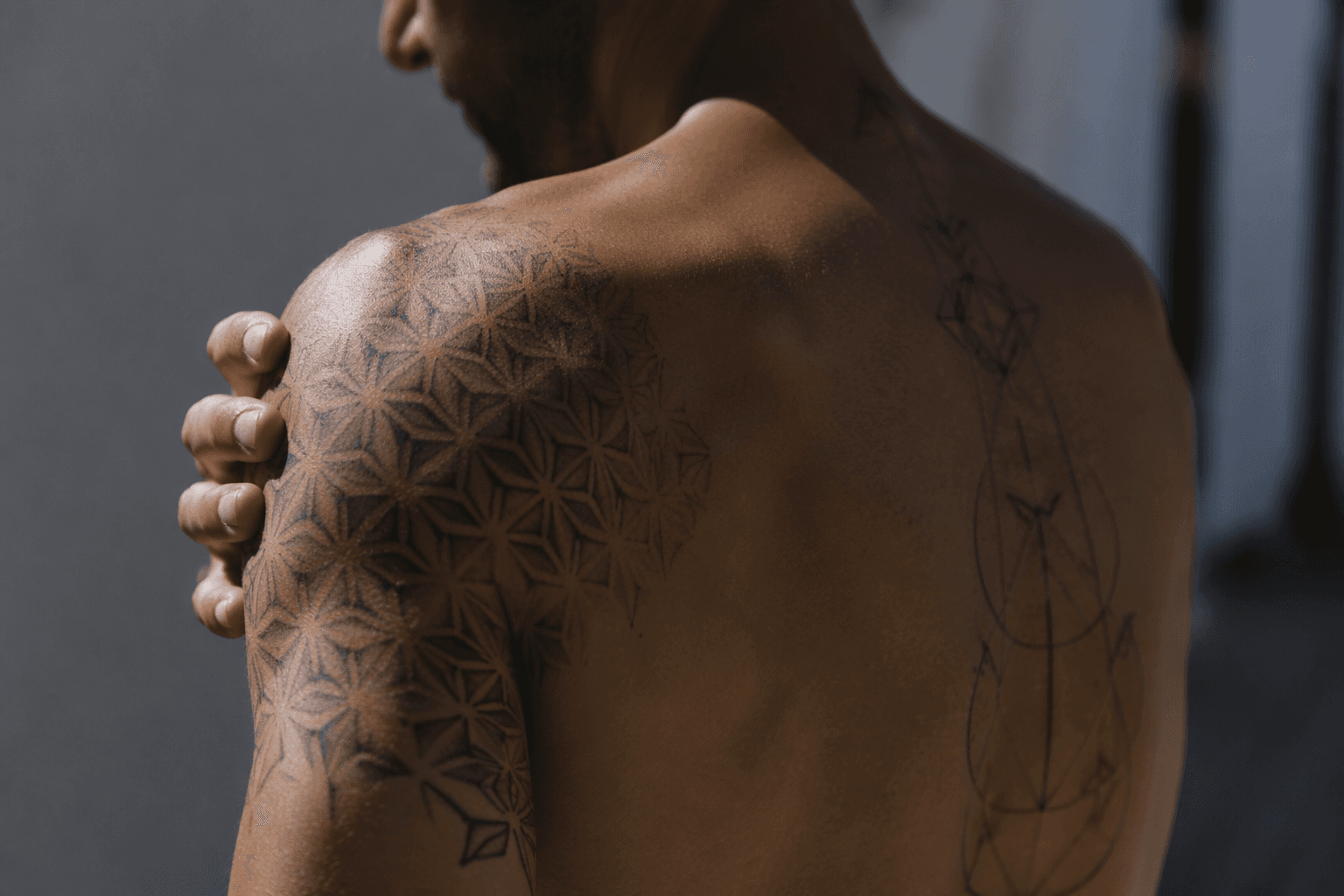
Straight lines, circles, grids, and angular frameworks can look perfectly controlled on paper, then start to wobble once they are wrapped around a joint or forced to live on skin that bends all day. The body moves, and the tattoo has to move with it.
Why the body changes the design
Body areas have different curvature, movement, skin texture, and sun exposure, so placement affects flow, visibility, pain, healing, and the long-term read of the tattoo. For geometric work, that means you are not just choosing a spot, you are choosing how much visual order that spot can preserve once the piece is healed and the skin starts behaving like skin again.
That is why the worst placement mistake is often not the idea itself, but the assumption that a design will stay neutral everywhere. A clean mandala centered on a stable panel of skin can read like architecture. The same motif pushed across a bend can start to feel crowded, broken, or slightly off even when the stencil was technically placed well.
Where clean lines hold, and where they fight the skin
High-motion areas are the first places where geometry gets tested. Elbows, knees, wrists, and ankles are all constantly changing shape, and straight lines can look uneven as the limb moves. That is why these spots usually work better with bolder shapes, fewer micro-details, and stronger contrast.
If you want a design built on precision, those areas force hard choices. Tiny line lattices and delicate repeating forms can lose clarity fast when the skin compresses, stretches, or twists. The better answer is usually to simplify the pattern so the eye still understands it at a glance, even when the body is in motion.
That tradeoff matters because geometric tattoos rely on optical order. A design with clean circles or angular symmetry can tolerate motion better when the composition is pared back. Add too much microscopic detail in a place that moves constantly, and the tattoo starts to look busy before it ever has a chance to age.
Give the pattern room to breathe
Scale is as important as placement, and sometimes the fix is simply moving the design to a flatter surface. The arm, back, and thigh all offer broader real estate, which makes them better choices when the concept needs space to open up. A larger panel lets a mandala stay centered, lets a grid breathe, and gives a more intricate composition a chance to keep its structure.
That does not mean every geometric piece belongs on a huge canvas. It means the motif should match the body area instead of fighting it. A line-based design can be simplified across a bend, while a more elaborate piece can be reserved for a broader surface that will not crush the pattern every time you move.
Healing, visibility, and the parts of the body that age faster
Placement also changes what happens after the session ends. Smaller tattoos on the hands, wrists, or arms may flake or itch, but they will likely heal faster than larger tattoos on the chest or back. That makes smaller placements tempting for people who want a quicker recovery, but it also means those spots are living with more daily motion and more exposure to the world.
Visibility is part of the equation too. A geometric tattoo on the forearm or wrist is seen constantly, which makes any distortion more obvious. A piece on the back or chest can be easier to protect and easier to let settle, but larger work in those areas usually asks for more time under the needle and more patience afterward.
Pain is part of that same conversation, because a tattoo on a stable, flatter section of skin is a very different experience from one that sits on a joint or on a surface that never quite relaxes.
Sun is the long game
A tattoo does not stop changing when the swelling goes down. Ultraviolet light can fade tattoo inks, and the American Academy of Dermatology recommends broad-spectrum, water-resistant SPF 30 or higher on tattooed skin. That makes sun-exposed placements a real long-term tradeoff, especially for geometric tattoos that depend on line quality and contrast.
The more exposed the placement, the more maintenance the tattoo asks for over time. Fine linework and pale shading can lose definition faster when UV hits them regularly, which is exactly why some collectors keep their most detailed geometry off heavily sunlit areas.
Geometry has always belonged to the body
The earliest known evidence of tattooing dates to about 3300 BCE, and Ötzi the Iceman, whose body carried 61 tattoos, included geometric and abstract markings across the lower spine, right knee, ankle joints, abdomen, lower back, lower legs, and left wrist. Smithsonian summary research notes that those dots and small crosses may have been placed to alleviate joint pain.
Polynesian tattoo traditions pushed that logic even further. Those cultures developed highly elaborate geometric designs over millennia, often covering the whole body, Smithsonian notes.
PubMed-indexed research found that 10.2 percent of tattooed participants in a Danish population-based study reported tattoo-associated skin reactions beyond the first three weeks after tattooing.
This article was produced by Prism’s automated news system from verified source data, official records, and press releases, then run through automated quality and moderation checks before publishing. The system is built and supervised by the people who set the standards it runs under. Read our full AI policy.
Did this article answer your question?