Portfolio review helps spot the right geometric tattoo artist
Geometric tattoos punish sloppy vetting, and a ten-minute portfolio review can show whether an artist can keep circles, spacing, and symmetry clean after healing.

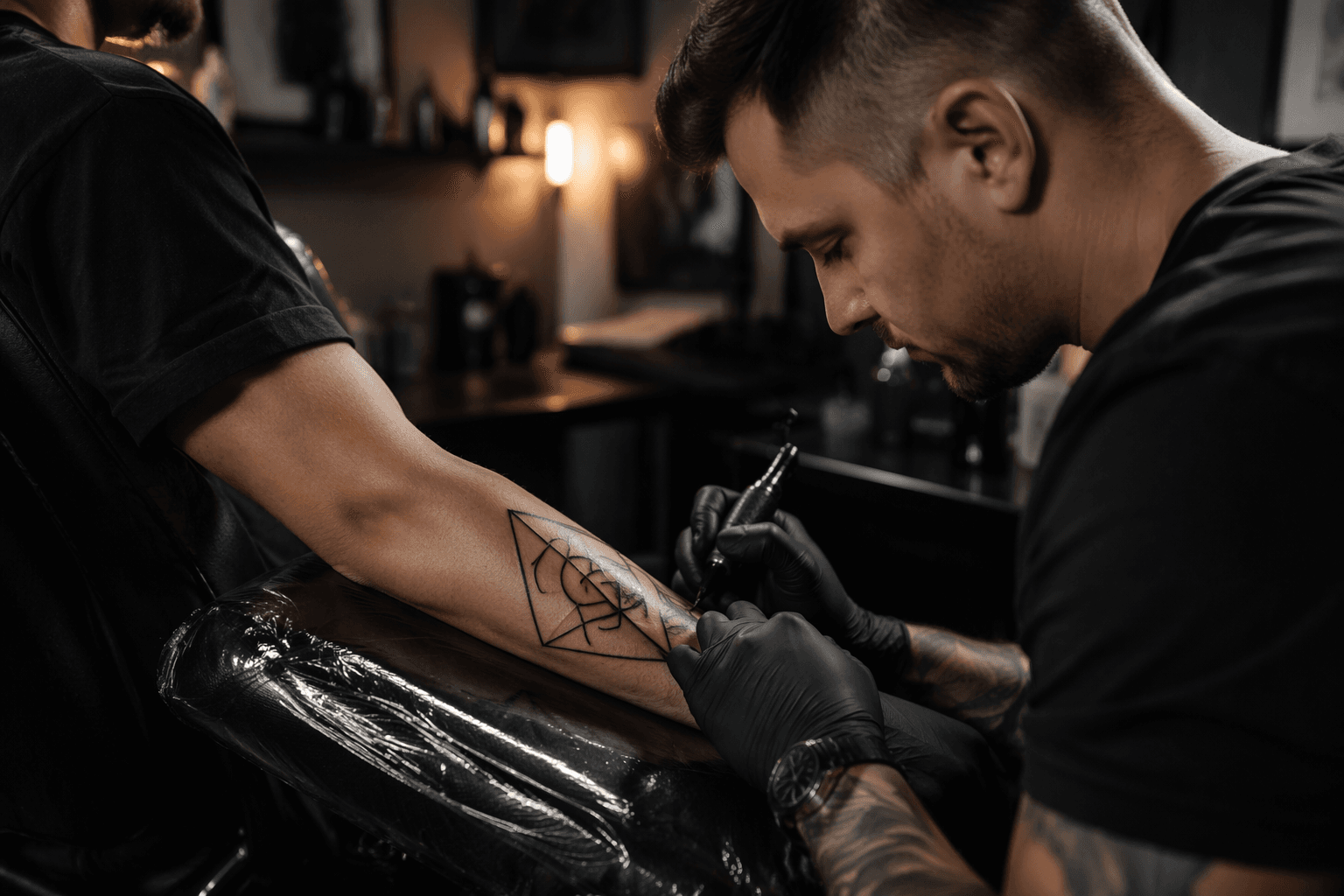
A geometric tattoo gives you very little room to hide bad habits. One off line, one uneven gap, one shape that drifts after healing, and the whole piece reads crooked. That is why the portfolio matters more than hype, follower count, or even price when you are choosing an artist for precision-heavy work.
Start with style fit, not clout
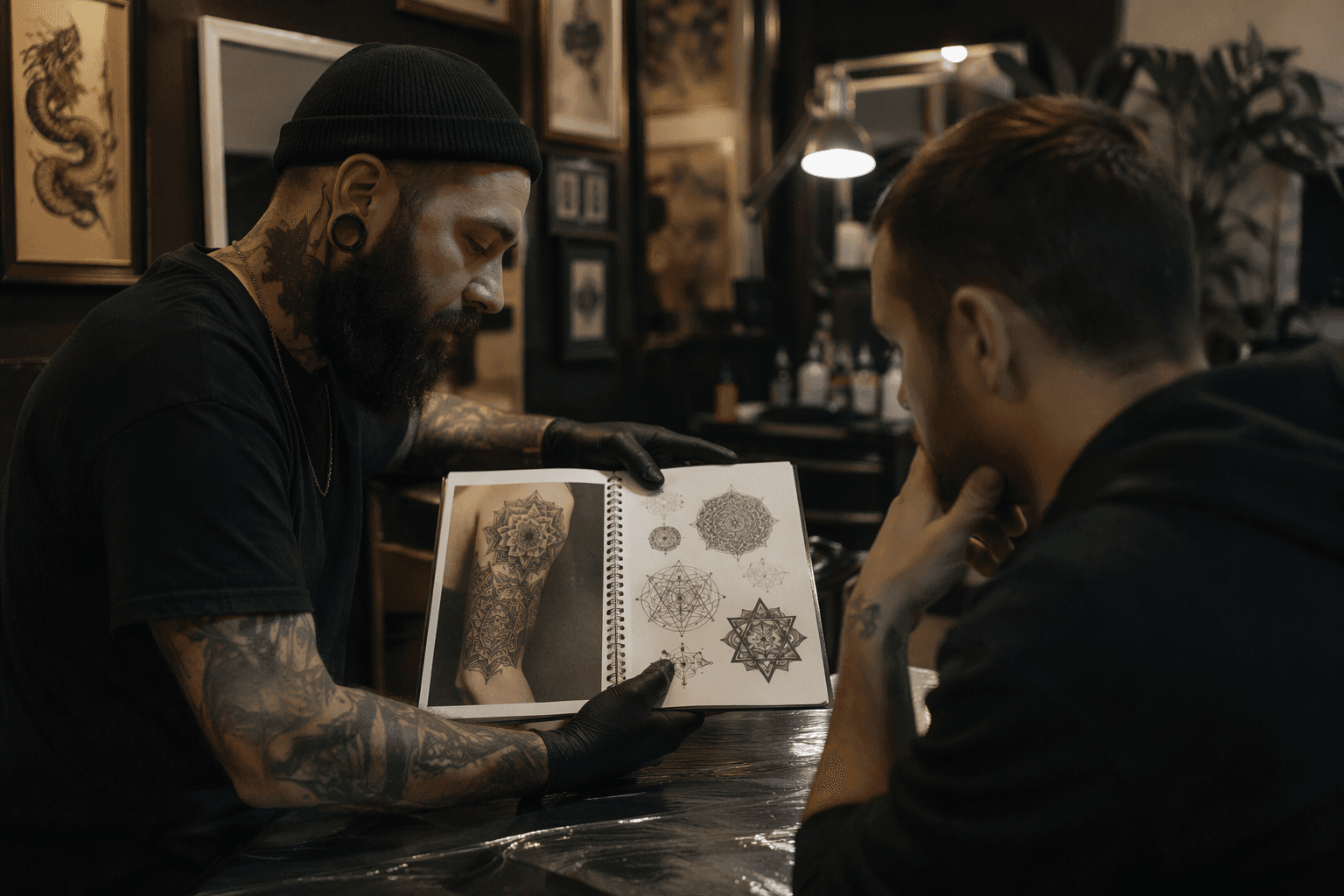
The first thing to check is whether the artist actually works in the style you want. A big online audience does not matter much if the portfolio is heavy on another look and light on crisp geometry, because an artist who excels at realism, lettering, or illustrative work may not have the same control over exact spacing and symmetry. The practical move is simple: ignore the noise and look for repeated evidence that the artist can build clean structure, not just post attractive flash.
That matters even more in geometric work because the style exposes mistakes fast. A circle that looks fine in a fresh photo can show tiny distortions once the skin settles, and spacing that seemed balanced in a filtered image can look uneven in daylight. The portfolio should answer one question before you send a deposit: can this person make geometry hold together after healing, not just on posting day?
What the portfolio should prove
A serious portfolio should do more than show pretty art. It should show linework consistency, healed results, composition, hygiene, and pricing signals, with the strongest proof coming from the first two and the last two. For geometric tattoos, linework and healed photos are the real test, because the design depends on exact edges, even spacing, and symmetry that still reads correctly after the body has finished healing.
When you open a portfolio, look for repetition in the right places. If the artist has done the same motif across multiple pieces, you can see whether they can repeat a pattern without drift, and whether the spacing stays disciplined from one tattoo to the next. That kind of consistency is worth more than one dramatic image, because geometry is built on control.
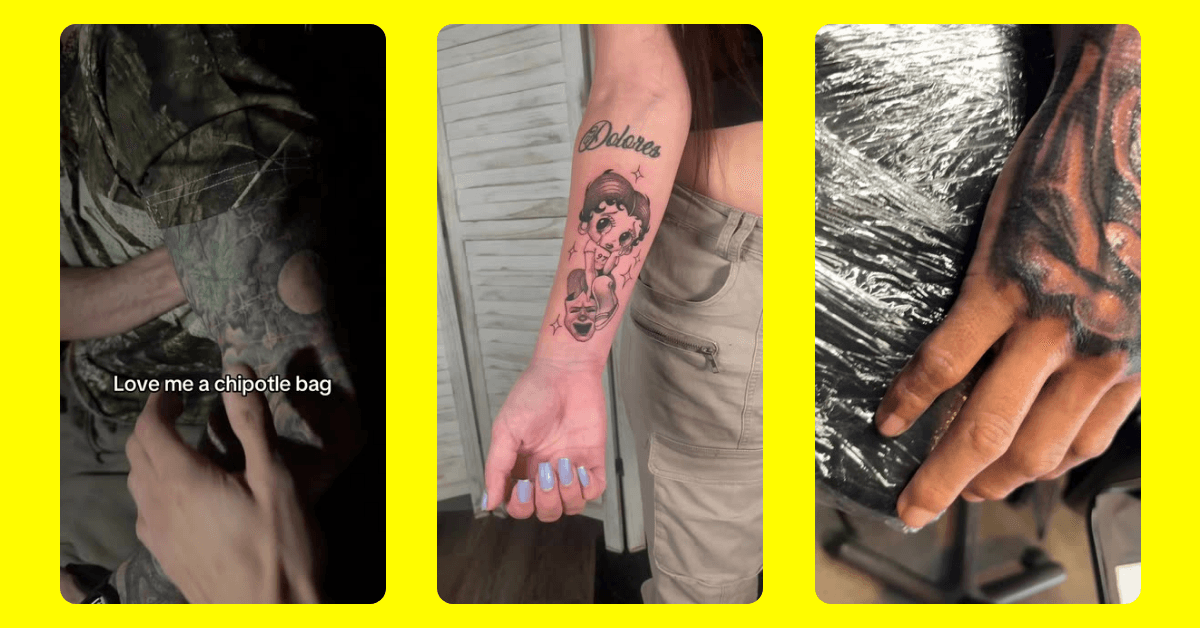
Fresh photos are only half the story, and often the easier half. They show stencil accuracy, clean skin, and the immediate punch of a new tattoo, but they do not always reveal whether the lines stay crisp or whether the pattern softens in a way that breaks the design. Healed photos are where you see if the artist understands how to protect the structure once the skin stops looking perfect.
A good review of fresh and healed images usually comes down to a few specific checks:
- Do circles stay round, or do they sag and wobble after healing?
- Does spacing stay even between repeated shapes, or does one section collapse tighter than the next?
- Do intersections and borders remain clean, or do they blur into each other?
- Does the piece still read symmetrically on the body, not just in the original photo?
- Does the artist show the same level of control on different body parts, not only on the easiest placements?
That last point matters. A portfolio that only shows geometry in forgiving placements tells you less than one that shows the artist can keep structure intact across different body parts. You want to know whether they can adapt the design to the body instead of forcing the body to absorb a design that only works in one ideal spot.
Hygiene and pricing are part of the decision
Portfolio review is not just about aesthetics, because tattooing also carries real safety risk. The American Academy of Dermatology notes that skin can react in unexpected ways even when the artist is licensed and aftercare is followed, and reactions can show up immediately, days or months later, or even years later. That means a clean-looking tattoo is not enough on its own if the studio habits behind it are sloppy.
The public-health side of this is not theoretical. The Centers for Disease Control and Prevention reported 22 cases of tattoo-associated nontuberculous mycobacterial infections across four states in 2011 and 2012, tied to contaminated ink and nonsterile water dilution in identified clusters. The U.S. Food and Drug Administration issued final guidance on tattoo inks in 2024 to help prevent microbial contamination, and in 2025 it warned about tattoo inks contaminated with bacteria including Pseudomonas aeruginosa. If an artist treats sanitation like an afterthought, that is a warning sign, not a side note.
State and local laws are part of the same picture. They are used to regulate sanitation and artist training in many places, and the Network for Public Health Law points to the National Environmental Health Association model code as a useful guide. Virginia’s tattooing regulations were updated on August 1, 2025, which is a reminder that the regulatory side of this trade is still active and specific, not vague and optional. A portfolio can show talent, but licensing, sanitation, and clear communication show whether the shop runs like a professional operation.
Pricing signals matter too. A sensible pricing structure does not guarantee skill, but it often goes hand in hand with clearer communication and a more organized booking experience. If the numbers feel random, the responses are slow, and the studio presentation feels careless, that usually shows up somewhere else in the work as well.
Why this screening matters so much
The reason people care this much about tattoo vetting is that tattoos are mainstream, not niche. Pew Research Center found in 2023 that 32% of U.S. adults have at least one tattoo, and 22% have more than one. The CDC’s earlier 2012 report put the figure at 21% of U.S. adults with at least one tattoo, which shows how steadily the market has grown over time.
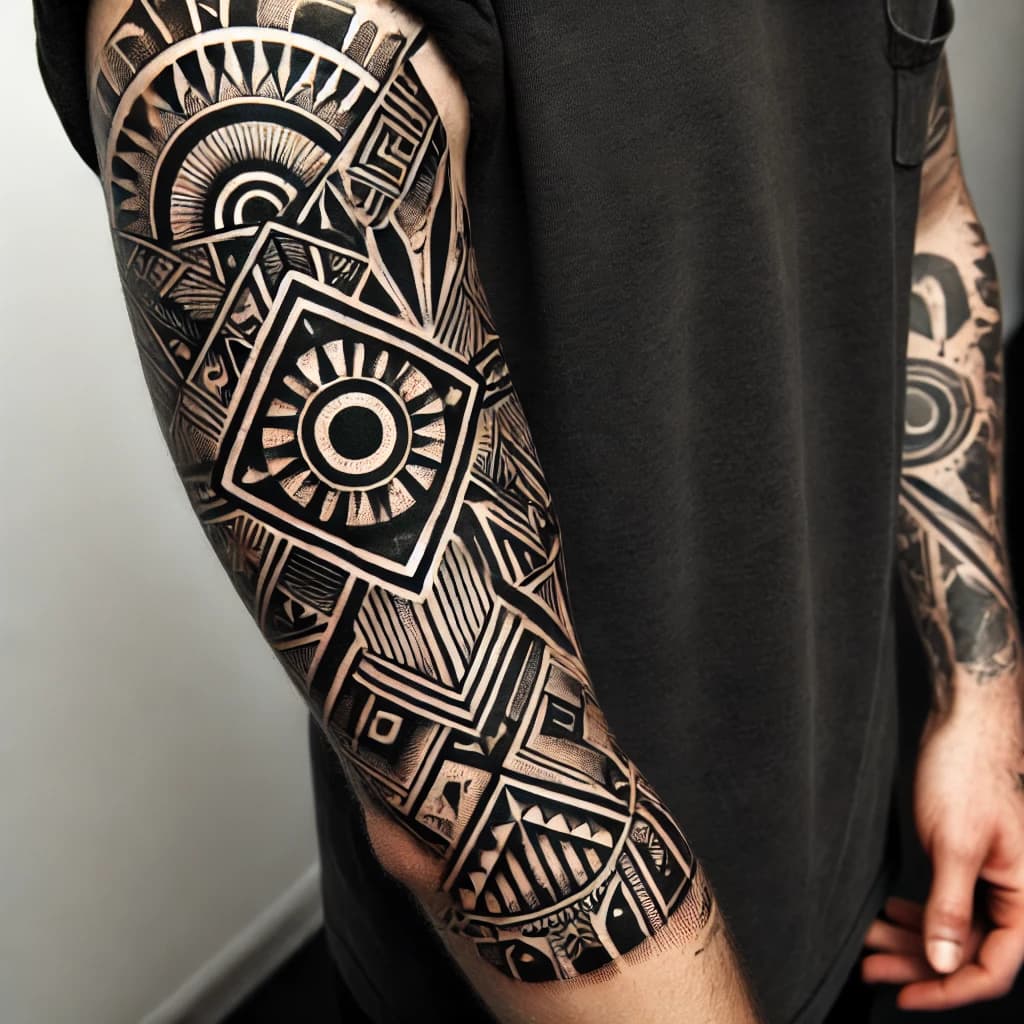
Geometric tattooing also has deeper roots than a passing trend cycle. Smithsonian Magazine describes Polynesian tattoo traditions as developing over millennia and featuring elaborate geometric designs, and Ötzi the Iceman carried 61 tattoos, many of them geometric and abstract, on the Italian-Austrian border. That history is a good reminder that the style has always depended on precision, pattern, and placement, not just decoration.
So if you are deciding whether to book, do not get distracted by reach, buzz, or a polished feed. Spend the ten minutes on the portfolio, look for healed symmetry, repeated motifs, body-placement control, clean linework, and clear studio discipline. In geometric tattooing, the portfolio is not a marketing accessory, it is the closest thing you have to proof that the design will still hold its shape when the skin stops behaving.
This article was produced by Prism’s automated news system from verified source data, official records, and press releases, then run through automated quality and moderation checks before publishing. The system is built and supervised by the people who set the standards it runs under. Read our full AI policy.
Did this article answer your question?