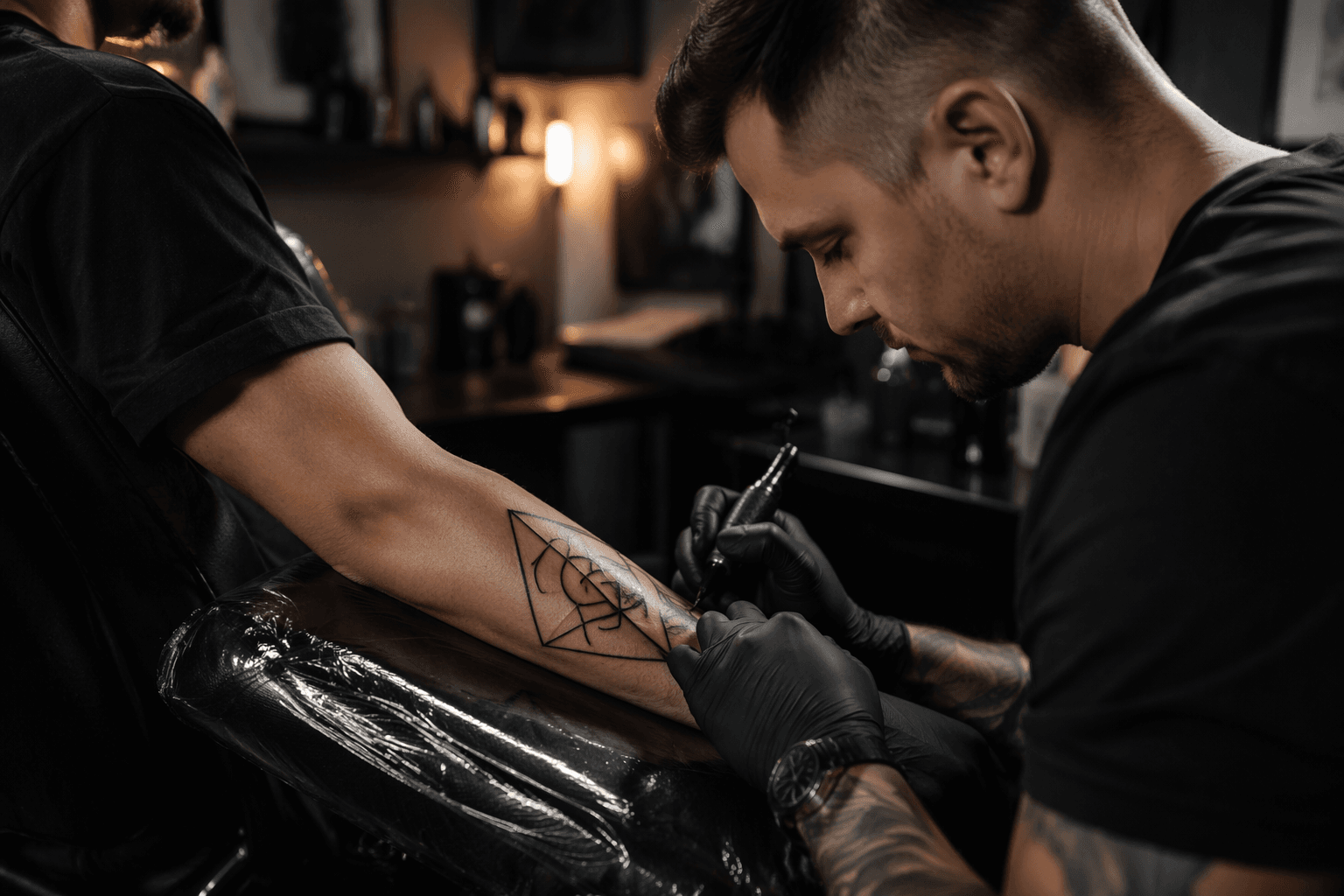
Scar Tattoos Need Time, Skill, and the Right Design Approach
The smartest scar tattoos are planned around tissue, age, and texture first, then shaped as camouflage or a deliberate geometric spine.
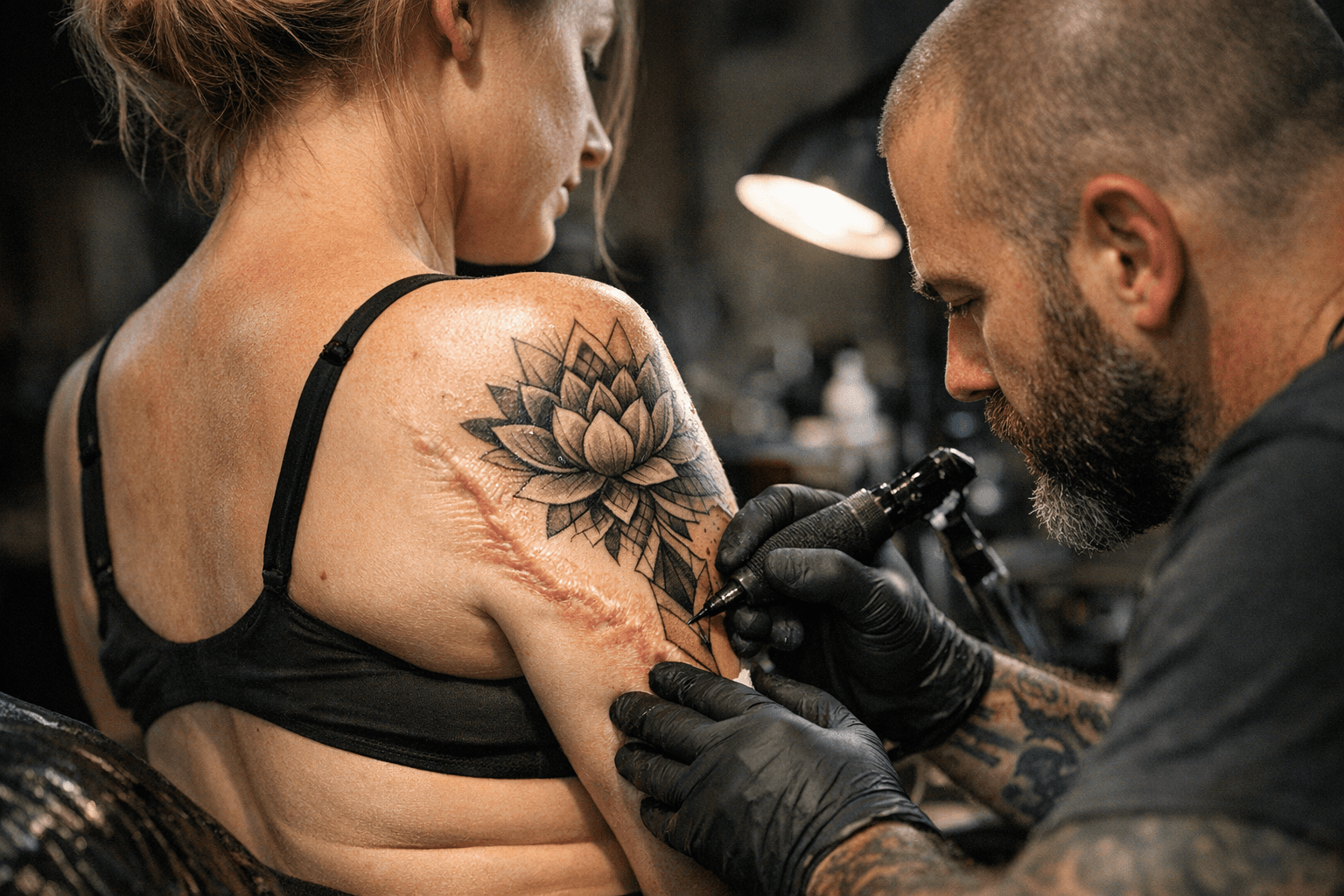
A scar tattoo succeeds or fails long before the stencil goes on. The first decision is not the motif, it is whether the skin can actually hold clean geometry, because scar tissue is denser, less elastic, and far less predictable than unscarred skin. If the scar is still changing, raised, or reactive, the better move may be to wait, or to choose a design that lets the scar become part of the composition instead of fighting it.
Read the scar before you draw
The age of the scar matters as much as its shape. NHS guidance says scars can take up to 2 years or more to fade and improve, which is why fresh scar tissue is a poor target for precision work. Even after the surface looks settled, the skin underneath may still be evolving, and that can lead to uneven ink spread, patchy settling, or linework that does not hold the way it would on normal skin.
Texture is the next filter. Flat, pale scars are usually the easiest to work with because they sit closer to the level of the surrounding skin and are less likely to distort the needle path. Raised hypertrophic scars are more complex, while keloids are the biggest warning sign because they can grow beyond the original wound boundary. The American Academy of Dermatology says that if you have ever had a scar that grew bigger than the wound causing it, you should rethink getting a tattoo, and Mayo Clinic notes that keloids are most common in people with brown or Black skin and can run in families.
Tattooing itself can also trigger keloids. That makes scar work a medical and artistic decision at the same time, especially for anyone with a history of abnormal scarring. If the skin has shown a tendency to overreact before, the safest design choice may be to step back from fine geometric detail and reconsider whether tattooing is worth the risk at all.
Choose the right geometric strategy
Scar tattoos usually work in one of two ways: they either disguise the scar so it disappears as much as possible, or they incorporate the scar so it becomes the central axis of the tattoo. That distinction matters because the design problem changes depending on the goal. Concealment leans on symmetry, pattern density, and controlled negative space, while integration leans on composition, flow, and a strong visual line that makes the scar look intentional.
For cover-up work, tattoo educators describe the job as technically demanding because the new design has to hide the old mark without leaving a muddy, obviously layered result. In scar tissue, that challenge gets harder because the skin can be less responsive to ink and more likely to behave unpredictably. Tattooing 101 says advanced scar-tattoo techniques require special care to avoid blowouts or extra trauma to the skin, and that is exactly why line precision has to be realistic rather than aspirational.
When hiding is the smarter call
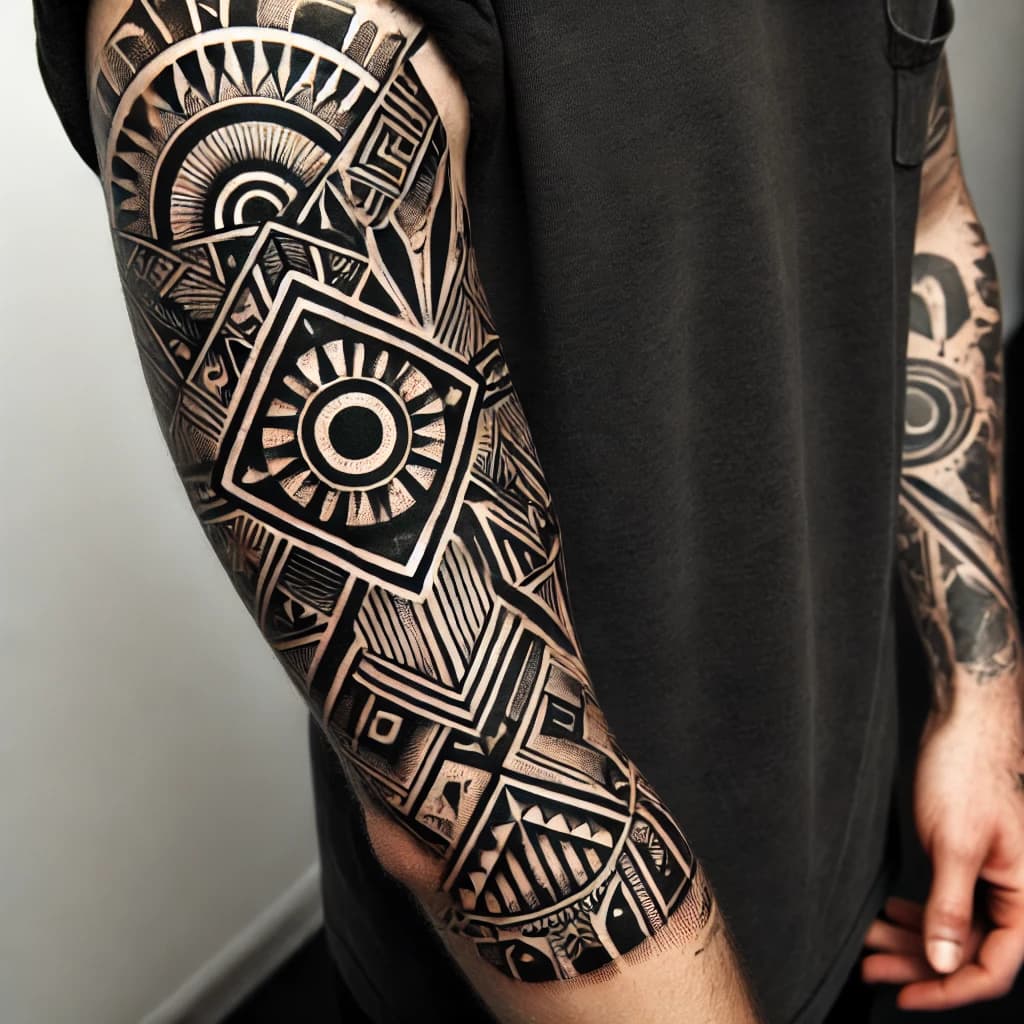
If the scar is flat, mature, and sitting in a spot where the artist can build a stable frame around it, geometric concealment can be very effective. Dense blackwork, repeating forms, mirrored motifs, and carefully placed negative space can break up the eye’s ability to read the scar line on its own. The best versions do not pretend the skin is blank. They use structure to redirect attention.
That is where geometric thinking is especially useful. A scar does not need to vanish under a random splash of detail. It needs a design that respects its shape and the limits of the skin. If a section of the body bends a lot, or the scar crosses a high-movement area, the safest route is usually less delicate linework and more pattern density, so the tattoo ages with the skin instead of fighting it.
When the scar should become the axis
Sometimes the strongest solution is not concealment at all. A scar can become a river, road, or trail in a landscape composition, which turns an unwanted mark into the literal spine of the piece. In geometric tattooing, the same idea can work through symmetry: the scar becomes the centerline, and the design unfolds evenly on both sides.
Butterflies and moths are especially effective for this approach because the scar can read as the body line while the wings carry the transformation. Vines and branches also work well when they follow the scar naturally rather than tracing it too literally. For clients who want less cover and more integration, a watercolor wash can soften the mark without erasing it, creating a piece that feels deliberate instead of defensive.
What artists need to know before they start
The artist’s experience matters almost as much as the scar itself. Not every tattooer who handles clean geometric linework is prepared for scar tissue, and not every scar can support the same level of precision. The right artist will look at the scar’s age, texture, location, and movement pattern before talking about style, because the skin sets the ceiling for what is possible.
That conversation should also include scarring history. If there has ever been a keloid, the risks are higher, and both the American Academy of Dermatology and Mayo Clinic stress caution. If the scar has stayed flat, pale, and stable for years, there is more room to experiment with geometry. If it is still raised or active, the design needs to be simpler, safer, and far more conservative.
The best result is a design that fits the wound, not the other way around
Scar tattooing is not just about hiding damage. It is about using the right structure for the skin in front of you. That may mean a dense geometric cover-up, a symmetrical composition built around the scar line, or a softer integrated piece that treats the mark as part of the story.
The strongest scar tattoos are the ones that respect time, medical risk, and line precision before they ever chase beauty. When the tissue is ready and the design is built around its limits, geometry can do something far more powerful than concealment: it can make the scar look chosen.
This article was produced by Prism’s automated news system from verified source data, official records, and press releases, then run through automated quality and moderation checks before publishing. The system is built and supervised by the people who set the standards it runs under. Read our full AI policy.
Did this article answer your question?