Studio Thirteen uses filterable portfolios to match geometric tattoo clients
Studio Thirteen’s filterable portfolio turns geometric tattoo booking into a precision test. The right gallery view can reveal symmetry, spacing, and the artist best matched to your piece.

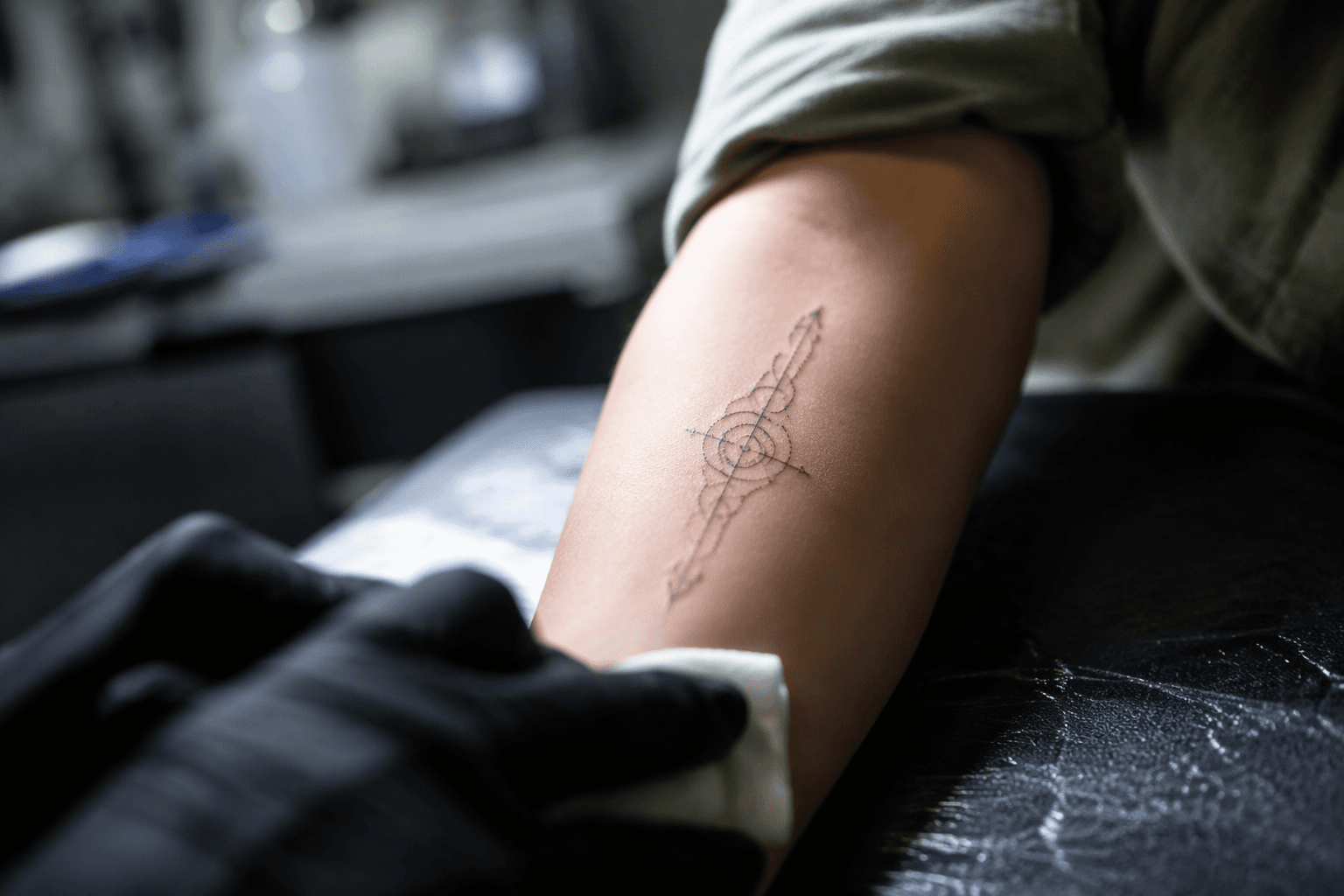
Studio Thirteen’s portfolio hub lets you filter tattoos by artist and by styles including geometric, dotwork, fineline, abstract, watercolor, lettering, sleeves, and micro before you ask for an estimate. Geometric work is unforgiving in the way good architecture is unforgiving: a line that drifts, a stencil that slips, or a composition that does not wrap the body cleanly shows up fast. For clients shopping for geometric work, the portfolio is the first place to judge whether an artist can control symmetry, spacing, and flow.
Filter before you commit
Studio Thirteen’s portfolio page is organized around filters that move you from broad browsing to a very specific search. The visible style labels split work into technical and aesthetic categories instead of flattening everything into one mixed gallery.
That structure matters for geometric clients because the style can split into very different specialties. One artist may build dense sacred-geometry patterns; another may be strongest in minimal linework; another may handle larger sleeve compositions with intentional negative space. A filterable portfolio makes those differences visible fast, so you are not comparing a mandala specialist against someone who mainly posts small fineline pieces and calling it the same thing.
The page also moves beyond browsing and into action. It includes a direct prompt asking whether you are ready to get an estimate and booking information, which means the portfolio is part of the intake process, not a detached showcase. On its separate “How It All Works” page, Studio Thirteen says that after first contact, its experienced administration team matches clients with the perfect artist for the project, so the portfolio hub sits inside a matchmaking workflow rather than standing alone.
What to look for in a geometric portfolio
A strong geometric portfolio should prove that the artist can do more than draw a pleasing shape once. Look for repeated evidence of straight-line accuracy, tight symmetry, even spacing, and clean transitions where the tattoo crosses rounded muscle, elbows, knees, ribs, or shoulder caps. Those are the failure points that turn a crisp design into something visibly off-center or warped by the body.
You also want to see how the work behaves at different scales. A design that reads cleanly as a small forearm piece may lose structure when expanded into a chest panel or sleeve, and a pattern that looks balanced in a square crop can break apart when it wraps around curvature. That is why placement-specific examples matter: the best portfolios show the same technical control on forearms, calves, backs, and sleeves, not just on flat, easy-to-photograph areas.
Healed work is another crucial test. Fresh geometric tattoos can hide soft edges under redness and gloss, while healed photos show whether micro-lines have spread, dot density still reads cleanly, and the overall pattern has kept its shape after settling into skin. If a portfolio only shows freshly inked, tightly edited close-ups, you are not getting the full picture.
Why geometric work demands this level of scrutiny
Precision is the whole game in geometric work. FadeFX Tattoo’s June 24, 2025 piece on geometric dotwork tattoos ties the style to intricate balance and harmony, Landlines Tattoo Company’s July 13, 2025 article places it in the context of history, technique, and personal meaning, and iNKPPL’s geometric tattoo directory defines the best geometric tattoo artists as people who rely on precision, symmetry, and detailed pattern work.
That is why a filterable portfolio is useful. Geometric tattoos can look deceptively similar from a distance, but the real differences live in the execution: how evenly a line holds, whether a pattern stays coherent as it moves, whether the spacing breathes correctly, and whether the whole design still makes sense when the skin shifts with motion. A portfolio sorted by style and artist gives you a way to compare those details without guessing from a shop’s general branding.
It also helps you separate style from scale. A fineline artist may do beautiful work without being the best choice for dense geometric packing, while a sleeve specialist may be much better at maintaining composition integrity across a large surface. The portfolio filters at Studio Thirteen make those distinctions easier to see before the consultation starts.
The portfolio is now part of the sales path
A tattoo portfolio now functions as an artist’s resume, brand, and primary sales pitch, with booking, design, and client management tools central to the same workflow. Tattoo Studio Pro’s 2026 portfolio guide and Jotform’s 2026 tattoo-app coverage both reflect that. Studio Thirteen’s setup fits that same ecosystem: the portfolio page is connected to booking language, and the studio has also promoted payment-plan options through Affirm, Afterpay/Cashapp Pay, Klarna, and PayPal Pay Later in social posts.
That combination changes how clients move through the process. Instead of sending vague inspiration images and hoping the studio can translate them later, you can browse the exact lane you want, identify the artist whose gallery matches the piece, and arrive with a clearer brief. For geometric tattoos, that reduces the chances of a mismatch between the design in your head and the artist’s actual strengths.
This article was produced by Prism’s automated news system from verified source data, official records, and press releases, then run through automated quality and moderation checks before publishing. The system is built and supervised by the people who set the standards it runs under. Read our full AI policy.
Did this article answer your question?