Thai guide explains Sak Yant meanings, hygiene, and ritual choices
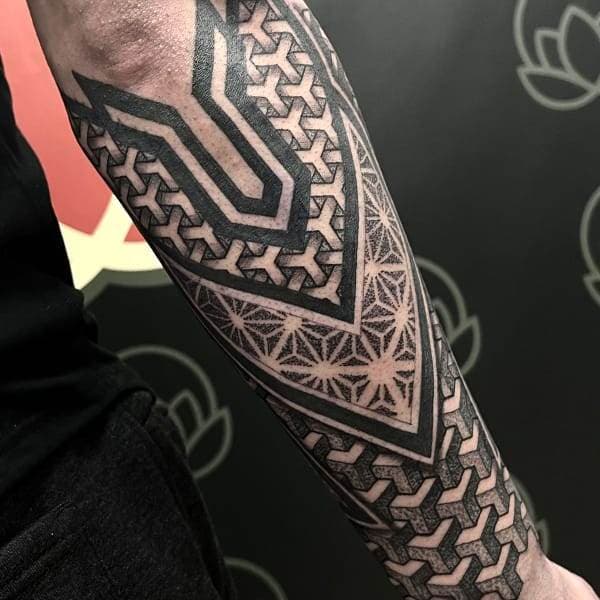
Sak Yant is not just geometric ink. The real choice is between a true ritual, a respectful homage, or a design that ignores both meaning and hygiene.
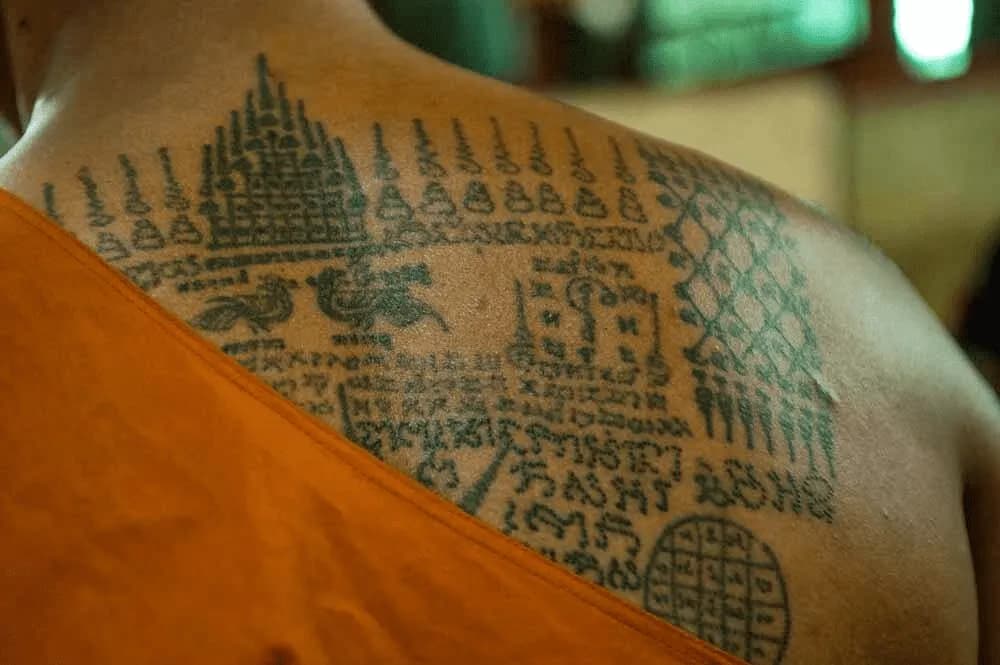
A Sak Yant stencil can be on your skin before you have asked who is blessing it, what rules come with it, or whether the room is actually sterile. Sacred meaning, hygiene standards, and ritual obligations are part of the decision, not extras to think about after the stencil is already on your skin.
What Sak Yant is really offering
Sak Yant sits inside a living tattoo tradition in mainland Theravada Southeast Asia, where sacred geometry, Buddhist prayers, and protective blessings are woven together rather than separated into design and decoration. The practice traces to older Khmer and Indian yantra traditions. The appeal is not just visual; it is spiritual, social, and deeply tied to how the tattoo is made.
The current boom is complicated. A 2024 social-science article on Sak Yant among Westerners framed the tradition as a live question of cultural appropriation, cultural appreciation, and participation, while marketing on Instagram and interest from foreign visitors have pushed the tattoos further into public view. In 2025, Anna Neatpisarnvanich wrote that Sak Yant is rooted in religious sanction and functions as a spiritual shield, with the design shaping what that shield is meant to do.
Choose the practitioner before the design
If you want the real thing, start with the person applying it, not the picture on the flash sheet. Sak Yant is associated with Buddhist monks and lay masters called ajarn, and some of the most trusted lineages still depend on long training, not just tattoo skill. A small number of disciples trained for 10 years under Ajarn Noo Kanpai to master the traditional bamboo method. His early monastic training was in Nonthaburi Province.
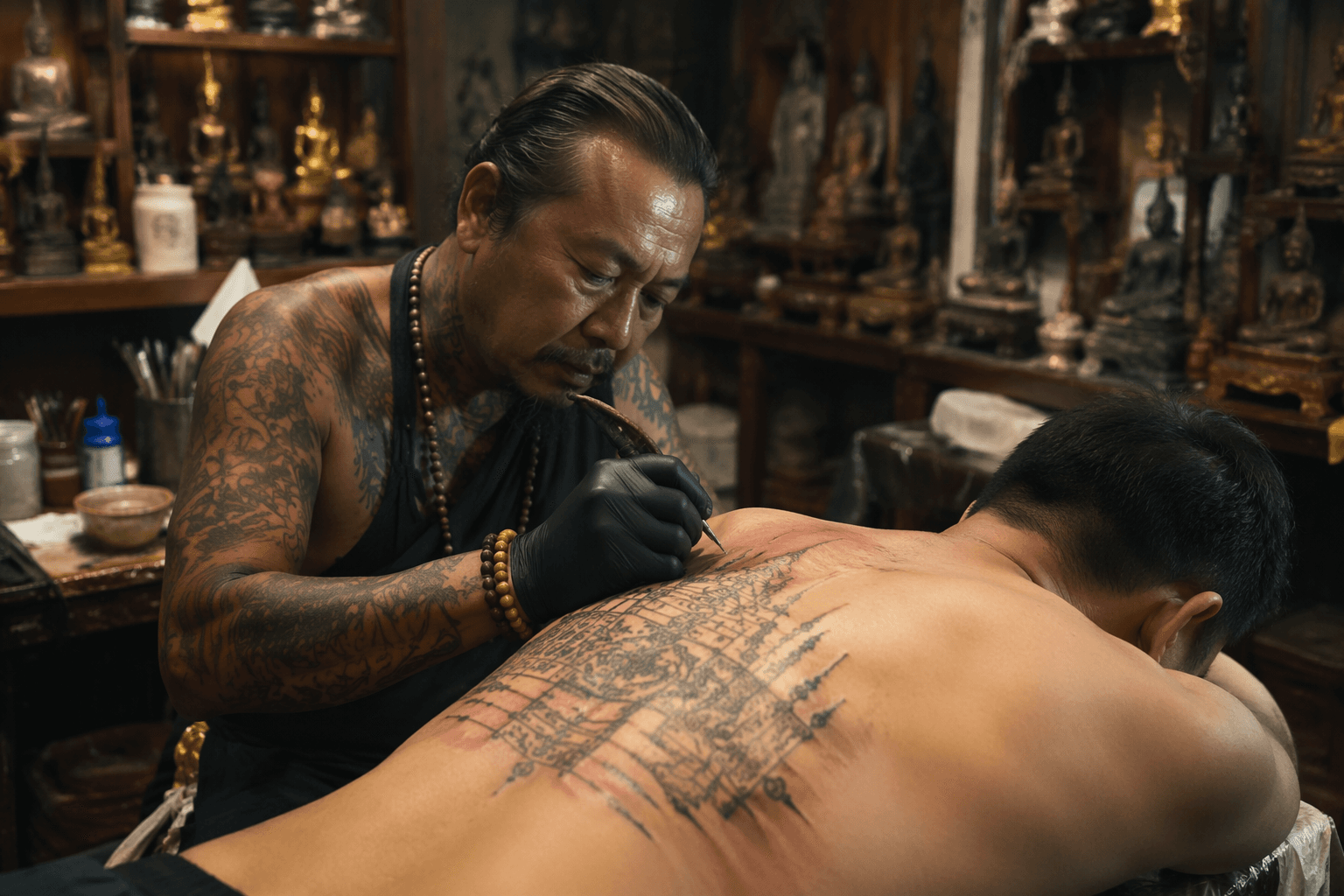
A traditional blessing session may share symbols with a modern machine-applied tattoo, but the ritual logic is different: the master, the lineage, the prayers, and the conduct expected afterward all change what the tattoo means. If you want the imagery without the obligations, say so plainly before anyone begins. If you want the ritual, ask who the ajarn is, how their lineage works, and what rules you are expected to follow once you leave the chair.
Hygiene is separate from ceremony
The World Health Organization says tattooing carries a risk of hepatitis B and hepatitis C, and it has also recorded rare HIV and monkeypox infections. CDC-reviewed evidence shows hepatitis C risk is especially significant when tattoos are done in prison settings, at home, or other nonsterile environments, while professional parlors do not show the same clear elevated risk.
Some ceremonies still involve shared tools or settings that are not clinical, which means the sacred atmosphere cannot be mistaken for infection control. Before you agree to anything, ask what is sterile, what is single-use, how surfaces are cleaned, and whether you can stop if the process or aftercare instructions are unclear.
Meaning and placement should be discussed together
Sak Yant designs vary by lineage and practitioner, which is one reason the same animal or geometric form can carry different weight depending on who applies it. Tiger motifs are often associated with strength, but the broader lesson is bigger than one symbol: the design is not simply a pretty shape, it is a claim about protection, authority, luck, or discipline, and that claim should be understood before the needle touches skin.
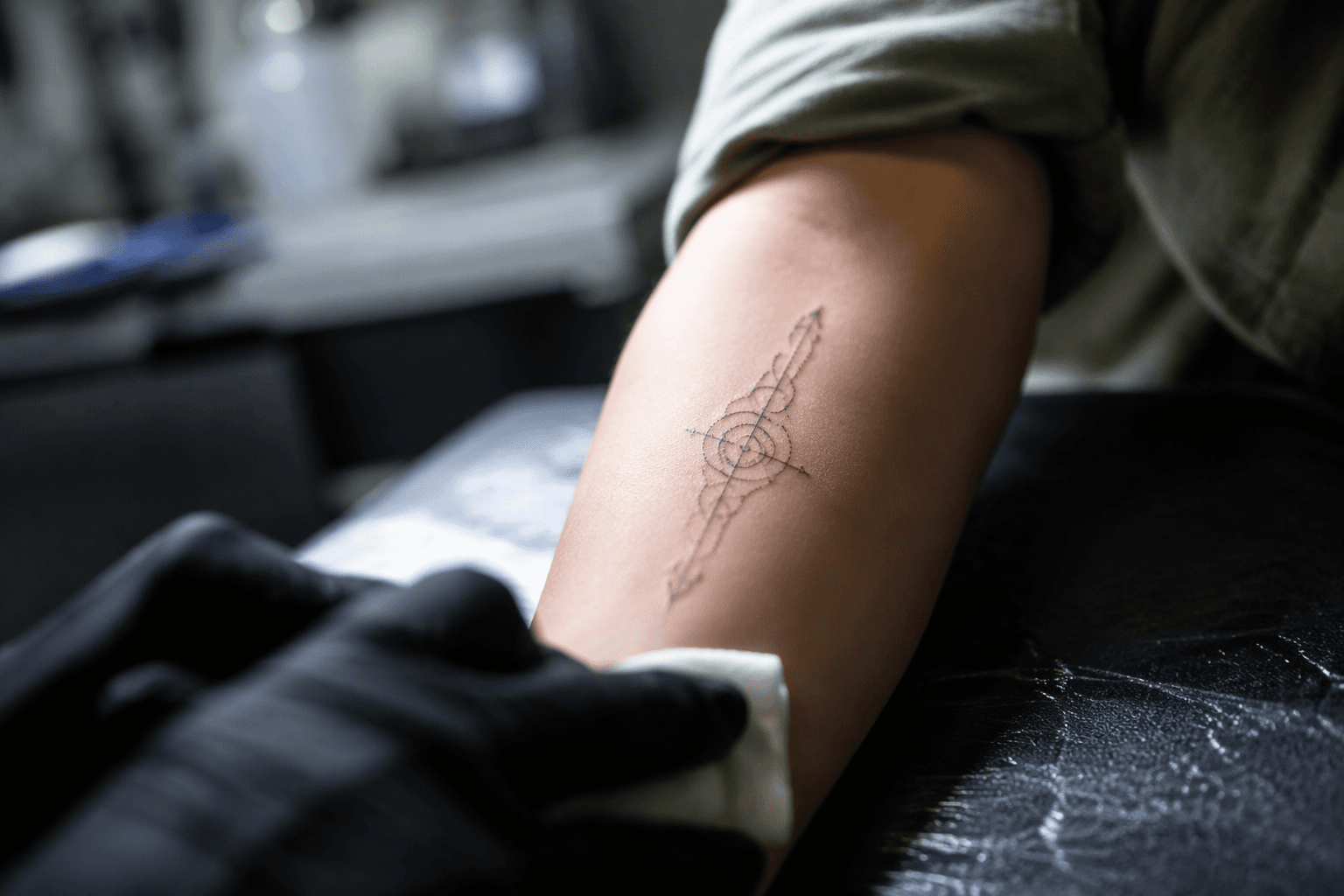
Placement matters for the same reason. Geometric work on a flat sketch can look precise, but once it lands on a shoulder cap, calf, chest, or back, the body changes the composition. That is why you should talk through placement before you commit, especially if you are crossing from a conventional geometric tattoo into a Sak Yant setting where the body’s flow, the ritual order, and the meaning of the symbol are all part of the same decision.
What to ask before you book
- Who is applying the tattoo, and what lineage do they work within?
- What does this specific design mean in that lineage, not just in general?
- What hygiene protocol is used, especially for needles, ink, and surfaces?
- What ritual obligations or conduct rules follow the tattoo?
- Can you pause or decline any part of the ritual without pressure?
This article was produced by Prism’s automated news system from verified source data, official records, and press releases, then run through automated quality and moderation checks before publishing. The system is built and supervised by the people who set the standards it runs under. Read our full AI policy.
Did this article answer your question?