Why medium-sized geometric tattoos often deliver the crispest results
Medium geometric tattoos keep linework sharp, spacing readable, and pricing sane. Go too small and symmetry starts to wobble; go too large and the project gets pricier, slower, and harder to place.
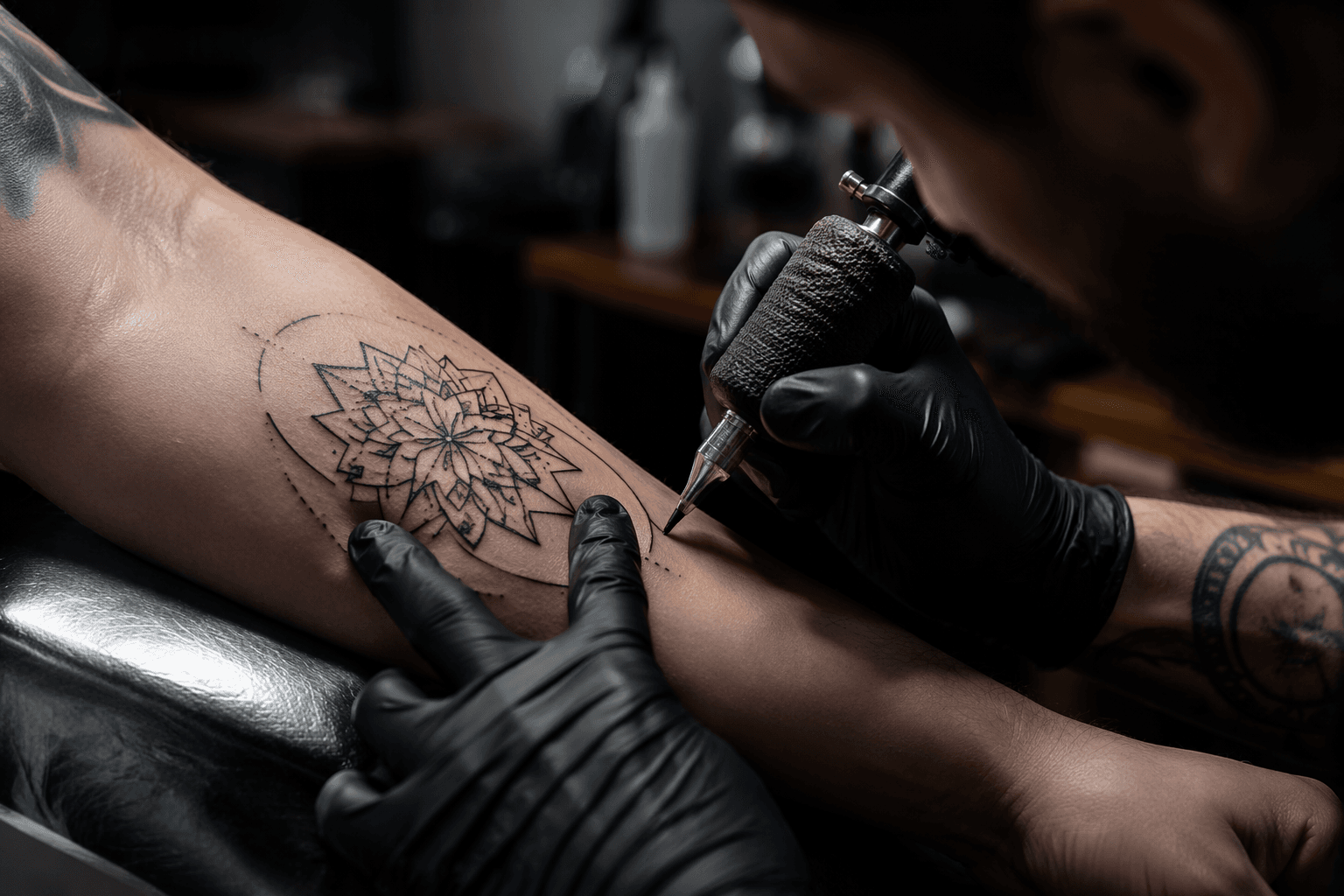
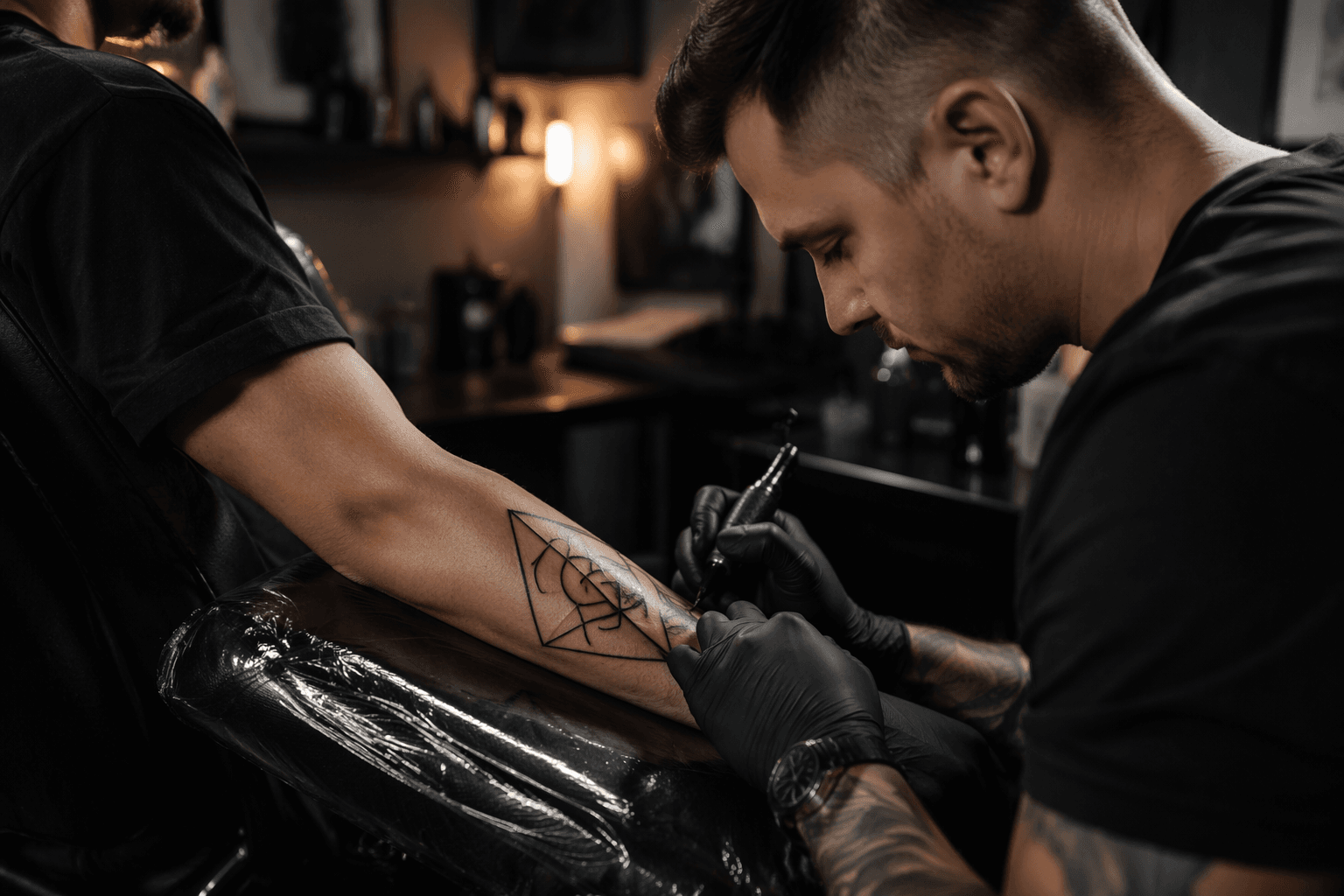
Medium geometric tattoos are the size range where the design usually stops fighting the skin. You get enough room for symmetry, spacing, and line hierarchy to actually breathe, but not so much canvas that the piece turns into a multi-session money pit. For a lot of geometric work, that middle lane is where the tattoo looks crisp on day one and still makes sense years later.
Why medium size is the technical sweet spot
Call medium roughly 3 to 6 inches across or tall, which usually lands in that palm-to-two-palms zone. In practice, that scale gives a geometric artist enough space for a focal point, clean negative space, and line hierarchy without compressing the whole structure into a tiny stamp. It also keeps the project in a range that is often done in 1.5 to 4 hours and commonly runs about $200 to $700, which is a lot easier to plan around than a sleeve-level commitment.
That matters because geometry is unforgiving. A mandala, sacred geometry panel, or crisp polygon grid can look perfect in stencil form and then lose its rhythm once it is squeezed too small for the body part. Medium scale gives the design enough breathing room that the symmetry is legible instead of implied.
What survives, and what breaks, at different sizes
Tiny geometric tattoos can be sharp at first, but they are the first to lose the things that make the style work. Fine intersections soften, micro-shading merges, and the negative space that once separated one shape from the next can collapse into visual noise. If the design depends on precise alignment, even a small amount of line spread during healing can make the structure look less intentional.
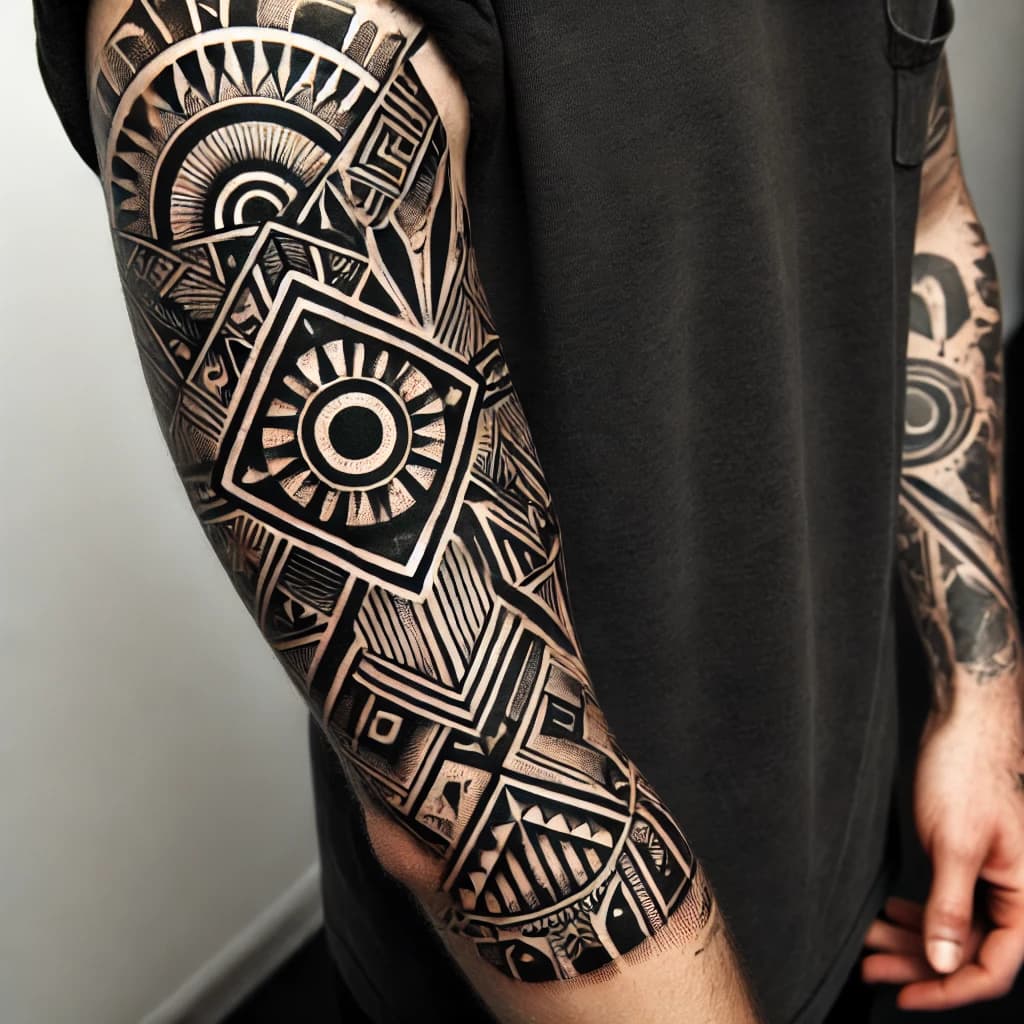
At the larger end, the problem changes. A full sleeve or major panel gives an artist more room to build complexity, but it also raises the stakes for placement, flow, and budget. You are no longer just buying a design, you are buying a body-map, and every curve of the forearm, shoulder, or calf has to be accounted for so the geometry does not look like it was pasted on and stretched.
Medium pieces tend to hit the middle ground most cleanly. They can hold multiple line weights, a little texture, and enough open skin to keep the pattern readable from a few feet away. That is exactly why this size often looks more finished than a micro version and less overcommitted than a sleeve.
Why geometry ages better when it is not crammed
This is where the practical side of tattooing matters more than the Instagram side. Medium tattoos often age more gracefully because the design can rely on stronger outlines and strategic empty space instead of ultra-fine detail doing all the work. When the tattoo is not overpacked, there is less chance that a tiny pattern will blur into itself as the skin settles.
That risk is real. Tattoo linework can blur if ink is placed too deeply, producing a blowout that makes the lines look smudged or spread beyond the intended edges. In geometric work, blowout is especially annoying because it does not just soften the tattoo, it can break the symmetry that made the piece worth getting in the first place. Size and placement are not separate decisions here, they are part of the same longevity problem.
Placement is half the design
Medium geometric tattoos work especially well on the chest, forearm, calf, and upper arm because those areas can support a contained shape without forcing it into a full wrap. A chest emblem can sit centered and intentional, a forearm panel can read cleanly with the arm in motion, and a calf piece can keep its form without having to chase every muscle line.
Visibility is part of the decision too. Pew’s Tattoo Taboo analysis found that 70% of tattooed Millennials and 73% of tattooed adults 30 and older said their tattoos are not usually visible. That lines up with how a lot of people actually wear tattoos now: not as constant display pieces, but as designs that can be covered when needed and shown when the placement makes sense. Medium size makes that flexibility easier to preserve.
Why people keep choosing tattoos like this
The broader tattoo culture explains some of the demand for this scale. Pew Research Center found in 2023 that 32% of U.S. adults have at least one tattoo, and 22% have more than one. Among tattooed adults, 69% said they got a tattoo to remember or honor someone or something, which helps explain why so many clients want a piece that feels deliberate rather than oversized or throwaway.
That is where medium geometric work lands well. It is large enough to feel serious, but not so large that the idea has to be built around the tattoo for months. It gives you room for meaning without dragging you into a giant project just to make the lines hold.
Aftercare is part of the crispness
A geometric tattoo does not stay crisp on technique alone. The first few weeks matter, and the basic aftercare advice is not fancy: cleanse the tattoo, moisturize it, protect it from the sun, and avoid submerging fresh ink in pools, hot tubs, lakes, or anything else that keeps the skin wet too long. Healthline notes that the outer layer of skin usually looks healed within 2 to 3 weeks, but deeper healing can take much longer, so the tattoo may look settled before the skin is fully finished.
Sun protection is non-negotiable once the skin closes. The American Academy of Dermatology advises broad-spectrum, water-resistant sunscreen with SPF 30 or higher for tattooed skin. If you want those clean lines to stay readable, you do not let UV chew through them for free.
Keep the health risks in perspective
Tattooing is routine, but it is still a skin procedure, and bad habits can create real problems. A systematic review of tattoo-related bacterial infections identified 67 published cases between 1984 and 2015, with poor hygiene in tattoo parlors and non-medical wound care called out as major risk factors. More recent case reports have continued to tie infections to contaminated ink or unsafe dilution practices.
That is another reason medium pieces make sense for a lot of geometric clients. You are not just choosing a size that looks good, you are choosing a scale that is easier to execute cleanly, heal responsibly, and keep readable over time. The middle range does not feel flashy, but in geometric tattooing it often gives you the sharpest result, the least drama, and the best chance that the symmetry you paid for is still there when the skin settles.
This article was produced by Prism’s automated news system from verified source data, official records, and press releases, then run through automated quality and moderation checks before publishing. The system is built and supervised by the people who set the standards it runs under. Read our full AI policy.
Did this article answer your question?