LA Beer Fest Marks 20 Years With 80 Breweries and 200 Pours
Eighty breweries and roughly 200 beers filled LA Center Studios on April 4 as LA Beer Fest reached its 20th year across two tasting sessions.
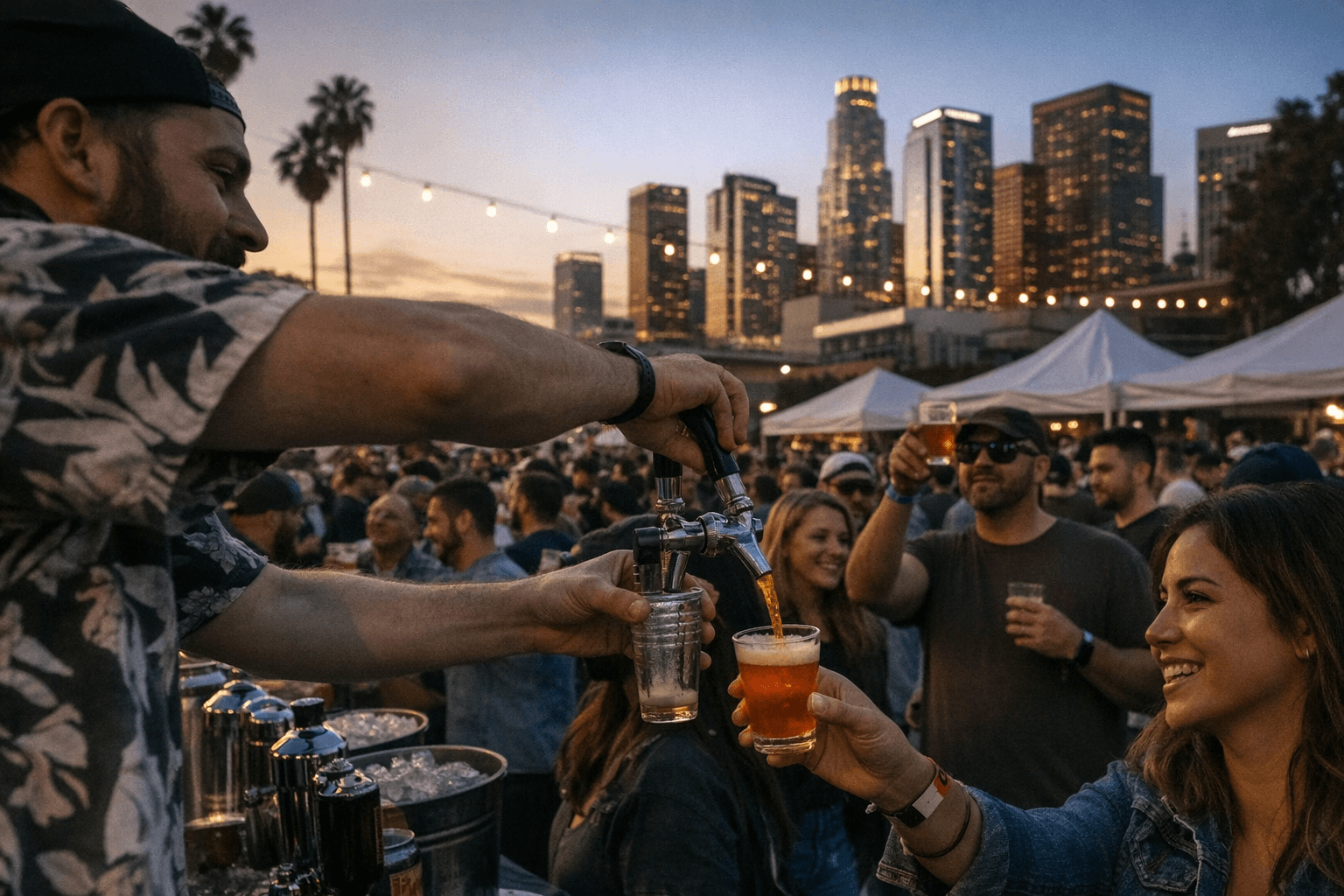
Twenty years is a long time to keep a city interested in craft beer, and LA Beer Fest made the case for its longevity on April 4 at Los Angeles Center Studios, drawing more than 80 breweries and roughly 200 pours across two sessions.
The multi-session format, spanning midday and evening time slots, was designed to spread foot traffic and give attendees a more focused window to work through the pour list without the shoulder-to-shoulder crush that can define single-session festivals. General admission included unlimited tastings; food came from a curated truck roster operating separately, with live music running alongside both sessions.
The lineup created the kind of pairing that anniversary editions do best: flagship beers from breweries that have been part of the LA scene for years sitting alongside one-off experimental batches from emerging local talent. That tension between established and untested is where the most interesting drinking tends to happen at events like this.
For homebrewers, the 200-beer slate represented an unusually dense data set. LA Beer Fest historically surfaces mash- and fermentation-driven techniques in ways a standard taproom visit doesn't, concentrating everything from alternative-grain bills and late-hop or whirlpool additions to yeast-driven ester profiles and cross-disciplinary experiments. Coffee stouts and beer-washed cheese pairings have shown up in this space before, and the 20th edition continued that tradition of blurring category lines.
Breweries also use appearances at large-attendance festivals to field-test consumer response to beers they're considering scaling for cans or wider draft release. The exposure from pouring to a concentrated and opinionated crowd gives producers real-time feedback that a taproom soft launch can't replicate at the same scale.
LA's beer scene looked considerably different when the festival first launched. The current landscape includes taproom exclusives, barrel programs, and collaborations with coffee roasters and distillers that didn't exist in those early years. The 20th edition at Los Angeles Center Studios offered a chance to take stock of how much the city's brewing culture has shifted, poured one flight at a time.
This article was produced by Prism’s automated news system from verified source data, official records, and press releases, then run through automated quality and moderation checks before publishing. The system is built and supervised by the people who set the standards it runs under. Read our full AI policy.
Did this article answer your question?