AKC backyard agility guide helps high-energy dogs burn energy
A few simple obstacles can turn backyard zoomies into real work. AKC’s agility approach starts low, builds confidence, and gives high-energy dogs a job they can actually finish.
Give the dog a job, not just a workout
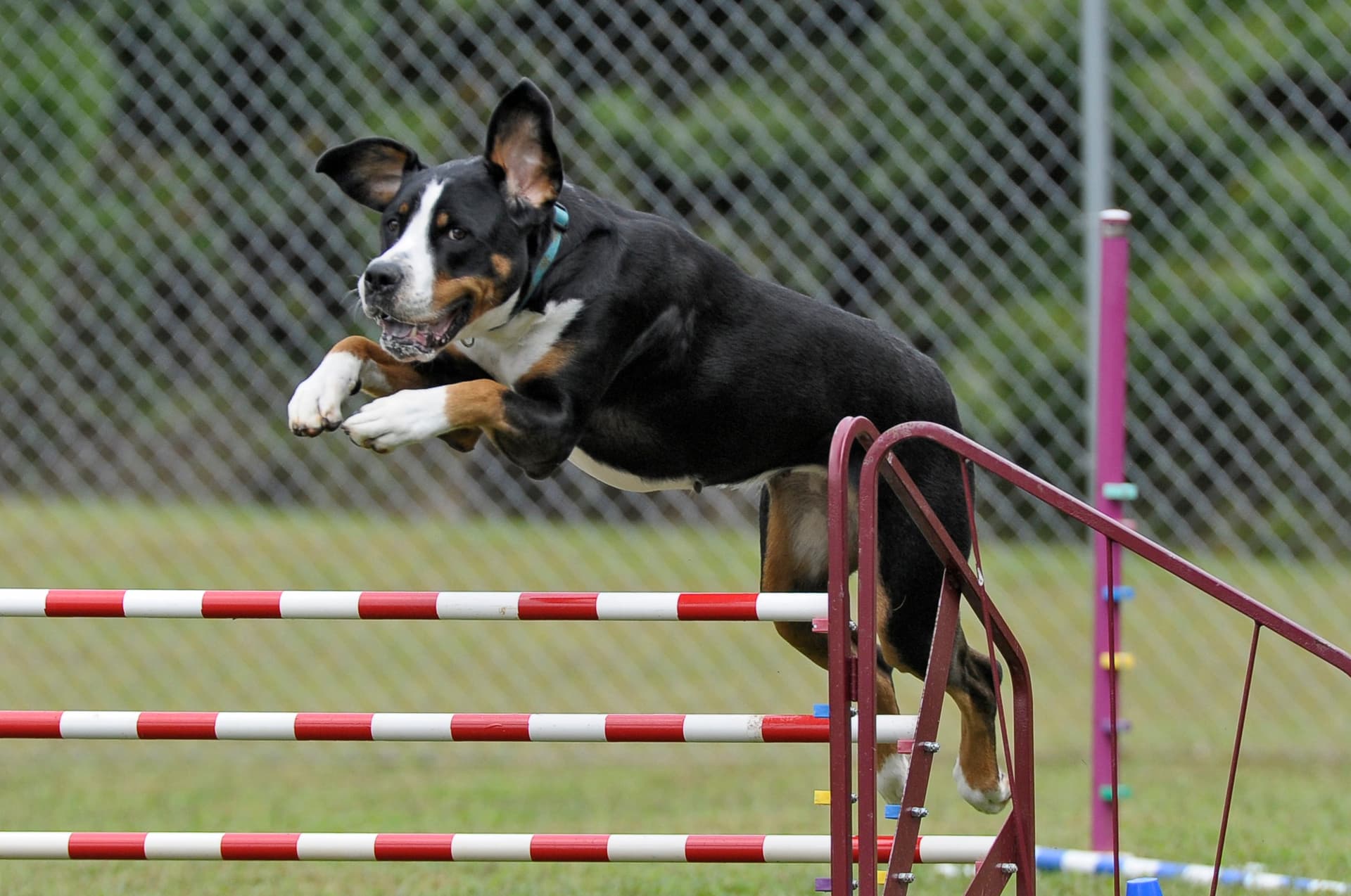
If you live with a dog that seems built to jump, race, and solve problems faster than you can throw the ball, backyard agility is a useful piece of the puzzle. AKC treats agility as a fast-paced, team-oriented sport for all dogs, and that framing matters: this is not just about burning energy, it is about giving that energy a direction. The sport can deepen the bond between dog and handler while delivering both physical exercise and mental work, which is exactly why it fits so many high-energy dogs so well.
The nice part is that you do not need a full trial field to get value from it. A basic backyard setup can give a dog a real job and a family a repeatable way to channel all that sprinting, jumping, and problem-solving into something structured. That structure often changes what happens inside the house, because a dog that has worked its body and brain is usually a lot less interested in inventing its own trouble.
Start with the dog in front of you
Before you set out a single obstacle, AKC’s first practical step is simple: check with your veterinarian and make sure your dog is in good physical condition. That caution is especially important for growing puppies, senior dogs, and any dog with mobility concerns. Agility can be a great outlet, but it should fit the dog’s body, not overpower it.
Basic obedience comes first too. If your dog cannot offer simple focus, come when called, or take direction on cue, the course will turn into confusion fast. AKC is clear that puppies should be physically mature and have closed growth plates before formal agility work with full-height jumps or contact obstacles, and another AKC article says puppies should not jump competitively or at extreme heights until about 12 to 15 months old. You can still begin with very low bars or bars on the ground, but the goal early on is confidence, not elevation.
For senior dogs, the payoff looks a little different. Lower-impact conditioning and fitness work can help keep them limber, and the sport can still satisfy their need to think, move, and engage. Agility is not just for the flashy, airborne dogs you see on a trial field. It is for the couch rocket, the older athlete, and the clever dog that wants a job.
Build the backyard in the right order
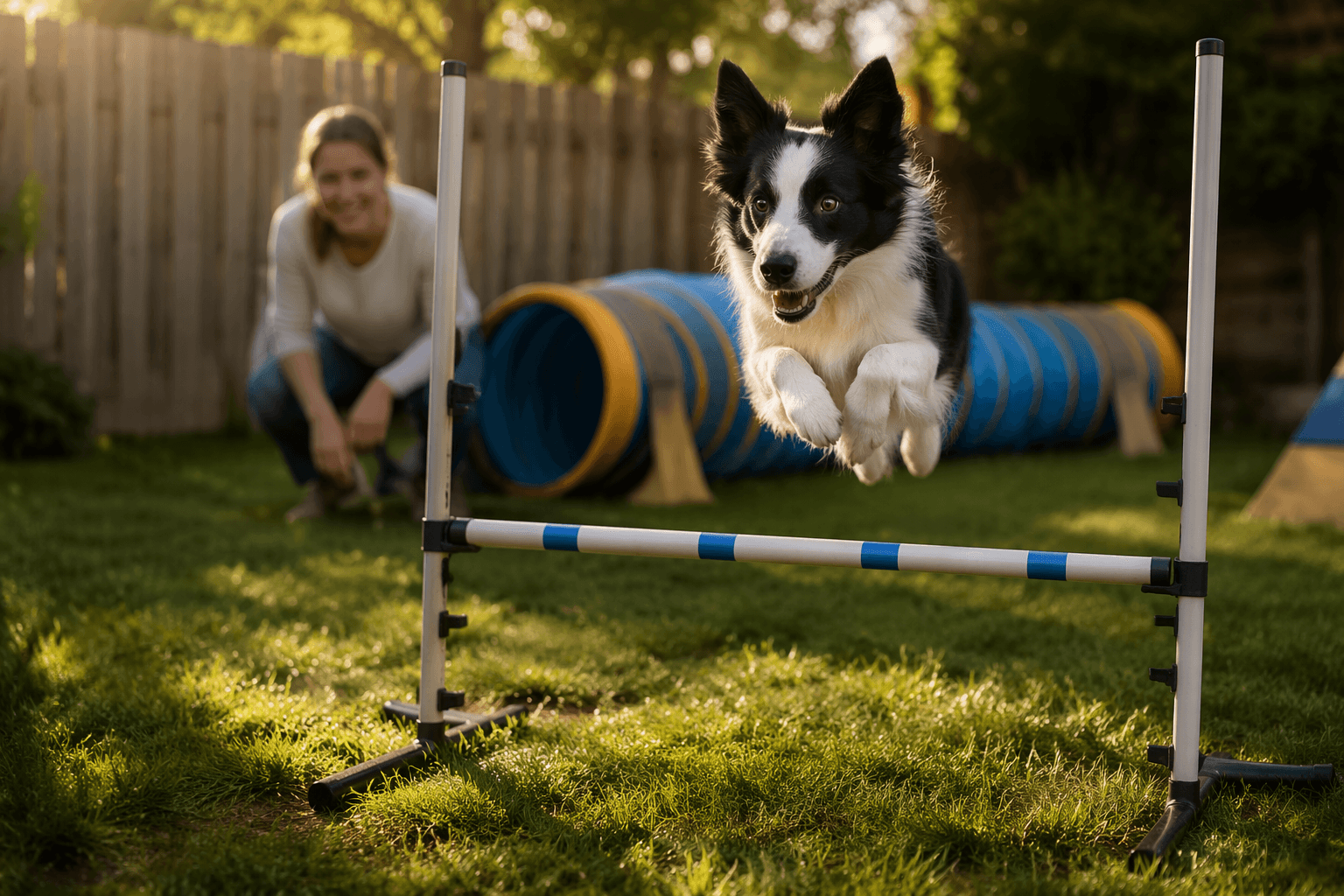
AKC’s core starter kit is refreshingly minimal: jumps, weave poles, and tunnels. If you have more room, more budget, and more ambition, you can expand into a fuller competition-style setup, but the guide makes it clear that you do not need every obstacle to make the work meaningful.
If you are building from scratch, start with this progression:
- An open tunnel
- One low jump or a bar on the ground
- Simple direction changes and straight lines
- Weave poles later, once the dog is ready
That order is the smart one because the open tunnel is straightforward and gives most dogs an easy win. AKC repeatedly points to it as a good place to start training. Weave poles, by contrast, are among the trickiest obstacles to master, and they are not where you want to begin if your dog is still figuring out the game.
That’s the real practical lesson in the backyard guide: build success first. A confident dog will come back for more. A frustrated dog will start guessing, and guessing on an agility course is how you create sloppy habits.
Teach confidence before height
Competition agility courses are more complex than a backyard setup, and that gives you a useful benchmark. AKC says standard courses typically have 14 to 20 obstacles, while AKC Novice courses can have 13 to 15. Common obstacles include jumps, weave poles, tunnels, tire jumps, dog walks, seesaws, A-frames, and pause tables. Weave poles usually consist of six to 12 upright poles, which is one reason they deserve patience.
That full-course structure helps explain how to train at home. A backyard course should not try to mimic the hardest parts on day one. Instead, think in terms of clean reps, short sessions, and a steadily rising difficulty curve. Begin with lower- or no-jump work, then increase the challenge only when your dog is moving well and staying confident. The point is not to blast through obstacles as fast as possible. The point is to teach your dog to listen, commit, and recover quickly when the task changes.
AKC’s own rules for trials reinforce that idea. Agility is meant to demonstrate a dog’s physical ability, soundness, and willingness to work with its handler. That is a much better standard for backyard training than sheer speed. Fast is fun, but sound is what keeps the game going.
Why this sport keeps growing
The sport has deep roots. AKC traces dog agility back to the United Kingdom and the 1978 Crufts Dog Show, where John Varley and Peter Meanwell created the first agility demonstration to entertain the audience between conformation and obedience segments. The Kennel Club officially recognized agility in 1980, and AKC held its first agility trial in 1994. AKC Canine Partners also notes that agility began in the 1970s in England as intermission entertainment at horse shows, which explains why the sport still carries that show-jumping DNA.
That history helps explain why the sport feels both polished and playful. It is structured enough for serious competition, but loose enough to work as family recreation. AKC says agility appeals to senior citizens and children alike, which is one reason the sport has become one of the fastest-growing dog sports in the country.
The AKC Agility League shows how well that format translates outside the trial ring. It launched a pilot on May 30, 2022 with 40 teams and more than 200 dogs. The League runs on a 12-week season, with a new course released every two weeks, and it can be run in a recreational format on a home training field. AKC even offers a Limited division for smaller spaces, with a minimum facility size of 50 feet by 70 feet.
Make it a weekend routine
The best backyard course is the one you actually use. Keep it simple, keep it safe, and keep it repeatable. A tunnel, a low jump, a short line of work, and a few careful reps can do more for a restless dog than a yard full of expensive gear gathering dust.
That is the real promise of AKC’s backyard agility guide. You are not building a miniature competition field just to impress yourself for ten minutes. You are giving a high-energy dog a job that uses speed, intelligence, enthusiasm, and the bond you already share, then turning that job into a weekend habit the dog can recognize and trust.
This article was produced by Prism’s automated news system from verified source data, official records, and press releases, then run through automated quality and moderation checks before publishing. The system is built and supervised by the people who set the standards it runs under. Read our full AI policy.
Know something we missed? Have a correction or additional information?
Submit a Tip