Boxers stay playful for hours, need active families to thrive
Boxers may look like comic relief, but they are athletic working dogs that need daily exercise, training, and mental work to match their hours-long play drive.
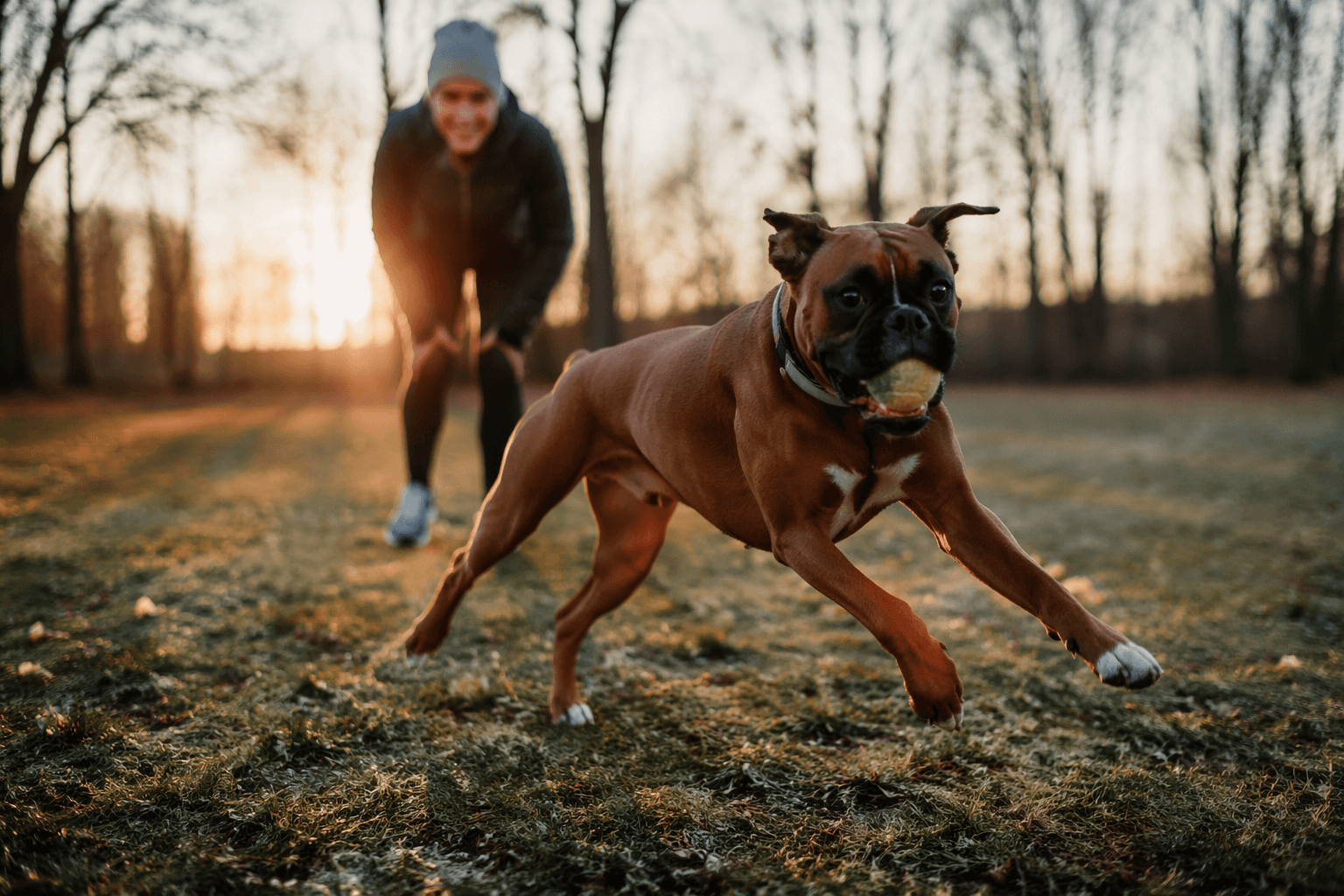
A Boxer can look like the class clown at first glance, but the breed’s real story is stamina, structure, and a whole lot of motion. Adult Boxers are playful, affectionate, intelligent, and strongly energetic, and some will keep a game of fetch going for hours if you let them. That makes them a strong fit for active homes, and a poor match for anyone hoping backyard time alone will be enough.
What life with a Boxer actually demands
This is not a dog that does well on occasional bursts of exercise. Boxers need daily physical activity and regular mental engagement to stay happy and well behaved, and their energy level has to match the household’s routine. The practical reality is simple: if you want a Boxer, you need to plan for movement, structure, and consistency, not just cuddles and a fenced yard.
Fetch is a natural favorite, which is exactly why owners have to set limits early. A Boxer that is allowed to run the game on its own terms can outpace a casual exercise routine fast, especially because the breed’s enthusiasm does not flag after a few throws. Controlled play matters here, not because Boxers are delicate, but because their energy can spill into bad habits when nobody is setting the pace.
The best households for this breed are the ones that can make room for both physical and mental work. That can look like daily walks, training sessions, tug or fetch with clear rules, and enrichment that keeps the brain busy as well as the body.
- Daily exercise should be non-negotiable.
- Short, consistent training works better than one long lesson.
- Play needs boundaries so the dog does not run the whole household.
- Mental challenges matter as much as muscle work.
Built from a working past
The Boxer did not begin as a lounge-room mascot. Its modern breed development started in the late 19th century near Munich, Germany, and it descends from the Bullenbeisser, a hunting dog used to seize and hold large game until hunters arrived. That heritage explains a lot about the breed’s athletic build, fast reactions, and eagerness to take part in whatever the family is doing.
The first Boxer club was formed in Munich in 1895, and the German Boxer Club followed there in 1896. Those early milestones helped lock in the breed’s future, and the first Boxer to finish an American Kennel Club championship, Sieger Dampf v Dom, did so in 1915. Boxers did not reach the United States until after World War I, and they did not become widely popular until the late 1930s.
American Boxerdom was shaped by four foundation dogs: Sigurd, Lustig, Utz, and Dorian. Lustig sired 41 American champions, while Utz sired 35, numbers that show how quickly the breed built a following once it arrived. Boxers later proved they could shine in the ring as well, winning Best in Show at Westminster in 1947, 1949, 1951, and 1970.
What the standard says to expect
The American Kennel Club places the Boxer in the Working Group and describes it as a bright, energetic companion for active households. The official standard is just as specific about the body: the ideal Boxer is medium-sized, square-built, muscular, and carried with movement that denotes energy. This is a breed built to look ready to go, not one designed for a low-key lifestyle.
Color rules are also tightly drawn. The standard permits fawn and brindle, and the American Boxer Club says white markings are acceptable, but any color other than fawn or brindle is disqualifying. That detail matters because it shows how clearly the breed is defined, right down to the look the standard is trying to preserve.
The Boxer’s popularity has stayed strong for good reason. The American Kennel Club says the breed has often placed in the top 10 most popular dogs and remains one of America’s favorites. That appeal makes sense once you watch one move: the breed’s proud carriage and muscular frame fit the history behind it.
Health is part of the decision, not an afterthought
The energy comes with a health reality that every Boxer home needs to take seriously. In a Royal Veterinary College study of a random sample of 3,219 Boxer dogs who received care in 2016, researchers found that one in every 100 dogs in the United Kingdom are Boxers. The most common disorders were ear problems, tumours and cancers, and eye ulcers.
Cancer is the clearest concern in that study. It was diagnosed in 14.2% of Boxers each year and was the most common cause of death, accounting for 12.43% of all deaths in the sample. The American Boxer Club also warns that Boxers are predisposed to a variety of cancers and urges owners to watch for unusual growths and stay close to a veterinarian, especially as dogs age.
That makes routine care and early attention part of the breed package. A Boxer can be a deeply affectionate family dog, but the owner has to be ready for more than the grin and the zoomies. The working history, the hours-long play drive, and the breed-specific health watchlist all point to the same conclusion: this is a dog for active people who are ready to keep up.
This article was produced by Prism’s automated news system from verified source data, official records, and press releases, then run through automated quality and moderation checks before publishing. The system is built and supervised by the people who set the standards it runs under. Read our full AI policy.
Did this article answer your question?