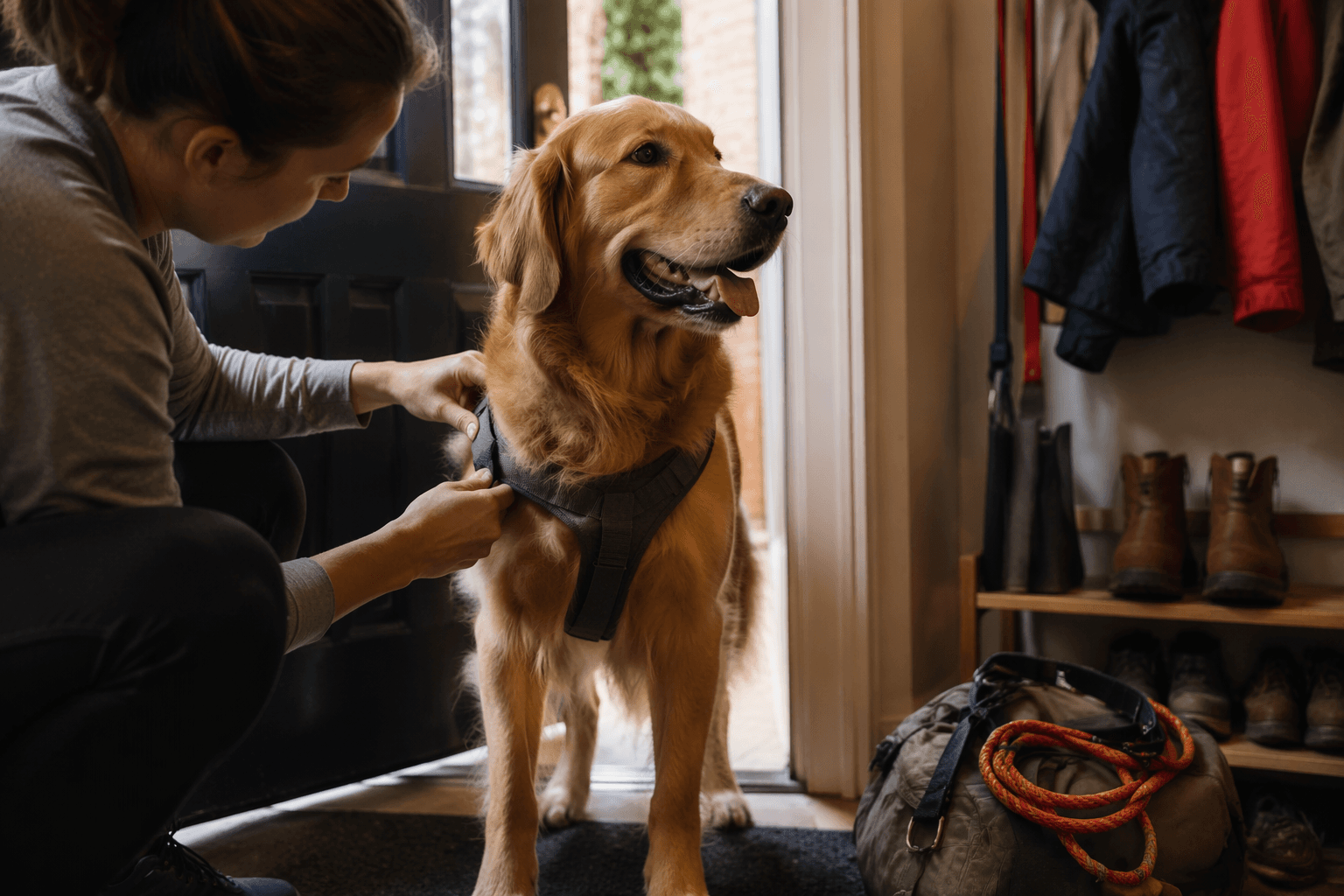
Hyperactive Dogs May Hide Pain Behind Subtle Behavior Changes
A hyperactive dog that suddenly slows, stiffens, or gets snappy may be hurting, and subtle signs like lip licking or looking away can appear before any limp.

The first thing to rule out is pain
A dog that seems to have gone from “too much energy” to “impossible” may not be stubborn, reactive, or poorly trained. It may be hurting. In a new piece by Jacqueline Boyd, a lecturer in Animal Science at Nottingham Trent University, the warning is blunt: many owners are not as good at recognizing pain in dogs as they think they are, and pain often hides behind behavior changes long before it shows up as a limp.
That matters most in the dogs people call high-drive, hard-working, or hyperactive. The one who suddenly does not want to run, will not settle after exercise, snaps during handling, or starts moving differently on walks may be signaling discomfort rather than disobedience. Boyd also points out a striking symmetry in the human-dog bond: dogs can be surprisingly good at noticing human illness, including migraine, even while people miss the dog’s own pain cues.
What the studies found owners miss
The core study behind this warning used an online questionnaire completed by 530 dog owners and 117 non-dog owners. Participants were asked to judge 17 different dog behaviors, and every one of those behaviors was actually associated with pain. People did best with the obvious signs. Hesitant paw lifting, reduced play, and personality changes were easier to spot than the quieter signals that slip past busy households.
The harder-to-read behaviors were exactly the ones that show up first in many active dogs: yawning, lip licking, nose licking, looking away, blinking more often, and turning the head or body away. In the PLOS One paper, change in personality, hesitant paw lifting, fluctuating mood, and reduced play were rated as more pain-likely than air sniffing, nose licking, and yawning. Non-dog owners were more likely than dog owners to connect turning the head or body away and freezing with pain, which suggests experienced owners can sometimes mistake pain for fear or stress instead.
The study also found no difference between dog owners and non-dog owners when they were shown a subtle pain case involving shadowing family members and restlessness at night. That is a useful warning for anyone who lives with a dog that never seems to sit still. Barely half of owners identified nighttime restlessness and clinginess as likely signs of pain, according to a EurekAlert! release on the same work.
The checklist most owners overlook
For a high-energy dog, pain often shows up in the middle of ordinary routines. The dog may still be eager to move, but the style changes. The leap onto the couch gets shorter. The fetch return is slower. The dog that used to rebound after a hike now hangs back. The dog that powered through training yesterday may seem distracted, flat, or suddenly resistant today.
- running with less enthusiasm or shortening stride
- hesitating before jumping into the car, onto furniture, or over obstacles
- reduced interest in tug, fetch, or play with other dogs
- a new dislike of being touched, brushed, or lifted
- more blinking, lip licking, yawning, or looking away during handling
- freezing, turning the body away, or moving off when asked to repeat a cue
- nighttime restlessness or clinginess that appears out of character
Watch for these changes:
If any of those changes arrive abruptly, or even slowly but clearly, the smart move is a veterinary exam before you label the dog untrained or difficult. Pain can look like irritability, reactivity, or a sudden drop in performance, and the risk is that owners keep asking for more exercise when the real problem is discomfort.
Why energetic dogs hide it so well
Dogs often disguise pain as a survival mechanism. In the wild, weakness can make an animal vulnerable, so many dogs keep functioning even when they are not okay. That instinct can be especially confusing in the dogs people rely on for sport, hiking, or everyday adventure, because these are the dogs most likely to push through until the signal becomes impossible to ignore.
Boyd’s article makes a practical point that every dog sport home should take seriously: good training depends on good health. A dog who is suddenly unwilling to work is not automatically being defiant. A dog who gets snappy during handling is not automatically being rude. And a dog who starts reacting differently on walks may be asking for medical help rather than more structure.
There is a reason experience matters here. The study found that owners who had lived through a painful event with their own dog were better at recognizing some possible pain signs. That suggests pain education can improve welfare, but it also means many people only learn the pattern after they have already missed it once.
The Utrecht study adds a daily-life warning
A second PLOS One study, published the same day, followed 51 dogs treated at Utrecht University’s Small Animal Clinic after discharge. In the home setting, the most common pain-linked changes reported on the day of discharge and the next two days were changes in walking, at 72.1 percent, playing with an object, at 70.5 percent, and playing with the owner, at 68.9 percent.
That matters because these are not abstract medical markers. They are the exact behaviors many people use to judge whether a dog is “back to normal.” If the walk changes, if the toy game changes, or if the dog stops engaging the way it usually does, something physical may be wrong even when the dog still looks alert and active. The study also found no correlation between veterinarians’ pain estimates and owners’ pain estimates, which is a clear reminder that a dog can look one way at the clinic and another way at home.
The authors said an owner-directed acute pain scoring instrument is needed to help people recognize pain-induced behavioral changes. That is the right direction for the kind of dogs who live in motion, because their first warning is often not a cry or a limp. It is a small, specific shift in how they move, play, settle, and respond.
When to take the change seriously
- the dog becomes less willing to run, jump, or climb
- training responsiveness drops without a clear reason
- handling, grooming, or collar pressure suddenly causes avoidance
- play intensity falls off or disappears
- restlessness, clinginess, or freezing shows up with no other explanation
- a “bad attitude” seems new rather than familiar
If a normally intense dog starts showing even one of these patterns, do not wait for the problem to get louder. A vet visit is warranted when:
The big lesson from both studies is simple: pain in dogs is often quiet before it is obvious. In hyperenergetic dogs, that quiet phase can look a lot like personality, until it does not. Recognizing the early changes is how you protect the dog before discomfort becomes the thing everyone else calls behavior.
This article was produced by Prism’s automated news system from verified source data, official records, and press releases, then run through automated quality and moderation checks before publishing. The system is built and supervised by the people who set the standards it runs under. Read our full AI policy.
Did this article answer your question?