Dog Behavior Conference Explores Puppy Development, Shaping, and Hyperenergetic Dogs
The biggest takeaway from this conference: hyperenergetic dogs are being framed as a science problem, not a “bad manners” problem. The sessions point straight at arousal, learning, and regulation.
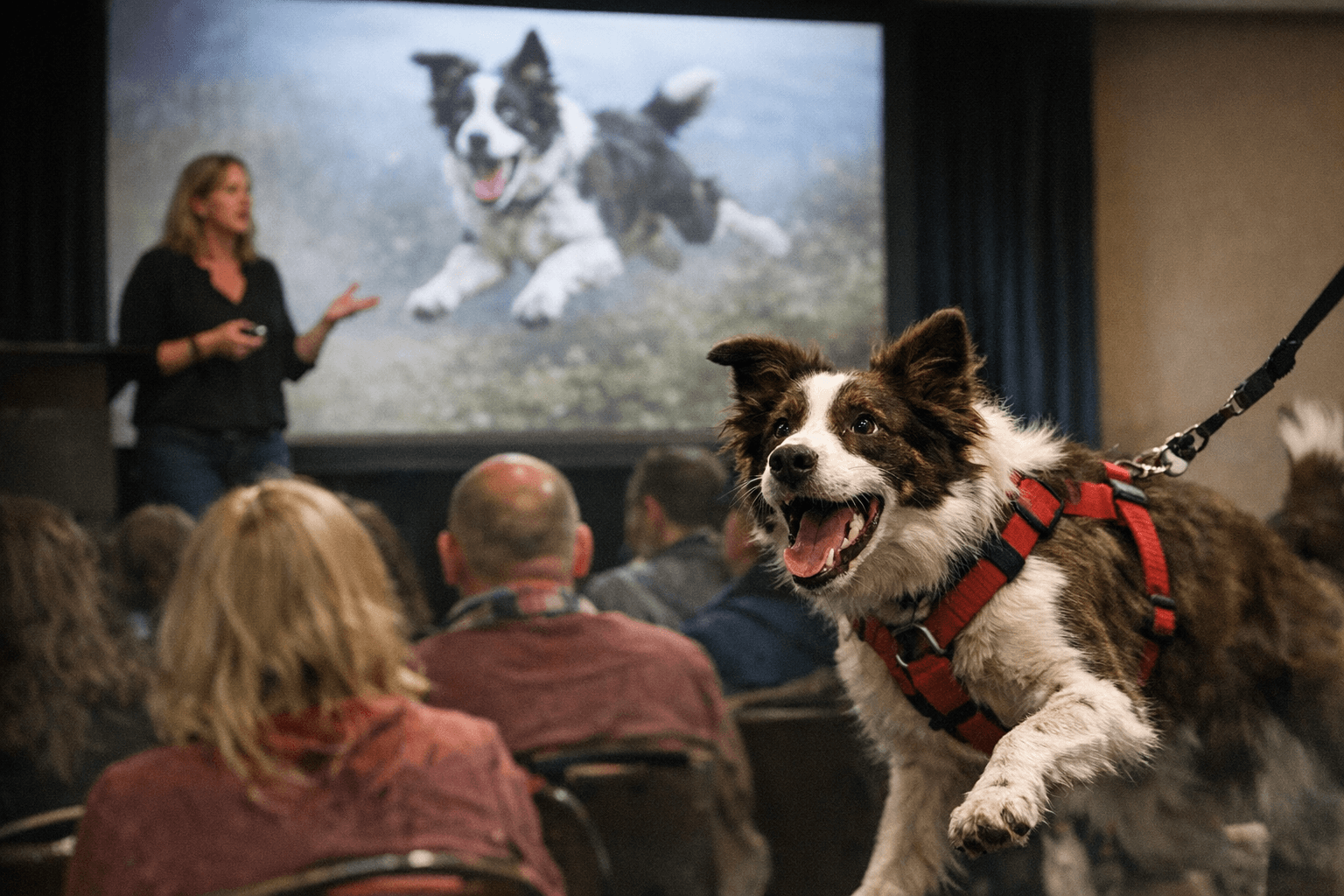
The first thing this conference gets right is the frame. The 2026 Dog Behavior Conference does not treat high-energy, hard-to-settle dogs like a nuisance to be worn out. It treats them like dogs whose arousal, learning history, and social environment all matter at once, which is exactly where real progress usually starts. That shift shows up immediately in the opening-day lineup, where the conversation leans into social health, habituation, and puppy development instead of quick fixes and tired obedience slogans.
The event runs April 17 through April 19 as a three-day virtual conference and bills itself as the thirteenth annual Dog Behavior Conference. Registration is listed at $189, about £139, and that price includes one year of access to recordings plus live Q&A sessions after each presentation. For anyone who has ever tried to juggle a difficult dog, a workday, and a training plan, that format matters. You can catch the live material, revisit the details later, and actually use the talks as a working reference instead of a one-and-done webinar.
Why the opening sessions matter for hyperenergetic dogs
Friday’s lineup is especially useful if your dog lives in the “wound tight and can’t come down” category. Sindhoor Pangal, Kamal Fernandez, Irith Bloom, Brian Hare, and Vanessa Woods anchor a day built around social health, living with multiple dogs, habituation, and the science of raising a great dog in puppy kindergarten. That mix matters because many overaroused dogs are not simply “too much.” They are dogs who have never been taught how to settle in a world that keeps lighting them up.
The practical lesson here is that the basics are not basic at all. Puppy development, controlled exposure, and social health shape how a dog handles novelty, noise, motion, and frustration later on. If your dog barks when the vacuum starts, spins when guests arrive, or falls apart the second the leash comes out, those are not separate problems. They are often the same regulation problem wearing different costumes.
Saturday goes deeper into how dogs learn
Saturday shifts from early development into the mechanics of behavior change. Kristina Spaulding, Adam Daines, Maia Huff-Owen, and Melissa McCue-McGrath are on the program, and the topics follow the same smart pattern: learned helplessness, shaping, the handler-dog relationship in herding, and the benefits and limits of citizen science in teaching dogs to help the environment. That is a wide range, but it is not random. It reflects how modern training increasingly treats behavior as something built through clear structure, not brute repetition.
For owners of intense dogs, shaping is one of the most useful ideas in the whole conference. Shaping rewards small steps toward a behavior instead of waiting for a perfect rep, which is often the difference between building confidence and creating shutdown. When a dog is too amped to think, tiny wins matter more than big speeches. A dog that can offer eye contact, stand on a mat, or pause before blasting through a doorway is already learning self-management.
The learned helplessness piece is just as important, because high-drive dogs are not always “defiant.” Some are overwhelmed, confused, or stuck in patterns where nothing they do seems to work. That is where training can go wrong fast if pressure gets mistaken for clarity. The conference’s willingness to put that topic alongside shaping sends a clear signal: good behavior work is about giving the dog a path to success, not cornering the dog into compliance.
Sunday brings the body back into the behavior conversation
Sunday’s presenters, Andrew Hale, Kay Attwood, Victoria Stilwell, and Yaz Porritt, push the conversation even further into everyday life and welfare. The schedule includes supportive walking, cognition, shelter placement strategies, and pain and nutrition. That last pairing deserves more attention than it usually gets, because some “behavior problems” are really body problems in disguise. A dog that cannot settle may be uncomfortable, underfueled, in pain, or simply not processing the world well.
Victoria Stilwell’s session, The Shelter Zones Approach: Practical solutions for understanding and managing dogs in shelters pre and post adoption, is a good example of where the field is heading. Shelter behavior is not just about reducing noise in kennels. It is about giving dogs the best chance to decompress, learn, and transition without being overwhelmed before adoption or after the move home. For high-energy dogs that arrive in a shelter system already keyed up, that kind of structure can make the difference between a rough adjustment and a spiraling one.
The science behind the practical advice is strong
This conference is not floating on vibes. The broader behavior literature has been saying for a while that arousal matters in a very real way. A 2023 veterinary review argued that excessive emotional arousal can affect physiological health in animals, and that emotional health should be part of the workup. A 2025 study in Scientific Reports found that arousal state affected memory consolidation in detection dogs after training. In plain English, the dog’s emotional state can change what gets stored, what sticks, and what gets lost.
That matters for anyone trying to train a dog who is always on. If the dog is too excited to take information in, you are not failing because your cues are weak. You may be asking for learning in a state where learning is compromised. The smarter move is to manage arousal first, then train in a way the dog can actually absorb. That is where calmer repetitions, better timing, and shorter sessions beat endless drilling every time.
The conference also lines up with what major behavior organizations are already saying. The American Veterinary Society of Animal Behavior recommends only reward-based training methods for all dog training, including treatment of behavior problems. The American College of Veterinary Behaviorists describes itself as the certifying board for veterinarians trained to advance behavioral health through clinical practice, research, and science-based behavior education. And Fear Free says its mission is to prevent and alleviate fear, anxiety, and stress in pets. Put those together and the message is obvious: force is out, informed handling is in.
Why this conference is more than a one-off event
The Dog Behavior Conference is also positioned as a serious continuing-education event. The CCPDT lists it as an approved CEU event, and CPDT-KA certificants can earn up to 12 CPDT-KSA Skills CEUs within their three-year certification period. That gives the conference weight for professionals, but it also tells hobby owners something useful: this is not fluff. It is the kind of material trainers actually build careers around.
The broader 2026 calendar of online dog education events, including the virtual MET Conference and other continuing-education offerings, shows how normal remote learning has become in this space. That shift helps owners too. You do not need to travel to pick up better tools for impulse control, handler mechanics, puppy foundations, or shelter-informed thinking. You can learn, pause, rewind, and apply.
For the hyperenergetic-dog crowd, that is the real value here. The best sessions in this conference do not promise to magically drain energy. They teach you how to channel it, lower it, and read it more accurately. That is the part that changes barking, chaos on leash, frantic greeting behavior, and the dog who seems unable to settle no matter how much exercise you pile on.
This article was produced by Prism’s automated news system from verified source data, official records, and press releases, then run through automated quality and moderation checks before publishing. The system is built and supervised by the people who set the standards it runs under. Read our full AI policy.
Did this article answer your question?