Reward-Based Training Helps Hyperenergetic Dogs Learn, Settle Down
The viral demo works because the dog gets the right answer paid immediately. That precision matters most for hyper dogs that need fast, clear feedback.
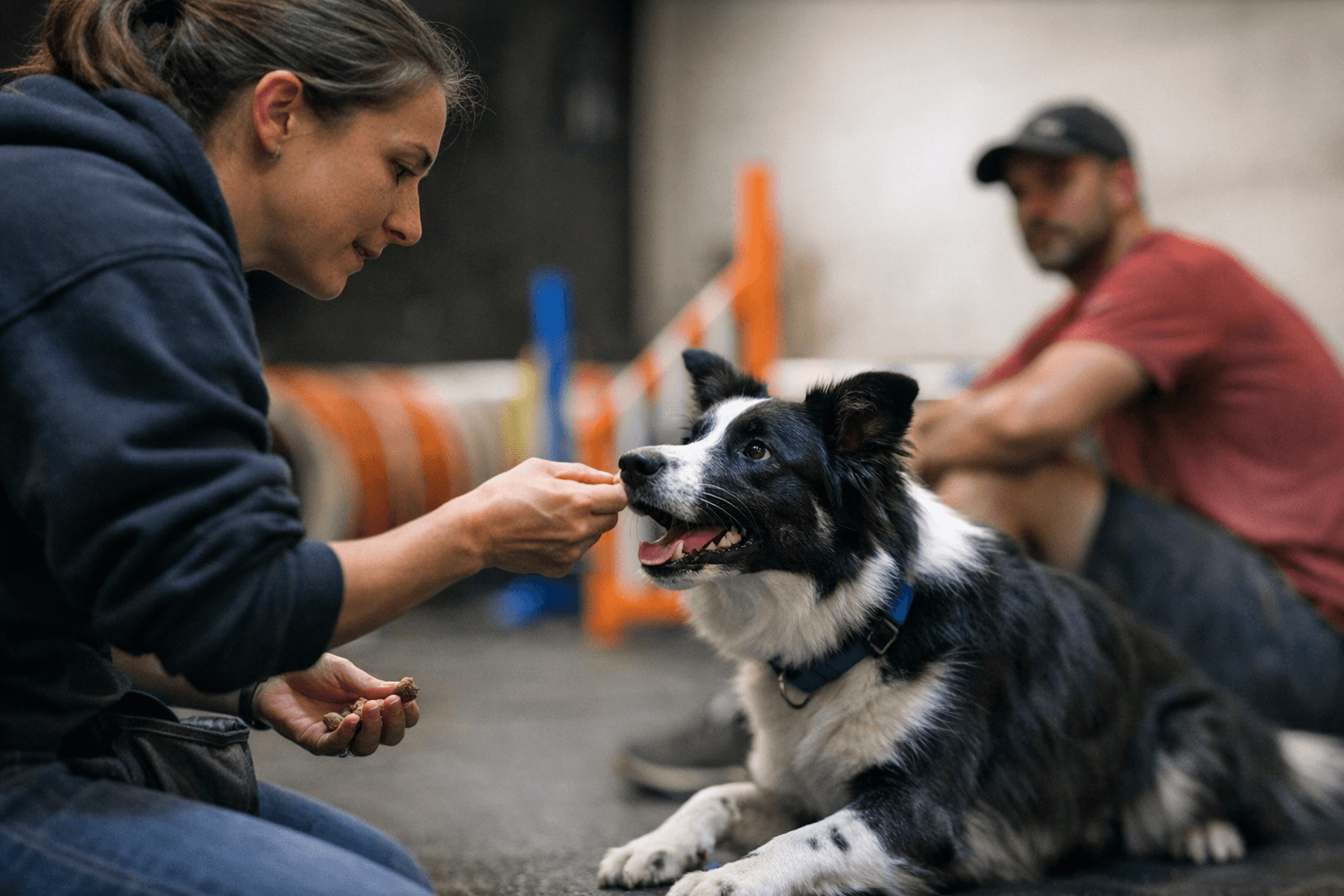
The viral demo works because the dog gets the right answer paid immediately, not after the moment has passed. That is the whole engine of operant conditioning, and it is exactly why reward-based training lands so well with hyperenergetic dogs that need fast, readable feedback.
Why the demo clicked
At its core, positive reinforcement is simple: reward the behavior you want so the dog is more likely to repeat it. The American Kennel Club describes that approach as grounded in the science of animal learning, and it can use treats, toys, games, or praise depending on what motivates the individual dog. In a good training clip, the dog is not being corrected for chaos after the fact. Instead, the handler is making the right choice obvious and worth repeating.
That distinction matters because operant conditioning is not the same thing as classical conditioning. Pavlov’s famous bell-and-food example is about association, while operant conditioning is about consequences shaping behavior. In dog training terms, the dog learns, “When I do this, good things happen,” and that feedback loop is what turns a random moment into a reliable command.
Why hyper dogs need this kind of clarity
For high-energy dogs, the problem is often not just “too much energy.” The AKC says many “hyper” dog cases are really about a need for education, a more suitable daily schedule, and an exercise plan that matches the dog in front of you. That is a useful correction for anyone who has tried to solve frantic behavior with longer and longer walks alone.
The AKC also notes that hyperactive-dog complaints are among the most commonly reported behavioral concerns by Canine Good Citizen and AKC S.T.A.R. Puppy owners. That makes this more than a cute training tip. It is a common household challenge, and it is one that gets worse when the dog is repeatedly rehearsing spinning, barking, jumping, or barging because nobody is marking the calm, correct answer fast enough.
The first training decision to copy: mark the right behavior immediately
The biggest lesson from a strong reward-based demo is timing. Reward the exact moment the dog offers the behavior you want, whether that is a sit, a down, eye contact, or even a single second of stillness before the next burst of motion. If you are late, you risk paying for the wrong thing, like the spin before the sit or the barking that followed the pause.
For hyperenergetic dogs, that speed is especially important because they move quickly from one impulse to the next. A delayed reward can accidentally reinforce the chaos around the command instead of the command itself. A sharp marker, followed by a prompt reward, tells the dog, in plain language, “That. Do that again.”
- Reward the first clean response, not the whole performance.
- Keep the mark and the reward tight together in time.
- End the rep before the dog drifts back into frantic movement.
A simple way to think about it:
That kind of precision is what makes the demo feel so clean to watch. It is also what makes it useful in a real kitchen, backyard, or training class where the dog is far more likely to be distracted.
The second training decision to copy: do not pay for accidental chaos
Reward-based training only works when you are careful about what you reinforce. If a jumping dog gets attention, if frantic barking opens the door, or if pacing gets the treat before the settle, the dog learns that noise works. The clip’s lesson is not just to reward more, but to reward better.
That is where structure matters. The AKC says many “hyper” dogs benefit from a more suitable schedule and exercise plan, which means the environment has to support the training, not fight it. Short sessions, clear cues, and predictable repetition help the dog understand which behavior actually earns the payoff.
This is where the human side matters too. If you are trying to calm a dog that is already over-threshold, every extra bit of confusion can become reinforcement for the very thing you want to reduce. Clean timing, a calm reset, and a fast reward for the right answer can change the whole tone of the interaction.
Why reward-based methods work beyond obedience
Veterinary Partner says reward-based training can improve a dog’s mood, build self-confidence, and strengthen the human-animal bond. That is a major reason this style of training has gained so much ground with both family pets and working dogs. It teaches the behavior, but it also changes how the dog feels about the process of learning.
The contrast with force-based methods is stark. Veterinary Partner warns that force and aversive techniques can increase fear and aggression, which creates welfare and safety concerns. For a high-drive dog, that can be especially counterproductive, because fear can add more volatility to an already fast, reactive nervous system.
Reward-based work does not just feel kinder. It tends to produce a more engaged dog, a cleaner training loop, and a better relationship between the dog and the person handling them. That is why the modern shift toward force-free methods keeps accelerating.
Why mental work matters as much as physical work
One of the most useful parts of the AKC guidance is the reminder that dogs need mental exercise too. Physical exercise matters, but it is not the whole picture, especially for dogs that are sharp, restless, or easily overexcited. Brain games and cognitive training can be energy-burning activities, and the AKC says canine conditioning can provide both a physical and mental workout.
That is the part many hyper-dog homes miss. Long walks and runs can help, but they do not automatically teach self-control. Training games, short cue sessions, and enrichment work give the dog a job to solve, which burns energy while also improving focus and communication.
- Use short, structured reward sessions.
- Mix obedience with simple brain games.
- Build calmness into the routine, not just mileage into the day.
For dogs that struggle to settle, that combination is gold:
What the viral moment really proved
The reason the demo spread is that it showed something dog people already know but do not always see executed cleanly: timing changes learning. A reward delivered at the right instant can reshape behavior faster than scolding ever will, especially in dogs that are intense, fast, and easily overstimulated.
That is the larger takeaway here. Hyperenergetic dogs do not need more noise around them. They need clearer communication, sharper timing, and a training plan that rewards the right choice before chaos takes over again.
This article was produced by Prism’s automated news system from verified source data, official records, and press releases, then run through automated quality and moderation checks before publishing. The system is built and supervised by the people who set the standards it runs under. Read our full AI policy.
Did this article answer your question?