Rhodesian ridgeback needs firm training, long walks and exercise
This is a 70- to 85-pound athlete, not a soft pet. Ridgebacks need firm puppy training, serious exercise and owners who respect their prey drive.
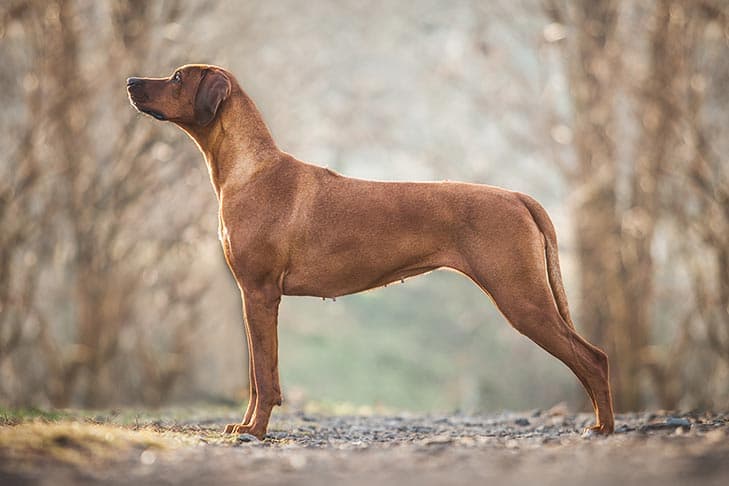
Built like a working hound, not a couch ornament
The American Kennel Club’s Rhodesian Ridgeback profile reads like a warning label for anyone who wants a big dog with zero opinions. This is a strong, muscular, active hound, capable of great endurance and a fair amount of speed, and it weighs about 70 to 85 pounds or more. That frame, plus the breed’s hallmark ridge of backward-growing hair along the back, tells you what kind of partner this is meant to be: athletic, independent and happiest when it has a real job.
That is why the Ridgeback fits experienced owners so well. The breed can be devoted and affectionate to its owner, but it is also reserved with strangers, strong-willed and built with enough self-direction to make sloppy handling obvious fast. If you underestimate that, the dog does not simply become “a little difficult.” It turns into a large, fast, smart animal with its own agenda.
The history explains the temperament
The Ridgeback did not come out of the show ring. AKC says the breed originated in Africa in the 1600s as the “African Lion Dog,” used to tease and disorient lions while hunters positioned themselves. The Rhodesian Ridgeback Club of the United States traces the breed to crosses made by settlers in South Africa and Rhodesia with native dogs of the Hottentot people, and says the dogs survived because of superb hunting ability. That is the kind of background that leaves a mark.
RRCUS also describes the breed as a dog of “incorruptible, independent character,” and that is not decorative language. The club says a Ridgeback should not be expected to lightly forgive harsh treatment, which is a blunt reminder that this is a dog built to think for itself. The breed was used to track and trail large animals and to hold quarry at bay, so the modern house dog still carries the instincts of a determined working hound.
What that means in a real home
The Ridgeback can be wonderful with families, but only if the family is ready for consistency. AKC is clear that the breed retains its independence and strong prey drive, and that it can be strong-willed. Firm but fair guidance from puppyhood is the key, because an adolescent Ridgeback with no structure is not a training project you want to start from scratch once the dog is already physically powerful.
That prey drive matters in daily life. A Ridgeback that spots movement, wildlife or another tempting distraction is not going to behave like a breed that naturally lives to please. The practical consequence is simple: this is an athletic partner, not a casual pet, and you need to train with that reality in mind from the start.
Training has to be consistent, not occasional
This is not the breed for half-hearted lessons or weekend-only manners. Positive-reinforcement training is the right tool here, especially when you want better leash walking and fewer problem behaviors. VCA Animal Hospitals notes that sporting, herding, hound and terrier breeds, along with adolescents, often have high exercise requirements, and that exercise needs vary by age, development stage, behavior, physical health and structure.
For a Ridgeback, that means your training plan needs structure as much as your walk schedule does. The dog should learn early that rules are the same on Tuesday afternoon as they are on Saturday morning. That kind of consistency pays off in leash manners, recall work, handling around distractions and the general ability to live with a dog that is powerful enough to make bad habits expensive.
A good Ridgeback training routine usually rests on a few nonnegotiables:
- short, repeated sessions instead of one long, boring lesson
- clear rules about pulling, jumping and pushing through doors
- early exposure to calm handling, strangers and other dogs
- rewards for focus, not just for obedience after the fact
Exercise is not optional, and long walks are only the start
If you are drawn to the breed’s speed and athletic look, you also have to be honest about the time that goes with it. Ridgebacks need long walks, structured exercise and enough daily activity to keep their minds from making trouble. They are not built for a quick lap around the block and then a nap until dinner.
The breed’s endurance is part of the appeal, but it is also the part people underestimate. A Ridgeback that does not get enough physical work is far more likely to invent its own entertainment, and that usually means behavior you do not want. The right home for this dog is one that can provide room, routine and the kind of movement that leaves the dog satisfied rather than restless.
Grooming is easy, until you get to the nails
Compared with many large breeds, the Ridgeback is fairly simple to maintain. Weekly brushing and occasional baths are enough for most dogs, which keeps the coat care manageable even for owners who are already spending plenty of time on exercise and training. The trickier part can be nail care, because some Ridgebacks resist clipping and may do better with a grinder.
That small detail matters more than it sounds like it does. A dog that dislikes handling will quickly turn routine grooming into a battle if you wait too long between sessions. With a Ridgeback, it is better to make nail care normal and predictable than to fight a grown dog over overlong nails every few months.
Health screening should be part of the conversation
RRCUS CHIC guidance calls for screening hips, elbows, thyroid and eye certification, which is exactly the sort of checklist that belongs with a breed of this size and drive. The club also flags dermoid sinus as a Ridgeback-specific concern, a reminder that even a hard, athletic dog can carry inherited issues that deserve attention.
This is where the breed’s seriousness shows up again. A Ridgeback is not just a handsome hound with a dramatic ridge. It is a structured, working-minded dog with real health screening needs, and anyone bringing one home should be prepared to treat those needs as part of responsible ownership rather than an afterthought.
A breed for confident handlers
The Ridgeback was recognized by the American Kennel Club in 1955, and the U.S. parent club was formed on July 10, 1957, in Pass Christian, Mississippi. That long organized history matches the breed’s reputation: this is not a novelty dog, and it has never really been a low-effort one.
Treat the Rhodesian Ridgeback like the athlete it is, and the breed makes perfect sense. The same power, speed and independence that turn a casual owner away are exactly what make a Ridgeback such a compelling partner for someone ready to train hard, walk far and stay consistent from puppyhood on.
This article was produced by Prism’s automated news system from verified source data, official records, and press releases, then run through automated quality and moderation checks before publishing. The system is built and supervised by the people who set the standards it runs under. Read our full AI policy.
Did this article answer your question?