Sniffspot guide says reactive dogs need space, exercise and training
Reactive dogs are not broken: space, exercise and threshold-based training can lower arousal and make real social progress possible.
When a dog barks, lunges, or growls at another dog or person, it can look dramatic fast, but that reaction is not the same thing as aggression. The big shift in this guide is simple and reassuring: reactivity is an exaggerated response to everyday triggers, and that means it can be managed, reduced, and trained around.
Reactivity is a response, not a verdict
The first thing to understand is that reactive dogs are not automatically doomed to be aggressive or untrainable. Some react because they never learned social skills or because a scary experience taught them to protect their space. Others are not fearful at all, but deeply frustrated that they cannot rush over to greet every dog or person they spot.
That distinction matters because it changes the whole job. Instead of treating the dog like a problem to overpower, you treat the dog like one that is overwhelmed, overexcited, or both. The goal is not to force close contact and hope for the best. The goal is to help the dog stay calm enough to notice, think, and choose something better.
Drain the tank before you ask for training
For hyperenergetic dogs, the guide’s first practical point is crucial: do not start trigger work on top of a huge reservoir of pent-up energy. Exercise, structure, and stimulation come first, because training is far harder when the dog is already over threshold from boredom, restlessness, or excess drive.
That does not mean running the dog into exhaustion and then calling it a day. It means meeting the dog’s basic needs so the nervous system has a chance to settle. A dog that has already had appropriate movement, predictable structure, and mental engagement is in a much better place to learn than one who is bouncing off the walls before the session even begins.

Threshold distance is where progress starts
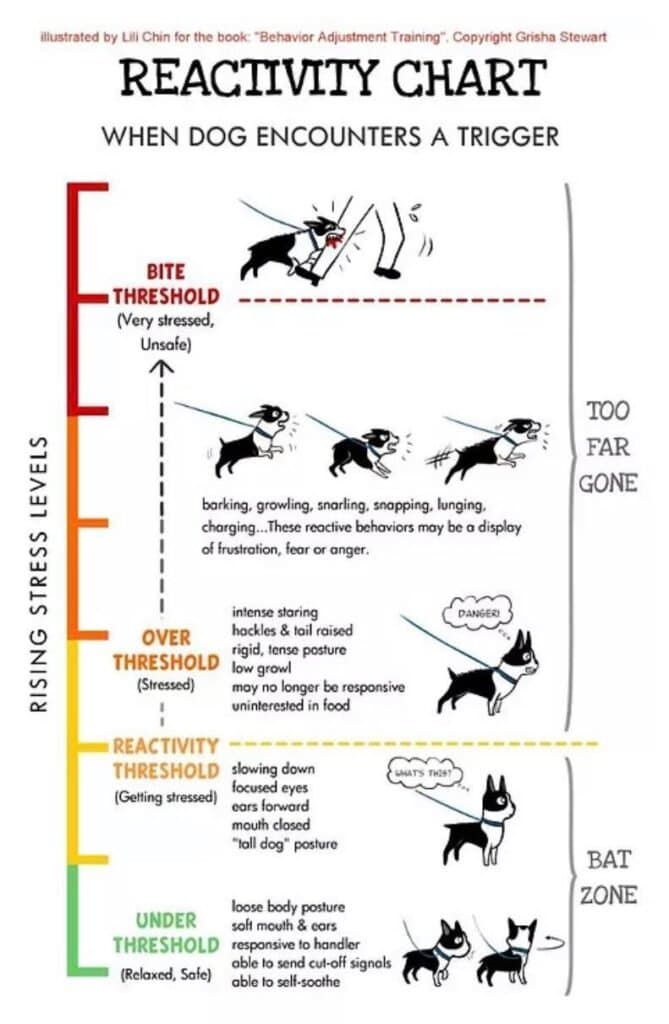
The most useful concept in the guide is threshold distance, the point at which your dog can still see or notice a trigger without tipping into reaction. That distance is the difference between a training rep that teaches and one that blows up. If the dog is under threshold, rewards still matter and the dog can process what is happening.
Once the dog crosses that line, learning gets harder and the reaction takes over. That is why identifying the right distance is so important. You are not trying to win a contest by getting as close as possible. You are trying to find the range where your dog can observe a trigger, stay regulated, and practice calmer behavior over and over again.
Safety and management come before contact
The guide’s step-by-step approach is built around safety, management, and counter-conditioning, not confrontation. Visual cues can help communicate that your dog needs space, which reduces pressure before a stressful meeting even starts. Timing also matters: walking at quieter times of day and choosing lower-stress settings can make the difference between a successful outing and a meltdown.
That lower-stress setup is not an avoidance strategy in the negative sense. It is a training tool. If your dog is constantly being shoved into crowded sidewalks, busy parks, or close-quarters greetings, you are asking for more arousal than the dog can handle. Better choices create room for better behavior, and better behavior can then be reinforced.
- Use space as a training aid, not a failure.
- Pick calmer routes and quieter hours whenever possible.
- Build from easy environments before moving to harder ones.
- Reward any moment your dog stays below threshold and keeps thinking.
Fear-based and frustration-based dogs need different support
One of the guide’s most useful reminders is that not all reactivity comes from the same emotional place. A fear-based dog needs support that reduces pressure, increases safety, and protects confidence. A frustration-based dog may look loud and intense for a different reason entirely, because the dog wants access and cannot get it.
That emotional difference changes how you handle the moment. A fearful dog benefits from more distance and careful reassurance. A frustrated dog still needs distance, but the training emphasis may lean even harder on impulse control, patience, and learning that not every sighting leads to instant contact. Either way, the answer is not to flood the dog and hope the reaction disappears.
Short successful reps beat long stressful ones
The guide leans hard on positive reinforcement, and for good reason. Dogs learn best when the work is broken into short, successful reps that can be repeated without pushing them over the edge. If the dog glances at a trigger, stays calm, and earns a reward, that is a meaningful win.
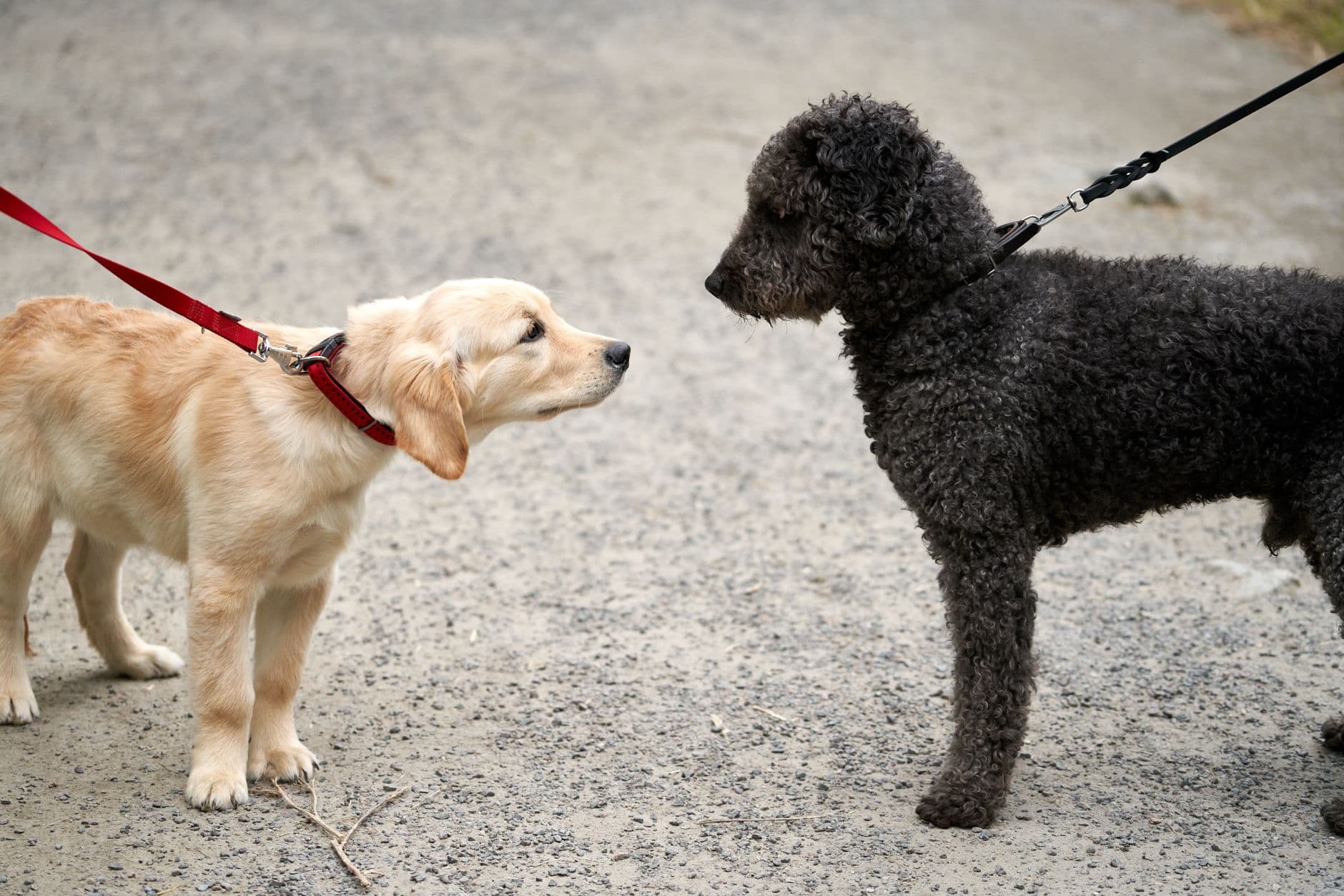
This is where hyperenergetic dogs often surprise people. Once the dog is given the right distance, the right setup, and enough basic needs coverage, the training starts to look less like damage control and more like skill-building. The dog gets practice doing something besides exploding, and every calm rep becomes part of the pattern.
The other key point is pace. Progress should happen at the dog’s pace, not the human’s. Pushing faster because the scene looks safe from your side often backfires, especially with dogs that are already aroused. Slow, steady, successful repetitions are what build real change.
What structured socialization really looks like
The broader lesson here is that safer socialization does not come from forcing dog-to-dog contact. It comes from thoughtful distance, repetition, and trust-building. Calm, structured exposure lowers arousal instead of spiking it, which is exactly what an overamped dog needs.
That is why this guide resonates so strongly with owners of hyperenergetic dogs. Leash chaos is usually a skill-and-state-of-mind problem, not a personality flaw. When you stop treating reaction as a character issue and start treating it as a threshold issue, the path forward becomes much clearer.
A barking, lunging, growling dog is not a lost cause. With enough space, enough exercise, and enough deliberate training, the dog can learn to look, think, and recover instead of tipping straight into reaction.
This article was produced by Prism’s automated news system from verified source data, official records, and press releases, then run through automated quality and moderation checks before publishing. The system is built and supervised by the people who set the standards it runs under. Read our full AI policy.
Did this article answer your question?