Summer pavement can burn hyperenergetic dogs, use the seven-second test
Summer exercise can turn dangerous fast on hot pavement. Use the seven-second test, watch the surface, and know when to cut the outing short.

When pavement hits the mid-70s, paws can get burned fast
A day that feels fine for a long walk can still be hard on a dog’s feet. Four Paws says asphalt can reach 125 degrees Fahrenheit when the air is only 77 degrees, hot enough to cause serious paw burns in under a minute. That is the trap for hyperenergetic dogs: the more they want to move, the more likely they are to rack up miles on surfaces that can injure them before anyone realizes there is a problem.
Why active dogs are at higher risk
This is not just about an occasional hot sidewalk. It shows up on neighborhood walks, parking-lot crossings, beach trips, trail days, and any outing where a dog keeps pushing forward after the human has already clocked the heat. DogsBestLife’s guidance makes the point clearly: the dogs most likely to need extra exercise are also the ones most likely to keep going until the surface starts hurting them.
The American Kennel Club says scorching pavement can cause discomfort, blisters, and burns on paw pads. WebVet goes further, noting that paw pads can suffer thermal injury once a surface reaches roughly 120 to 125 degrees Fahrenheit. That means the danger is not theoretical, and it does not require desert-level temperatures to show up.
Use the seven-second test before every hot-surface outing
FOUR PAWS recommends the seven-second test, and it is simple enough to use anywhere: press the back of your hand firmly against the pavement for seven seconds. If you cannot hold it there comfortably, it is too hot for your dog’s paws.
The American Kennel Club uses a similar hand-on-pavement check and recommends holding it for 10 seconds. Both tests point in the same direction: if the surface feels too hot for you, it is too hot for your dog. Dr. Jerry Klein of the AKC says that when the air temperature is 85 degrees Fahrenheit or over and the pavement cannot cool down, walking may be unsafe.
That threshold matters because the surface can be hotter than the air by a wide margin. The AKC says asphalt can reach 135 degrees when the air temperature is 86 degrees. FOUR PAWS adds that asphalt reaches 143 degrees at 87 degrees air temperature and 149 degrees at 95 degrees. In other words, the sidewalk may look ordinary while it is quietly turning into a burn hazard.
Know which surfaces are safer, and which stay hot longest
Not all ground is equally risky. Asphalt holds heat, which means a road or lot that has been baking since midday can still be dangerous at 7 p.m. Dark asphalt is worse than concrete, and when you are unsure, grass is the safest alternative.
That matters on the quick transitions that hyperenergetic dogs love to turn into sprints. Parking lots, curb cuts, and trailheads often have the worst mix of dark pavement, reflected heat, and no shade. If you have a choice, move the outing to grass, shade, or cooler early-morning timing before the pavement has had a chance to store a full day of heat.
Practical surface checks
• Test the pavement every time, not just at the start of the season. • Recheck after a long pause, because a surface can heat up fast. • Treat parking lots and blacktop as higher-risk than concrete. • Use grass when you need a safer fallback.
Know when to cancel the outing
The cleanest line is simple: if the pavement fails the seven-second test, cancel the walk on that surface. If the air temperature is 85 degrees or higher and the pavement cannot cool down, the AKC says walking may be unsafe. That is the point to change the plan, not to “push through” because the dog still wants to move.
There is also a temperature ceiling to respect for the dog itself. The AKC says a normal resting temperature is about 99 to 102.5 degrees Fahrenheit. Over 104 degrees indicates heat stress, over 105 degrees signals heat exhaustion, and more than 106 degrees is heatstroke that requires emergency veterinary care. Hot pavement can add to that load fast, especially when a high-drive dog is pulling, trotting, or trying to keep up at speed.
Watch for paw injury signs in real time
WebVet says the warning signs to look for are blisters, raw or peeling pads, limping, or refusing to walk. The hard part is that excited dogs may not stop on their own. They can keep moving because they are focused on the outing or trying to stay with their people, even when the pads are already damaged.
That is why a quick glance at paw pads is not enough. If a dog starts slowing down, lifting a paw, licking at the feet, or hesitating on a hot stretch, treat it as a warning and get off the surface immediately. A dog that keeps “working through it” is not being tough, just compromised.
Dogs that need extra caution
WebVet flags several higher-risk groups: • Brachycephalic dogs • Senior dogs • Small dogs • Recently groomed dogs
Those dogs do not get a pass on hot surfaces, and they may need an even lower threshold for cutting the outing short.
Make paw protection part of the routine
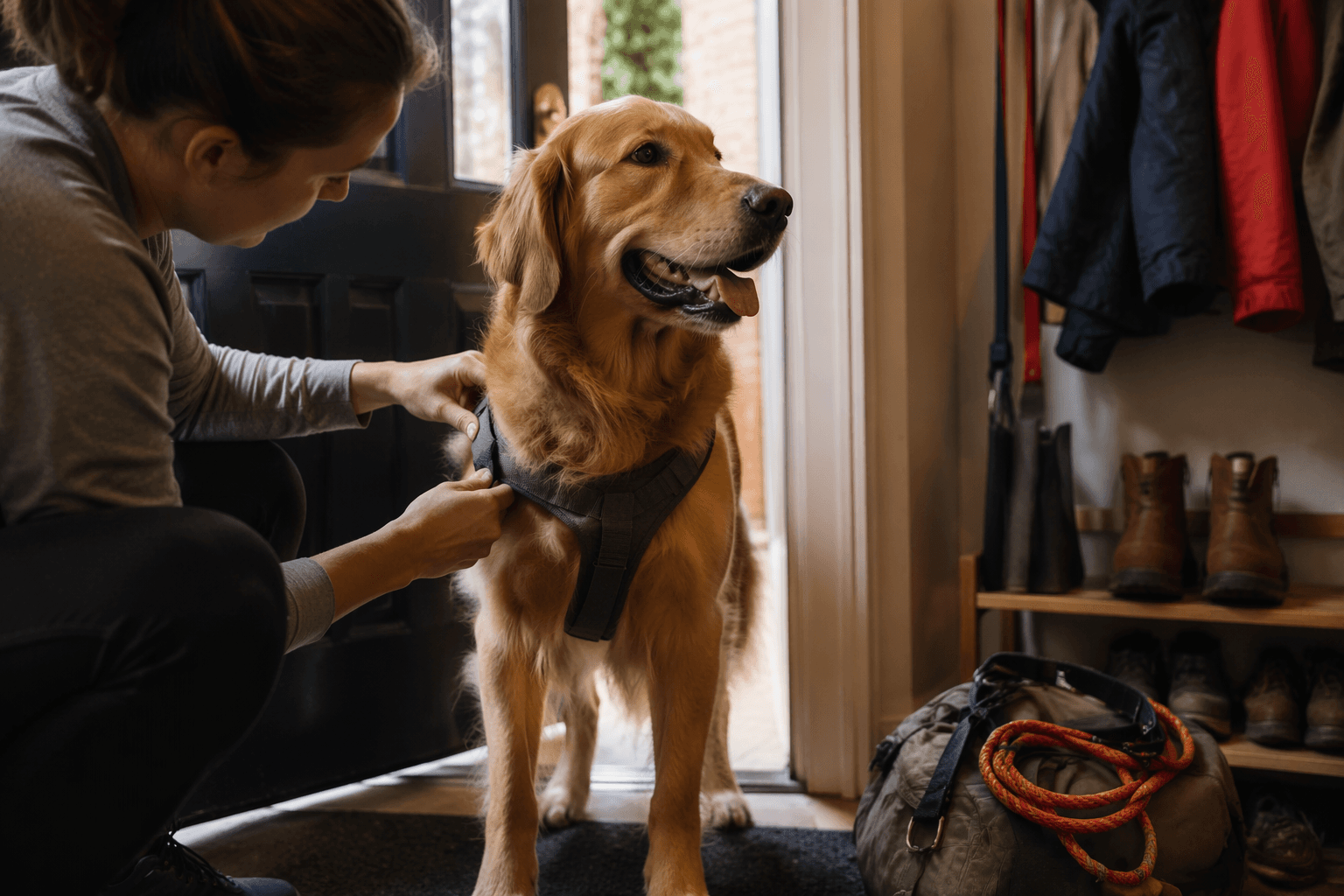
Prevention is easier than recovery, and it starts before the leash comes off the hook. Paw wax can help as a buffer, and dog booties are no longer an odd niche item for extreme weather only. Ruffwear says booties can be useful year-round, including in summer and on hot pavement, which makes them a practical tool for active dogs that still need daily movement.
Booties are not a substitute for surface awareness, though. They work best when paired with the seven-second test, smart timing, and a willingness to stop and switch surfaces. If the ground is dangerously hot, gear helps, but the outing still needs to change.
If a burn happens, cool first and call the vet
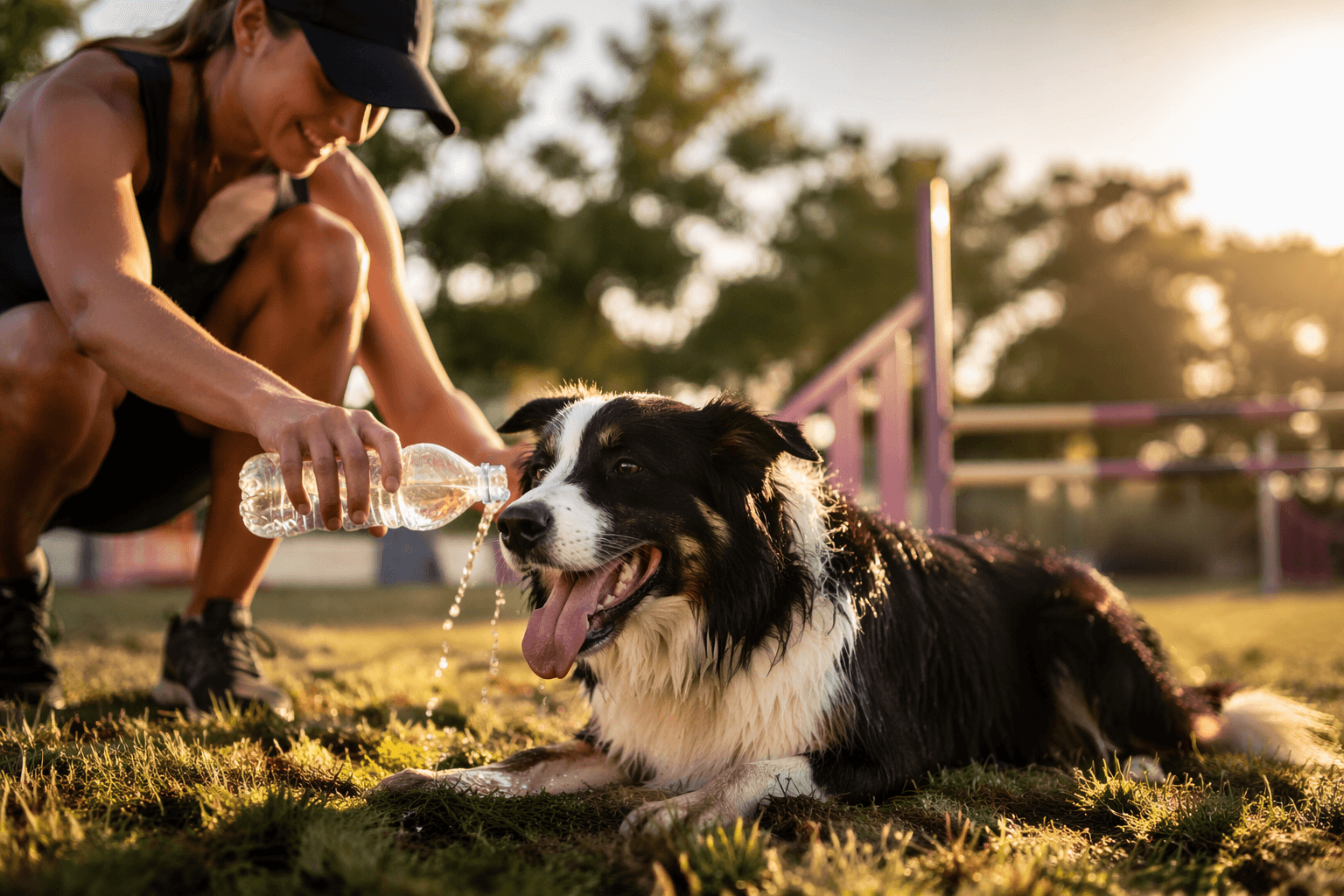
WebVet advises cooling paws with cool, not icy, water while contacting a veterinarian. That detail matters because the goal is to lower heat without adding shock to already damaged tissue. If you see blisters, raw pads, peeling skin, limping, or refusal to walk, treat the paw injury as real, not minor.
The bigger lesson is that hot pavement is not just an inconvenience. It is a surface-level injury risk that can turn a normal exercise routine into a veterinary problem in seconds. For hyperenergetic dogs, the answer is not to stop moving, but to choose the right surface, the right time, and the right cutoff point before the first step lands on pavement that is already too hot to hold.
This article was produced by Prism’s automated news system from verified source data, official records, and press releases, then run through automated quality and moderation checks before publishing. The system is built and supervised by the people who set the standards it runs under. Read our full AI policy.
Did this article answer your question?