Tennessee law lets EMS stabilize and transport injured police dogs
Tennessee’s new law gives EMS a legal path to stabilize and move injured K-9s, ending the guesswork when every minute counts.
Tennessee has closed a dangerous gray area for injured police dogs. The Tennessee K-9 Emergency Medical Care and Transport Act now lets EMS crews stabilize working K-9s and transport them, by ground or air, without running afoul of veterinary practice rules when a dog is hurt in the line of duty.
The law defines a “canine first responder” as a dog trained, or in training, for police, military, patrol, detection or search-and-rescue work that is being used by a law-enforcement or military unit. It also directs the Tennessee Board of Veterinary Medical Examiners, working with the Tennessee Emergency Medical Services Board, to write rules for an emergency veterinary medicine service director and an EMS training program. The fiscal note for the bill estimated a first-year state cost of $50,000 in FY26-27 for licensing software updates, while saying EMS training could be handled with existing personnel and resources.

State Sen. Bo Watson and state Rep. Michele Reneau pushed the measure after arguing the old system left handlers and responders guessing in urgent situations. Watson described a world in which injured dogs were sometimes loaded into the nearest vehicle because crews could not wait for specialized help. Reneau said the law was meant to protect EMS personnel acting in good faith, while keeping the scope limited to emergency stabilization, not full veterinary treatment. The bill was filed on January 15, 2026, introduced on January 21, referred to committee on January 22 and placed on subcommittee calendar on February 26 before taking effect on April 16, 2026.
The timing mattered because Tennessee’s K-9 transport network was already taking shape. The University of Tennessee College of Veterinary Medicine and Erlanger LIFE FORCE completed the first-ever dry run of a helicopter transport for a critically injured K-9 in 2025, and UTCVM said that effort was inspired by Cain, the Crossville police K-9 killed in the line of duty in 2017. LIFE FORCE said it became the first EMS agency in Tennessee and the fifth air medical program in the nation equipped and trained to transport critically ill or injured working K-9s.
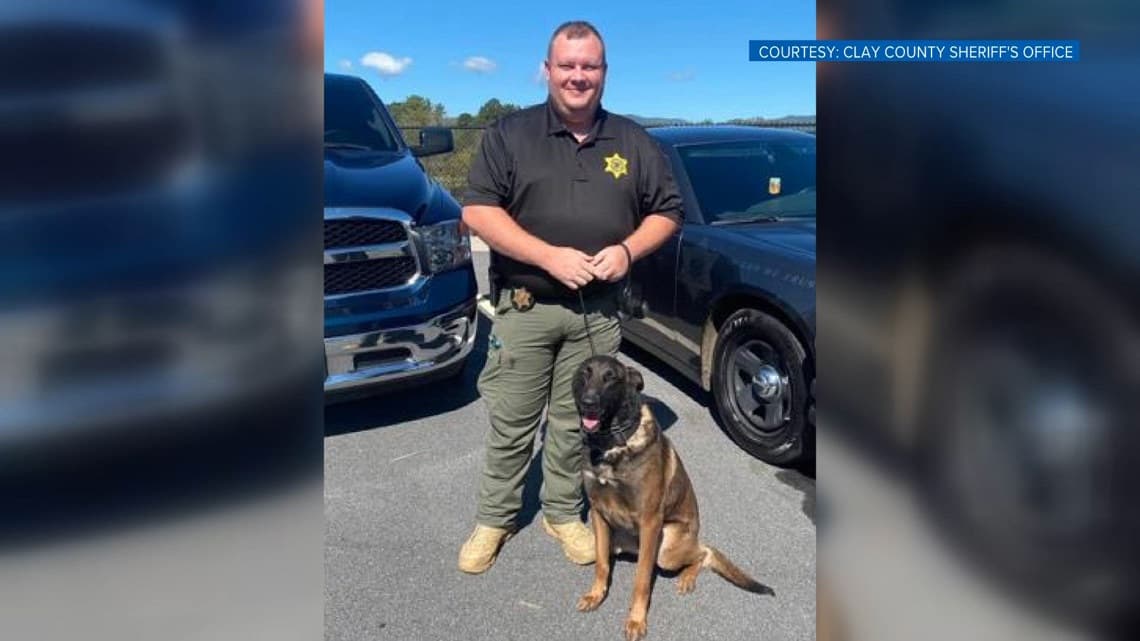
That system saw its first real-world activation with Luca, a 6-year-old Belgian Malinois assigned to the Clay County Sheriff’s Office Criminal Investigations Division. After acute respiratory distress from concentrated ozone exposure on April 21, 2026, Luca was stabilized at Big Bear Veterinary Clinic in Hayesville, North Carolina, then flown to the University of Tennessee College of Veterinary Medicine in Knoxville. The mission saved more than two hours of ground travel time and got Luca to specialized trauma care inside the critical Golden Hour. For handlers of high-drive sport dogs and working dogs, the message is plain: know the emergency route before the crash, because the law now gives responders a legal path instead of a guessing game when a K-9 goes down.
This article was produced by Prism’s automated news system from verified source data, official records, and press releases, then run through automated quality and moderation checks before publishing. The system is built and supervised by the people who set the standards it runs under. Read our full AI policy.
Did this article answer your question?