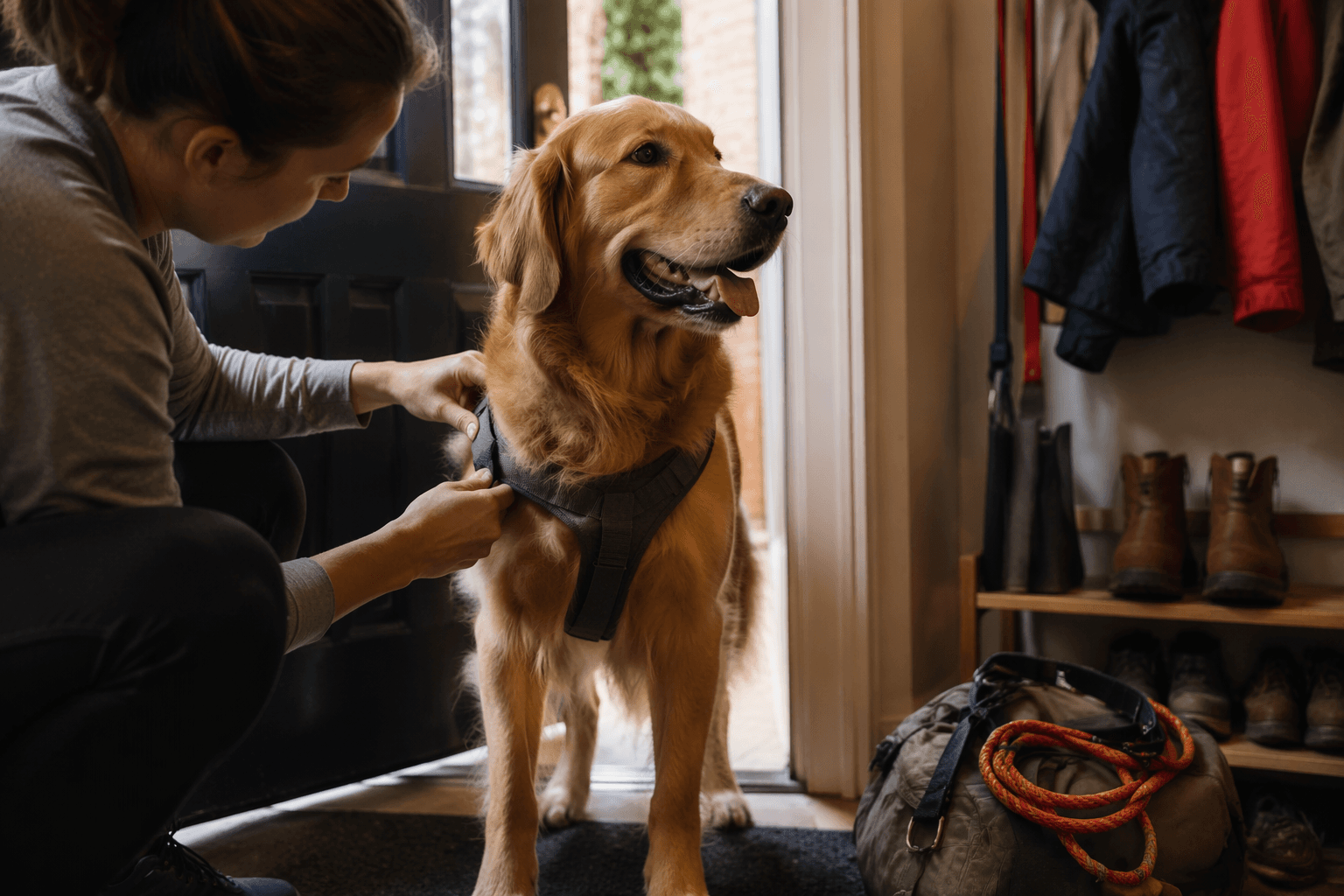
Two unconventional training tools help a hyper dog stay calmer
A spray bottle and a tiny dog backpack can help, but only when they interrupt barking or channel energy without adding fear, strain, or sloppy timing.
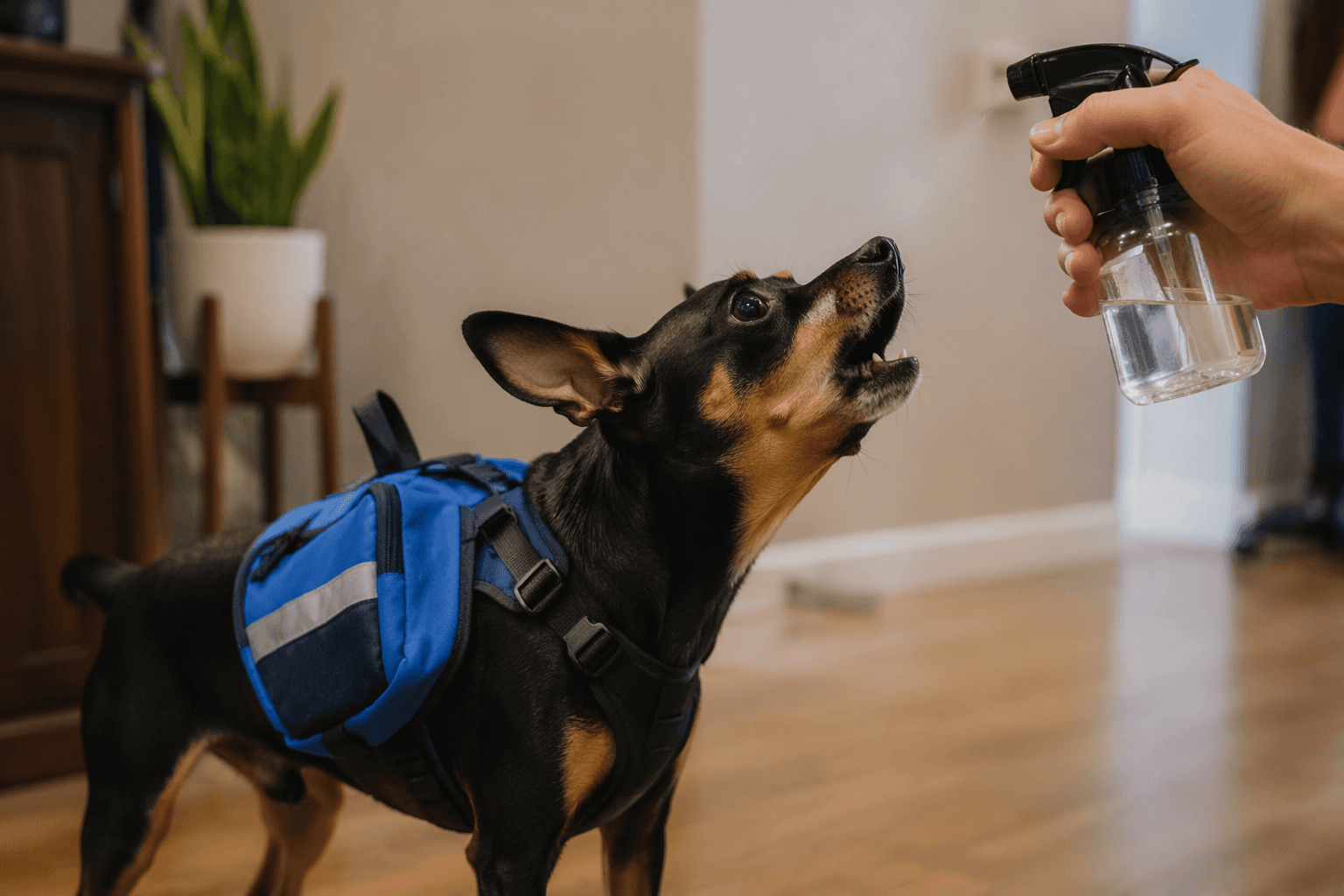
A spray bottle and a tiny backpack sound like gimmicks until you watch a hyper dog settle. Both tools work for one narrow reason: they give a bright, keyed-up dog a clearer job, whether that job is stopping a barking spiral at the window or trading lunging for forward focus on a walk. The trick is not novelty. It is whether the tool lowers arousal fast enough to matter.
When an odd tool earns its place
The cleanest way to judge an unconventional training aid is by the behavior it targets. A tool aimed at home settling has to interrupt overreaction before it snowballs; a tool aimed at outdoor focus has to make movement feel purposeful instead of frantic; a tool aimed at recovery from excitement has to help the dog come back down without adding more chaos.
The spray bottle in the PetGuide piece is a very specific intervention, not a universal solution. The author uses it as a brief interruption when her older dog starts growling and barking at movement outside the window. She is explicit that the goal is not cruelty or intimidation. The point is to break the barking loop before it turns into a practiced habit, and to make the verbal warning meaningful enough that the dog sometimes pauses before the spray ever comes out.
The spray bottle: useful only if it changes the moment
For a dog that explodes at the sight of a passerby, the first question is not whether the bottle works in theory. It is whether it can cut through the arousal in the exact second the bark cycle starts. If the dog keeps escalating, the tool is too slow, too scary, or too messy to be useful. If the dog begins to connect the cue with the behavior and the barking shortens, that is a sign the interruption is doing actual work.
That still leaves a hard boundary. The American Veterinary Society of Animal Behavior says reward-based methods should be used for all dog training, including behavior problems. The British Small Animal Veterinary Association is even more direct: reward-based training is more effective and less likely to create unwanted consequences than aversive methods. A spray bottle sits outside that preferred lane, so it deserves skepticism, especially if a dog becomes more fearful, more reactive, or more suspicious of people and movement.
The smartest use case is narrow and practical. If a dog barks at the window, environmental management can do part of the job before training even starts, such as blocking the view so the trigger is harder to rehearse. Then a brief interruption may help stop the immediate outburst, reduce rehearsal, and improve timing while you reinforce quiet, calm behavior.
The backpack: a job, not a burden
The backpack example is different because it is not about stopping a bad habit in the moment. It is about giving a young, fast-moving dog a task. In the PetGuide account, the author used a small backpack when her dog was younger and pulled on walks, loading it lightly so the dog had something to focus on besides rushing ahead. The pack created structure and purpose, a little like a weighted vest or task can change the feel of a human workout.
That only works if the pack is fitted and loaded with restraint. Dog backpacks are generally kept to a total weight, including the pack itself and whatever the dog carries, of around 10% to 12% of the dog’s body weight. The pack should rest over the front legs, where dogs are strongest, with even weight distribution and clear shoulder movement. It should never press on the spine or throat.
There is also an age and health check built into the idea. Puppies and older dogs may need veterinary guidance before using a pack, and overloading can raise the risk of strain, joint problems, balance trouble, and breathing difficulty. That makes the backpack a good example of a tool that is only humane when it matches the dog’s physical ability. If it creates drag, awkward gait, or visible fatigue, it has crossed from enrichment into burden.
Barking is not a minor annoyance
Excessive barking is not just a household nuisance. PetPlace lists sleepless nights, angry neighbors, legal action, abandonment, abuse, and even euthanasia among the consequences. That explains why many behavior plans start with management, not confrontation.
American Animal Hospital Association canine behavior guidance puts the veterinarian at the center as the primary resource for accurate, current behavior information and emphasizes low-stress handling. The American College of Veterinary Behaviorists, the AVMA-recognized specialty organization for veterinary behaviorists, sits in the same professional ecosystem.
How to decide whether the weird tool is worth it
Use the behavior itself as the test. A tool is earning its keep only if it answers yes to all three of these questions:
- Does it reduce arousal quickly enough to interrupt the unwanted pattern?
- Does it improve timing, so you can catch the behavior before it becomes a full meltdown?
- Does it fit inside a reward-based plan, rather than replace one?
That standard treats the spray bottle and the backpack as different kinds of aids. The spray bottle is a brief interruption, useful only if it stops barking without poisoning the relationship. The backpack is a task cue, useful only if it channels energy without overloading the body.
This article was produced by Prism’s automated news system from verified source data, official records, and press releases, then run through automated quality and moderation checks before publishing. The system is built and supervised by the people who set the standards it runs under. Read our full AI policy.
Did this article answer your question?