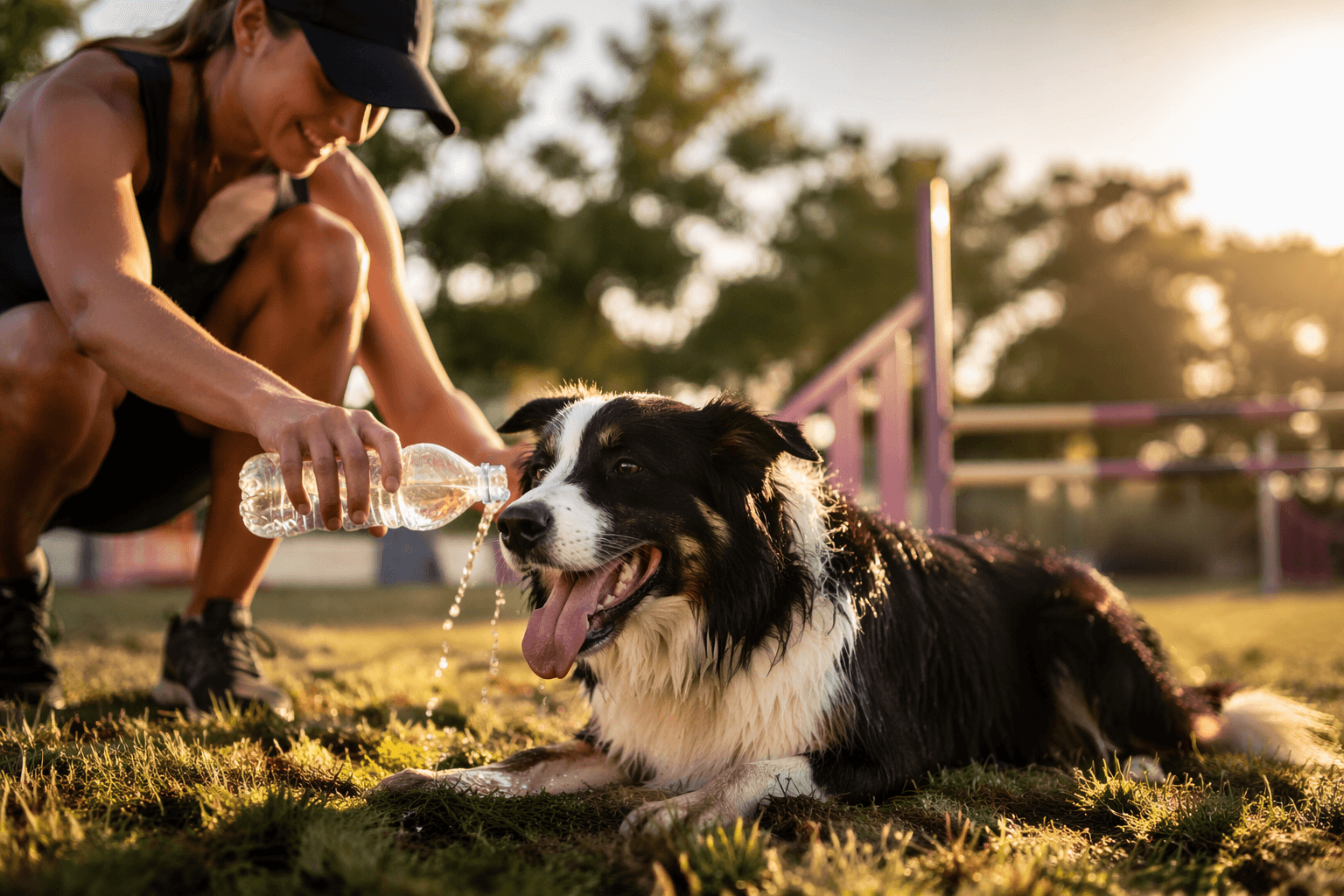
Vehicle safety for working dogs goes beyond hot-car warnings
Working dogs need more than a cracked window and a shady parking spot. The real risk is the whole vehicle setup, from crash forces to loose gear and loading routines.
Vehicle safety is a working-dog systems problem
A vehicle is not just transport for a high-drive dog. It is a waiting area, a gear station, a recovery space, and often part of the daily workflow, which is why safety has to start long before the engine turns over. The same truck or SUV might carry a sport dog to practice, a search-and-rescue dog to a deployment, a detection dog to a search site, a puppy to class, or a senior dog to the veterinarian. Each of those trips brings different risks, but the core rule stays the same: your dog is only as safe as the whole setup around them.

That is the point too many hot-car warnings miss. Heat is serious, but it is only one piece of the picture. In a working-dog vehicle, you also have to think about airflow, restraint, crate security, loose gear, door control, supervision, and what happens if one part fails. A setup that feels fine in a driveway can still become dangerous the moment a crate shifts, a hatch opens, or a dog gets over-aroused by the transition.
Why the parked-vehicle rule is stricter than most people think
The simplest safeguard is also the one people break most often: never leave an animal alone in a parked vehicle. Cracked windows do not make it safe, and shade is not a reliable fix because it can move or disappear. The danger is not theoretical. ASPCA guidance says a car interior can rise more than 30 degrees above outside temperature in less than 30 minutes, and as of 2025, 32 states and the District of Columbia have laws addressing animals left unattended in confined vehicles under dangerous conditions.
For working dogs, that warning matters even when the plan is “just a minute.” High-arousal dogs often spend a lot of time on the move between training, trials, classes, and work, which means loading and stopping routines get repeated until they feel automatic. That familiarity is exactly why the danger gets overlooked. A dog can be unsafe in a vehicle even when the weather looks mild if the dog is left alone, the airflow changes, or the routine assumes nothing can go wrong.
Crash safety matters just as much as heat safety
The second layer is what happens while the vehicle is moving. The Center for Pet Safety independently crash-tests pet carriers, crates, kennels, and harnesses, and it maintains a CPS Certified program for products that meet its standards. That distinction matters because not every product is built for a collision, and some cargo-area anchors may not be crash-rated.
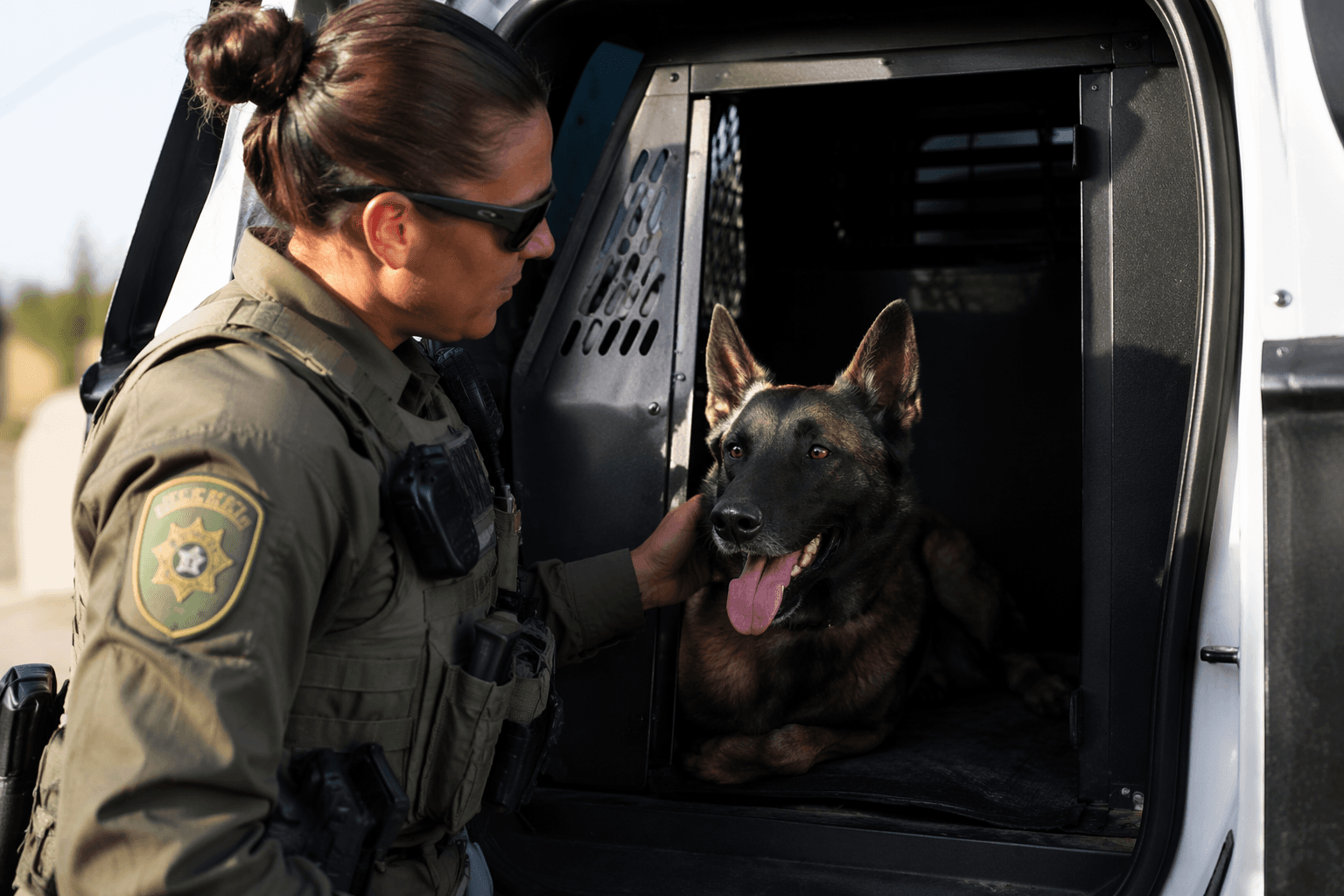
If you use an SUV or wagon setup, treat the cargo area like a safety system, not just open space. A crate that is loose, a tether attached to an unverified anchor, or gear stacked above the dog can all turn into hazards during a sudden stop or crash. The goal is not only to prevent escape, but to prevent movement inside the vehicle and reduce the chance of impact from shifting equipment.
Where the dog rides changes the risk
AAA says an unrestrained pet can distract a driver, can be thrown from the vehicle in a crash, and can be injured or killed by airbags if riding in front seats. That is why AAA advises that pets ride in the back seat for maximum safety. For working-dog handlers, this is more than a general pet tip. It is a reminder that the safest setup is one that keeps the dog out of the airbag zone and keeps the driver’s attention on the road.
NHTSA’s distracted-driving guidance adds another layer to the same warning. Drivers whose attention is diverted from driving for more than 2 seconds at a time are at increased crash risk, and NHTSA says distracted driving injured 315,167 people in 2024. A barking dog, a loose crate door, a shifting harness, or a dog scrambling at a stop can all pull your focus at exactly the wrong moment. For a working team, protecting the dog and protecting the human are part of the same job.
What a working-dog loading routine should look like
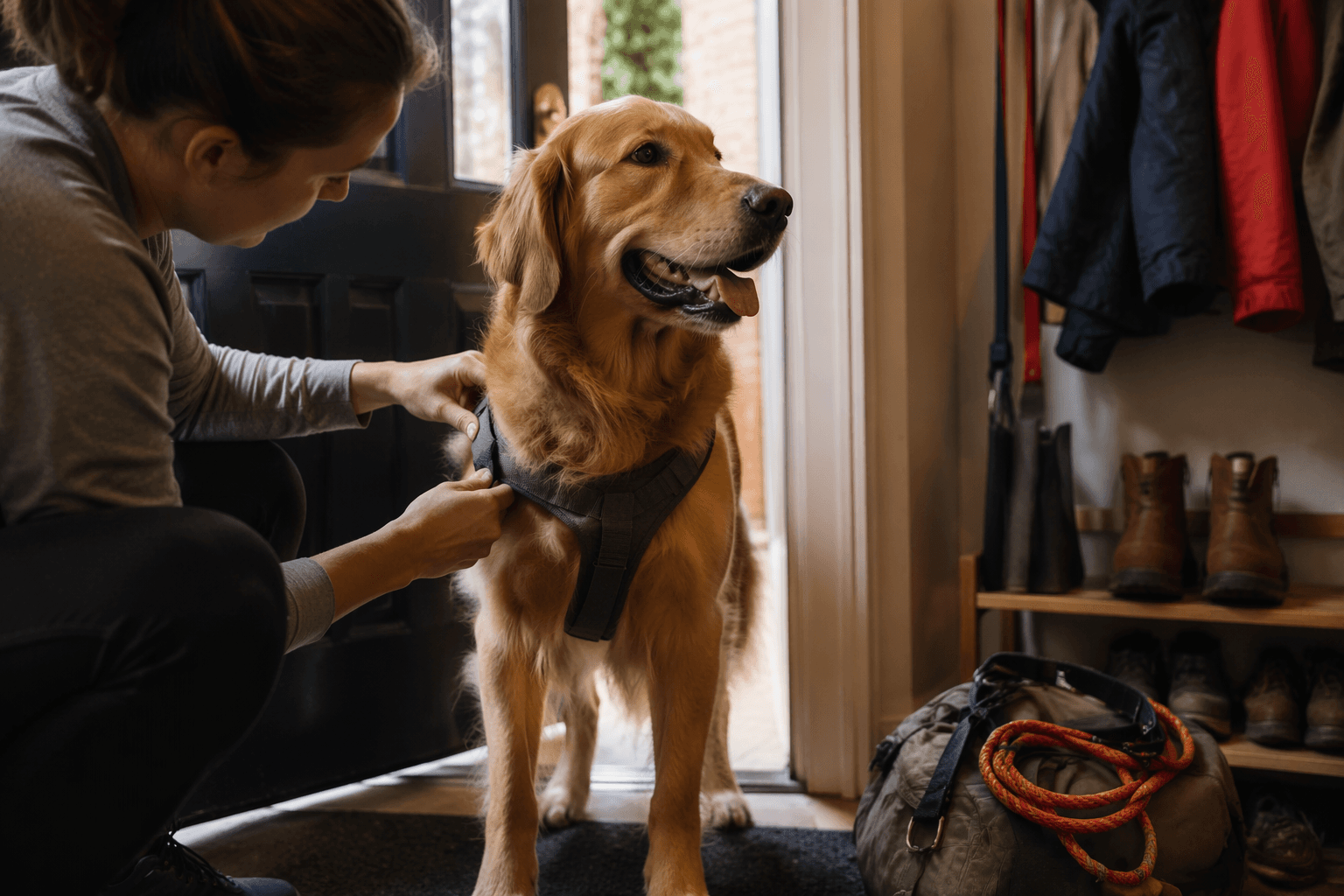
The best vehicle setup is deliberate, repeatable, and boring in the right ways. Before you roll out, check the crate or restraint, confirm the load is secured, and make sure the dog cannot reach loose gear. If you are using a cargo area, verify that the anchor points and tie-downs are appropriate for crash conditions, not just everyday transport.
A practical routine should include:
- Crate or harness secured before the dog enters
- Loose gear removed from the dog’s space
- Doors, hatch, and crate latches checked twice
- Airflow confirmed in the area where the dog rides
- A clear plan for who supervises the dog at stops
- No assumption that a routine is safe just because it worked before
The loading and unloading moments matter too. Rough transitions in and out of the vehicle can spike arousal, create door-dash opportunities, and lead to accidental contact with gear or hard surfaces. Handle those moments with the same discipline you would use in a training drill: controlled door opening, deliberate release cues, and no loose equipment underfoot.
When the vehicle itself becomes part of the hazard
The stakes are not abstract. In June 2023, a Cobb County, Georgia, police K9 died after a vehicle air-conditioning failure during active-shooter training. That loss is a hard reminder that even working setups can fail when safety is assumed instead of verified. A vehicle can feel like a secure base of operations until one mechanical problem or one missed step changes the outcome.
That is why the best working-dog practice treats the vehicle as part of the task, not just the commute. If the dog is your partner in sport, detection, rescue, or patrol, then the crate, the tie-down, the airflow, the loading routine, and the supervision plan all belong in the same conversation. The old hot-car warning is only the starting point. The real standard is a vehicle that protects the dog in motion, at rest, and in every handoff between the two.
This article was produced by Prism’s automated news system from verified source data, official records, and press releases, then run through automated quality and moderation checks before publishing. The system is built and supervised by the people who set the standards it runs under. Read our full AI policy.
Did this article answer your question?