Why positive reinforcement is reshaping dog training methods
Positive reinforcement is turning hyperenergetic dogs into better learners, using clear rewards to build recall, settle, and polite manners without punishing mistakes.
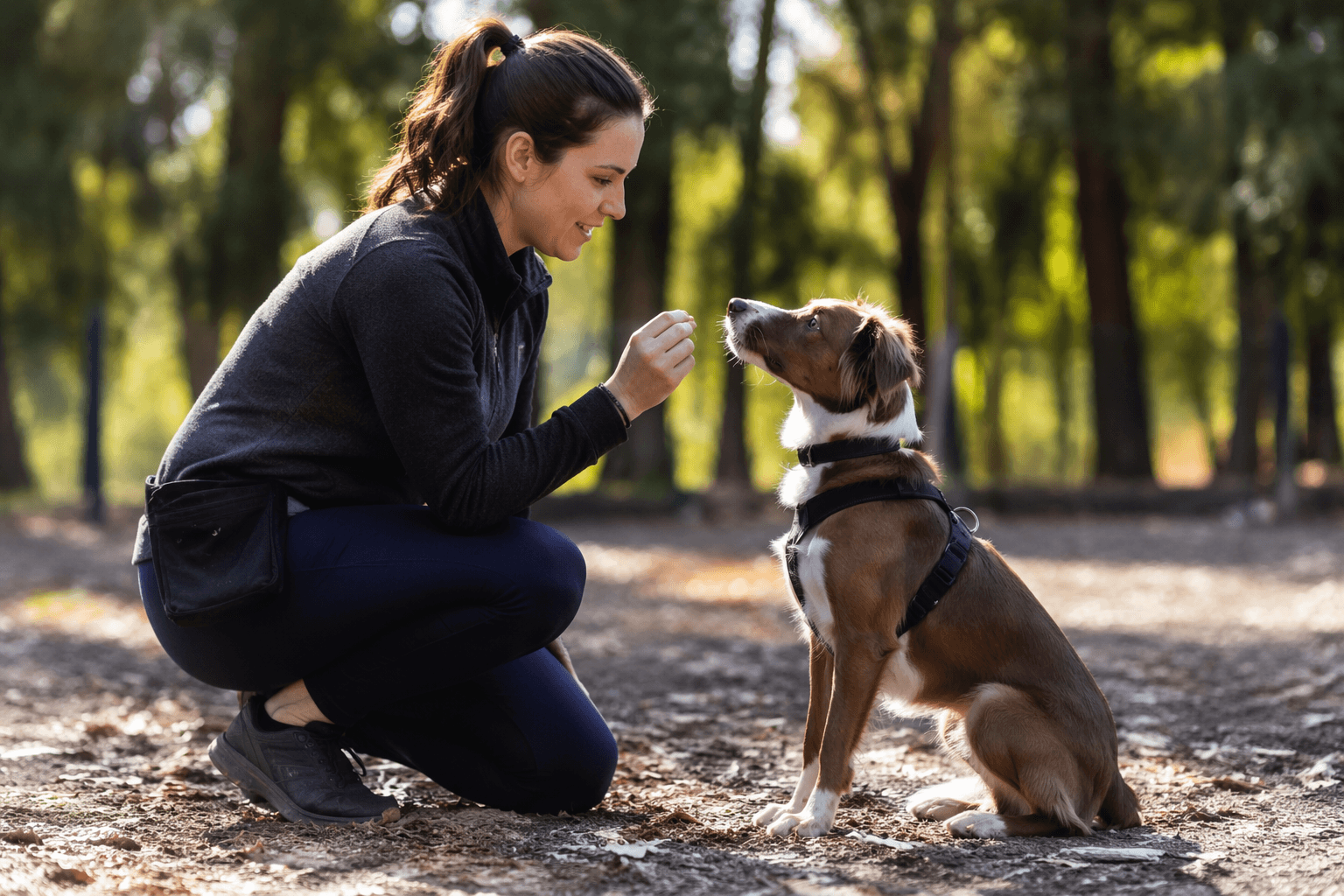
The biggest change in dog training is not a new gadget or a louder correction. It is a cleaner idea of how dogs learn, especially the ones who come in at full speed and never seem to power down. When a hyperenergetic dog earns a treat, a toy, or praise for the right choice, that behavior becomes worth repeating, and modern training has leaned hard into that logic.
For dogs with serious drive, that shift matters because it turns intensity into something usable. Instead of fighting motion with force, today’s best systems shape recall, settle, impulse control, and polite greetings through clear feedback, consistent timing, and rewards the dog actually wants to work for.
Why the field moved on
Modern trainers are moving away from coercive and dominance-centered ideas and toward teaching dogs better choices before problems snowball. That approach is not just softer, it is more deliberate: it focuses on reinforcing the behavior you want and preventing the dog from rehearsing the behavior you do not want.
That is also where the professional consensus has landed. The American Veterinary Society of Animal Behavior recommends only reward-based training methods for all dog training, including behavior problems. The American College of Veterinary Behaviorists says it advocates teaching animals through reinforcement of desired behaviors, with environment modification when needed. In other words, the goal is not to punish mistakes after the fact, but to set up success from the start.
What the evidence keeps showing
The strongest case for positive reinforcement is that it works. Research and surveys cited in the overview show reward-based methods can be faster and more effective than aversive tools for core cues like come and sit, while also being linked to fewer stress-related side effects. For a dog whose default setting is to launch first and think later, faster learning is not a luxury. It is the difference between a cue that sticks and a cue that gets lost in the excitement.
Older owner surveys add another layer. Punishment-based strategies were associated with problematic behaviors, including attention-seeking and aggression, which is exactly the kind of fallout no one wants from a dog already operating at high volume. The takeaway is simple: training is not just about obedience. It is also about welfare, trust, and making the dog feel confident enough to keep trying.
What this looks like in daily life
For hyperenergetic dogs, positive reinforcement is especially powerful because it turns scattered energy into a repeatable pattern. You are not asking the dog to become less alive. You are teaching the dog where that energy pays off.
A few practical examples make the point:
- Settle: reward the dog for choosing a mat, staying down, and extending calm for longer stretches. That teaches an on-switch and an off-switch, which matters when the dog’s default mode is motion.
- Recall: make coming when called the best deal in the room. If the dog learns that return equals something excellent, you get a behavior that can compete with squirrels, people, and every other distraction.
- Impulse control: reward pauses at doors, waits before meals, and calm choices around toys or movement. These are tiny reps, but they build a dog who can think before exploding into action.
- Polite greetings: reinforce four paws on the floor, a sit, or a step back when people arrive. That gives the dog a habit to perform instead of a bad habit to repeat.
This is why modern trainers keep talking about timing and consistency. A dog cannot learn a new default if the old one keeps getting rehearsed. Reward-based training gives you a way to interrupt the chaos and make the right choice the easy one.
Why many owners still get mixed results
The gap between modern theory and real-world practice is still wide. A 2024 survey of nearly 800 Arizona State University undergraduates found that only 5% said they would use a trainer when they had behavior concerns. Instead, 60% said they would ask friends or family or look for advice online, and 70% said they either trained the dog themselves or used no formal training at all.
The same survey shows how easily old habits survive under a new label: 57% said they would use auditory or physical corrections for specific problem behaviors. That suggests plenty of people are mixing reward-based ideas with aversive tactics in practice, even when they think of themselves as modern trainers. For busy owners, consistency matters as much as philosophy, because half-committed training often just teaches the dog to guess.
The e-collar debate keeps sharpening the stakes
Few topics show the divide more clearly than remote electronic collars. A 2024 study on stopping chasing behavior noted that controversy still surrounds both the effectiveness and welfare impact of these tools, and said earlier studies often failed to spell out the punishment schedule or intensity being used. That detail matters, because vague methods are hard to evaluate and even harder to defend as best practice.
A Frontiers study with 63 dogs made the comparison more concrete. Dogs trained with positive reinforcement outperformed dogs trained with remote electronic collars on recall and general obedience, and they faced fewer welfare risks. The message is hard to miss: if you want a dog that learns reliably and stays mentally steady, reward-based training gives you a better starting point.
The public conversation has also become more visible around high-profile trainers. In 2023, the American Veterinary Medical Association highlighted concerns about Augusto DeOliveira, also known as The Dog Daddy, after the American College of Veterinary Behaviorists warned about damaging effects from aversive methods. That dispute pushed a once-private training debate into the open and made the consumer side of dog training impossible to ignore.
A smarter model for how dogs learn
One of the most interesting newer ideas in this space is the Do-As-I-Do method, which uses canine observation and imitation instead of relying only on direct cueing. PubMed-indexed studies show dogs can imitate human actions after a delay and can generalize that imitation across some context changes, although performance depends on the type of action and how familiar it is.
That is a useful reminder for anyone living with a high-drive dog: learning is not just about command and response. Dogs watch, remember, and connect patterns, which is exactly why clear rewards and predictable structure work so well. The dog is not being bribed into obedience. The dog is being shown, step by step, which choices make sense.
That brings the whole shift back to the first challenge every hyperenergetic dog owner knows well. You do not need to crush energy to get control. You need a training system that can channel it, reward it, and make the right behavior the one your dog is eager to repeat.
This article was produced by Prism’s automated news system from verified source data, official records, and press releases, then run through automated quality and moderation checks before publishing. The system is built and supervised by the people who set the standards it runs under. Read our full AI policy.
Did this article answer your question?