Ice baths may ease soreness, but can hinder muscle gains
Ice baths can take the sting out of hard running, but if your goal is muscle growth, the cold may blunt part of the payoff.

**The real ice bath question for runners is not whether it hurts less. It’s whether the relief is worth the tradeoff.** For a runner coming off a marathon, a brutal long run, or back-to-back high-mileage days, a cold plunge can feel like instant damage control: less soreness, a mental reset, and a little more bounce before the next session. But the same cold that calms aching legs can also interfere with the repair process that makes training pay off, especially when lifting, hills, or strength work are part of the plan.
Where ice baths help most
The strongest case for cold-water immersion is soreness management. A 2022 systematic review and meta-analysis in Sports Medicine pulled together 28 studies and found cold-water immersion beat other recovery methods for muscle soreness, while performing about the same as other methods for muscular power and flexibility recovery. That matters for runners because soreness is often the thing that derails consistency, not some abstract lab metric.
That is why marathoners and high-mileage runners are the most obvious candidates for a well-timed plunge. If your training block is already pounding your legs and the next key workout is close, the short-term relief can be useful. The same goes for race-day competitors who want to feel less beaten up between efforts, or after a particularly punishing session that leaves the quads and calves lit up for days.
Who is most likely to waste time
Sore beginners are the group most likely to overspend on the idea. If you are still early in training, the bigger win is usually learning to manage load, sleep, fueling, and easy mileage, not making cold water part of every post-run ritual. A plunge may make you feel better in the moment, but it is not a magic fix for training mistakes or a substitute for building tolerance gradually.
The bigger caution flag is for anyone chasing strength, power, or muscle size alongside running. Chris Joyce, a physical therapy professor, argues that post-training cold may blunt the build-and-repair cycle that makes muscles stronger. Carson Gantzer, a strength coach and performance physiologist, says the biggest concern is loss of hypertrophy gains rather than endurance progress. If your week includes heavy lifting, sprint work, or hill repeats, the tub deserves more thought than habit.
Why the muscle-gain warning keeps coming up
This is not a fringe concern. A 2020 meta-analysis concluded regular cold-water immersion may be harmful to resistance-training adaptations while potentially helping endurance-training adaptations. A 2021 Frontiers review went in the same direction, saying repeated post-exercise cold-water immersion may blunt strength, power, and hypertrophy gains without hurting endurance adaptations. That lines up with work in the Journal of Applied Physiology showing cold-water immersion attenuated anabolic signaling after resistance exercise, which is exactly the kind of molecular response lifters want to preserve.
For runners, that means the tradeoff depends on what kind of adaptation you are trying to protect. An occasional plunge after a marathon or a very hard aerobic day is one thing. Turning cold exposure into a default after every run, especially when the block includes lifting or power work, is where the downside starts to matter.
The protocol details are not fluff
The newest reviews also make one point very clearly: details matter. A 2026 network meta-analysis from BMC Sports Science, Medicine and Rehabilitation said the best cold-water immersion protocol is still not well understood and exercise-specific guidelines are lacking. A 2024 network meta-analysis in BMC Musculoskeletal Disorders similarly found recovery effects vary by temperature and protocol, which is another way of saying “ice bath” is too vague to be a real prescription.
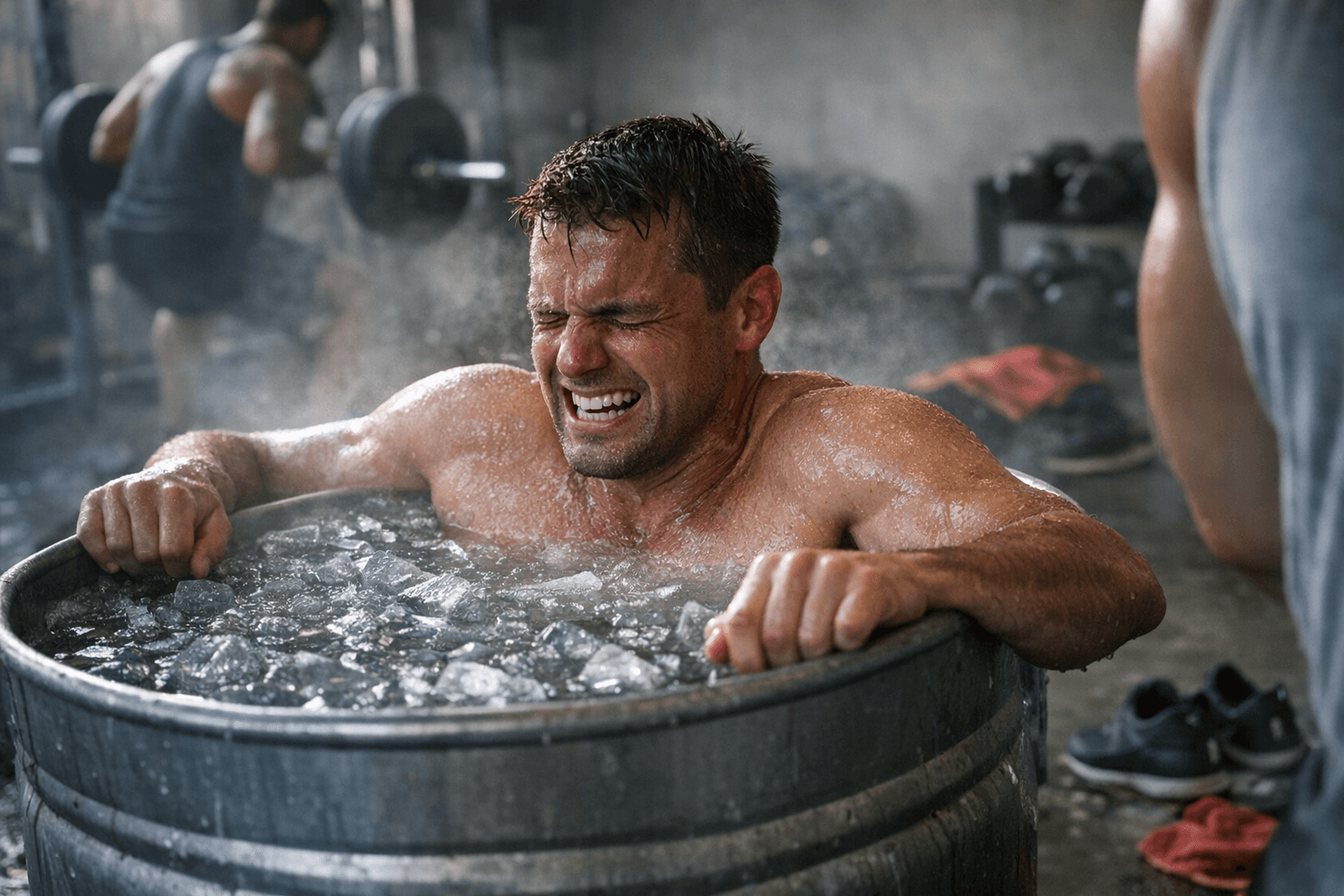
Still, the practical sweet spot is getting clearer. A 2025 Frontiers network meta-analysis found 10 to 15 minutes in about 11°C to 15°C water, and also 5°C to 10°C water, significantly reduced delayed onset muscle soreness. That does not mean colder is always better or longer is always smarter. It means runners looking for soreness relief have evidence-based ranges to work from instead of guessing at the tub like it is a dare.
The best use case is strategic, not automatic
Here is the simplest way to think about it:
- If the day was about endurance and you mainly want to feel less wrecked, cold-water immersion has a solid case.
- If the day was about lifting, hills, power, or building muscle, the cold may take some of the edge off your gains.
- If you are already managing soreness well with sleep, fueling, easy movement, and smart programming, a plunge may be more luxury than necessity.
That distinction is why the debate keeps getting louder in running circles. The evidence does not say ice baths are useless. It says they are a tool with a specific job, and the job is soreness relief more than performance magic.
The wellness hype has helped, but not all of it is earned
Part of the reason ice baths feel unavoidable now is cultural. Mayo Clinic Press noted in April 2024 that Wim Hof, the “Iceman,” helped turn icy plunges from a niche stunt into a mainstream fitness trend. That popularity has only grown, with a 2025 PLOS One meta-analysis on wellbeing analyzing 11 studies and 3,177 healthy adults, showing just how broad the interest has become.
Popularity, though, is not the same as proof. Some gyms are charging a premium for cold-plunge access that may be oversold and may deliver more placebo than performance benefit. A cold tub can feel heroic, but if the goal is better training, the smartest move is still to use it sparingly and for the right kind of session.
The bottom line is straightforward: ice baths are most defensible after especially hard endurance work when soreness is the main problem, and least attractive when the real goal is strength, hypertrophy, or adaptation from lifting-heavy training. Treat the tub like a recovery tool, not a religion, and you keep the benefit without paying for the downside.
This article was produced by Prism’s automated news system from verified source data, official records, and press releases, then run through automated quality and moderation checks before publishing. The system is built and supervised by the people who set the standards it runs under. Read our full AI policy.
Did this article answer your question?