New 2026 Guide Compares Cold Plunge Tubs Across All Budgets and Features
A chiller-equipped cold plunge can cost as little as $10–$20/month in electricity, but the specs that actually matter are rarely what comparison guides highlight first.

Why most cold plunge comparison guides miss the point
Picture a chest freezer humming quietly in your garage, water sitting at a crisp 50°F, and a thermometer clipped to the rim that never lies. That setup, cobbled together for under $400, outperforms plenty of $3,000 "premium" tubs in the one metric that actually matters: holding a consistent target temperature without surprise. The explosion of cold plunge products hitting the market in 2026 is real, the consumer appetite is real, and the noise drowning out useful information is also very real. A new comparison guide from Collective Relaxation, distributed via press channels in early April 2026, tries to cut through that noise by stacking cold plunge tubs across price tiers and performance categories. It's a useful starting point. Whether it's a trustworthy finishing point is a different question entirely.
What the guide actually covers
The Collective Relaxation guide scopes cold plunge tubs across four broad segments: budget inflatable and pop-up tubs, mid-range vessels, chiller-integrated models, and premium setups built for serious home recovery. The declared evaluation framework includes cool-down rate, chiller horsepower, filtration and UV sanitation systems, warranty length, and shipping and service footprint. Those are the right criteria. A guide that organizes products around those six variables is miles ahead of one organized around aesthetic finishes or influencer placements, which dominated cold plunge marketing as recently as two years ago.
The guide also draws a practical line between apartment-sized units and full-home installations, which matters enormously for anyone shopping in a condo or rented space. Compact, chiller-integrated tubs that run on a standard 120V outlet are a categorically different product from a 500-liter acrylic vessel that needs dedicated electrical work and 40 square feet of floor space.
The specs that actually separate good tubs from expensive ones
Cooling method is the single most important variable in any cold plunge purchase, and it's the one most often buried in spec sheets. There are three real approaches:
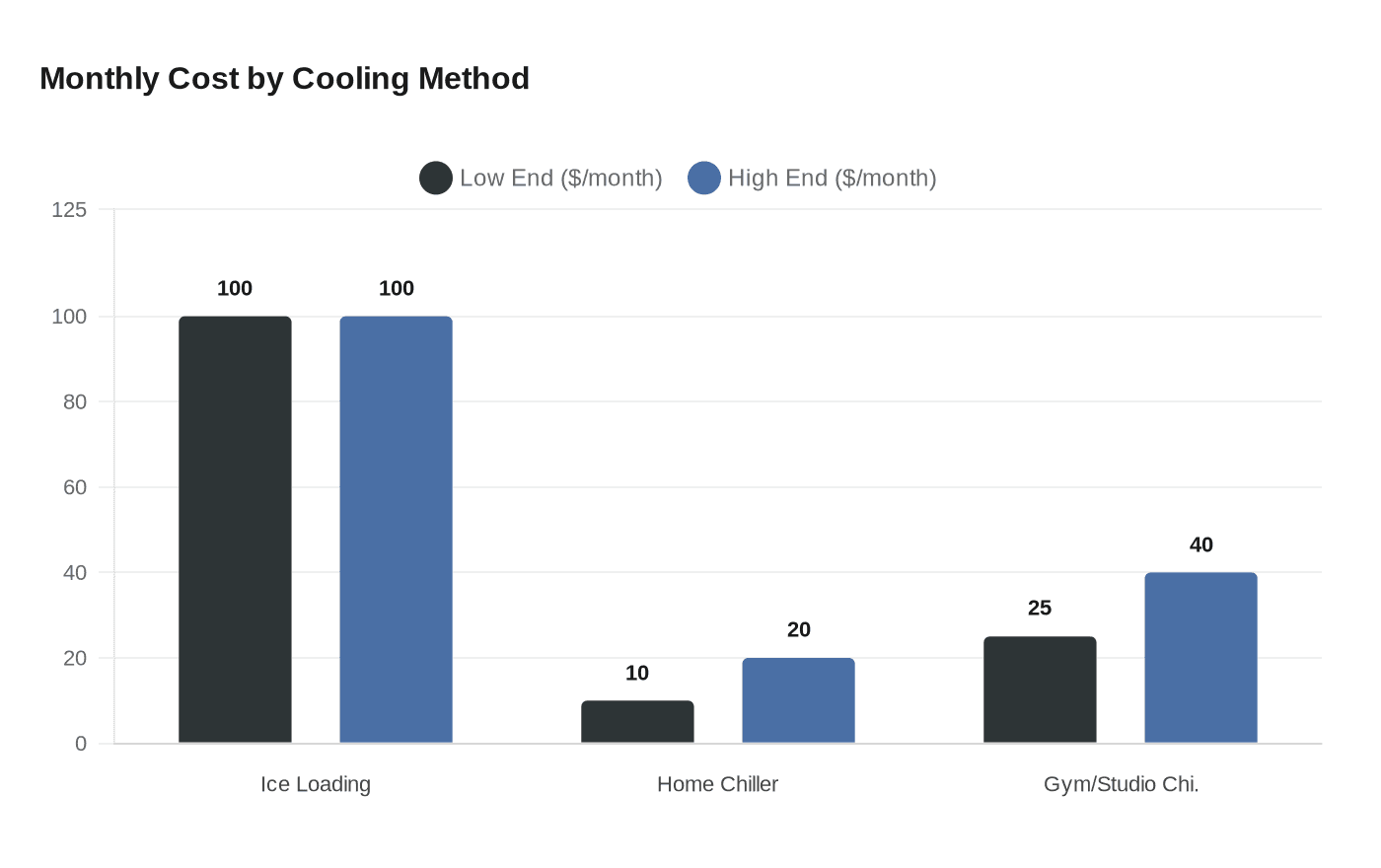
- Manual ice loading: Zero upfront cost beyond the tub itself, but ongoing ice expenses that can exceed $100/month for daily plungers. Fine for testing the habit, unsustainable long-term.
- Chest freezer conversion: A secondhand chest freezer plus a circulation pump runs under $400 total. It holds temperature as well as any dedicated unit at a fraction of the cost, and it has a devoted DIY community behind it.
- Dedicated chiller unit: The standard on mid-range and premium tubs. A 1HP chiller cooling 200 liters to 3°C (37°F) consumes roughly 4.8 kWh over 24 hours, which works out to about $0.73/day at average U.S. electricity rates. Monthly, home users with chiller-equipped tubs typically land between $10 and $20 in added electricity cost, even with daily plunges. Gyms and studios running multiple sessions daily see $25 to $40/month. Either way, electricity is not where this purchase gets expensive.
Chiller horsepower should be matched to tub volume and ambient conditions. A 0.5HP unit struggling to chill 400 liters in a sun-baked garage will cycle constantly, wear out faster, and never hit target temp on a hot August afternoon. A 1HP chiller on a 200-liter insulated tub in a shaded space is quiet, efficient, and long-lasting. Getting that match wrong is one of the most common and most avoidable cold plunge mistakes.
Filtration and sanitation: the unsexy spec that matters most for health
Cold plunge water sits between 39°F and 59°F, a range that slows but does not eliminate bacterial growth. Without active sanitation, a tub used daily by one person can develop biofilm within weeks. The current market standard for mid-range and premium tubs combines mechanical filtration (a cartridge or sand filter) with a UV sanitation stage that neutralizes pathogens without the skin irritation of heavy chlorine. Some budget tubs pair with optional chillers that include no filtration at all, meaning you're responsible for manual chemical treatment and regular full water changes.
Questions worth asking before buying:
- Does the filtration system come standard or cost extra?
- What is the recommended water change frequency at rated usage levels?
- Does the UV system have a replacement bulb schedule, and what do those bulbs cost?
- Is there an ozone or other secondary sanitation layer?
Noise and power draw: the apartment test
This is where many guides go quiet. Chiller units produce noise, typically in the 45 to 65 decibel range depending on compressor size and housing quality. That's the difference between a quiet library and a normal conversation, and it matters enormously if your "cold plunge space" is a studio apartment bathroom or a shared outdoor patio. Some premium tubs market specifically to noise-sensitive environments with vibration-isolated compressors and insulated housings; that engineering costs money and is worth paying for if the use case demands it.
Power draw during the initial cool-down phase, when a chiller is working hardest, can spike to around 10 amps at 120V (roughly 1.2 kWh/hour). Most standard home circuits handle this without issue, but if you're planning a permanent installation near other high-draw appliances, a dedicated circuit is worth the one-time electrical cost.
How to evaluate the guide itself (and any comparison guide)
Here is where the April 1 publication date and the press distribution channel deserve a direct mention. A comparison guide released via syndicated press distribution on April Fools' Day, authored by a brand called Collective Relaxation that also sells or recommends cold plunge products, carries two credibility questions before you read a single spec:
1. Timing and platform: Syndicated PR channels like MarketersMedia/FinancialContent distribute brand-authored content, not independently reported journalism. That is not disqualifying, but it means the framing and product selection serve the author's interests, not yours.
2. Affiliate incentives: Most comparison guides in the wellness category earn commission on purchases made through their links. That economic relationship does not automatically corrupt the recommendations, but it should prompt you to ask: are the top-ranked products the best performers, or the highest-commission partners?
The Cold Plunge Research Institute, an independent nonprofit founded specifically to document industry abuses including warranty exclusions and deceptive marketing, represents the countervailing force in this space. Before trusting any comparison list at face value, cross-reference the top picks against independent test data: measured cooling curves, documented warranty claim outcomes, and verified decibel readings under load.
What the market evolution actually signals
The Collective Relaxation guide, whatever its limitations, is a symptom of something real and useful: the cold plunge market is maturing. Buyers in 2024 largely bought on brand trust and social proof. Buyers in 2026 are asking about chiller horsepower-to-volume ratios, warranty transferability, and monthly operating costs before they commit. That consumer sophistication is forcing manufacturers to publish actual specs and forcing comparison sites to at least attempt structured criteria.
The next frontier is published raw test data: cooling curves measured in controlled conditions, noise levels taken with calibrated meters, and warranty claim rates reported honestly. Until that standard takes hold, use guides like this one as a map of the territory, not a verdict on the destination. The tub that fits your space, your budget, and your sanitation tolerance is the right tub, and no press release will know those variables better than you do.
This article was produced by Prism’s automated news system from verified source data, official records, and press releases, then run through automated quality and moderation checks before publishing. The system is built and supervised by the people who set the standards it runs under. Read our full AI policy.
Know something we missed? Have a correction or additional information?
Submit a Tip